DETROIT (AP) — Established veterans Hilary Knight and Marie-Philip Poulin helped deliver a post-Olympic boost to the Professional Women’s Hockey League coming out of the Milan Cortina Games in February.
On Wednesday, it was the youngsters’ turn to take the spotlight at the draft.
Click to Gallery
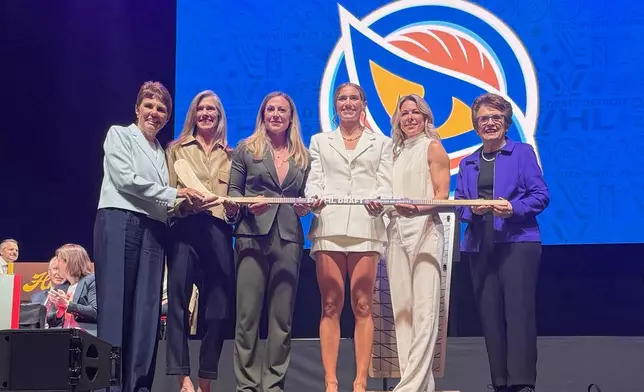
Wisconsin defender Caroline Harvey, center right, who was selected by the Vancouver Goldeneyes with the No. 1 overall pick in the PWHL draft, poses with Vancouver general manager Cara Gardner Morey, second from right, tennis icon and PWHL board member Billie Jean King, right, King's wife Ilana Kloss, left, Kimbra Walter, second left, and PWHL executive VP of hockey operations Jayna Hefford, center left, Wednesday, June 17, 2026, in Detroit. AP Photo/John Wawrow)
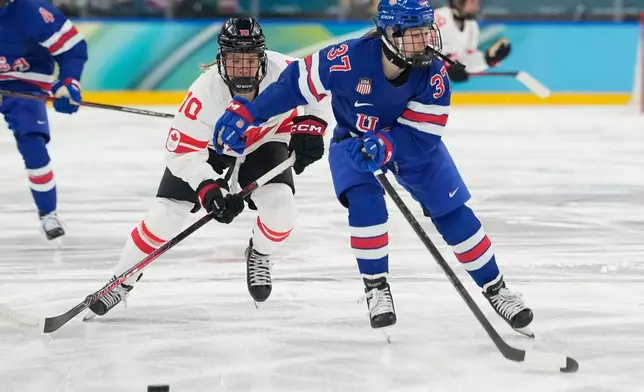
FILE - United States' Abbey Murphy (37) challenges with Canada's Sarah Fillier (10) during a women's ice hockey gold medal game between the United States and Canada at the 2026 Winter Olympics, in Milan, Italy, Feb. 19, 2026. (AP Photo/Hassan Ammar, File)
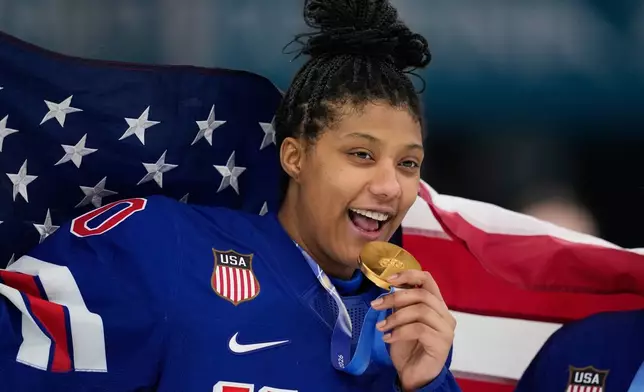
FILE - United States' Laila Edwards (10) poses after the United States' women's ice hockey team was presented with the gold medals at the 2026 Winter Olympics, in Milan, Italy, Feb. 19, 2026. (AP Photo/Petr David Josek, File)
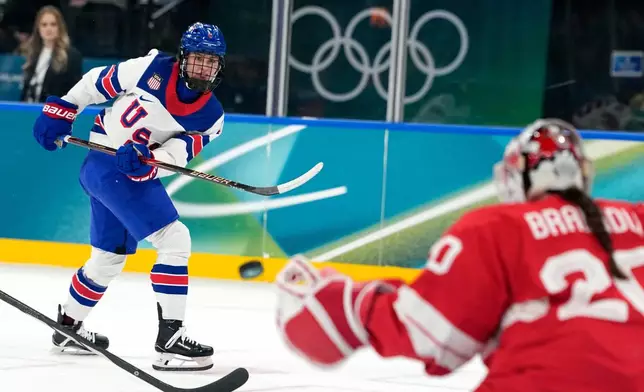
FILE - United States' Caroline Harvey shoots on goal during a preliminary round match of women's ice hockey between Switzerland and United States at the 2026 Winter Olympics in Milan, Feb. 9, 2026. (AP Photo/Hassan Ammar, File)
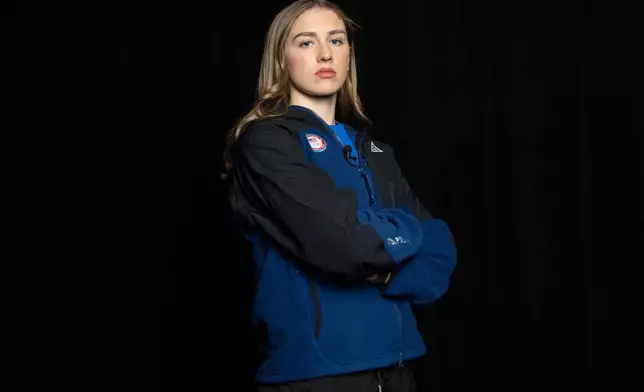
FILE - Olympic-hopeful U.S. hockey player Caroline Harvey poses for a photo at Team USA Media Summit, Oct. 28, 2025, in New York. (AP Photo/Yuki Iwamura, File)
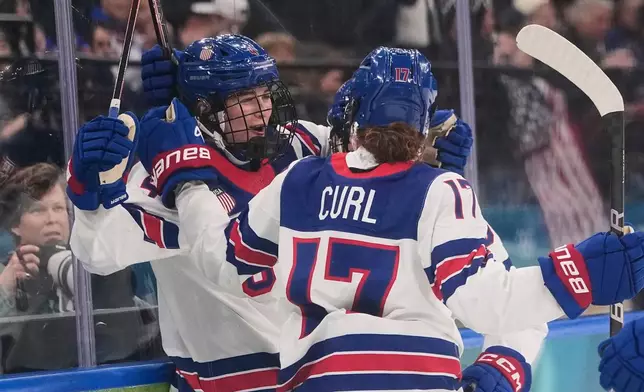
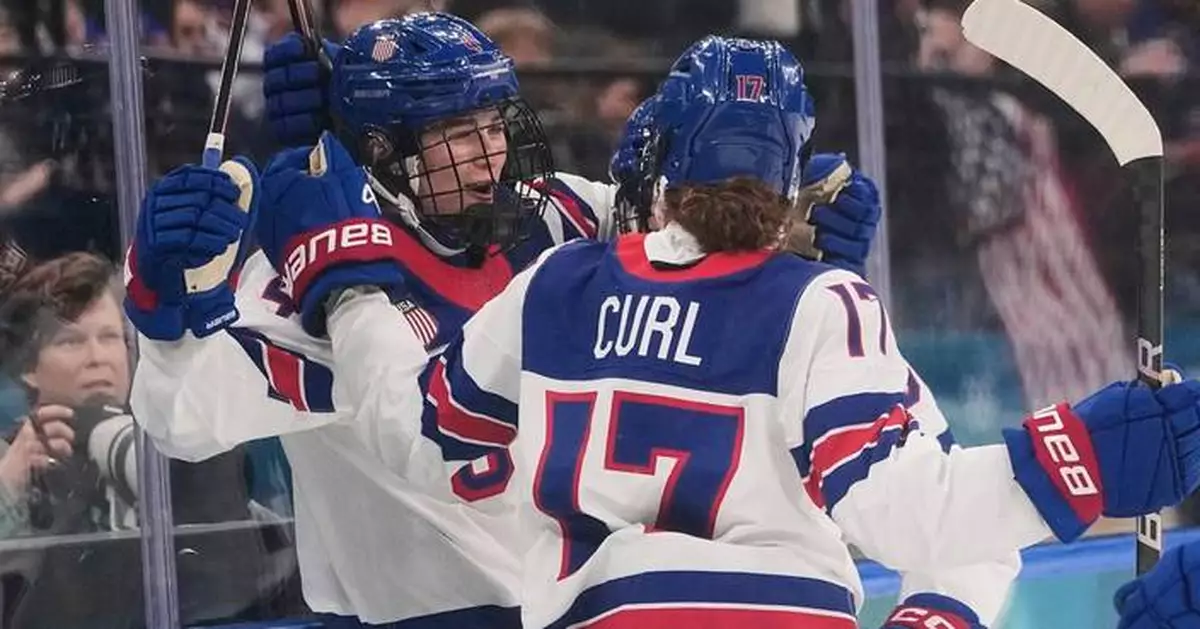
FILE - United States' Caroline Harvey celebrates with teammates after scoring her side's first goal during a preliminary round match of women's ice hockey between USA and Canada at the 2026 Winter Olympics, in Milan, Feb. 10, 2026. (AP Photo/Petr David Josek, File)
In being selected first overall by the Vancouver Goldeneyes, U.S. national team and Wisconsin defender Caroline Harvey kicked off a parade of 14 2026 Olympians — five of them Americans — taking downtown Detroit's Fox Theater stage during the six-round event.
The draft class was regarded as the league’s deepest and most talented and was one of the reasons behind the PWHL adding four new markets, growing to 12 teams entering its fourth season. It's also why Harvey experienced nerves before finally hearing her name called.
“There’s always this, you have no idea until you officially hear it,” said Harvey, who kicked off the day being named the International Ice Hockey Federation's female player of the year.
“This draft class is just so deep and so many phenomenal players. Anyone could get picked at any time,” she added. “It’s just a surreal feeling, and I had no idea. I mean it could have been anyone. But I’m grateful to have my name called.”
The draft was held in one of the PWHL’s new markets and featured its share of tears and cheers.
Seated next to Harvey, Laila Edwards grew emotional while congratulating her longtime friend and teammate upon being selected.
“It caught me off guard. After I gave her a hug I started crying, and I couldn’t stop,” said Edwards, who was chosen fourth by San Jose. The 22-year-old Edwards is from Cleveland, and became the first Black player selected in the first round of the PWHL draft.
As for the cheers, they rang out any time Detroit or Knight — the expansion team’s star addition — were mentioned. And the biggest roar in the packed theater was heard when Detroit finally made its first selection in the second round by choosing Switzerland Olympic goalie Andrea Brandli.
The 29-year-old Brandli’s selection was key for Detroit, with GM Manon Rheaume — a former goalie — growing nervous because she had had yet to fill the position.
As for the welcome she received, Rheaume said: “I got like emotional walking there ... And I think everybody felt it, every player that was getting drafted.”
This was the atmosphere the PWHL has become accustomed to generating while growing its brand in the wake of the Americans’ thrilling 2-1 overtime win over Canada in the Olympic final. The win created a surge of attention for women's hockey in North America, with Knight and gold medal-clinching goal-scorer Megan Keller appearing on Saturday Night Live.
“Milan was just one of those amazing things that keeps happening to us,” PWHL executive board member Stan Kasten told The Associated Press. “You see what the city of Detroit is going to do for this team, right? We just think the more people that get exposed, the more fans we make.”
On Wednesday, Americans swept the top five picks and made up nine of 12 first-round selections, with the 23-year-old Harvey continuing to cement her reputation as her generation’s most accomplished player.
She’s a two-time Olympian and was the tournament MVP in Milan. At Wisconsin, she won three NCAA titles and capped her four-year career winning the Patty Kazmaier Memorial Award as college hockey’s MVP.
From Pelham, New Hampshire, Harvey is the second American player to go No. 1 after Minnesota chose Taylor Heise in the league’s inaugural draft in 2023.
“She’s actually just at the start of her career, which is crazy, and she’s coming in with all these accolades,” Goldeneyes GM Cara Gardner Morey said, before emphasizing the priority PWHL teams place on defense. “To have one of the best ones in the country, in North America, probably in the world right now is pretty special.”
Fellow U.S. Olympians followed with Minnesota forward Abbey Murphy chosen second by Seattle, Penn State forward Tessa Janecke going third to Las Vegas. After Edwards went fourth, Wisconsin forward Kirsten Simms rounded them out, going eighth to Toronto.
“It’s a little bittersweet,” Simms said of watching many of her Badgers’ teammates go their separate ways. “I’m just happy for all of them. They’re unbelievable players and unbelievable people and so every team is super lucky. But, obviously, I’m gonna miss them.”
Finland national team defender Nelli Laitinen was the first European player selected, going No. 6 to Hamilton. The first Canadian selected was Ohio State defender Sara Swiderski, who went ninth overall to Minnesota.
Overall, 31 Americans and 30 Canadians were among the 72 players selected with Finland having four.
Las Vegas finished having three picks among the top 13. Janecke was selected with the pick Las Vegas acquired in trading Knight to Detroit. Las Vegas then used its fifth pick to select Wisconsin's Lacey Eden, women's college hockey's leading scorer last season. The team then traded forward Abby Boreen back to Vancouver to acquire the Goldeneyes' first pick of the second round and select Princeton forward Issy Wunder.
AP women’s hockey: https://apnews.com/hub/womens-hockey
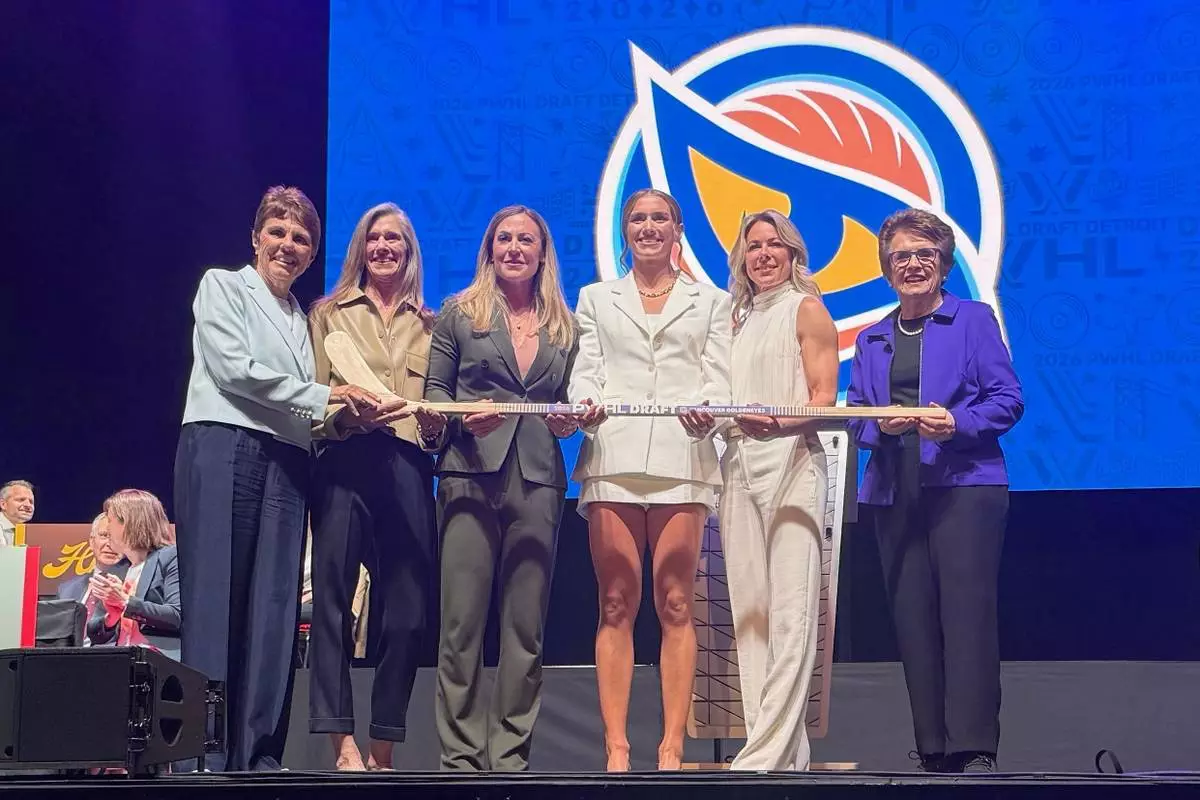
Wisconsin defender Caroline Harvey, center right, who was selected by the Vancouver Goldeneyes with the No. 1 overall pick in the PWHL draft, poses with Vancouver general manager Cara Gardner Morey, second from right, tennis icon and PWHL board member Billie Jean King, right, King's wife Ilana Kloss, left, Kimbra Walter, second left, and PWHL executive VP of hockey operations Jayna Hefford, center left, Wednesday, June 17, 2026, in Detroit. AP Photo/John Wawrow)
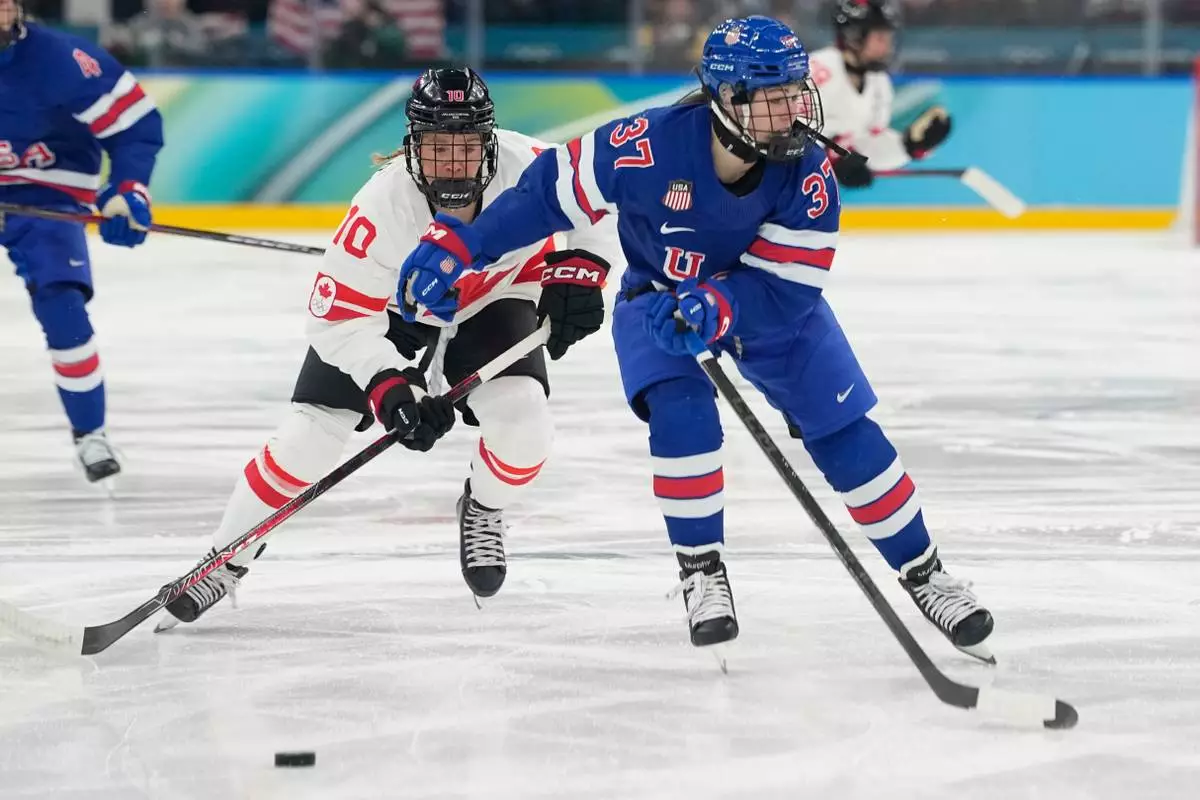
FILE - United States' Abbey Murphy (37) challenges with Canada's Sarah Fillier (10) during a women's ice hockey gold medal game between the United States and Canada at the 2026 Winter Olympics, in Milan, Italy, Feb. 19, 2026. (AP Photo/Hassan Ammar, File)
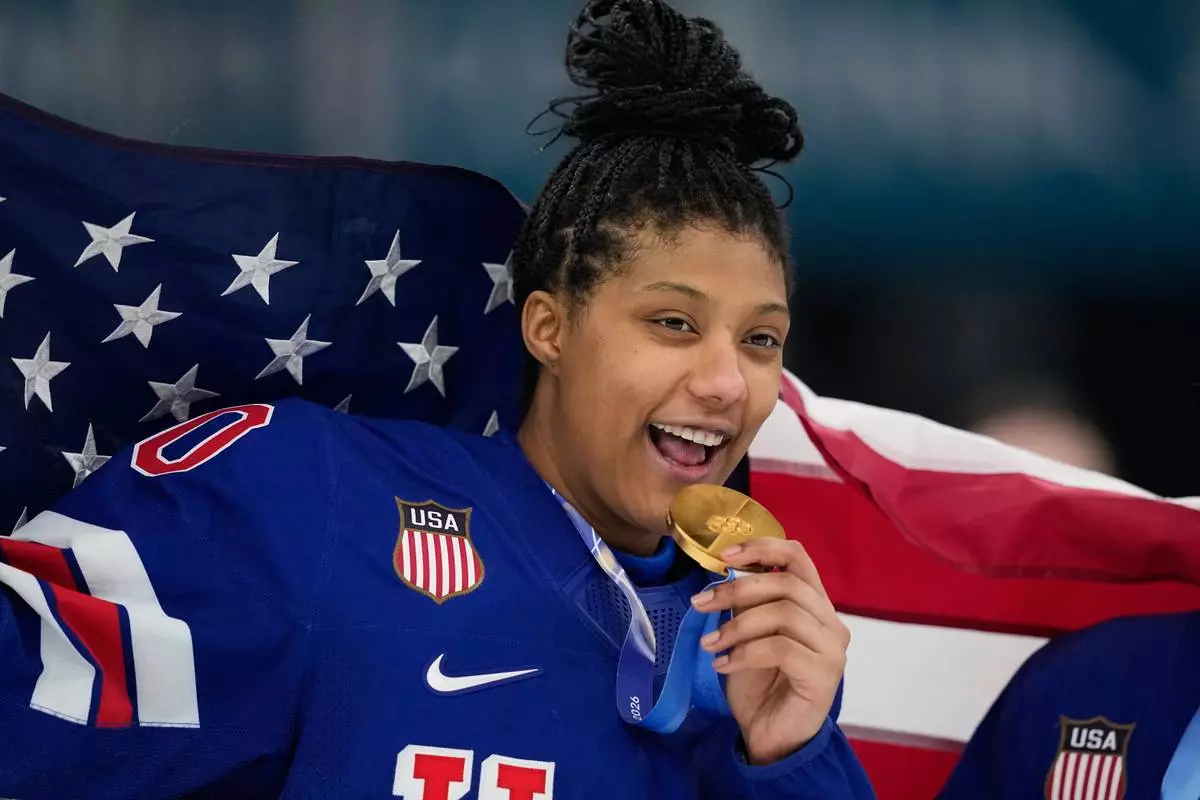
FILE - United States' Laila Edwards (10) poses after the United States' women's ice hockey team was presented with the gold medals at the 2026 Winter Olympics, in Milan, Italy, Feb. 19, 2026. (AP Photo/Petr David Josek, File)
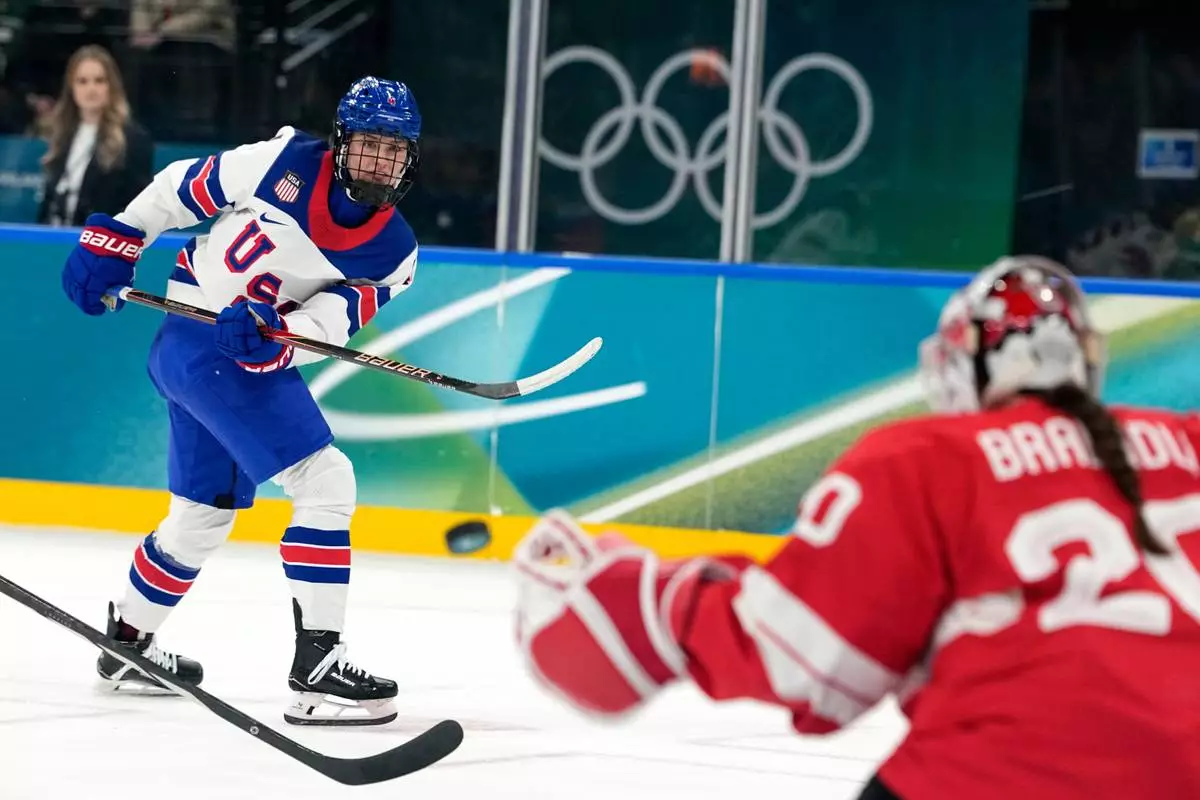
FILE - United States' Caroline Harvey shoots on goal during a preliminary round match of women's ice hockey between Switzerland and United States at the 2026 Winter Olympics in Milan, Feb. 9, 2026. (AP Photo/Hassan Ammar, File)
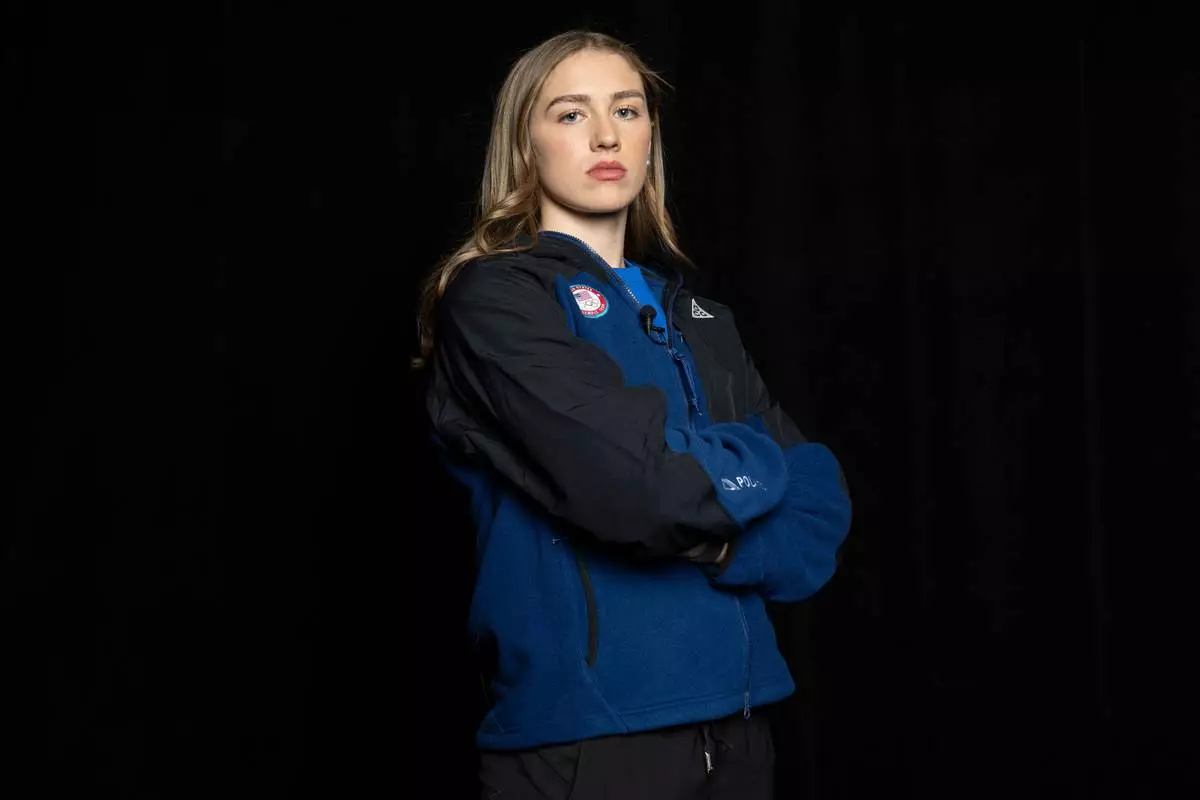
FILE - Olympic-hopeful U.S. hockey player Caroline Harvey poses for a photo at Team USA Media Summit, Oct. 28, 2025, in New York. (AP Photo/Yuki Iwamura, File)
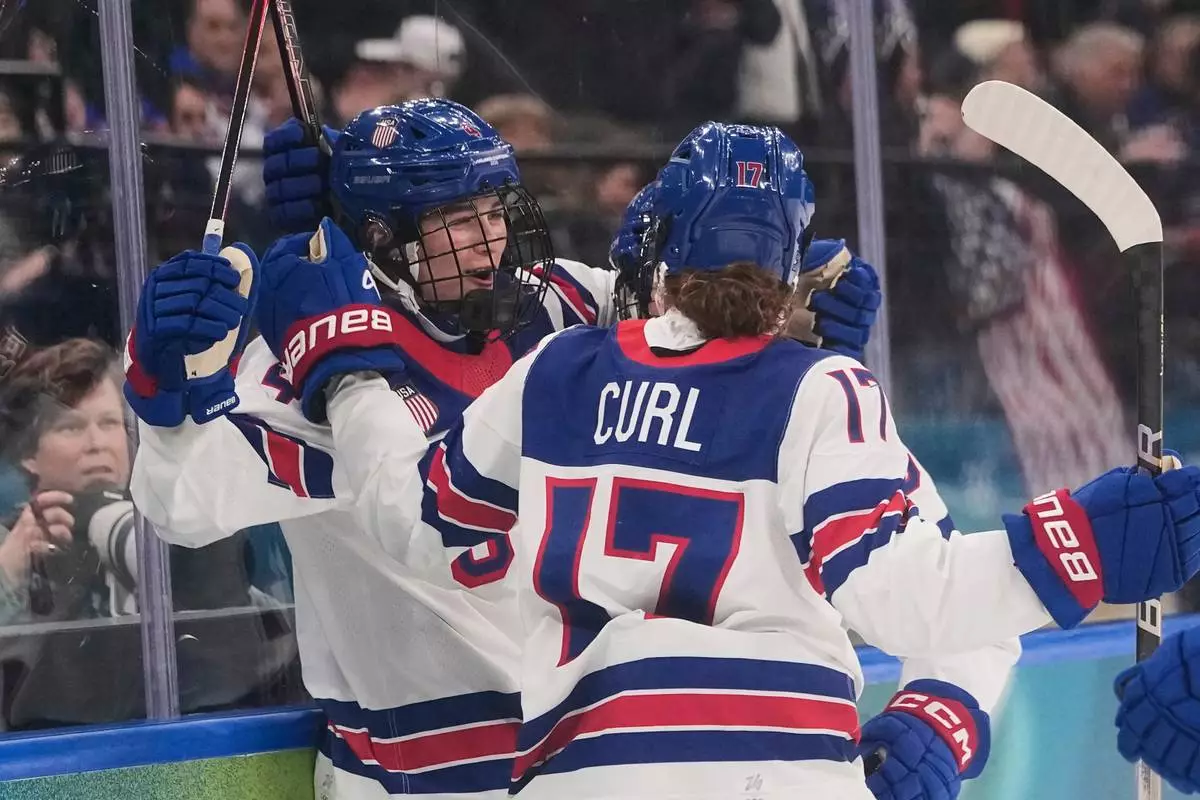
FILE - United States' Caroline Harvey celebrates with teammates after scoring her side's first goal during a preliminary round match of women's ice hockey between USA and Canada at the 2026 Winter Olympics, in Milan, Feb. 10, 2026. (AP Photo/Petr David Josek, File)