WESTMINSTER, Colo. & DÜSSELDORF, Germany--(BUSINESS WIRE)--Jun 18, 2026--
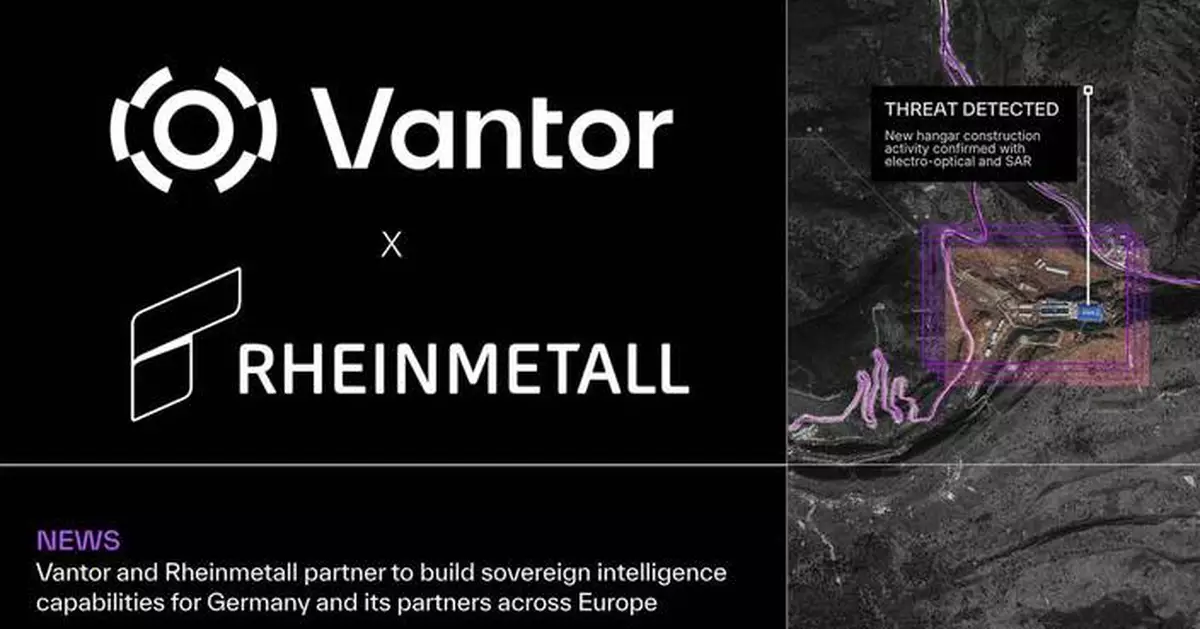
Vantor, the leader in unified spatial intelligence, and Rheinmetall, a leading international systems house in the defence industry, have signed a Memorandum of Understanding (MOU) to advance sovereign spatial intelligence capabilities for Germany and other European nations.
This press release features multimedia. View the full release here: https://www.businesswire.com/news/home/20260618420945/en/
Planned as a joint venture in Germany, the intention is to deliver a unified spatial intelligence capability that can serve as the core multi-domain intelligence platform for armed forces across Europe. Spatial intelligence combines imagery from satellites and drones with mapping data to create a precise 3D situational picture that serves as an accurate, trusted foundation for battlefield operations.
The partnership will support Germany’s sovereign defence requirements as well as existing and emerging European intelligence, surveillance, and reconnaissance (ISR) programs. The joint capability will deliver actionable intelligence to commanders and warfighters at mission speed. This will support tactical warfighting workflows, including targeting, mission planning, battle damage assessment, persistent monitoring, and operational command and control.
Recent conflicts have underscored the strategic importance of connecting intelligence across all domains. As European nations invest in more satellites, drones and tactical platforms, operational advantage increasingly depends on the ability to turn growing volumes of sensor data into trusted, timely intelligence. Sovereign control of that architecture, including where data is processed, how it is secured and how quickly it reaches the battlefield, is becoming essential to national and allied defense.
Through the partnership, Vantor and Rheinmetall will integrate Vantor’s spatial intelligence platform into Rheinmetall command-and-control systems, combining Vantor’s imaging satellite constellation, trusted 2D and 3D spatial foundation and operational software with Rheinmetall’s command-and-control architecture, defense expertise and European industrial base.
The joint capability is designed to give European nations a sovereign architecture to task, fuse, analyze and deploy intelligence from space, air and ground. The combined platform will process and fuse data from numerous sources to create a trusted common operating system. This includes satellite-based information from a variety of sensors, such as Synthetic Aperture Radar (SAR), electro-optical and infrared, including both sovereign and commercial imagery, as well as airborne sensors.
“To maintain decision advantage at the pace of today’s conflict, Europe’s armed forces need control of the architecture that turns that data into trusted ground truth,” said Dan Smoot, Chief Executive Officer of Vantor. “Together with Rheinmetall, we will bring Vantor’s full Tensorglobe platform into a European-controlled solution that can task, fuse, produce, analyze and deploy spatial intelligence in sovereign environments. This is how European nations can maintain operational control while delivering intelligence directly to the warfighter when it matters most.”
The capability will also enable European customers to directly task Vantor’s industry-leading imaging satellite constellation and securely downlink imagery in near real time, as fast as 15 minutes after collection. Foundational to the combined offering is Tensorglobe™, Vantor’s spatial intelligence platform. Tensorglobe integrates hardware, data and software to orchestrate the full spatial intelligence cycle, from tasking and fusion to AI-powered analysis and delivery.
“The future of reconnaissance will not be determined by sensors alone, but by the ability to quickly and reliably process information from a wide variety of sources and make it usable,” says Armin Papperger, CEO of Rheinmetall AG. “Together with Vantor, we are laying the groundwork for a sovereign European capability in the field of geospatial intelligence.”
Combining Rheinmetall's defense systems expertise and European industrial footprint with Vantor's end-to-end spatial intelligence platform delivers the ultimate in unified sovereign intelligence capability. Spanning sensor tasking, intelligence production and operational deployment, this enables commanders to move from collection to decision advantage faster and with greater confidence.
About Vantor
Vantor is forging the new frontier of spatial intelligence, empowering nations and global businesses with decision advantage from space to ground. We provide the ground truth, spatial intelligence infrastructure, and AI-powered capabilities needed to build a unified picture of what’s happening on Earth and in space. Fueled by the Vantor imaging satellite constellation, Vantor’s Tensorglobe platform orchestrates the full spatial intelligence cycle—from tasking and fusion to analysis and delivery—anchoring real-time data from space, air and ground to Vantor’s uniquely accurate, AI-ready spatial foundation. With this combination of hardware, data, and operational software, Vantor supports the missions that matter most, from real-time mapmaking and GEOINT analysis to tactical operations, persistent monitoring and autonomy. Learn more at www.vantor.com.
About Rheinmetall
Rheinmetall AG is an integrated technology group headquartered in Düsseldorf. Founded in 1889, the company is a leading international systems provider in the defence industry, operating across the land, air, sea and space domains. Sustainability is an integral part of Rheinmetall’s strategy. With around 34,000 employees at some 160 locations worldwide, Rheinmetall has been listed on the DAX 40 since March 2023 and achieved a turnover of €9.9 billion in the 2025 financial year.
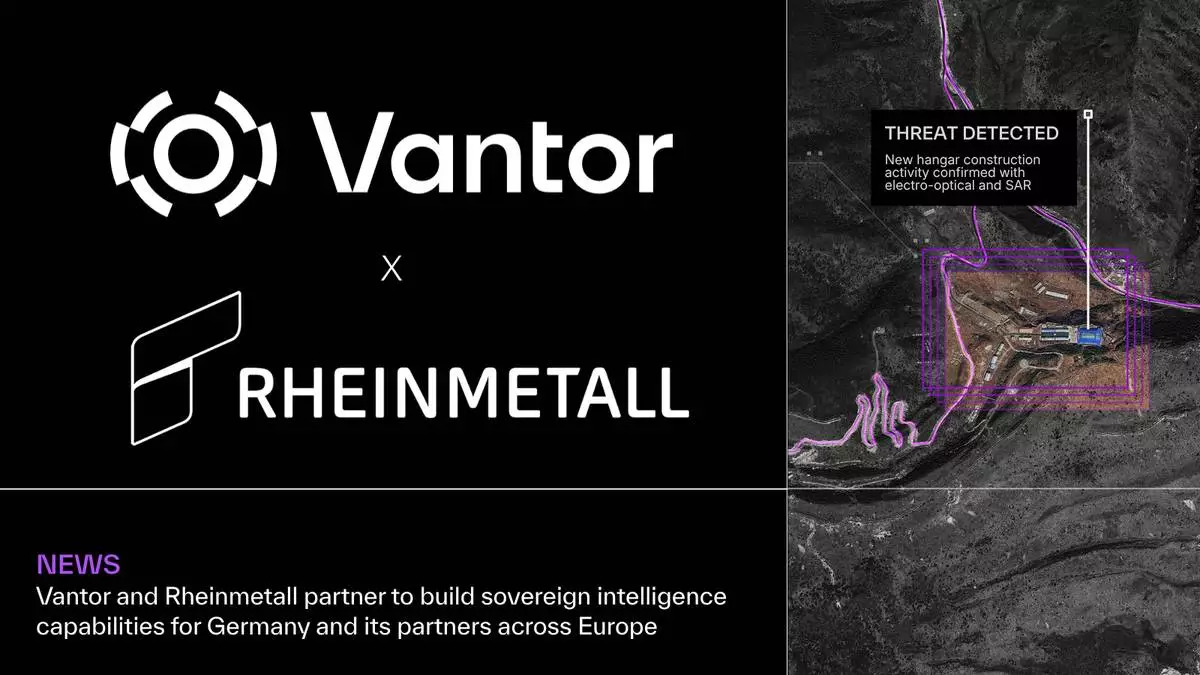
Vantor and Rheinmetall partner to build sovereign intelligence capabilities for Germany and its partners across Europe.