MEXICO CITY (AP) — Colombia arrived at the World Cup with dreams of redemption after missing out on Qatar in 2022. Although it was tense at times, the Cafeteros got off to a strong start.
Luis Díaz had a goal and an assist in his debut on soccer's biggest stage, sparking Colombia to a 3-1 win over Uzbekistan on Wednesday night.
Click to Gallery
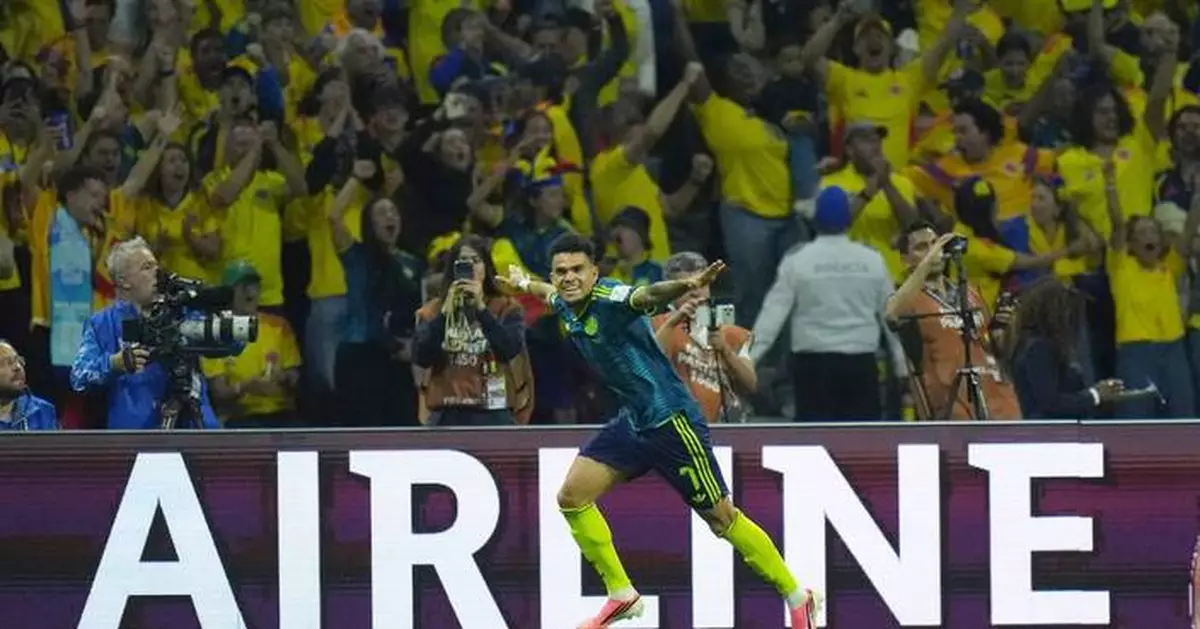
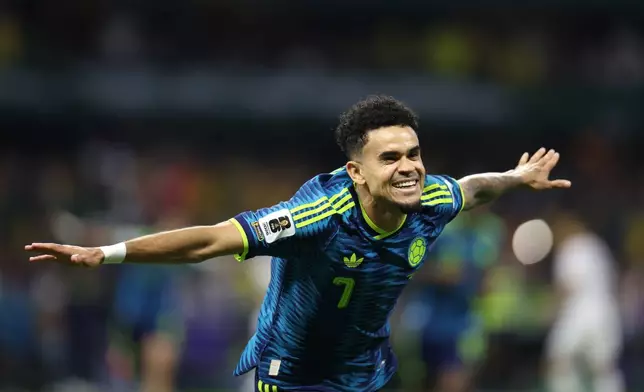
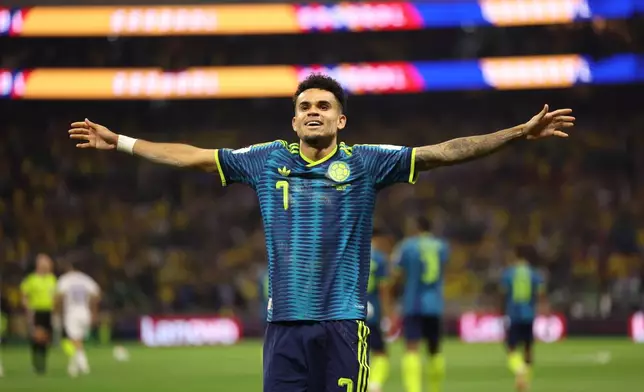
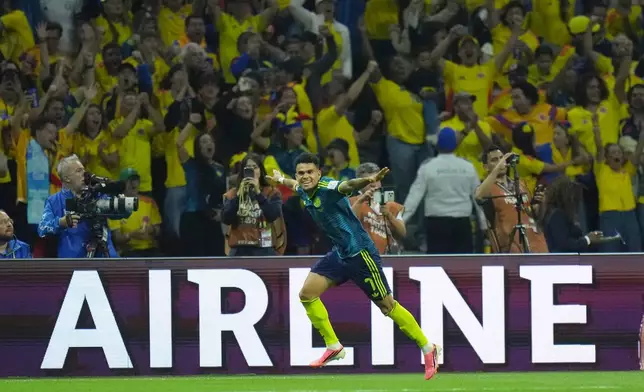
Colombia's Luis Diaz (7) celebrates after scoring his team's second goal during the World Cup Group K soccer match between Uzbekistan and Colombia in Mexico City, Wednesday, June 17, 2026. (AP Photo/Ashtin Barker)
Colombia's Luis Diaz (7) celebrates after scoring their second goal during the World Cup Group K soccer match between Uzbekistan and Colombia in Mexico City, Wednesday, June 17, 2026. (AP Photo/Ashtin Barker)
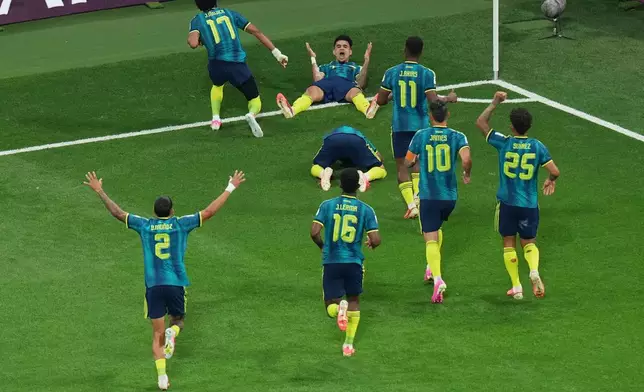
Colombia's Luis Diaz (7), top, celebrates with his teammates after scoring his side's second goal during the World Cup Group K soccer match between Uzbekistan and Colombia in Mexico City, Wednesday, June 17, 2026. (AP Photo/Silvia Izquierdo)
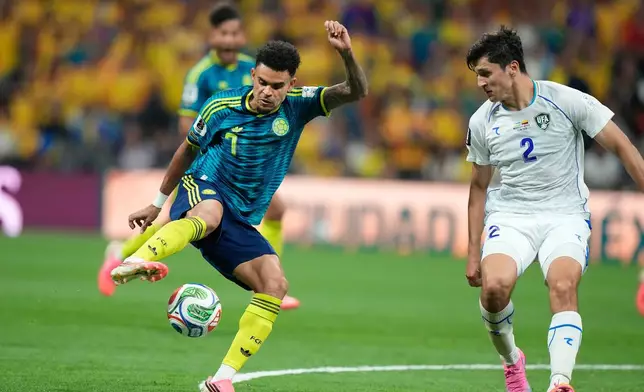
Colombia's Luis Diaz (7) controls the ball against Uzbekistan's Abdukodir Khusanov (2) during the World Cup Group K soccer match between Uzbekistan and Colombia in Mexico City, Wednesday, June 17, 2026. (AP Photo/Fernando Llano)
Colombia's Luis Diaz (7) celebrates after scoring his team's second goal during the World Cup Group K soccer match between Uzbekistan and Colombia in Mexico City, Wednesday, June 17, 2026. (AP Photo/Eduardo Verdugo)
“That’s what we came here to do. It’s very important to win this first game. We controlled the first half, but they played better in the second,” said Díaz, who plays for Bayern Munich. “We must improve.”
Daniel Muñoz, also playing in his first World Cup, opened the scoring in the 40th minute after a pass from Díaz, who scored the tiebreaking goal in the 65th when his strike from close range deflected off the hands of diving goalkeeper Utkir Yusupov and trickled across the line.
“We knew that it was going to be a tough match,” Colombia coach Nestor Lorenzo said.
Fayzullaev Abbosbek scored in the 60th minute for Uzbekistan, which made its World Cup debut in front of a heavily pro-Colombia crowd of 80,824 at Estadio Azteca.
“It is a wonderful joy, but emotionally, I think it weighed on some of the players who suffered physically,” Lorenzo said. “It has to do with the emotional burden generated by the opening match and the setting in which we played — especially since we were expected to take the initiative and were under pressure to win.”
With the White Wolves' defeat, three of the four debuting teams at this year's World Cup lost their first match. Cape Verde played Spain to a draw, while Curaçao and Jordan lost.
“For a small team like ours, to lose 3-1 is too much,” said Uzbekistan coach Fabio Cannavaro, an Italian who took over the team in October 2025. “We have good quality for an Asian team, but we need to grow. It was a good experience.”
Jaminton Campaz added a goal in second-half stoppage time for the Colombians, who are ranked 13th in the world and were heavy favorites over 50th-ranked Uzbekistan. Colombia's best World Cup finish was a run to the quarterfinals in Brazil in 2014.
“We needed to hit the ground running. Now we can enjoy the rest of the night,” midfielder Gustavo Puerta said.
Colombia moved atop Group K, ahead of Portugal and Congo, who played to a surprising 1-1 draw earlier Wednesday.
The Colombians will face Congo next Thursday at Guadalajara, Mexico, while Uzbekistan will take on Cristiano Ronaldo and Portugal at Houston.
“We are going to play against a tough team that played great against one of the best teams in the world. It is going to be hard,” Lorenzo said.
Colombia finished third in South American qualifying behind Argentina and Ecuador. Uzbekistan was second in its Asian qualifying group behind Iran.
AP World Cup: https://apnews.com/hub/fifa-world-cup
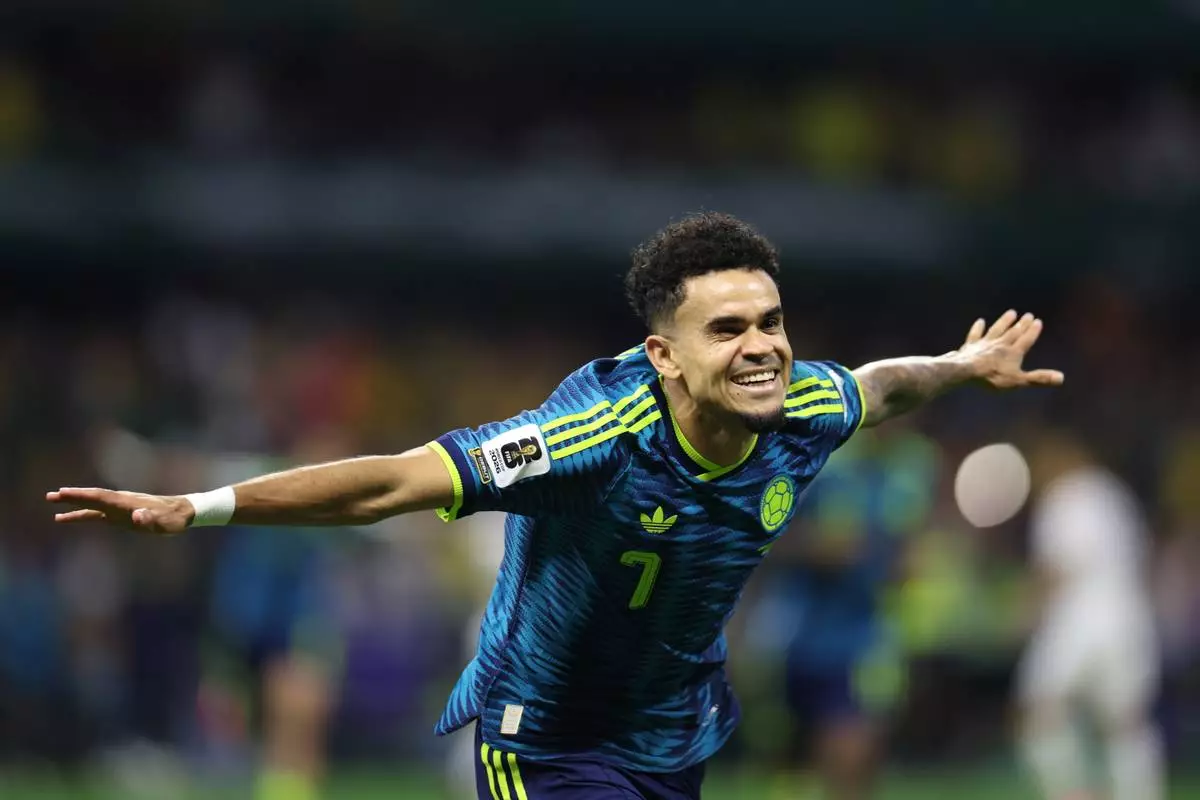
Colombia's Luis Diaz (7) celebrates after scoring his team's second goal during the World Cup Group K soccer match between Uzbekistan and Colombia in Mexico City, Wednesday, June 17, 2026. (AP Photo/Ashtin Barker)
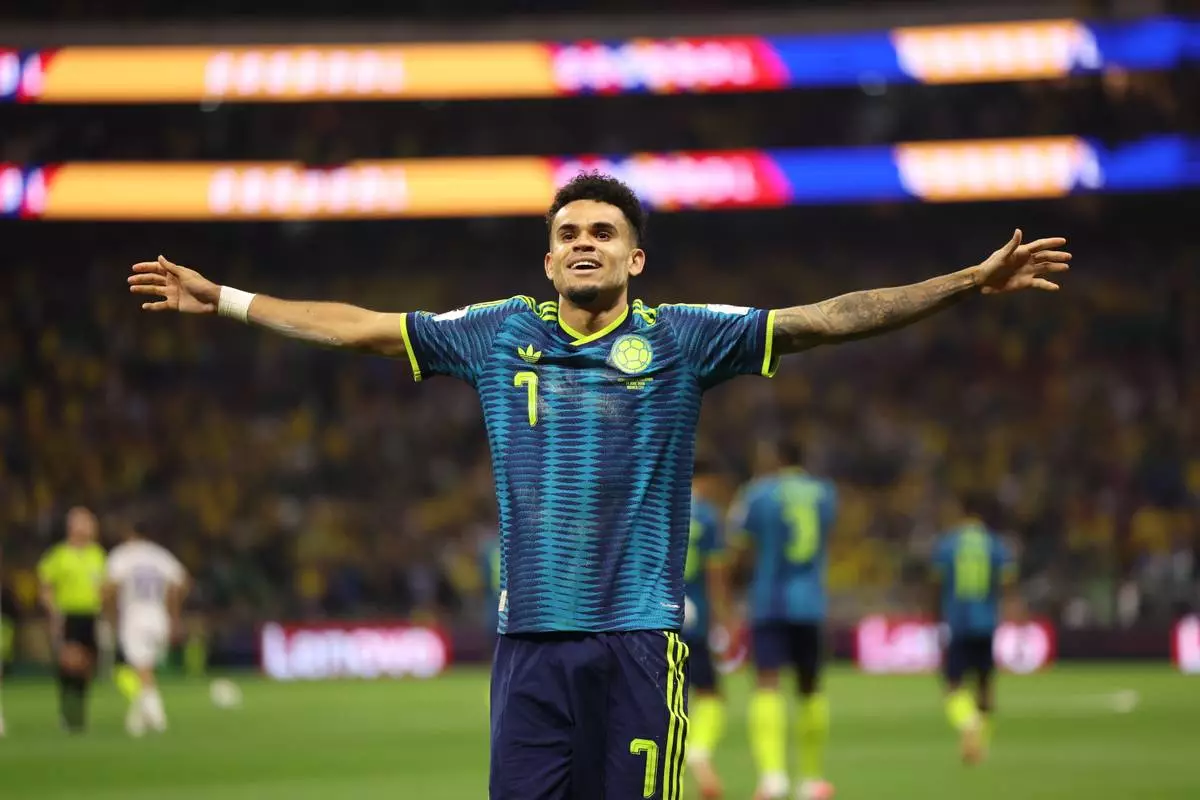
Colombia's Luis Diaz (7) celebrates after scoring their second goal during the World Cup Group K soccer match between Uzbekistan and Colombia in Mexico City, Wednesday, June 17, 2026. (AP Photo/Ashtin Barker)
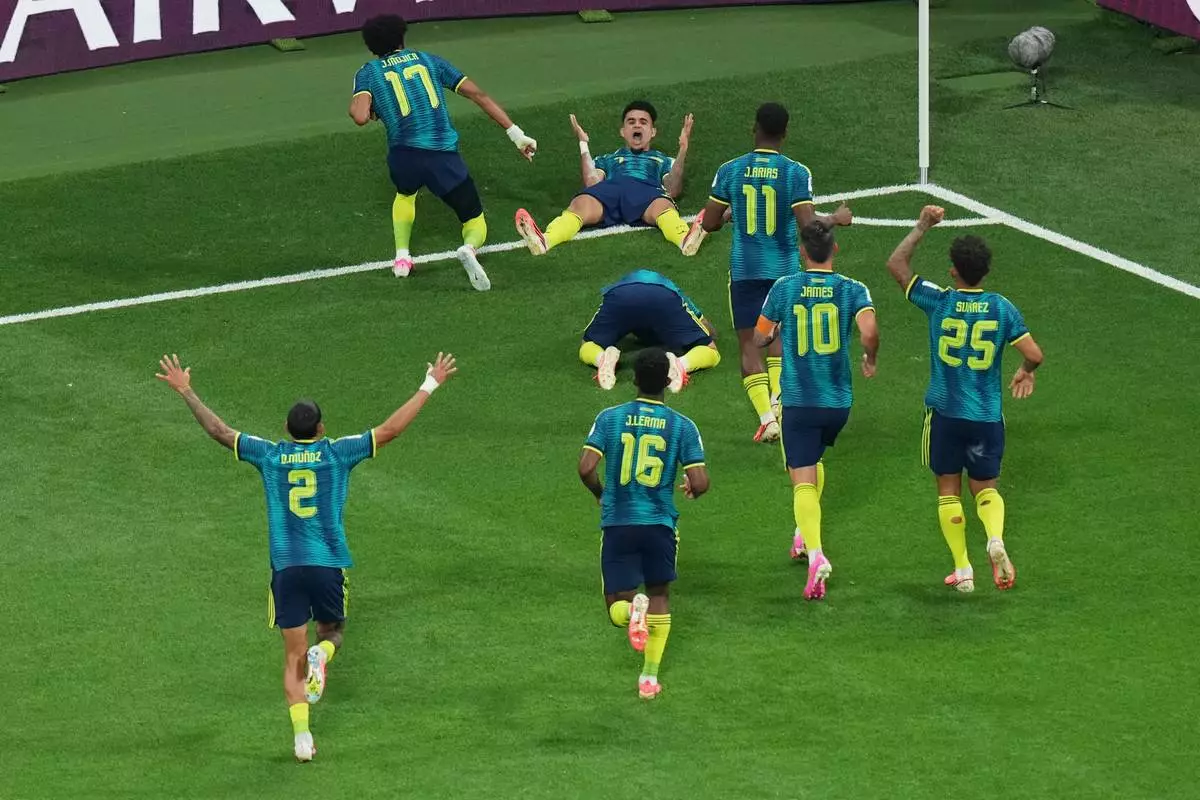
Colombia's Luis Diaz (7), top, celebrates with his teammates after scoring his side's second goal during the World Cup Group K soccer match between Uzbekistan and Colombia in Mexico City, Wednesday, June 17, 2026. (AP Photo/Silvia Izquierdo)
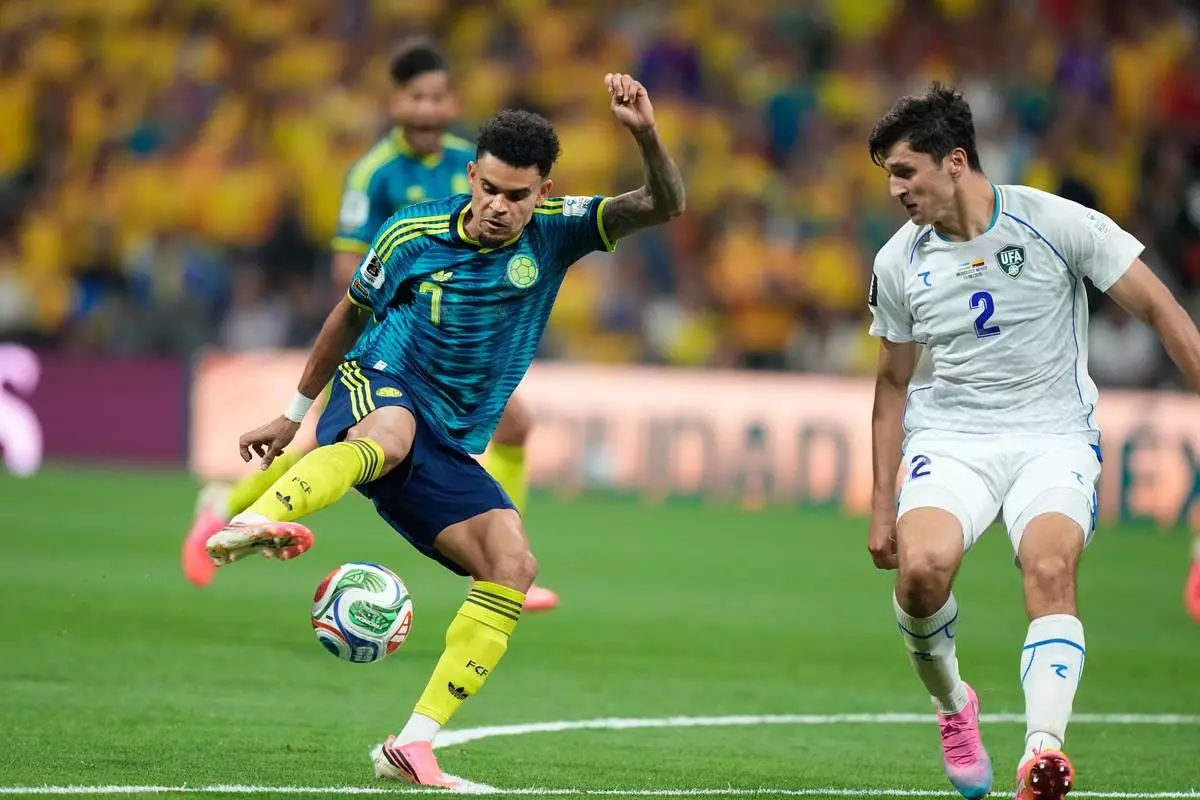
Colombia's Luis Diaz (7) controls the ball against Uzbekistan's Abdukodir Khusanov (2) during the World Cup Group K soccer match between Uzbekistan and Colombia in Mexico City, Wednesday, June 17, 2026. (AP Photo/Fernando Llano)
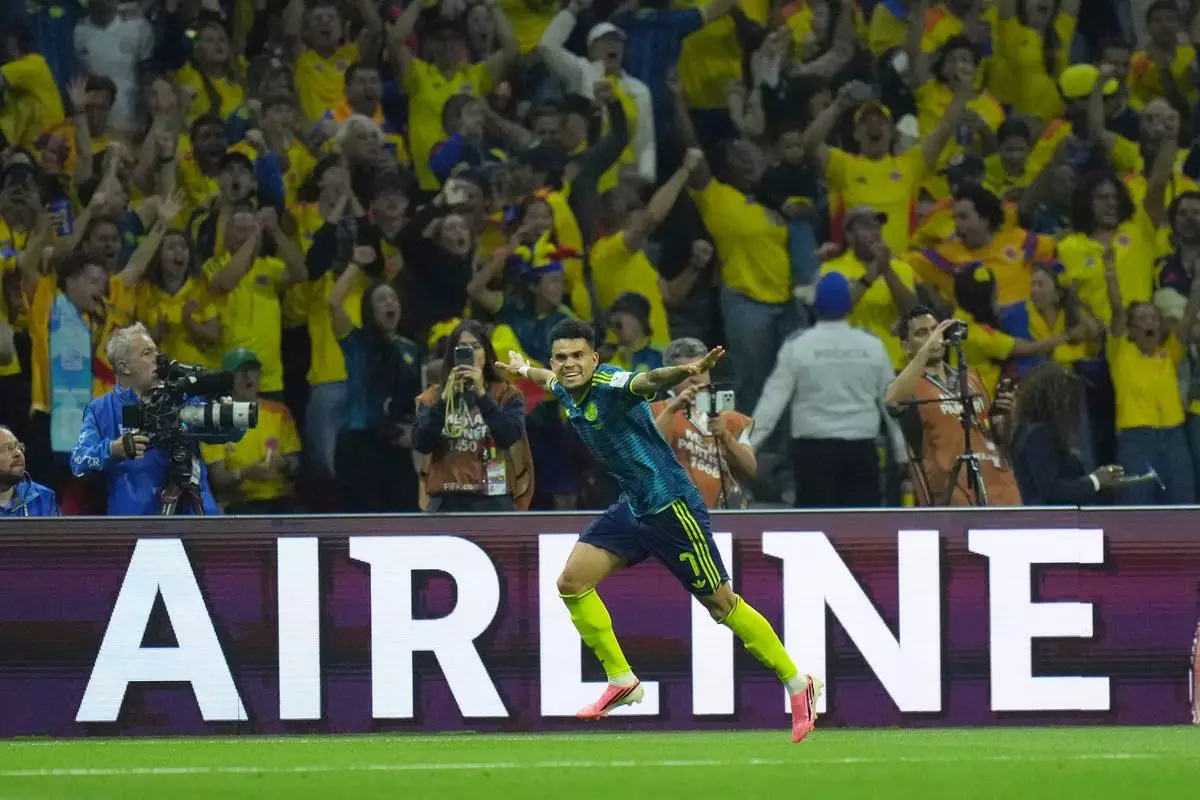
Colombia's Luis Diaz (7) celebrates after scoring his team's second goal during the World Cup Group K soccer match between Uzbekistan and Colombia in Mexico City, Wednesday, June 17, 2026. (AP Photo/Eduardo Verdugo)
BRUSSELS (AP) — European Union leaders are holding a summit in Brussels on Thursday without Hungarian politician Viktor Orbán for the first time in 16 years.
Prime ministers, chancellors and presidents have come and gone, but Orbán has been a stable fixture in Brussels' halls of power, piloting Europe's drift to the right. He has pioneered a brand of nationalist populism that has found growing success on the continent and is idolized by the Make America Great Again movement in the U.S.
Orbán, who is now Hungary’s leading opposition figure, had repeatedly clashed with the EU as he vilified its institutions and leaders and broke regulations as he hollowed out institutional checks and balances in Hungary.
Long a foil to EU ambitions in Ukraine and beyond, the former Hungarian prime minister, who lost a pivotal election in April, is now sitting on the sidelines for the first time in a generation — and watching as his successor Péter Magyar joins leaders including Spain's Pedro Sanchez, France's Emmanuel Macron and Germany's Friedrich Merz as they advance policies likely at odds with Orbán's vision.
As the EU summit opened to discuss ramping up support for Ukraine, among other things, Orbán was surrounded by his far-right allies from his new position outside the halls of power he once roamed.
Orbán was in the Belgian capital to take part in a Thursday summit of his Patriots for Europe party group, a collection of far-right parties from across the bloc that forms the third-largest caucus in the European Parliament.
Orbán’s bruising election loss was welcomed with relief by many EU leaders and viewed by many observers as a rebuke of his combative approach to the EU and close ties to Russia. Even so, he has remained steadfast in his belief that far-right parties in Europe are on the verge of a breakthrough.
Orbán told a news conference in Brussels on Wednesday that his election defeat had not interrupted “the rise of patriotic political organizations, communities and parties across Europe.”
“No one election loss can stop this historical process,” he said. “Anti-migration and sovereigntist political forces in Europe will continue to grow stronger in the coming months and years.”
Orbán hopes the Patriots for Europe will be a vehicle for transforming the EU to his vision, for example, by decreasing the bloc’s purview in matters of rule of law and democracy, taking a zero-tolerance approach to immigration and steering toward deeper cooperation with Russia and China.
He had been the primary impediment to the EU's efforts to draw Ukraine into the bloc. But Hungary’s new government, led by Magyar and his center-right Tisza party, has pledged more constructive cooperation with the EU.
Last week Hungary lifted its veto on beginning Ukraine’s accession process after weeks of negotiations with Kyiv on restoring minority rights for ethnic Hungarians in western Ukraine.
“Hungary obviously had issues that they were able to resolve to allow this to happen this week,” said Thomas Byrne, Minister for European Affairs for Ireland, which will take the rotating EU presidency in July for six months. During that time, accession talks are slated to accelerate for Ukraine and Moldova, among others.
Europe’s far right has indeed scored some recent successes. France’s National Rally, led by Marine Le Pen, gained ground in municipal elections earlier this year, while Alternative for Germany (AfD) is performing increasingly well in polls. The populist leader of the Czech Republic, Orbán ally Andrej Babis, returned as prime minister last year and is now the only Patriots member who leads an EU-member nation.
They were able to deeply reform the EU's migration policy, too, because of an alliance with the center-right European People's Party. Human rights groups fiercely criticized the measures for increasing the bloc's surveillance authorities, ramping up deportations of migrants, and the setting up of detention centers outside the EU dubbed “return hubs.”
When the right-wing coalition won the vote to pass the migration reform on Wednesday, far-right and center-right lawmakers broke out in cheers inside the European Parliament chamber in Strasbourg, France.
“Send them back,” they chanted.
Geert Wilders, the firebrand Dutch ally of Orbán, said the victory reflects the ongoing power of the far right.
“We are still very powerful indeed,” he said to reporters before the Patriots meeting. “The influence is only growing.”
Orbán’s loss has not curbed the right-wing populists’ momentum, said Gabriela Greilinger, a researcher at the University of Georgia in the U.S.
“Far-right parties remain strong in several European countries and will continue to be electorally successful, whether or not Orbán is in power,” she said.
Still, fractures have emerged within Europe’s far right stemming from discomfort over the United States and Israel’s war in Iran as well as U.S. President Donald Trump’s threats to annex Greenland, a territory held by EU member Denmark.
Spike reported from Budapest, Hungary. Associated Press writer Sylvain Plazy contributed to this report from Brussels.
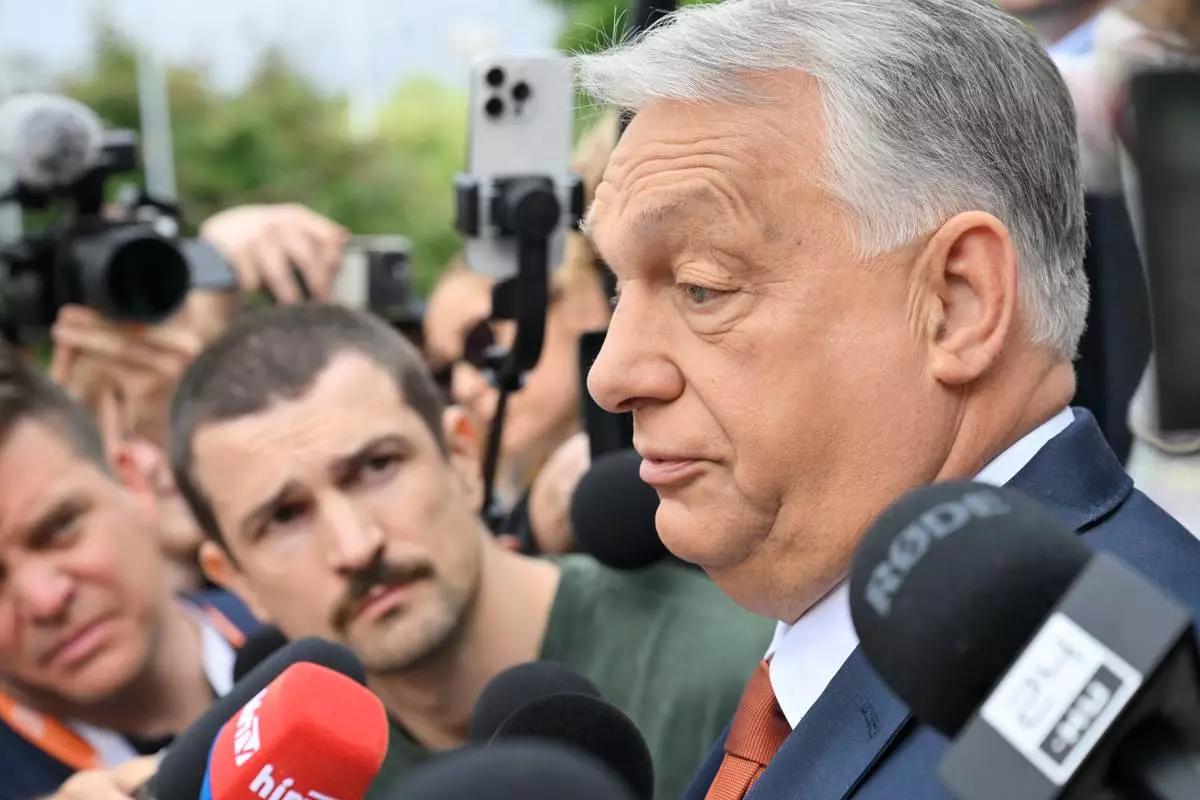
Fidesz party head and former prime minister Viktor Orban, center, speaks to the press as he arrives at the opposition Fidesz party's working congress meeting, in Budapest, Hungary, Saturday, June 13, 2026. (Zoltan Mathe/MTI via AP)