Skip to Content Facebook Feature Image

Utah Leaders Convene to Address Adolescent Literacy as National Reading Scores Reach Historic Lows

Business

Utah Leaders Convene to Address Adolescent Literacy as National Reading Scores Reach Historic Lows
Business

Business

Utah Leaders Convene to Address Adolescent Literacy as National Reading Scores Reach Historic Lows

2026-06-18 22:00 Last Updated At:22:10

SALT LAKE CITY--(BUSINESS WIRE)--Jun 18, 2026--

Data released this week by the National Assessment of Educational Progress (NAEP) shows that reading achievement among 13-year-olds has fallen back to levels last seen in the early 1970s. The results underscore the depth and persistence of literacy challenges facing today's middle school students. And while much of the national conversation has focused on early grades, new research makes clear the crisis doesn't stop when students leave elementary school. On Wednesday, June 17, Reading Horizons, a Kaysville-based literacy company, and Ken Garff for Good facilitated a candid, research-led conversation on what striving readers in grades 6-12 need.

This press release features multimedia. View the full release here: https://www.businesswire.com/news/home/20260618436852/en/

“Utah's kids are our greatest investment,” said First Lady Abby Cox. “That doesn't change when they leave elementary school. Today’s convening is proof that we have people at every level working to do right by our children. Our community is committed to every reader, at every age.”

The event offered attendees an in-depth look at the Literacy in Transition Report, original national research drawing on survey responses from 2,648 educators across 49 states. Key findings show that:

The report is equally clear on what's standing in the way. Secondary educators say they lack age-appropriate materials and training to teach foundational skills to older students. The good news: among educators already using evidence-based literacy, the impact is real and it compounds the longer schools stick with it.

"When we look at the data, a pattern emerges that teachers already recognize from their classrooms: older students who struggle to read are missing critical foundational skills,” said Dr. Shantell Blake, EdD, VP of Education and Outreach at Reading Horizons. “The survey data confirms this. So does the research on root causes. What changes when you understand that is how you respond: instruction has to meet students where they actually are, not where we assume they should be.”

While Utah's 2026 legislative session produced significant K-3 investment, including new individualized reading plans and a statewide goal of 80% third-grade proficiency by 2030, the Literacy in Transition Report makes the case that structured literacy investment must extend further.

About Reading Horizons® Reading Horizons® is a 40-year-old, mission-driven literacy education company dedicated to empowering educators to eradicate illiteracy. Serving more than 200,000 educators and two million students across 50 states and 35 countries, Reading Horizons provides evidence-based, structured literacy instruction through its comprehensive platform, Ascend, which unites core, supplemental, and intervention instruction for students in Pre-K through grade 12 and beyond. For more information, visit readinghorizons.com.

About Ken Garff for Good Ken Garff for Good has provided pathways to education for Utah students for more than 20 years. Through its Literacy Initiative (formerly Road to Success), the organization has worked to inspire elementary school students to read daily with incentivized reading programs in schools across the state. Since its founding, Ken Garff for Good has connected Utah students with more than $100 million in scholarships. Today, the organization’s four signature programs – focused on literacy, higher education, young women’s mentorship and leadership, and technology - are active in all 41 Utah school districts, impacting students in over 365 high schools, 100 middle schools and junior highs, and 16,000 elementary school classrooms. To learn more, visit KenGarffForGood.org or follow along on LinkedIn.
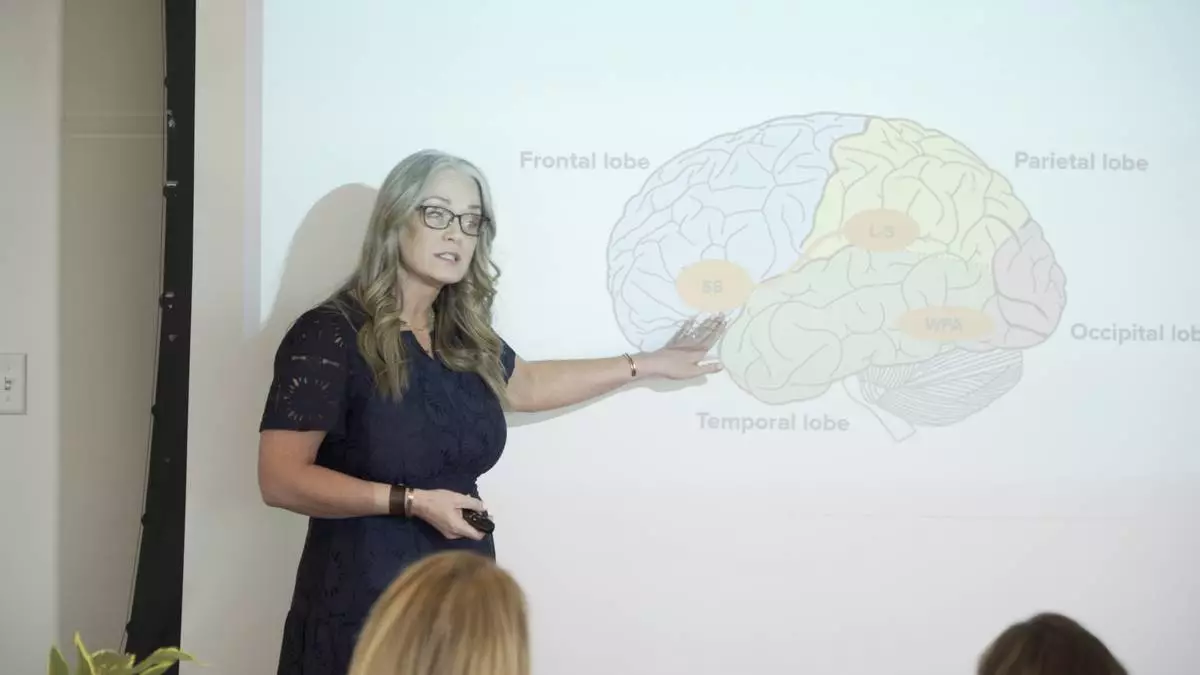
Dr. Shantell Blake Discusses How the Reading Brain Works and Why We Need to Approach Secondary Reading Intervention Differently.
Dr. Shantell Blake Discusses How the Reading Brain Works and Why We Need to Approach Secondary Reading Intervention Differently.

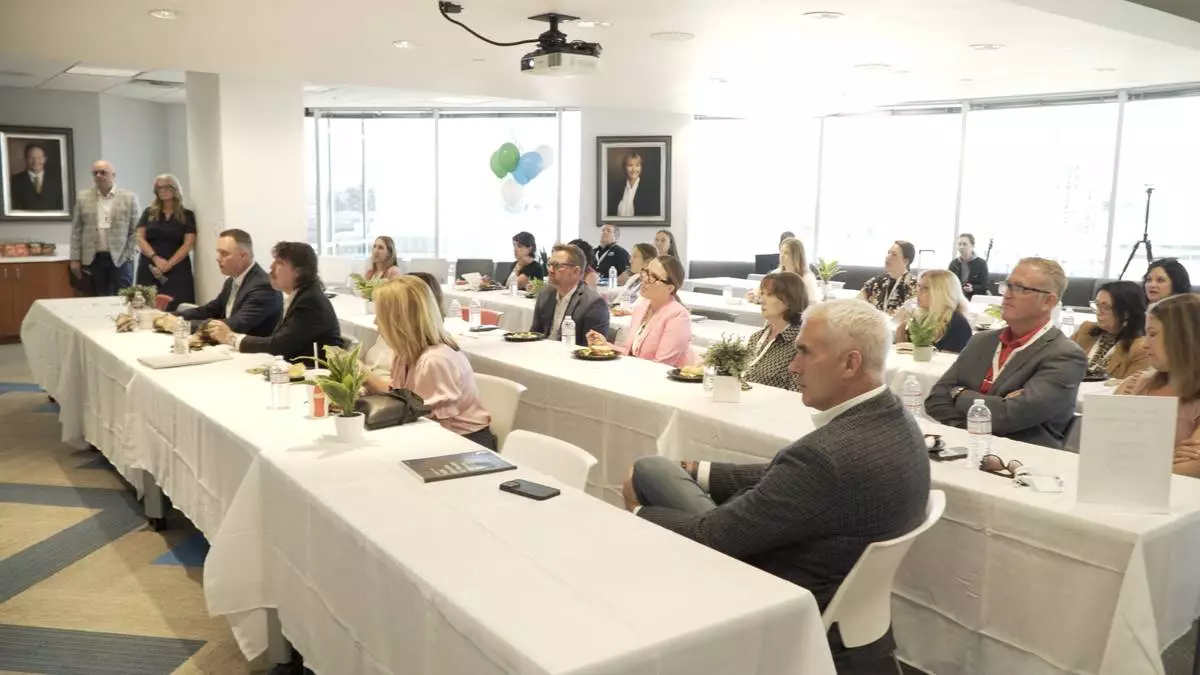
Policymakers, Literacy Advocates, District Leaders convene for a Strategic Discussion on What Secondary Students Really Need for Literacy Intervention.

Policymakers, Literacy Advocates, District Leaders convene for a Strategic Discussion on What Secondary Students Really Need for Literacy Intervention.

Abby Cox, Utah's First Lady, Kathi Garff, and CEO of Reading Horizons Tyson Smith discuss the importance of Secondary Reading Intervention at Local Event.

Abby Cox, Utah's First Lady, Kathi Garff, and CEO of Reading Horizons Tyson Smith discuss the importance of Secondary Reading Intervention at Local Event.
WASHINGTON (AP) — Washington, D.C., mayoral candidate Kenyan McDuffie on Thursday conceded the Democratic primary race to Janeese Lewis George.

Although the official certification of the primary race is continuing, McDuffie said in a statement that “it is clear that the voters have chosen a different path.” The former member of the D.C. council said he had contacted Lewis George and congratulated her. He thanked his supporters and urged them to continue working for the city.

"The campaign may be over, but the work of building a safer, more affordable, more prosperous city continues.”

The Associated Press has not declared a winner in the race. Lewis George had a little less than 53% of the vote Thursday morning, which is just a few percentage points above the 50% threshold to avoid ranked choice voting.

The city is scheduled to release preliminary ranked choice voting results on Sunday. AP will call the race before then if it is clear that the ranked choice process will be avoided.

Lewis George has pledged to aggressively stand up to federal intervention into Washington, D.C.’s, affairs, setting up a potential showdown with President Donald Trump over his administration's moves to challenge the city’s limited autonomy.

If the results stand, Lewis George is likely to win November’s general election in the heavily Democratic city. The winner in the general election will replace Muriel Bowser, who decided not to run again after three terms.

Lewis George would join Robert White Jr., who won the Democratic primary for the district’s delegate to Congress, as the top local officials who likely will contend with the federal government’s intentions for the city. They each campaigned on a promise to take a harder line than their predecessors against the Trump administration’s moves on the district, including its deployment of the National Guard on an ongoing, open-ended mission meant to fight crime.

“As mayor, I will work with anyone who makes D.C. safer,” Lewis George told a crowd of cheering supporters Tuesday night, “but I will also stand up to Trump.”

Washington has limited autonomy and federal leaders retain significant control over local affairs, including approval of the budget and laws passed by the D.C. Council.

Trump further encroached on that autonomy last year when he briefly federalized the city’s police force and deployed an ongoing law enforcement surge that included the National Guard. His efforts to downsize the federal government also roiled the capital region, costing thousands of people their jobs. And he has been reshaping the city by renovating storied landmarks and putting his name or image on buildings.

Lewis George, a self-described democratic socialist and a member of the D.C. Council, has already come under fire from Trump, who last week threatened to place the city under federal control if she won.

“Maybe we’d take back Washington, run it on the federal basis,” he said.

Lewis George, 38, and a third generation Washingtonian, has vowed to overrule an executive order by the city’s police chief permitting local law enforcement to cooperate with Immigration and Customs Enforcement agents. Lewis George argued the order “hurt the trust of our community.”

She also pledged to use any levers available to her through the city’s home rule compact to resist what she called authoritarian infringements on the district’s local governance.

“We have legal tools we can use to fight back,” she told the AP in an interview before the vote. “And we know that when we have gone to court, we’ve won.”

Bowser found herself walking a fine line between staying in Trump’s good graces and responding to the concerns of constituents, many of whom said she didn’t push back hard enough on Trump’s actions. Eleanor Holmes Norton, the 18-term, 89-year-old delegate to Congress, meanwhile, faced mounting concern from critics who said she wasn’t forcefully pushing back on the Trump administration’s moves against the city.

D.C. Council member Janeese Lewis George speaks to the crowd after winning D.C. Mayor primary election during an election night party at the Howard Theatre Tuesday, June 16, 2026, in Washington. (AP Photo/Jose Luis Magana)

D.C. Council member Janeese Lewis George speaks to the crowd after winning D.C. Mayor primary election during an election night party at the Howard Theatre Tuesday, June 16, 2026, in Washington. (AP Photo/Jose Luis Magana)

Recommended Articles