LOS ANGELES (AP) — For the first time in World Cup history, FIFA is mandating all soccer players take hydration breaks to protect them from the threats of extreme heat. But the new rule has sparked criticism from two very different groups.
Some experts have warned that this summer's World Cup — co-hosted by the U.S., Mexico and Canada — could be the hottest in the tournament's history. In response to concerns about extreme heat, FIFA implemented three-minute hydration breaks midway through each half regardless of temperatures. But some critics say they're interrupting the game's flow and give coaches a chance to shift momentum in their team’s favor, while some scientists have said the breaks are too short to make a significant impact on cooling and rehydration when conditions are sizzling.
Click to Gallery
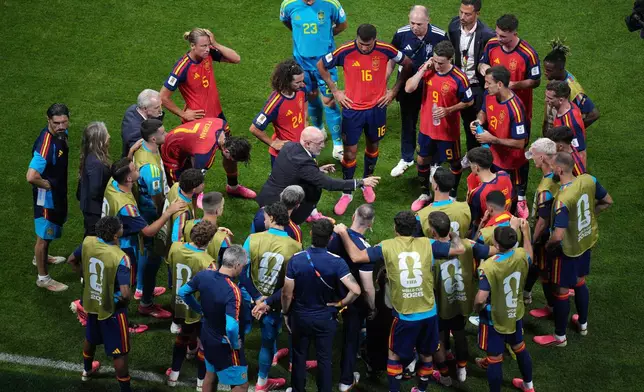
Spain head coach Luis de la Fuente talks with players during a hydration break in the World Cup Group H soccer match between Spain and Cape Verde in Atlanta, Monday, June 15, 2026. (AP Photo/Jacob Kupferman)
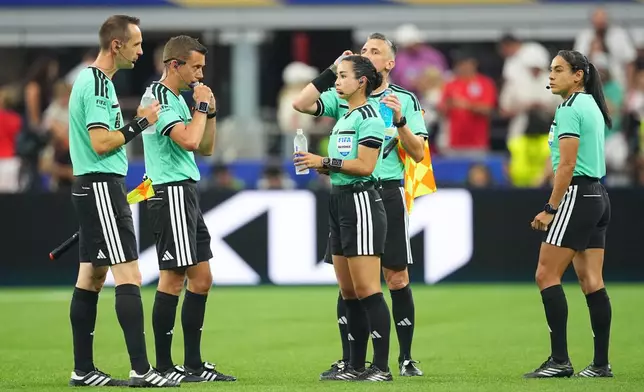
Referees takes a hydration break during the World Cup Group L soccer match between England and Croatia in Arlington, Texas, near Dallas, Wednesday, June 17, 2026. (AP Photo/Julio Cortez)
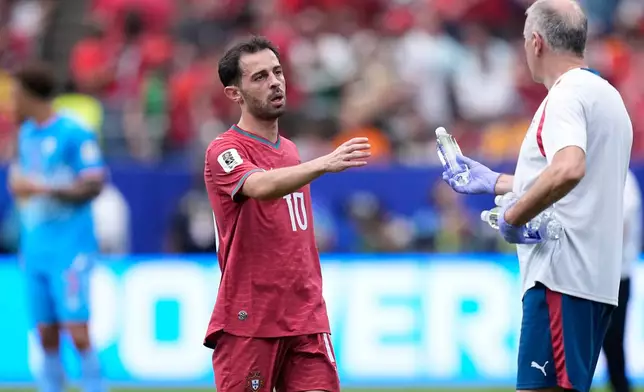
Portugal's Bernardo Silva takes a bottle of water during a hydration break during the World Cup Group K soccer match between Portugal and Congo in Houston, Wednesday, June 17, 2026. (AP Photo/Ashley Landis)
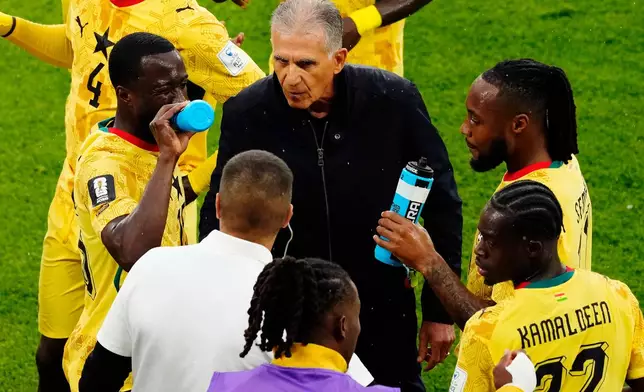
Ghana manager Carlos Queiroz speaks with his players during a hydration break during the World Cup Group L soccer match between Ghana and Panama in Toronto, Wednesday, June 17, 2026. (Chris Young/The Canadian Press via AP)
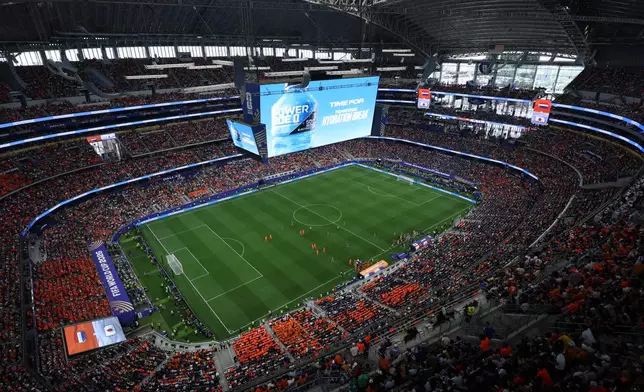
Signage for a hydration break is displayed during the World Cup Group F soccer match between the Netherlands and Japan in Arlington, Texas, near Dallas, Sunday, June 14, 2026. (AP Photo/Sam Hodde)
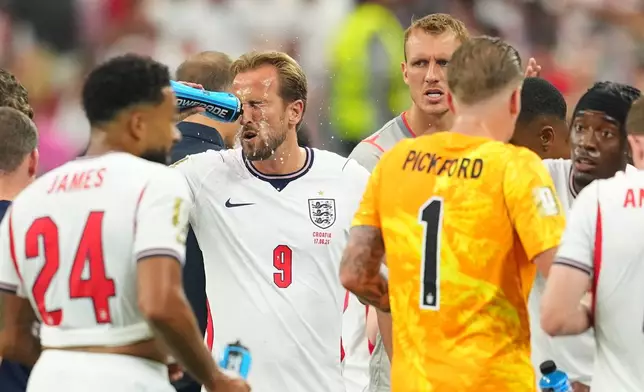
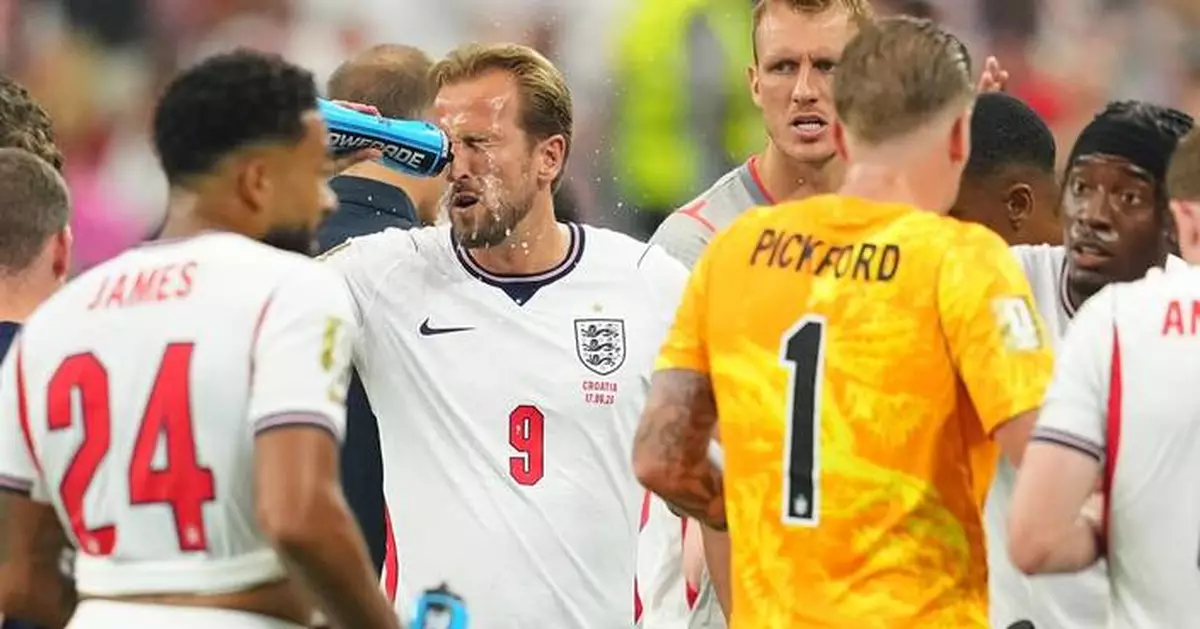
England's Harry Kane (9) cools off during a hydration break of the World Cup Group L soccer match between England and Croatia in Arlington, Texas, near Dallas, Wednesday, June 17, 2026. (AP Photo/Julio Cortez)
“When we look at the three minute hydration breaks, we're really looking at this as a way to mitigate anything that could potentially lead to an incident or an emergency,” said Joshua L. DeVincenzo, assistant director of applied research services at Columbia University’s National Center for Disaster Preparedness.
Here's a look at the heat risks players face and what the hydration breaks can do:
This World Cup is the first to implement mandatory three-minute cooling breaks midway through each half, regardless of temperatures or whether stadiums are enclosed and/or air conditioned.
The governing body said it was to “ensure equal conditions for all teams, in all matches,” and the rules draw upon the experiences of past tournaments, including the FIFA Club World Cup in the U.S. last summer where temperatures soared into the 90s F (mid-30s C) and above in many areas.
Some coaches said the breaks make sense when temperatures are extreme, but they questioned whether they were necessary at every match.
Athletes pushing themselves physically in hot and humid conditions risk getting what's called exertional heat illness. It happens when the body’s temperature gets too hot and is accompanied by significant strain on the heart, nerves, muscles and central nervous systems.
Common symptoms include muscle cramps, extreme fatigue, impaired performance, headache, irritability, nausea, dizziness, cramping and dehydration.
When internal body temperature exceeds 105 F (40.5 C), athletes might feel confused, aggressive or lose consciousness, said Yuri Hosokawa, associate professor at the Faculty of Sport Sciences in Japan’s Waseda University, in an email, “all of which are characteristic signs of exertional heat stroke and require immediate medical attention.” She co-signed a letter to FIFA in May urging stricter heat guidelines for player safety, including that cooling breaks be at least six minutes.
Exertional heat stroke while playing a sport is among the leading causes of death in athletes.
Dehydration also exacerbates the risk. Athletes in the heat can sweat 1 to 2 liters (50 to 67 ounces) an hour, and most drink less liquids than they expel. Losing as little as 2% of one's body weight to dehydration can impair physical performance.
Ryan Calsbeek, professor of biological sciences at Dartmouth College, said the human body performs better when it’s warmer, but there’s a critical threshold above which that improvement in performance not only stops, but precipitously drops off.
“Your body starts to really fall apart, you lose the ability to cool off fast enough,” he said. “And the physiological mechanisms just break down.” That happens when the wet bulb globe temperature, which includes temperature, humidity, cloud cover and wind, reads above about 95 F (35 C), though some people will be more heat tolerant than others.
The increased confusion from extreme heat could impact an athlete’s ability to make strategic decisions, he said.
“It’s these marginal differences in performance that I think can determine the outcome of a match,” Calsbeek said. “If you have individuals that do better in extreme conditions, whether it’s extreme heat or high altitude or whatever the case may be, those small differences could play a critical, pivotal role in determining the outcome.”
The three-minute mandatory hydration breaks are meant to protect players, and referees, from extreme heat illness and help them maintain their physical performance.
In that time, players can cool off and replenish lost water and salt from sweating, but how effective it is depends on how aggressive the cooling methods are.
That could mean putting wet, cold towels on the exposed parts of a player's body, such as the neck, head, back and arms. If done well, that could reduce their body temperature by about 0.22 F (0.12 C) per minute, said Douglas Casa, CEO of the University of Connecticut’s Korey Stringer Institute who also co-signed the letter to FIFA.
“Some people can tolerate a little more fluids comfortably and then do intense exercise. Some people can’t because it sloshes around in their stomach and they don’t feel super comfortable, so they might not drink as much in such a short period of time,” he added.
The time, he said, dictates the volume of impact, whether from fluid or cooling, and “that’s why we’re suggesting doing something like five or six minutes, because it just makes such a big impact when you’re dealing with a change of that magnitude.”
But how much time a player needs to recover also varies. “Depending on your body, you might need more or less time. But those kinds of breaks are crucial so that your body isn’t just being forced to keep trying to play catch up... to keep trying to cool you down without any kind of rest or a break,” said Bharat Venkat, director of the Heat Lab at the University of California, Los Angeles.
As our planet gets hotter, mandating hydration breaks and changing where, when and how sports are played will be necessary.
“No matter what sport you play, there’s going to be adjustments that have to be made in the face of climate change,” he said.
The Associated Press receives support from the Walton Family Foundation for coverage of water and environmental policy. The AP is solely responsible for all content. For all of AP’s environmental coverage, visit https://apnews.com/hub/climate-and-environment
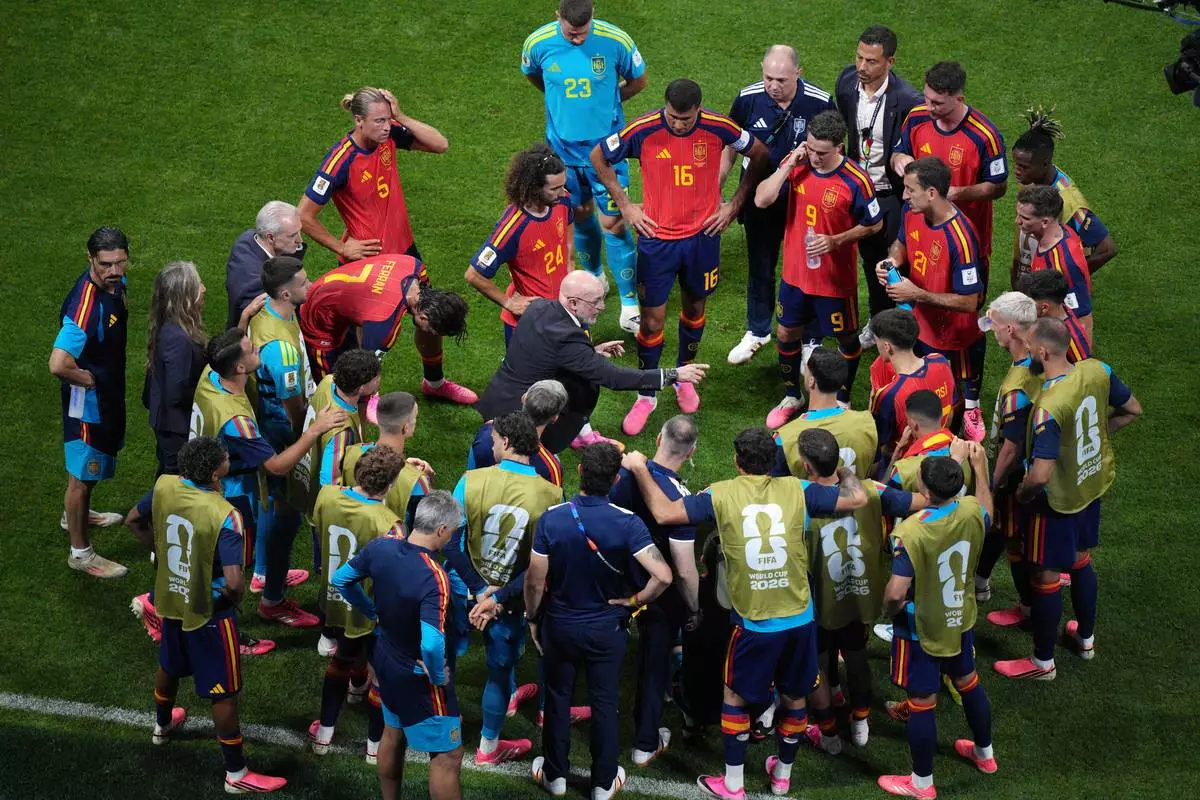
Spain head coach Luis de la Fuente talks with players during a hydration break in the World Cup Group H soccer match between Spain and Cape Verde in Atlanta, Monday, June 15, 2026. (AP Photo/Jacob Kupferman)
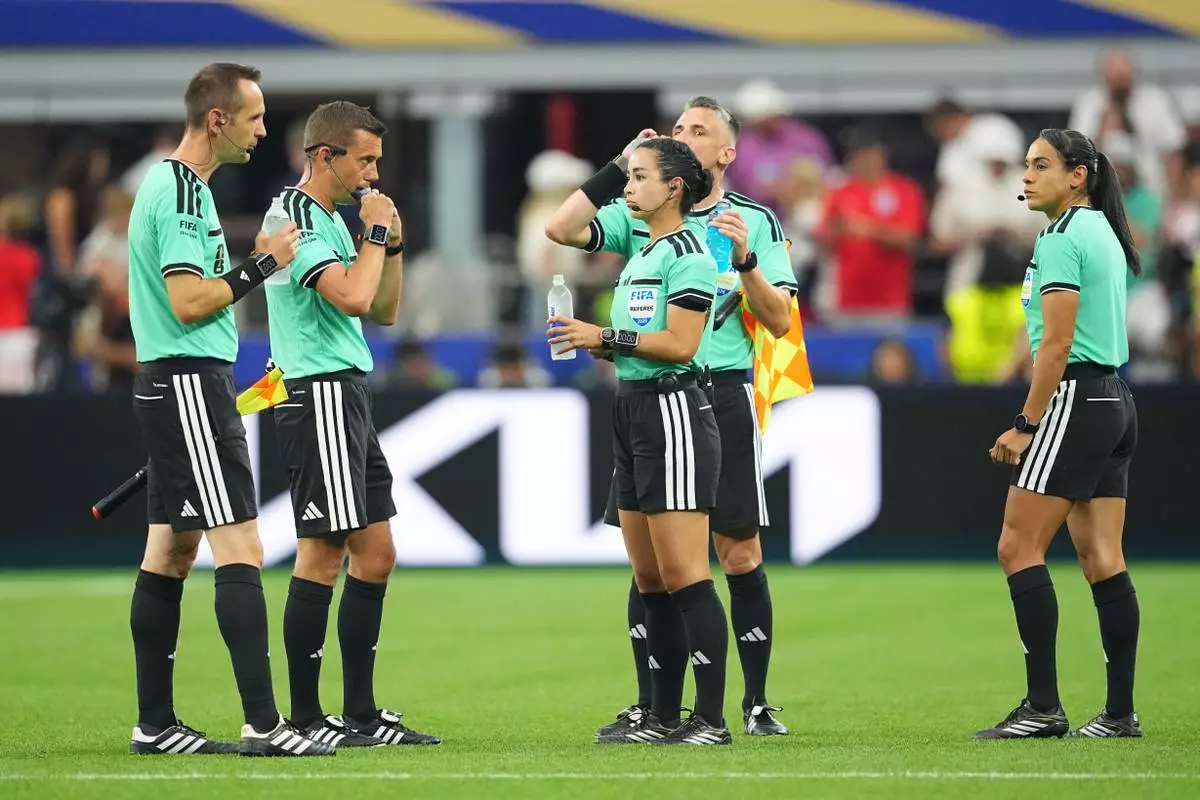
Referees takes a hydration break during the World Cup Group L soccer match between England and Croatia in Arlington, Texas, near Dallas, Wednesday, June 17, 2026. (AP Photo/Julio Cortez)
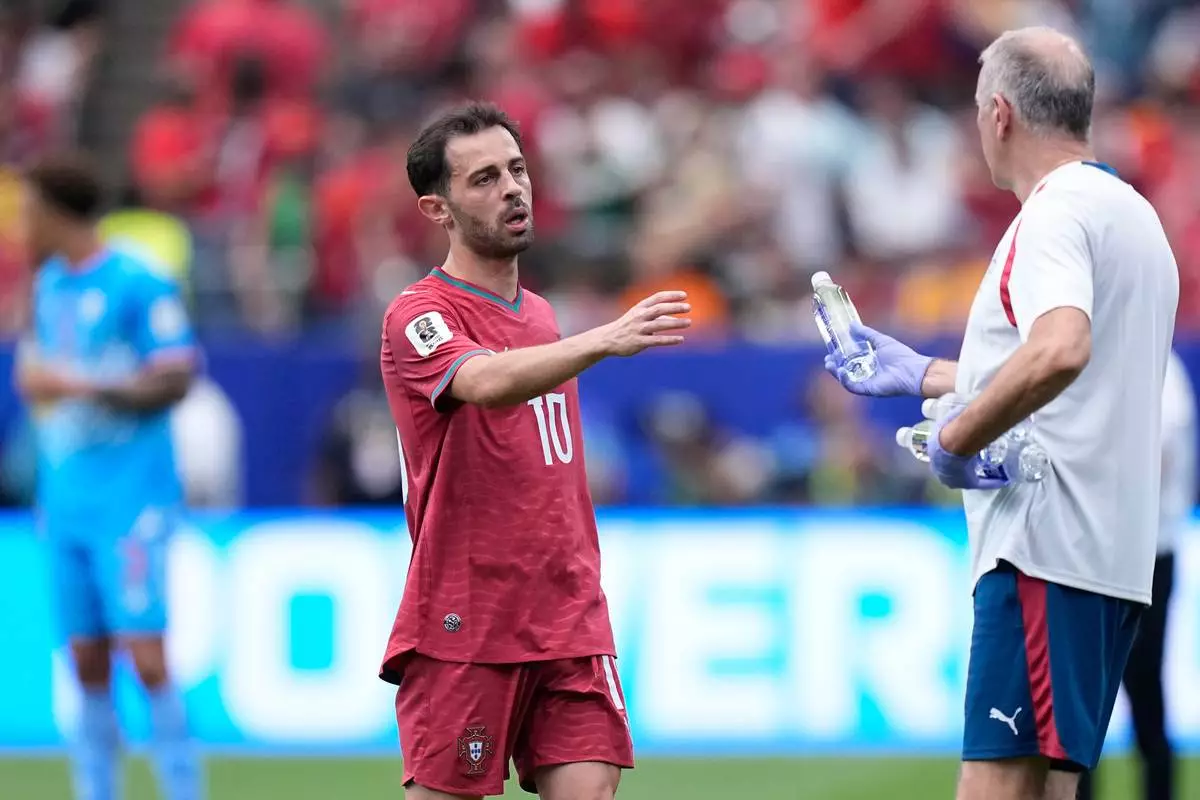
Portugal's Bernardo Silva takes a bottle of water during a hydration break during the World Cup Group K soccer match between Portugal and Congo in Houston, Wednesday, June 17, 2026. (AP Photo/Ashley Landis)
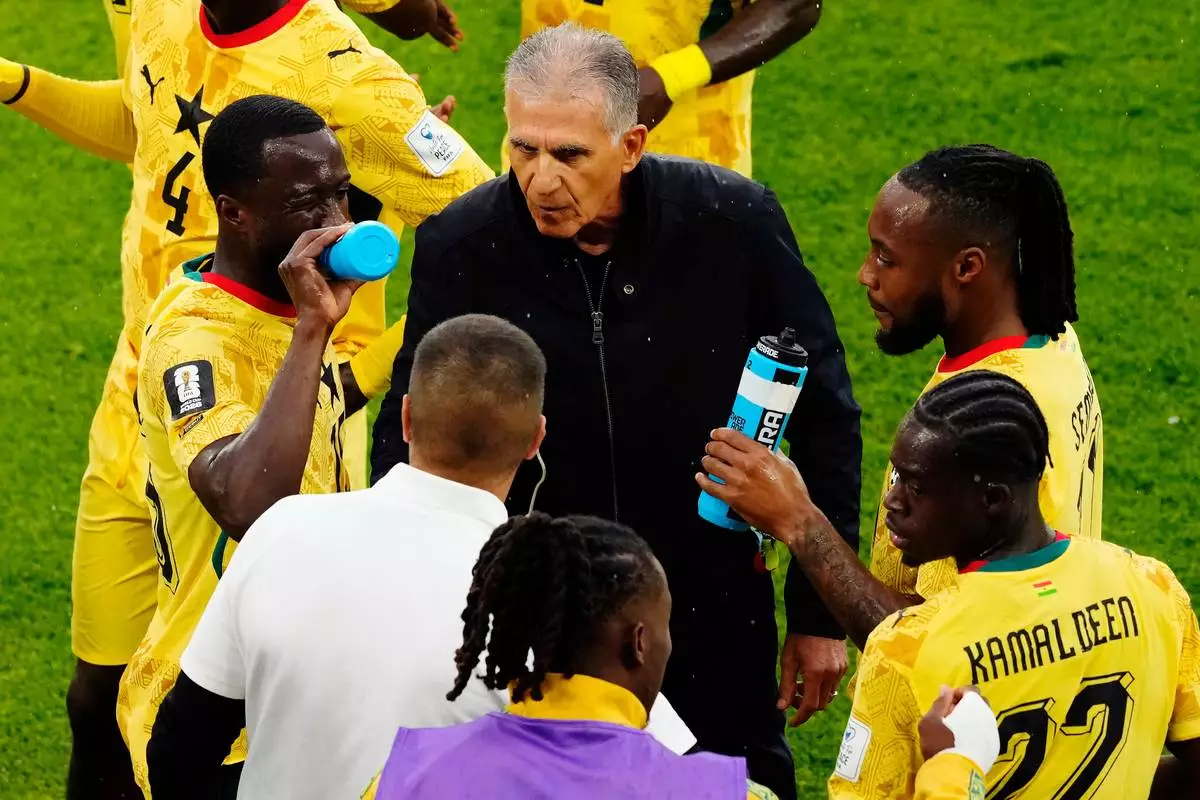
Ghana manager Carlos Queiroz speaks with his players during a hydration break during the World Cup Group L soccer match between Ghana and Panama in Toronto, Wednesday, June 17, 2026. (Chris Young/The Canadian Press via AP)
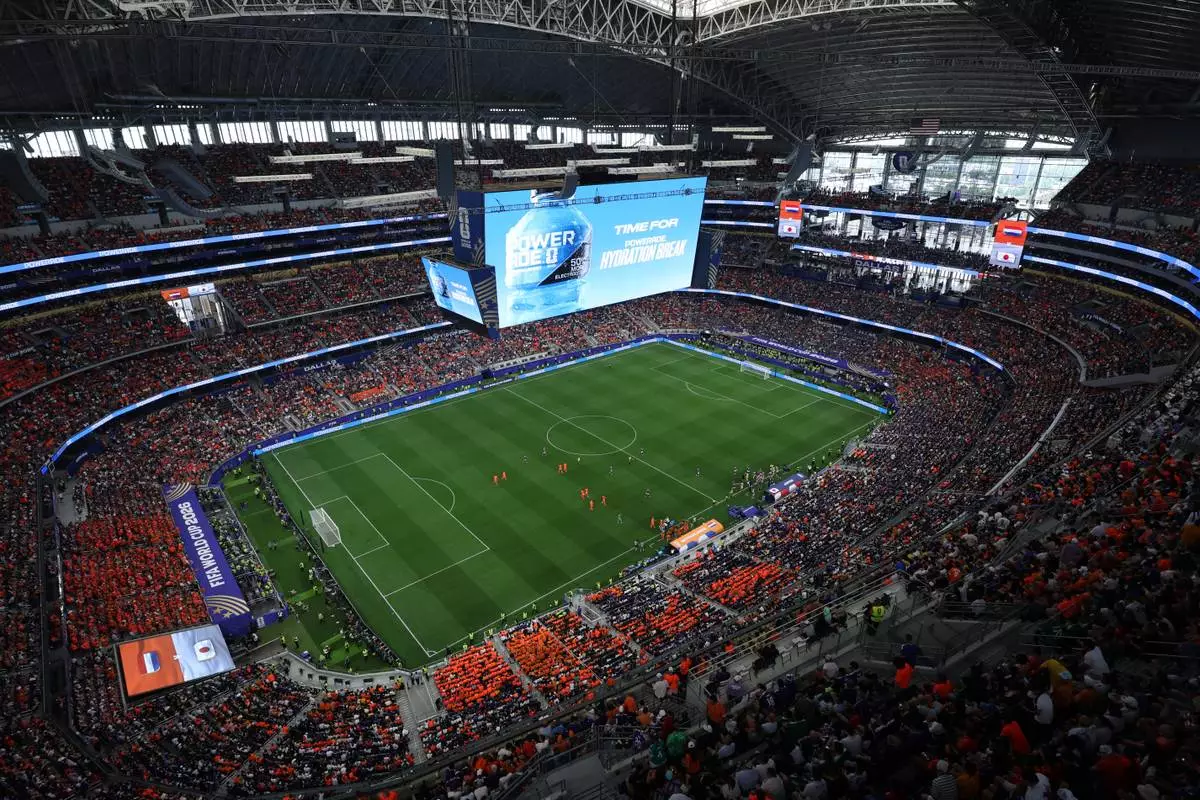
Signage for a hydration break is displayed during the World Cup Group F soccer match between the Netherlands and Japan in Arlington, Texas, near Dallas, Sunday, June 14, 2026. (AP Photo/Sam Hodde)
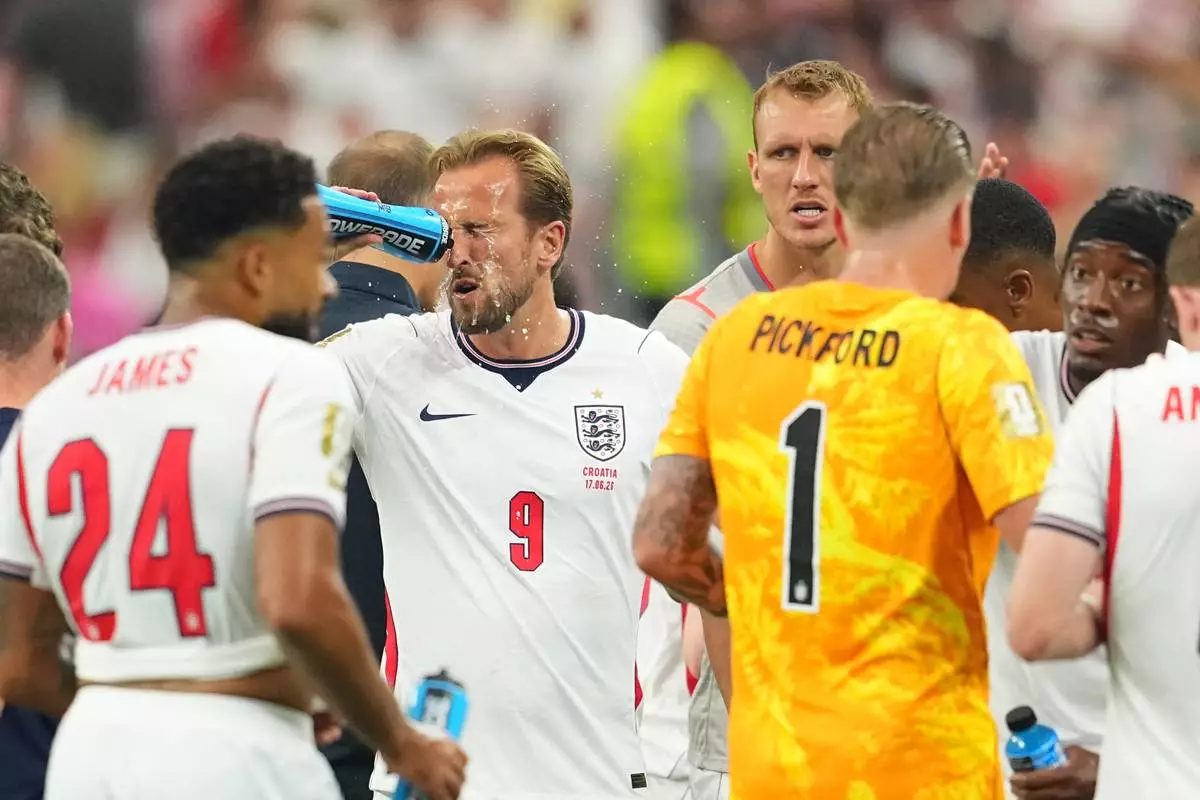
England's Harry Kane (9) cools off during a hydration break of the World Cup Group L soccer match between England and Croatia in Arlington, Texas, near Dallas, Wednesday, June 17, 2026. (AP Photo/Julio Cortez)

CAIRO (AP) — The interim deal reached by the United States and Iran to end their war will reopen the Strait of Hormuz and bring the two adversaries back to the negotiating table over Tehran’s nuclear program, according to details released by both countries. It will also give Iran an immediate benefit, allowing it to sell its oil freely again.
Besides the new oil revenue for Iran, the two sides are more or less back where they were 3½ months ago — before Israel and the U.S. launched their war, which has left thousands dead across the region, triggered a global energy crisis and shaken the American economy.
Iran and the U.S. will enter a 60-day period of negotiations, and hanging over them will be the question of whether U.S. President Donald Trump can wrest a better deal than the 2015 nuclear accord he scuttled eight years ago.
Here’s what to know based on details released by U.S. officials and Iranian state media:
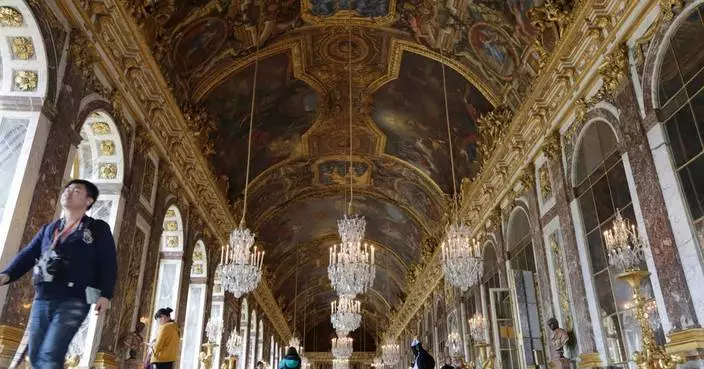
Trump signed a physical copy of the deal Wednesday while dining with French President Emmanuel Macron at the Palace of Versailles.
In Tehran, President Masoud Pezeshkian signed the document, according to the state-run IRNA news agency, which posted an image of him holding up the deal with his signature and Trump’s.
Under the agreement, the Strait of Hormuz will reopen, and the U.S. will lift its blockade of Iranian ports — both of which should push gas prices down. Passage through the waterway will be toll-free for 60 days, and the deal doesn't preclude fees after that, according to U.S. officials who spoke on the condition of anonymity to read details of the draft, which has not yet been officially released by Washington.
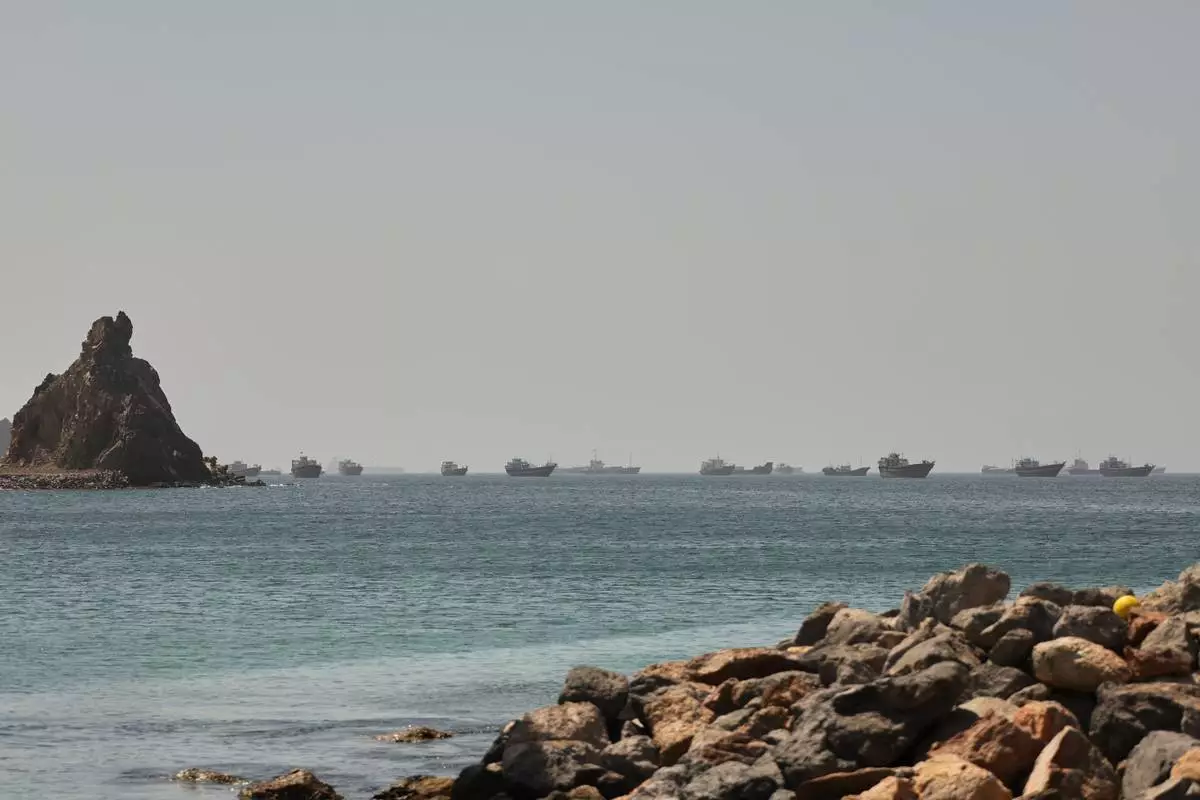
Iran’s closure of the strait, through which around a fifth of the world’s traded oil supplies passed before the war, proved perhaps its strongest weapon. It drove up global fuel prices, made food and other products like fertilizer more expensive, and helped push U.S. inflation to 4% ahead of this fall's midterm congressional elections.
With the deal in place, the Islamic Republic has survived the most serious attempt ever by Israel and the United States to topple its government, despite the thundering opening volleys of the war that killed Iran’s supreme leader and other top officials.
The deal immediately waives, but doesn't eliminate, sanctions that Trump imposed on Iran’s oil exports, allowing it once again sell its crude on the world market and restoring a revenue stream worth billions.
Last year, Iran earned an estimated $45 billion from oil sales. But it had only one major buyer, China, and had to ship its crude through a shadow fleet of tankers to elude sanctions, eating into its profits. Under the blockade since April, its exports have nearly ground to a halt.
With the waiver, Iran will likely be able to find more customers and sell its oil for higher prices.
The draft agreement calls for Iran’s highly enriched uranium to be “downblended” — or diluted — under the supervision of the International Atomic Energy Agency, without elaborating. Negotiations on any other restrictions on Tehran's nuclear program lie ahead.
Trump withdrew from a previous nuclear deal with world powers, criticizing it for giving a huge windfall to Iran. But the interim deal outlines even more lucrative incentives if Iran reaches a new nuclear agreement.
One is the eventual lifting of all international sanctions, which would seem to go further than the 2015 accord. That agreement lifted sanctions related to Iran’s nuclear program but kept others in place over what the U.S. alleged were Tehran's support for terrorism and rights abuses.
The interim pact also promises a $300 billion fund for postwar reconstruction. It's not clear where that money will come from — but Trump said the U.S. would not contribute.
To give a sense of the extraordinary scale of the fund, the World Bank estimates that Syria, after 13 years of civil war, needs $215 billion for reconstruction; the Gaza Strip, largely flattened in two years of war between Israel and Hamas, needs $53 billion.
The deal also promises to unfreeze billions of dollars worth of Iranian assets held abroad under a procedure the two sides will work out, according to the text provided by U.S. officials.
The Trump administration said its war aims were to “obliterate” Iran's missile arsenal, “sever its support” for armed proxies in the region, “annihilate its navy,” and ensure it never acquires a nuclear weapon.
The seven weeks of U.S.-Israeli bombardment are believed to have heavily damaged Iran’s missile arsenal and production facilities as well as other parts of its military. How heavily isn't known, though, and Iran continued to fire on Israel as recently as last week. Meanwhile, Iran’s ties with its militant proxies — Hezbollah in Lebanon, the Houthis in Yemen and Shiite militias in Iraq — appear as strong as ever.
Neither the missile arsenal nor Iran’s support for its allies appears to be on the table in the upcoming negotiations.
The deal calls for an end to the war in Lebanon, where Israel has been fighting Hezbollah.
However, Israel and Hezbollah aren't parties to the agreement. Iran insists Israel must withdraw from the large swath of southern Lebanon it is occupying, but the interim deal doesn't explicitly require that and only ensures Lebanon's “territorial integrity.”
Israel has vowed to keep troops in Lebanon, while Hezbollah says it is committed to resisting Israel “until full withdrawal is achieved.” Fighting between the two could derail the deal unless the U.S. and Iran can rein in their respective allies.
Israel was squeezed out of the negotiations with Iran, and Israelis from across the political spectrum have called the deal a disaster, directing their fury at Prime Minister Benjamin Netanyahu.
Tensions between Trump and Netanyahu, meanwhile, have occasionally spilled into the open, including when the American president described the Israeli leader as “crazy.”
At the G7 summit in France this week, Trump said that Netanyahu “has to be more responsible with respect to Lebanon.”
Netanyahu is left in a precarious situation ahead of national elections later this year. His relationship with Trump may require downscaling a military campaign in Lebanon that is broadly popular in Israel.
The 2015 agreement negotiated by the Obama administration severely limited Iran’s nuclear program for 15 years. During that period, Iran could only enrich uranium to a low level, far below what's needed for a weapon. It could only stockpile 300 kilograms (660 pounds) of the material and had to sharply reduce its centrifuges carrying out enrichment. It was also put under stricter inspections by the IAEA.
One main criticism was the 15-year time limit, after which opponents said Iran would be able to quickly ramp up its ability to produce a bomb. Iran insists its nuclear program is for peaceful purposes.
A key question now will be whether the U.S. can win stricter limits for a longer term.
Associated Press reporters Michelle L. Price and Matthew Lee in Washington contributed.
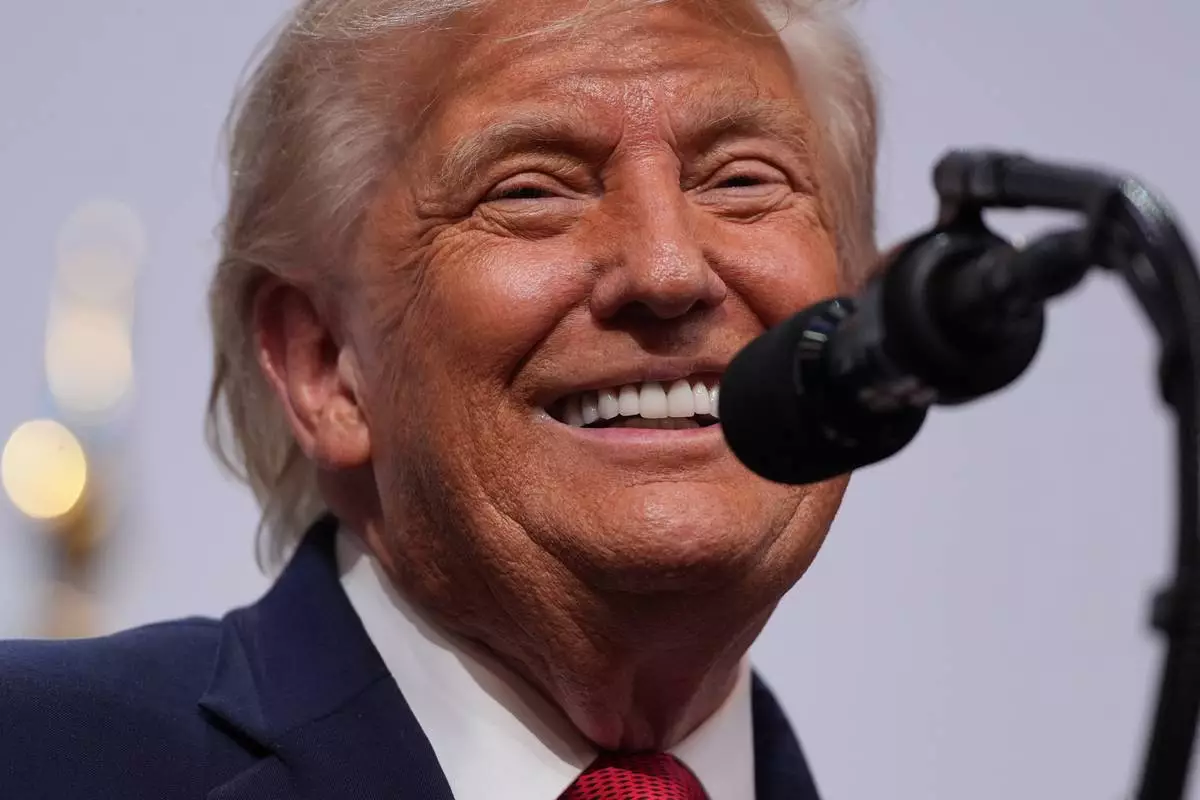
U.S. President Donald Trump speaks during a news conference at the G7 summit, Wednesday, June 17, 2026, in Evian-les-Bains, France. (AP Photo/Julia Demaree Nikhinson)
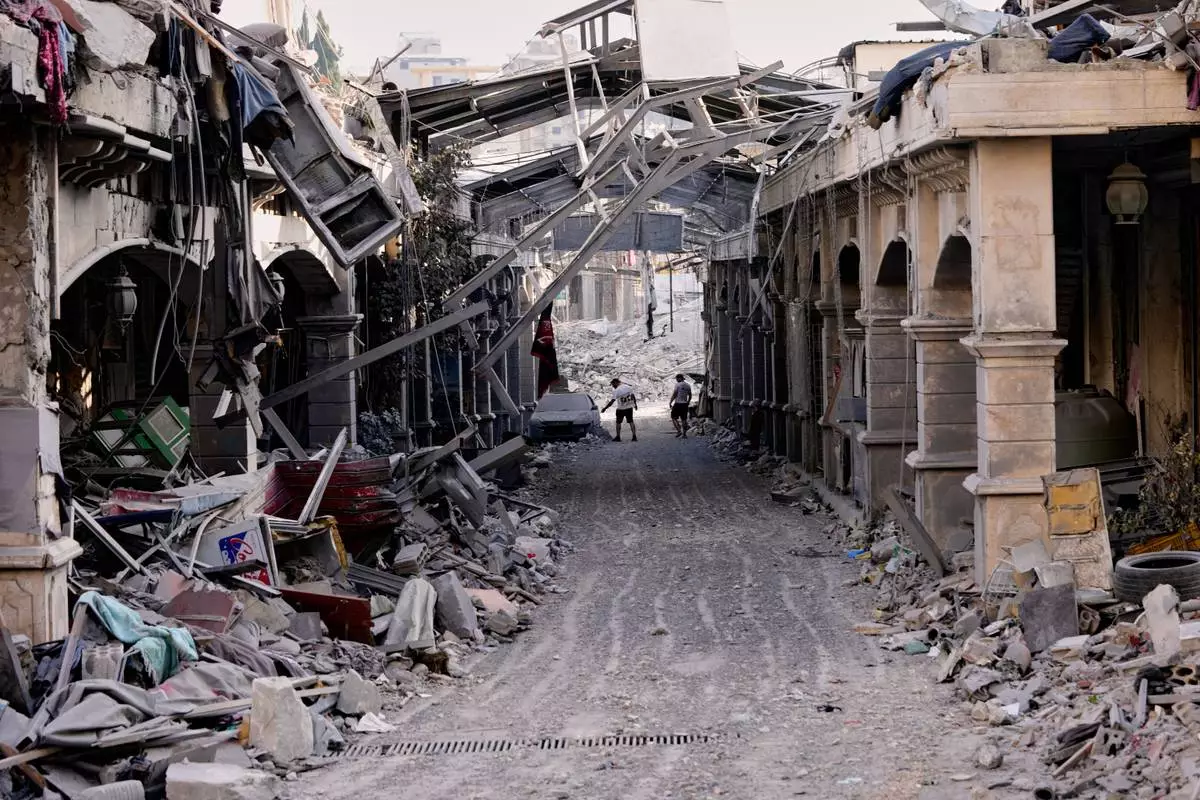
People returning to their village following the announcement of an initial ceasefire agreement between the United States and Iran, check a car at a destroyed market shop in Nabatiyeh town, southern Lebanon, Tuesday, June 16, 2026. (AP Photo/Hussein Malla)
Tankers and cargo vessels are seen in the Gulf of Oman, along shipping routes linking the Strait of Hormuz and the Arabian Sea, Tuesday, June 16, 2026. (AP Photo)
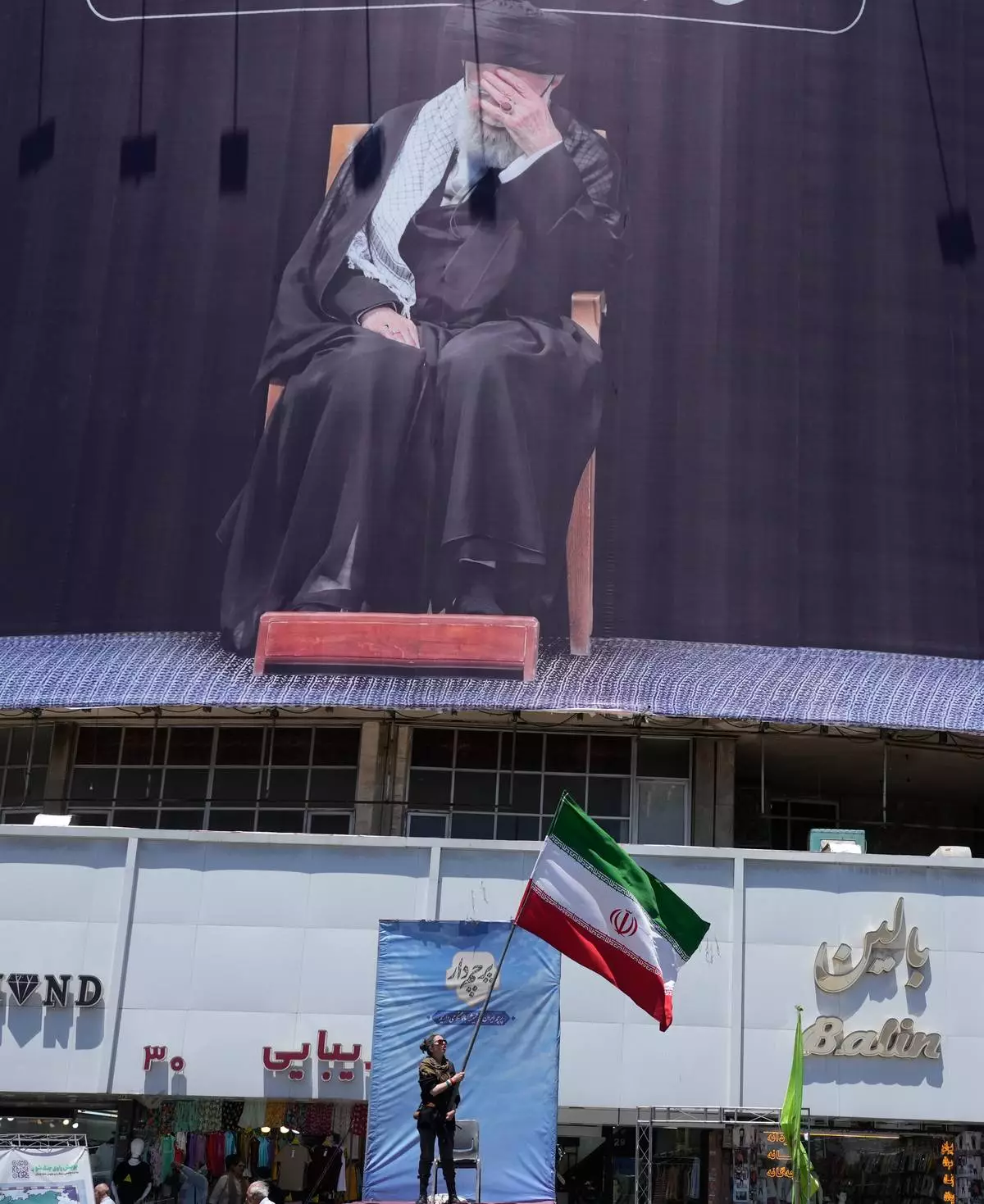
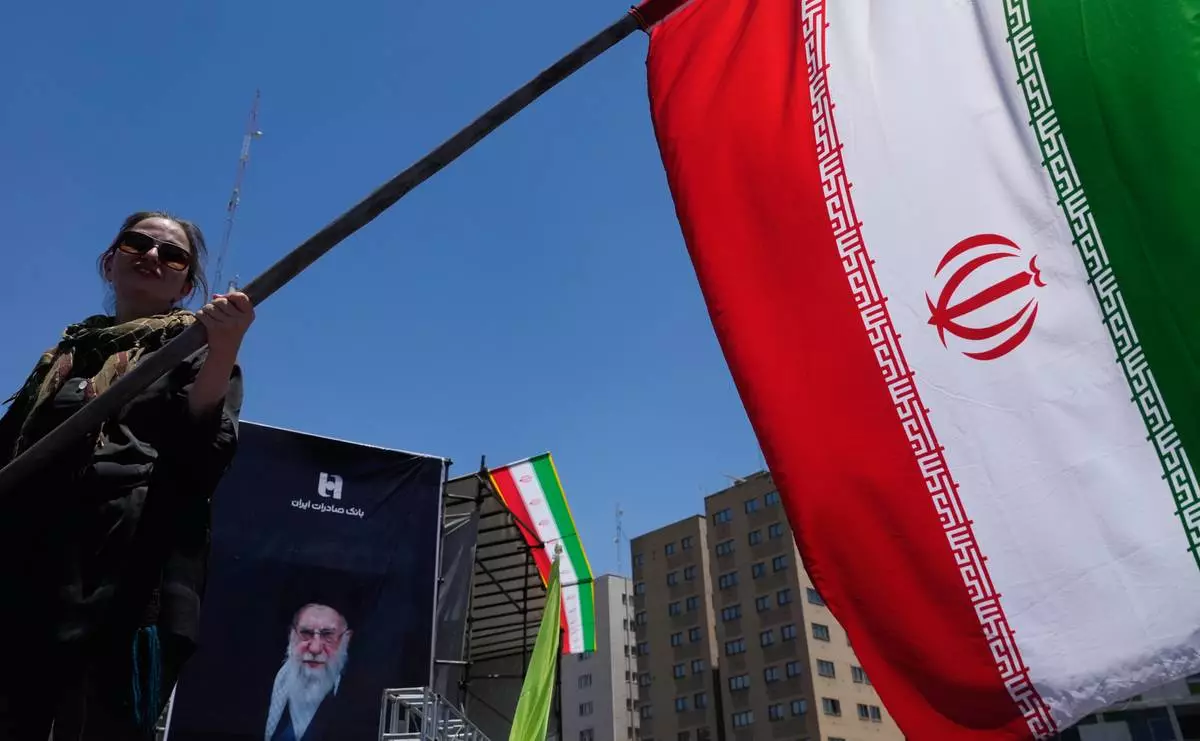
A woman waves an Iranian flag during a pro-government campaign under a portrait of the slain Supreme Leader Ayatollah Ali Khamenei, who was killed in U.S. and Israeli strikes on Feb. 28, in downtown Tehran, Iran, Monday, June 15, 2026. (AP Photo/Vahid Salemi)
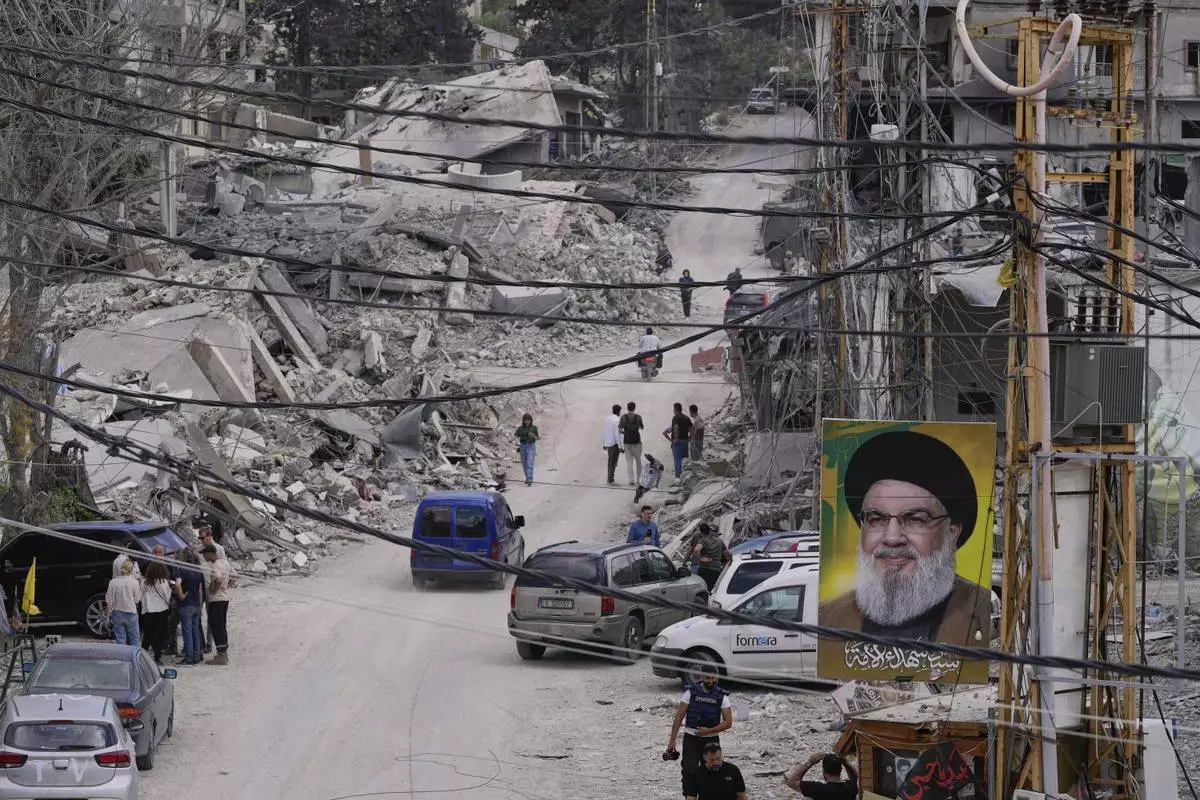
People who return to their village following the announcement of an initial ceasefire agreement between the United States and Iran, gather with journalists at a destroyed street in Beer al-Salassel, south Lebanon, Monday, June 15, 2026. (AP Photo/Mohammed Zaatari)
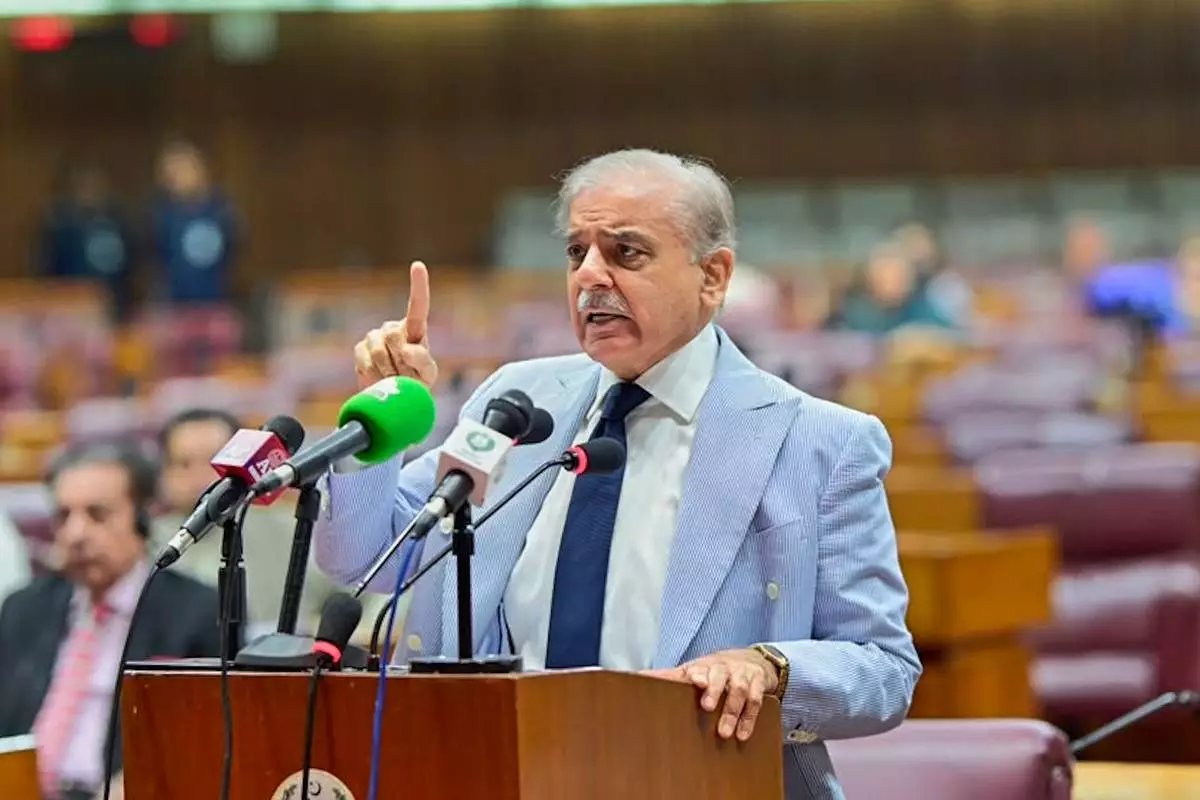
In this photo released by the Pakistan Prime Minister Office, Prime Minister Shehbaz Sharif speaks on the U.S.'s conflict with Iran, during a assembly session in the parliament in Islamabad, Pakistan, Monday, June 15, 2026. (Pakistan Prime Minister Office via AP)
A woman waves an Iranian flag during a pro-government campaign as a portrait of the slain Supreme Leader Ayatollah Ali Khamenei, who was killed in U.S. and Israeli strikes on Feb. 28, is displayed at rear, in downtown Tehran, Iran, Monday, June 15, 2026. (AP Photo/Vahid Salemi)
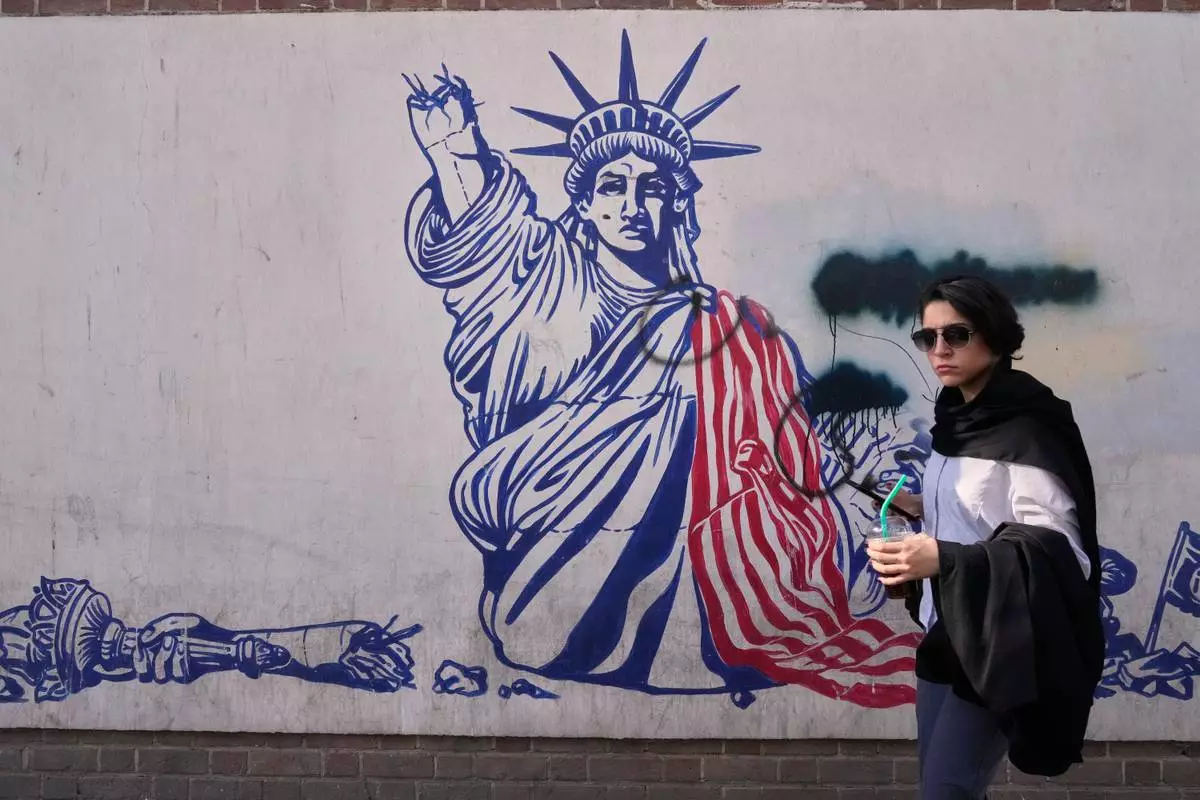
A woman walks past an anti-American mural on the wall of the former U.S. Embassy, now a museum, in Tehran, Iran, Friday, June 12, 2026. (AP Photo/Vahid Salemi)