GAZA (AP) — Israel’s military campaign in Gaza has left tens of thousands of Palestinian children without one or more of their parents, adding to what UNICEF has said is the conflict’s “unconscionable” toll on the territory’s youth.
The loss is among the war’s most lasting consequences, depriving children, many of whom are already traumatized, wounded or living in dire conditions, of the nurture and care provided by mothers and fathers as they negotiate their place in the world.
Click to Gallery
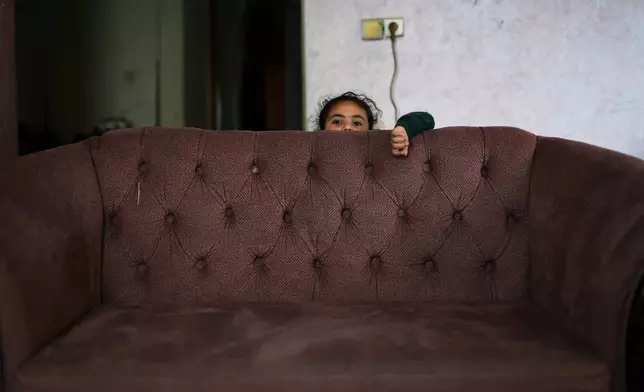
Habiba al-Kafarna, 5, who was orphaned when her parents, Ahmed and Sajida, were killed in an Israeli strike on a school sheltering displaced people in 2025, stands behind a sofa in the Gaza City home where she lives, May 31, 2026. (AP Photo/Abdel Kareem Hana)
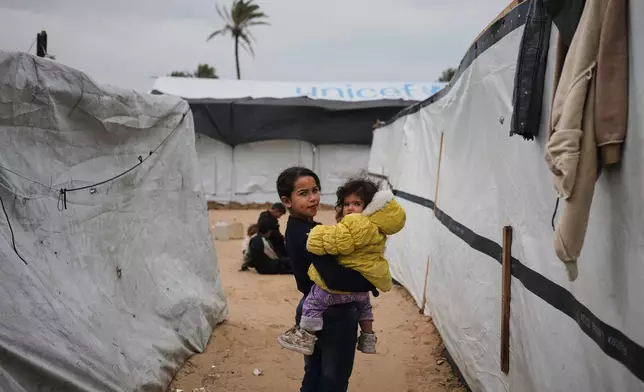
Palestinian children walk between tents at an orphanage camp in Khan Younis, southern Gaza Strip, Thursday, Jan. 22, 2026. (AP Photo/Jehad Alshrafi)
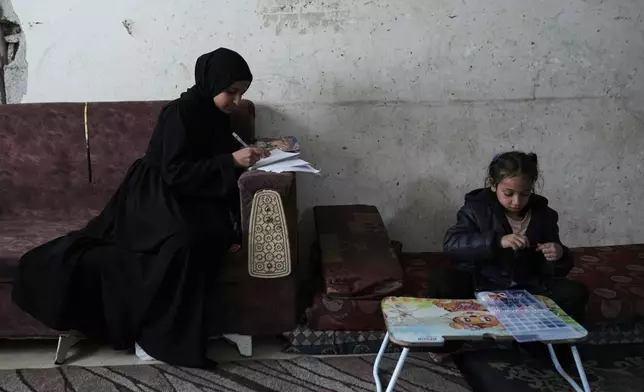
Raghad Ramzi Al-Ajal, who lost her parents in an Israeli airstrike, studies at the Gaza City home where she lives with relatives, Monday, Jan. 19, 2026. (AP Photo/Jehad Alshrafi)
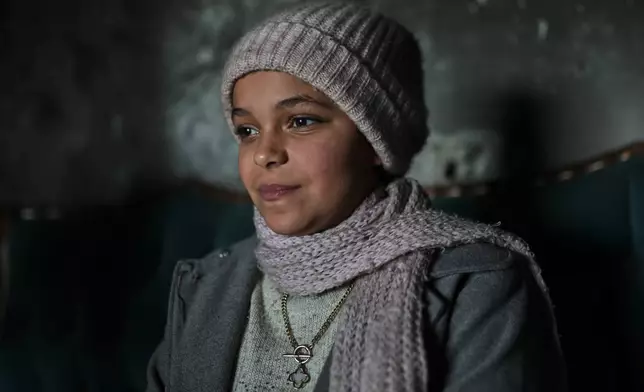
Razan Sharif Hamdi Shanan, 10, the sole survivor of an Israeli airstrike that killed her parents and siblings, poses for a photo at the home where she is staying with relatives in Gaza City, Monday, Jan. 19, 2026. (AP Photo/Jehad Alshrafi)
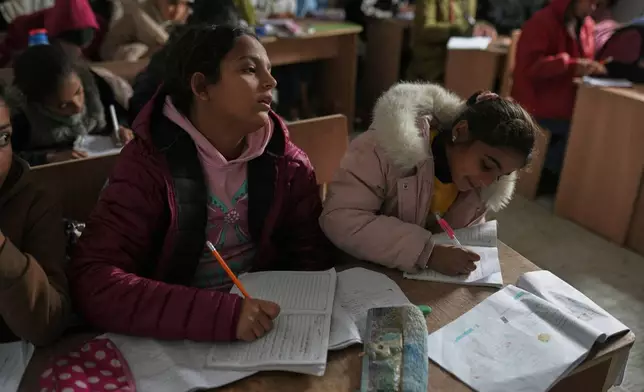
Palestinian children attend class in a tent classroom at an orphanage camp in Khan Younis, southern Gaza Strip, Thursday, Feb. 12, 2026. (AP Photo/Jehad Alshrafi)
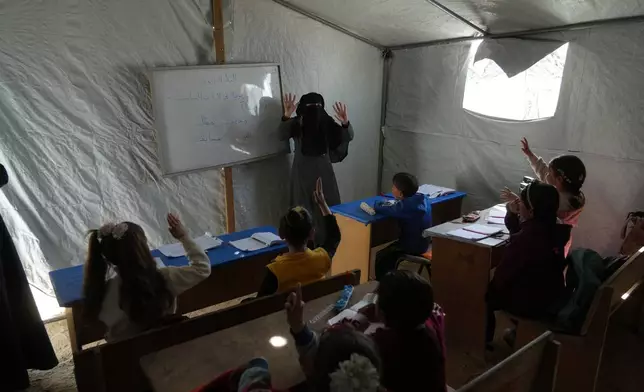
Palestinian children attend class in a tent classroom at an orphanage camp in Khan Younis, southern Gaza Strip, Thursday, Feb. 12, 2026. (AP Photo/Jehad Alshrafi)
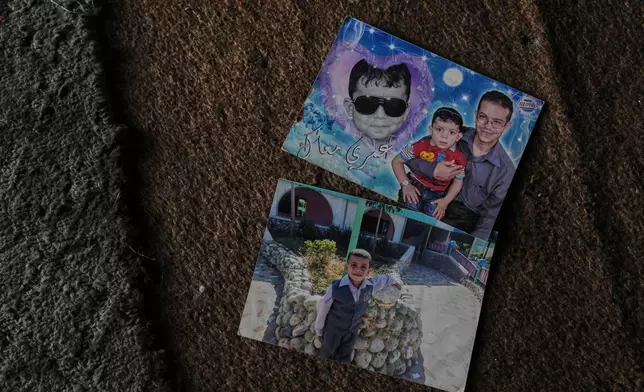
Photos of the father and brother of Razan Sharif Hamdi Shanan, 10, the sole survivor of an Israeli airstrike that killed her parents and siblings, are displayed at the home where she is staying with relatives in Gaza City, Monday, Jan. 19, 2026. (AP Photo/Jehad Alshrafi)
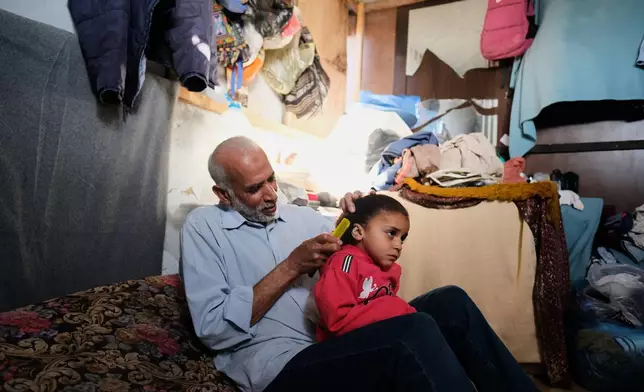
Mahmoud Nofal, 64, combs the hair of his three-year-old granddaughter, Raneen Nofal, whom he has raised since her parents were killed in an Israeli airstrike, in Khan Younis, Thursday, April 30, 2026. (AP Photo/Jehad Alshrafi)
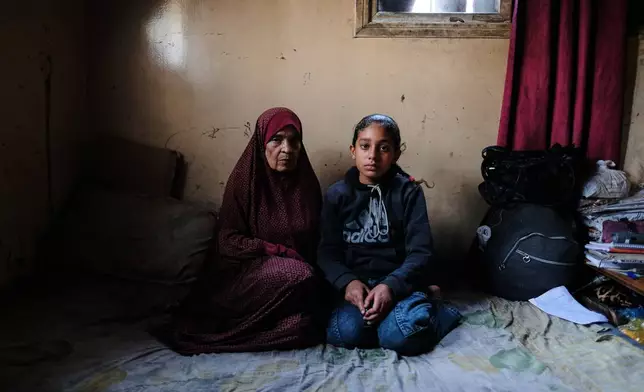
Eleven-year-old Ghazal al-Kibritti, who lost her parents and three siblings in an Israeli airstrike, poses with her grandmother, Huda al-Salti, at the Gaza City home where she now lives with her grandparents, Sunday, April 26, 2026. (AP Photo/Jehad Alshrafi)
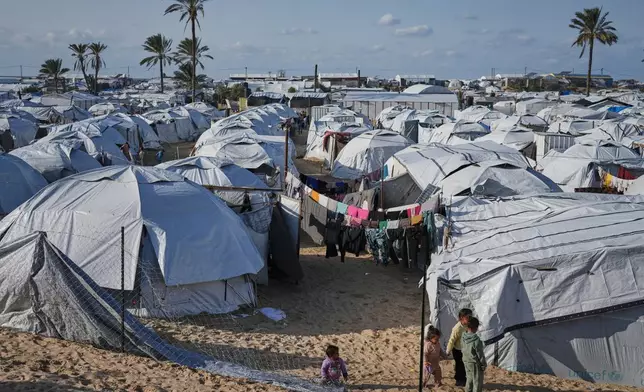
Palestinian children walk between tents at an orphanage camp in Khan Younis, southern Gaza Strip, Tuesday, Jan. 20, 2026. (AP Photo/Jehad Alshrafi)
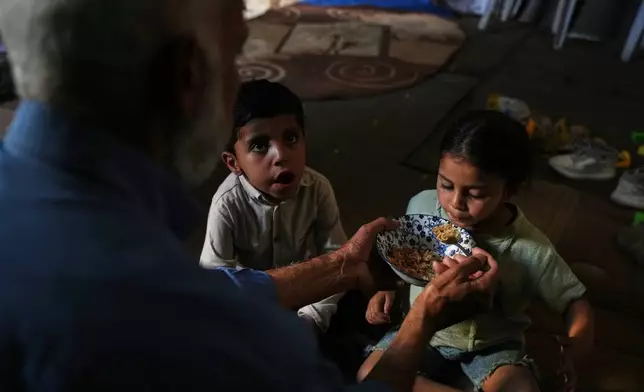
Mahmoud Nofal, 64, feeds his grandchildren, Tamim and Raneen Nofal, whom he has raised since their parents were killed in an Israeli airstrike, in Khan Younis, southern Gaza Strip, June 2, 2026. (AP Photo/Abdel Kareem Hana)
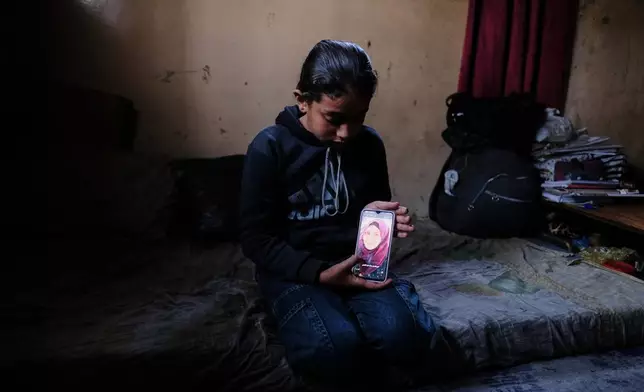
Eleven-year-old Ghazal al-Kibritti, who lost her parents and three siblings in an Israeli airstrike, poses with a photo of her mother, Sana, at her grandparents' home in Gaza City, Sunday, April 26, 2026. (AP Photo/Jehad Alshrafi)
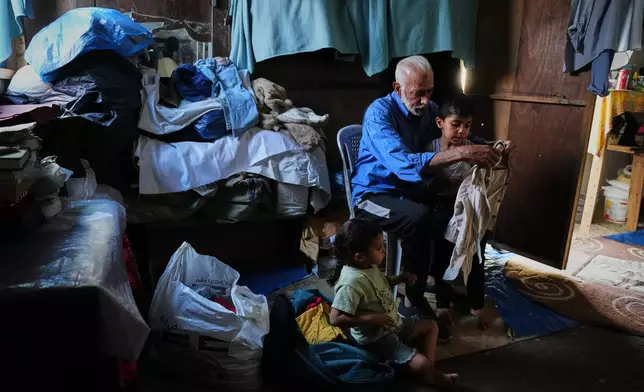
Mahmoud Nofal, 64, cares for his grandchildren, Tamim and Raneen Nofal, whom he has raised since their parents were killed in an Israeli airstrike, in Khan Younis, southern Gaza Strip, June 2, 2026. (AP Photo/Abdel Kareem Hana)
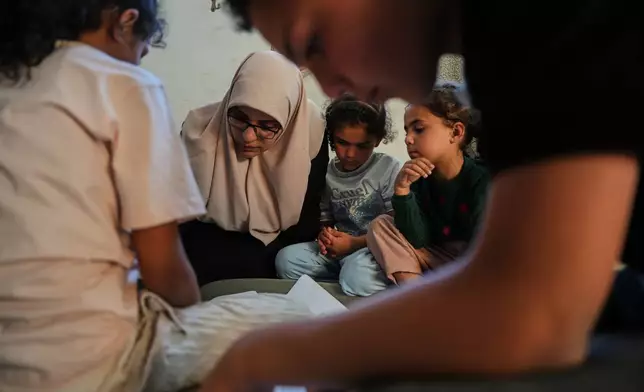
Ikhlas al-Kafarna, 35, teaches her orphaned nieces and nephews at her home in Gaza City, May 31, 2026. The children lost their parents in an Israeli airstrike. (AP Photo/Abdel Kareem Hana)
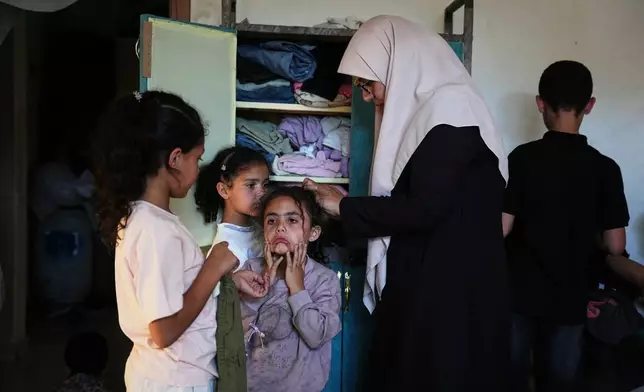
Ikhlas al-Kafarna, 35, cares for her orphaned nieces and nephews at her home in Gaza City, May 31, 2026. The children lost their parents in an Israeli airstrike. (AP Photo/Abdel Kareem Hana)
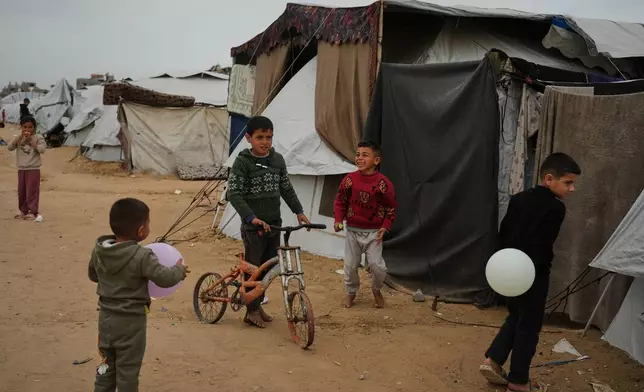
Palestinian children play at an orphanage camp in Khan Younis, southern Gaza Strip, Thursday, Feb.12, 2026. (AP Photo/Jehad Alshrafi)
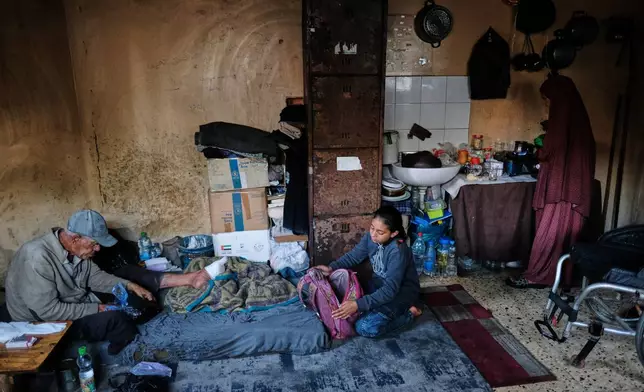
Eleven-year-old Ghazal al-Kibritti, who lost her parents and three siblings in an Israeli airstrike, prepares her school bag at her grandparents' home in Gaza City, Sunday, April 26, 2026. (AP Photo/Jehad Alshrafi)
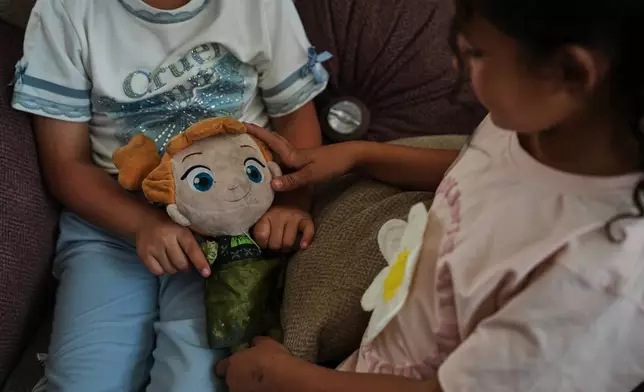
Palestinian orphan sisters Nabila and Basmala Al-Kafarna play with a doll at their home in Gaza City, May 31, 2026. Their parents were killed in an Israeli airstrike that struck a school sheltering displaced people on April 3, 2025. (AP Photo/Abdel Kareem Hana)
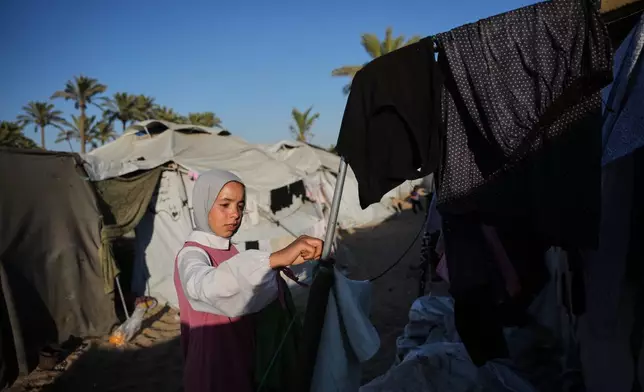
Palestinian orphan Dina Zourob, 17, hangs laundry outside her tent at an orphanage camp in Khan Younis, southern Gaza Strip, Sunday, June 7, 2026. (AP Photo/Abdel Kareem Hana)
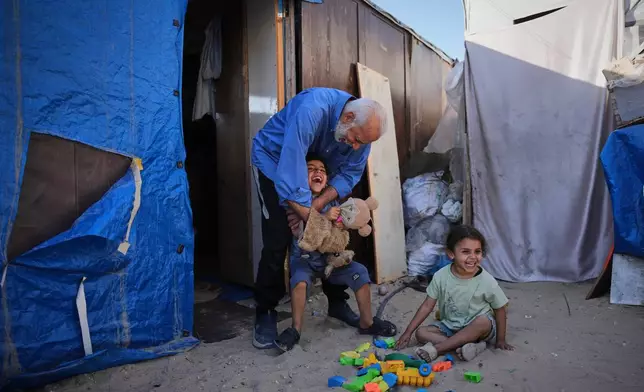
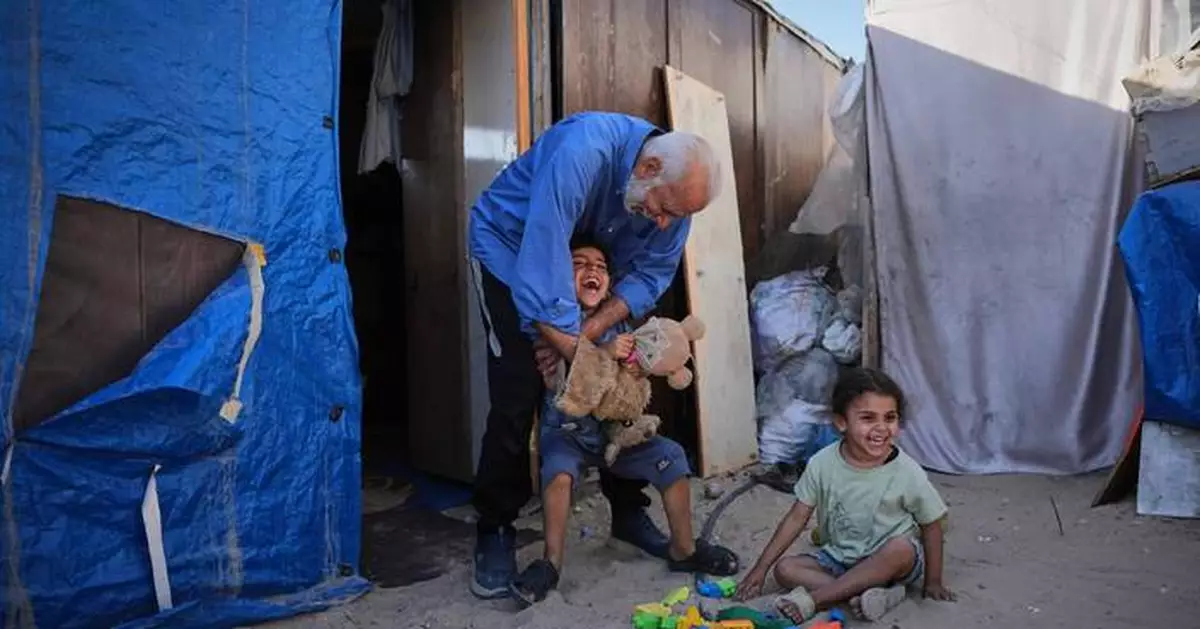
Mahmoud Nofal, 64, plays with his grandchildren, Tamim and Ranin Nofal, whom he has raised since their parents were killed in an Israeli airstrike, outside their tent in Khan Younis, southern Gaza Strip, June 2, 2026. (AP Photo/Abdel Kareem Hana)
As of earlier this year, nearly 59,000 children had lost at least one parent, UNICEF said, with around 2,700 having lost both their mother and their father.
More than 73,000 people have been killed in Gaza since the start of the war on Oct. 7, 2023, when Hamas-led militants attacked southern Israel, killing around 1,200 people and taking 251 others hostage. The death toll comes from the health ministry in Gaza, which is part of the Hamas-run government but staffed by medical professionals who maintain and publish detailed records viewed as generally reliable by the international community.
“The tragedy is not limited to physical harm alone,” according to Dr. Ola Awad, president of the Palestinian Central Bureau of Statistics. “But extends to the very fabric of the family and social structure.”
Gaza’s society is rooted in extended family networks, with many relatives living together or in the same neighborhoods. Amid the devastation, relatives and other caregivers have tried to give the orphaned children some semblance of a normal childhood.
“It’s difficult to replace the love and affection of a father and mother. It’s difficult to compensate them for so many things,” said Mahmoud Nofal, 64, now the guardian of his two young grandchildren, ages 3 and 5.
“I am their provider. I bathe them and I supply them with everything they need,” he said at the tent they now call home in the southern region of Khan Younis.
Without their families, homes, or familiar routines, many children hold on to whatever they can from their lives before the war. Some have restarted school, help with chores at home or ride bikes along dirt roads with friends.
For Razan Shanan, it has been hard to let go. She was 10 years old when an airstrike killed five members of her immediate family. She was the only one who survived. The attack left her anxious and she clings to family photos recovered from the rubble of the six-story building where she and her family lived.
“No matter how much affection, clothing, trips, food, and drink I provide them, it can never replace even one percent of their family,” said Salah Al-Kafarana, who is now raising five nieces and nephews in Gaza City.
This is a documentary photo story curated by AP photo editors.
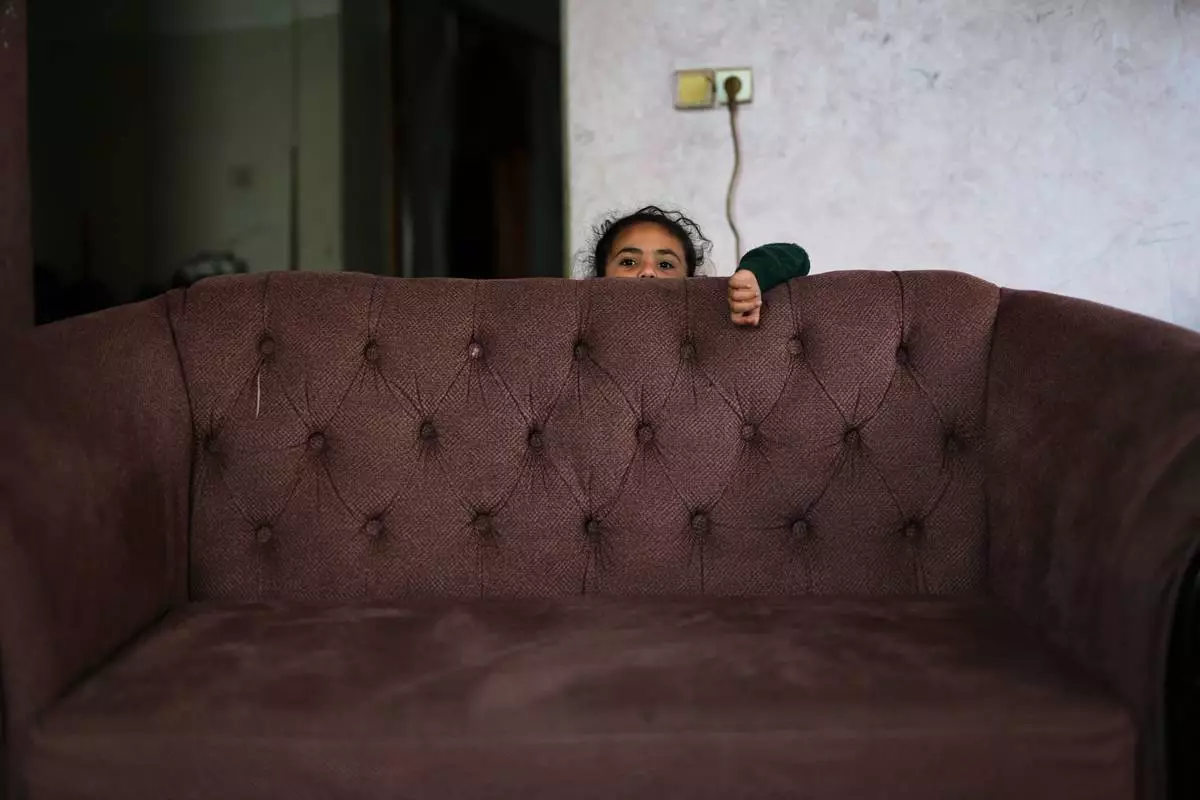
Habiba al-Kafarna, 5, who was orphaned when her parents, Ahmed and Sajida, were killed in an Israeli strike on a school sheltering displaced people in 2025, stands behind a sofa in the Gaza City home where she lives, May 31, 2026. (AP Photo/Abdel Kareem Hana)
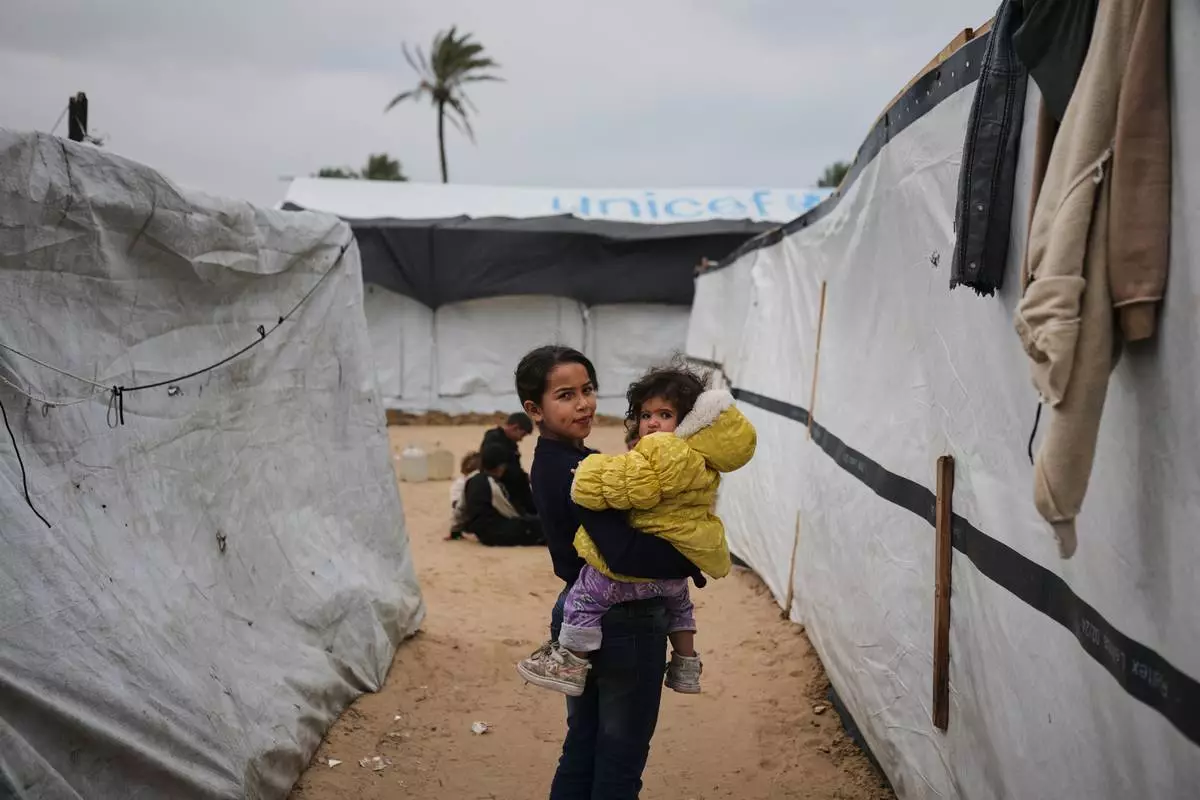
Palestinian children walk between tents at an orphanage camp in Khan Younis, southern Gaza Strip, Thursday, Jan. 22, 2026. (AP Photo/Jehad Alshrafi)
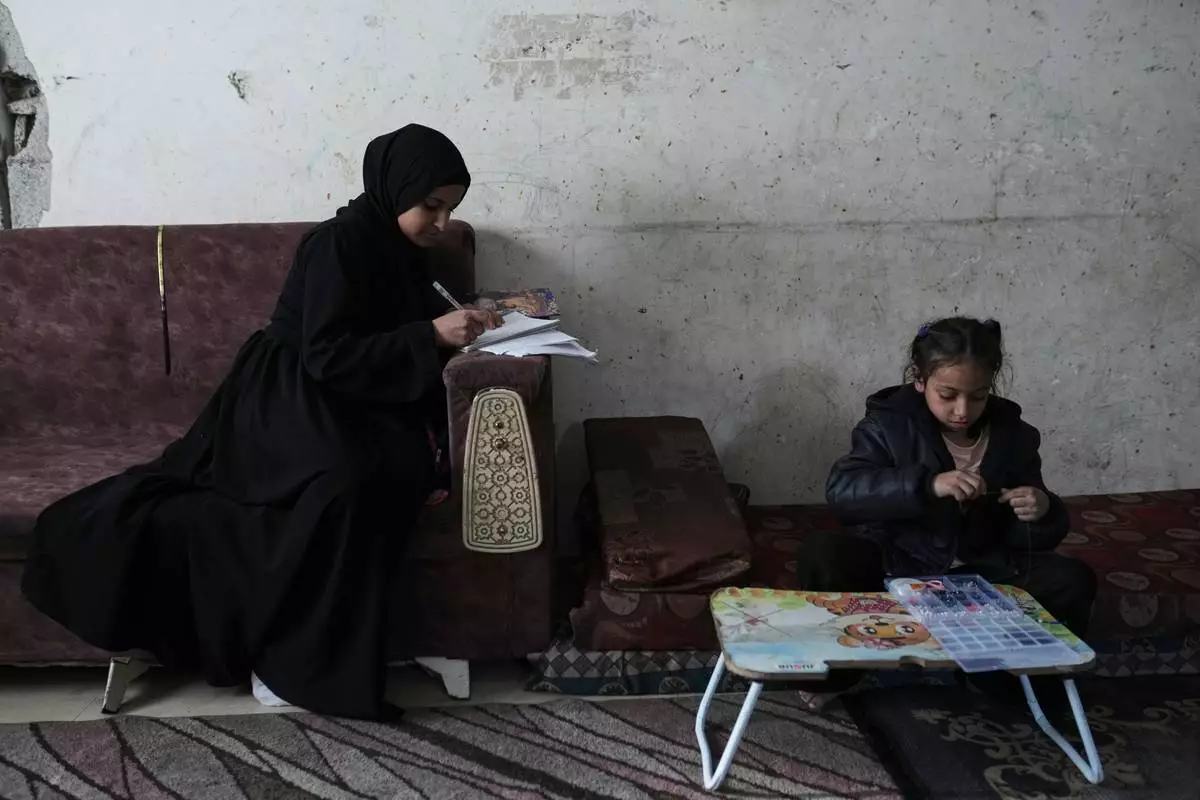
Raghad Ramzi Al-Ajal, who lost her parents in an Israeli airstrike, studies at the Gaza City home where she lives with relatives, Monday, Jan. 19, 2026. (AP Photo/Jehad Alshrafi)
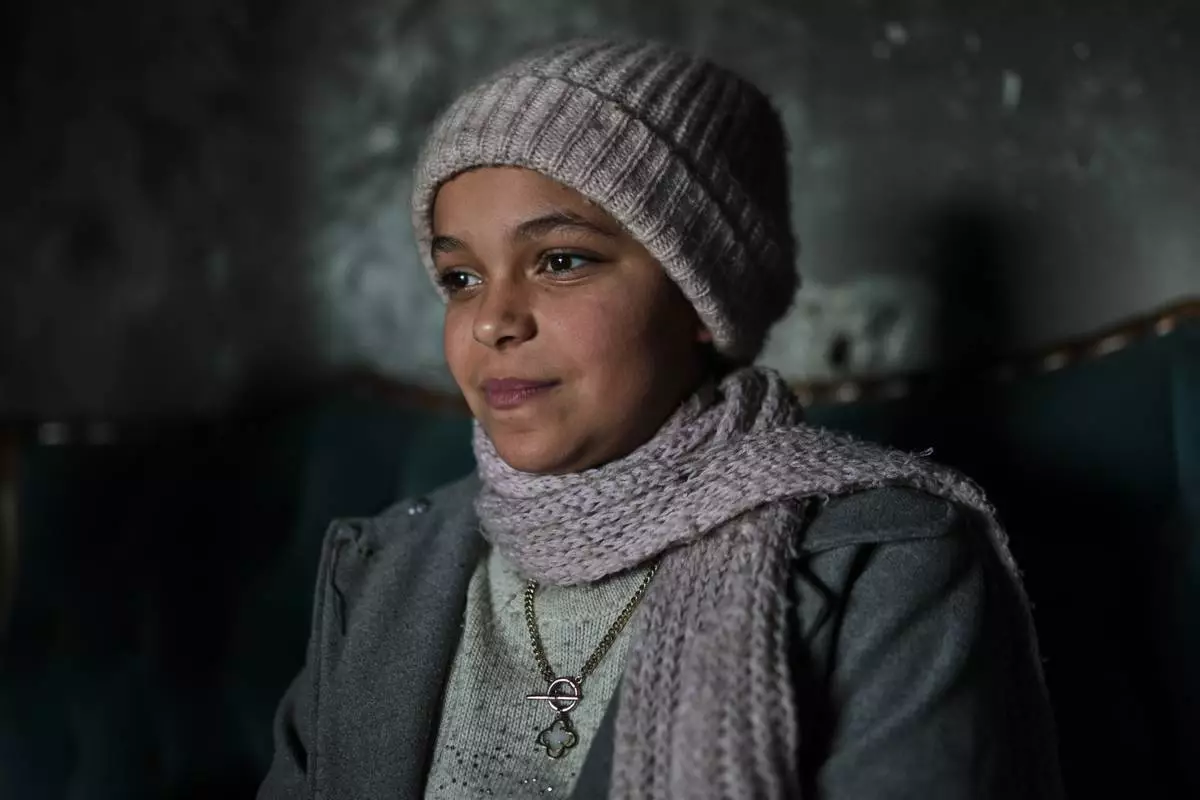
Razan Sharif Hamdi Shanan, 10, the sole survivor of an Israeli airstrike that killed her parents and siblings, poses for a photo at the home where she is staying with relatives in Gaza City, Monday, Jan. 19, 2026. (AP Photo/Jehad Alshrafi)
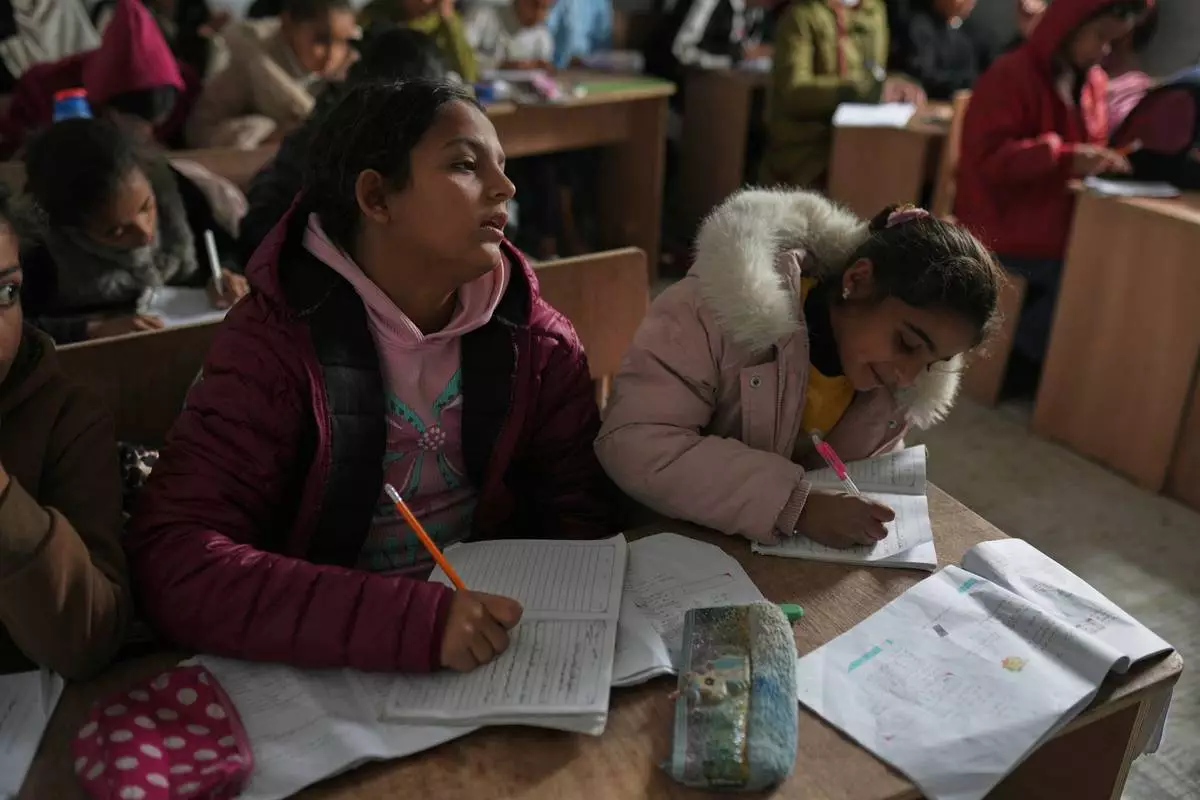
Palestinian children attend class in a tent classroom at an orphanage camp in Khan Younis, southern Gaza Strip, Thursday, Feb. 12, 2026. (AP Photo/Jehad Alshrafi)
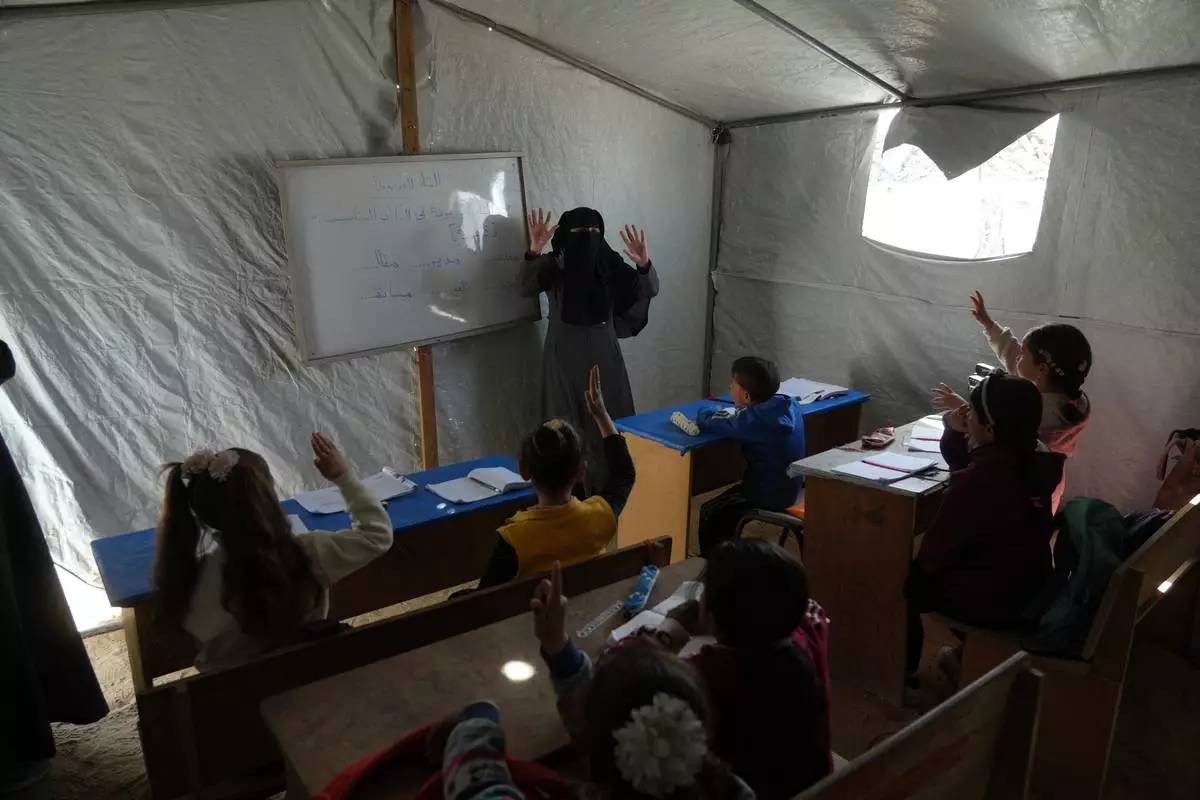
Palestinian children attend class in a tent classroom at an orphanage camp in Khan Younis, southern Gaza Strip, Thursday, Feb. 12, 2026. (AP Photo/Jehad Alshrafi)
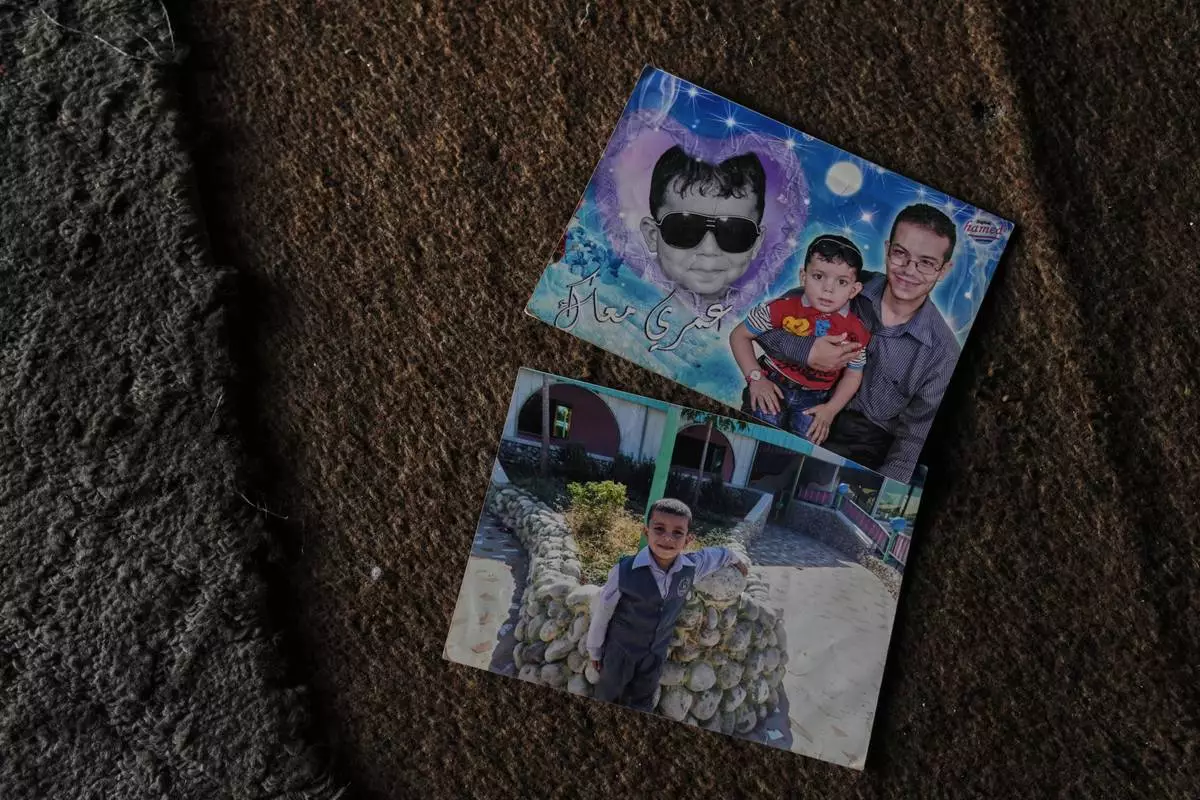
Photos of the father and brother of Razan Sharif Hamdi Shanan, 10, the sole survivor of an Israeli airstrike that killed her parents and siblings, are displayed at the home where she is staying with relatives in Gaza City, Monday, Jan. 19, 2026. (AP Photo/Jehad Alshrafi)
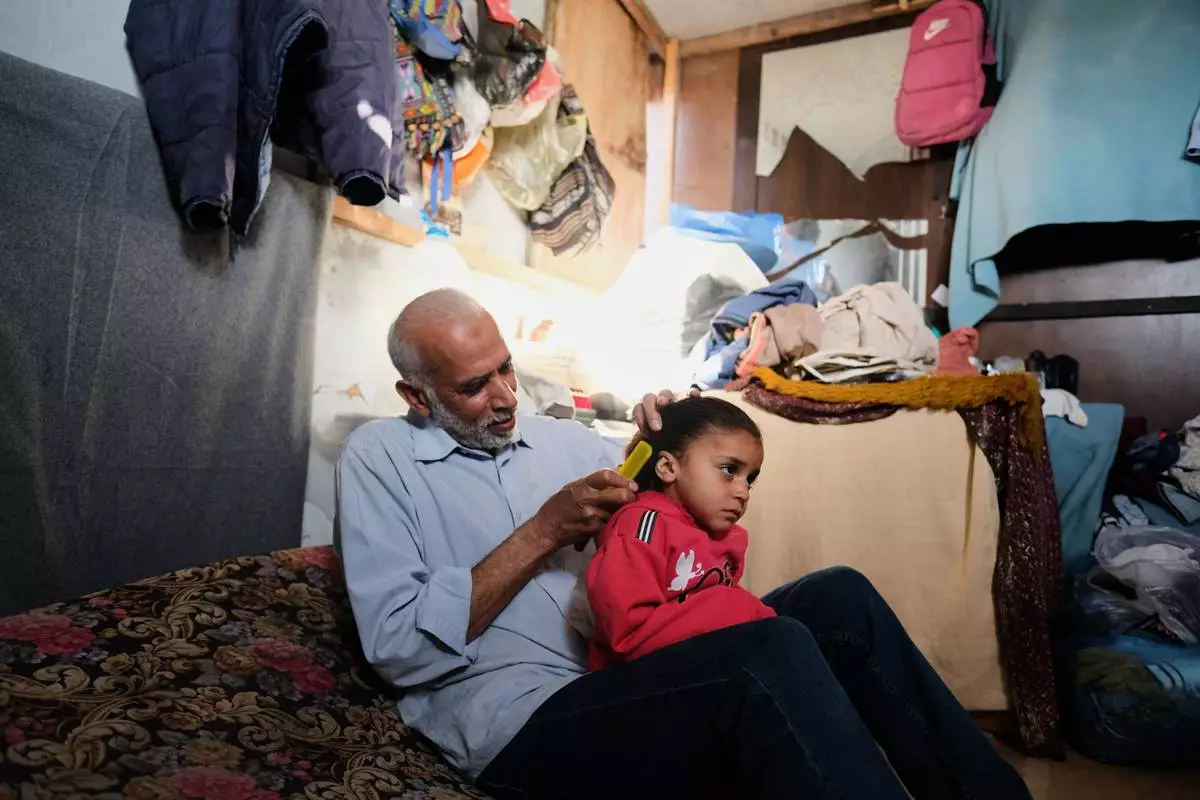
Mahmoud Nofal, 64, combs the hair of his three-year-old granddaughter, Raneen Nofal, whom he has raised since her parents were killed in an Israeli airstrike, in Khan Younis, Thursday, April 30, 2026. (AP Photo/Jehad Alshrafi)
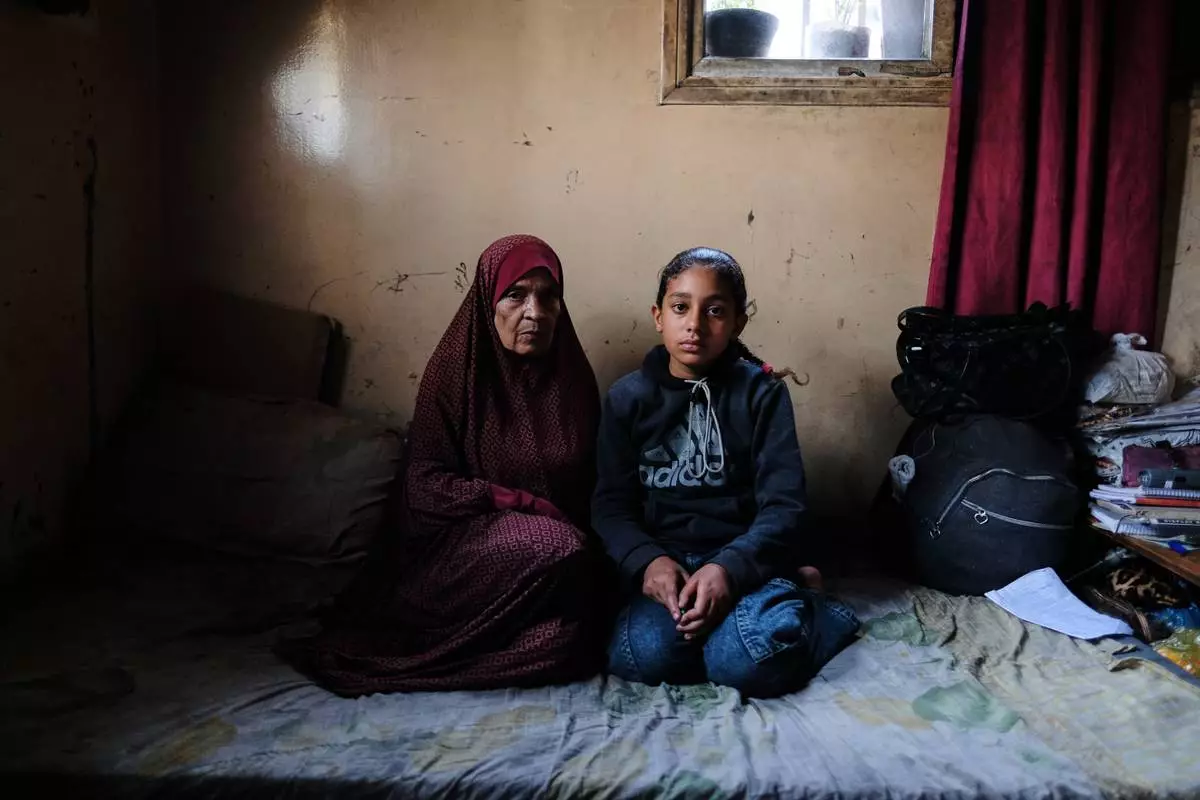
Eleven-year-old Ghazal al-Kibritti, who lost her parents and three siblings in an Israeli airstrike, poses with her grandmother, Huda al-Salti, at the Gaza City home where she now lives with her grandparents, Sunday, April 26, 2026. (AP Photo/Jehad Alshrafi)
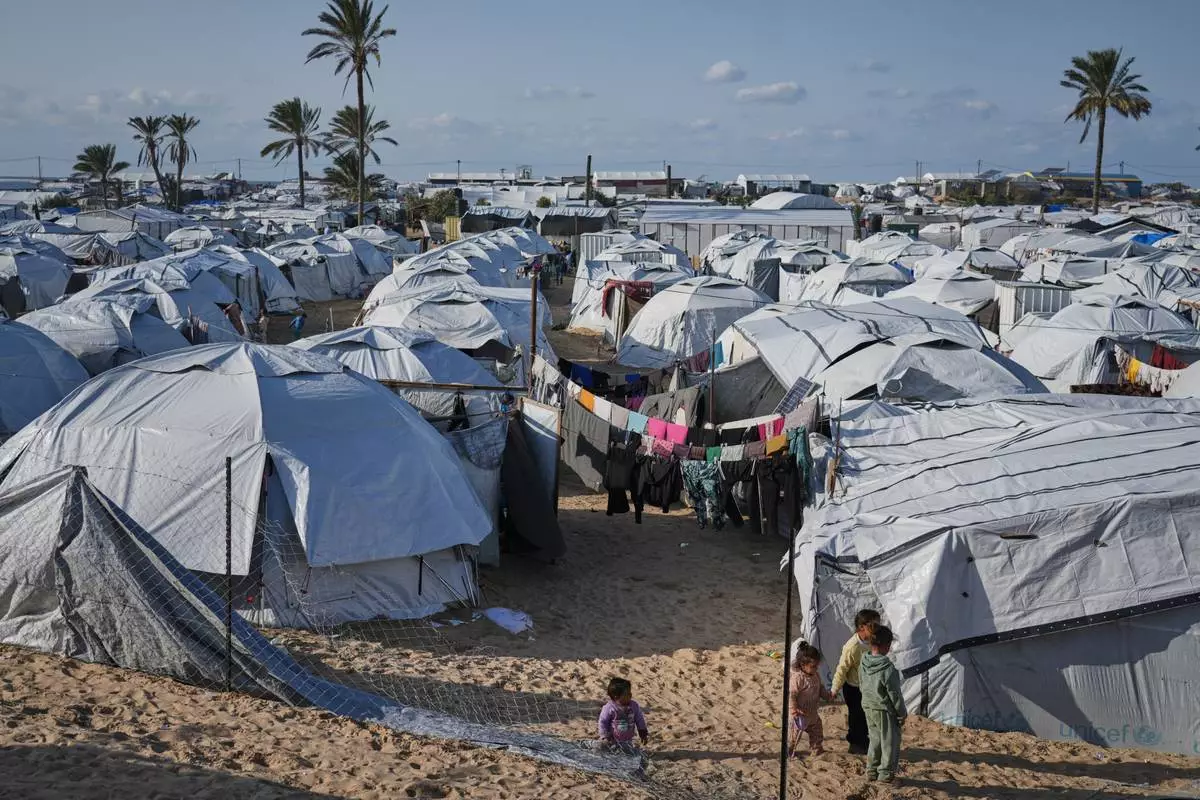
Palestinian children walk between tents at an orphanage camp in Khan Younis, southern Gaza Strip, Tuesday, Jan. 20, 2026. (AP Photo/Jehad Alshrafi)
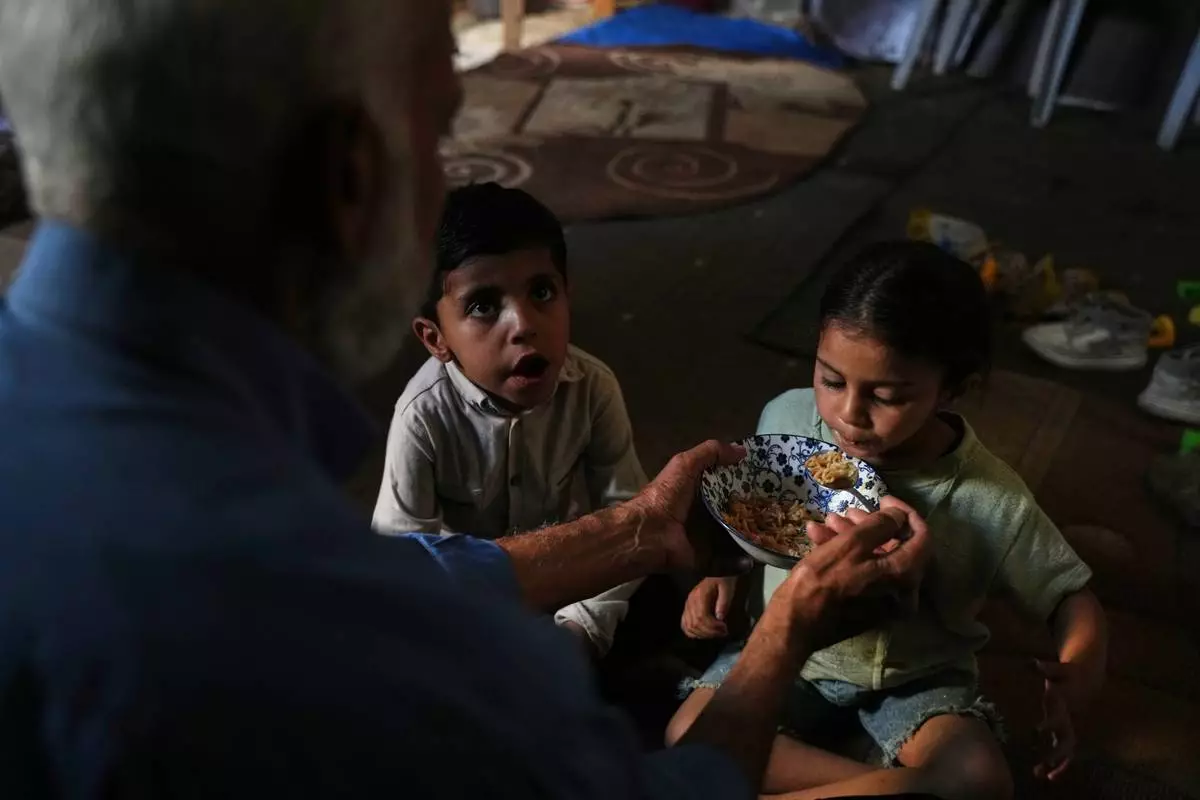
Mahmoud Nofal, 64, feeds his grandchildren, Tamim and Raneen Nofal, whom he has raised since their parents were killed in an Israeli airstrike, in Khan Younis, southern Gaza Strip, June 2, 2026. (AP Photo/Abdel Kareem Hana)
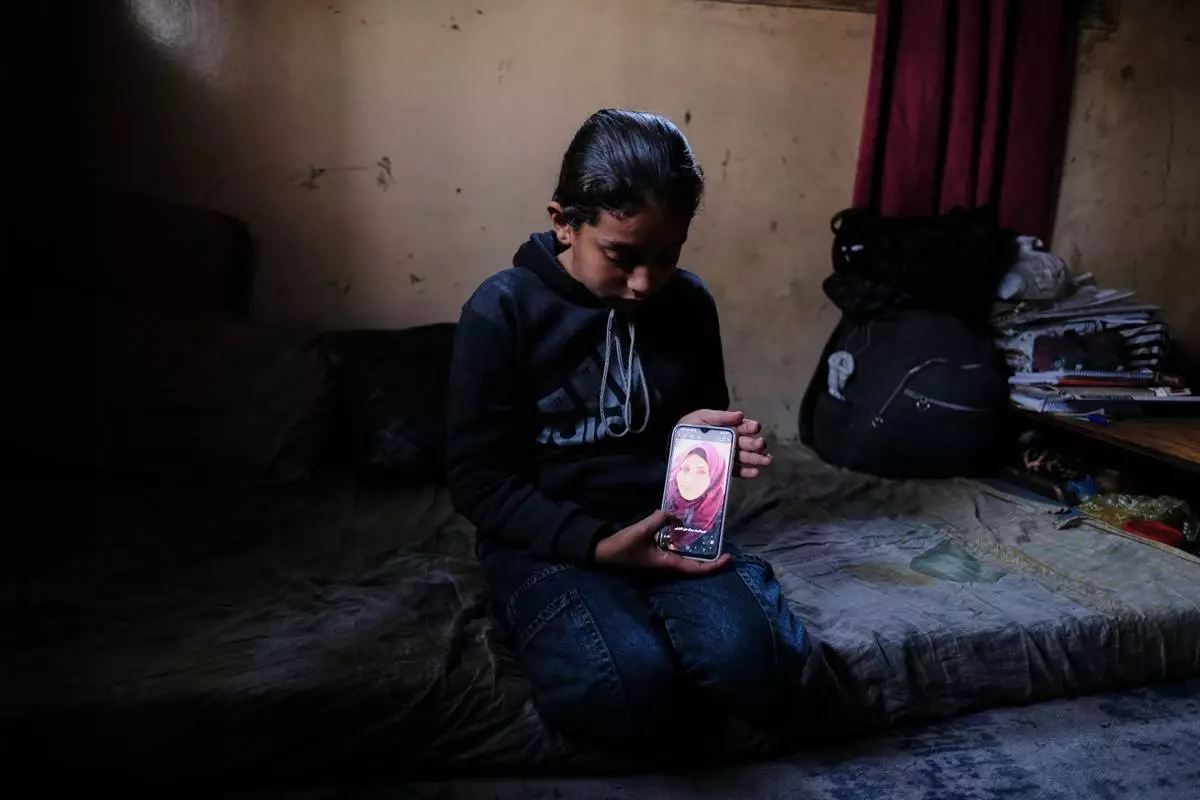
Eleven-year-old Ghazal al-Kibritti, who lost her parents and three siblings in an Israeli airstrike, poses with a photo of her mother, Sana, at her grandparents' home in Gaza City, Sunday, April 26, 2026. (AP Photo/Jehad Alshrafi)
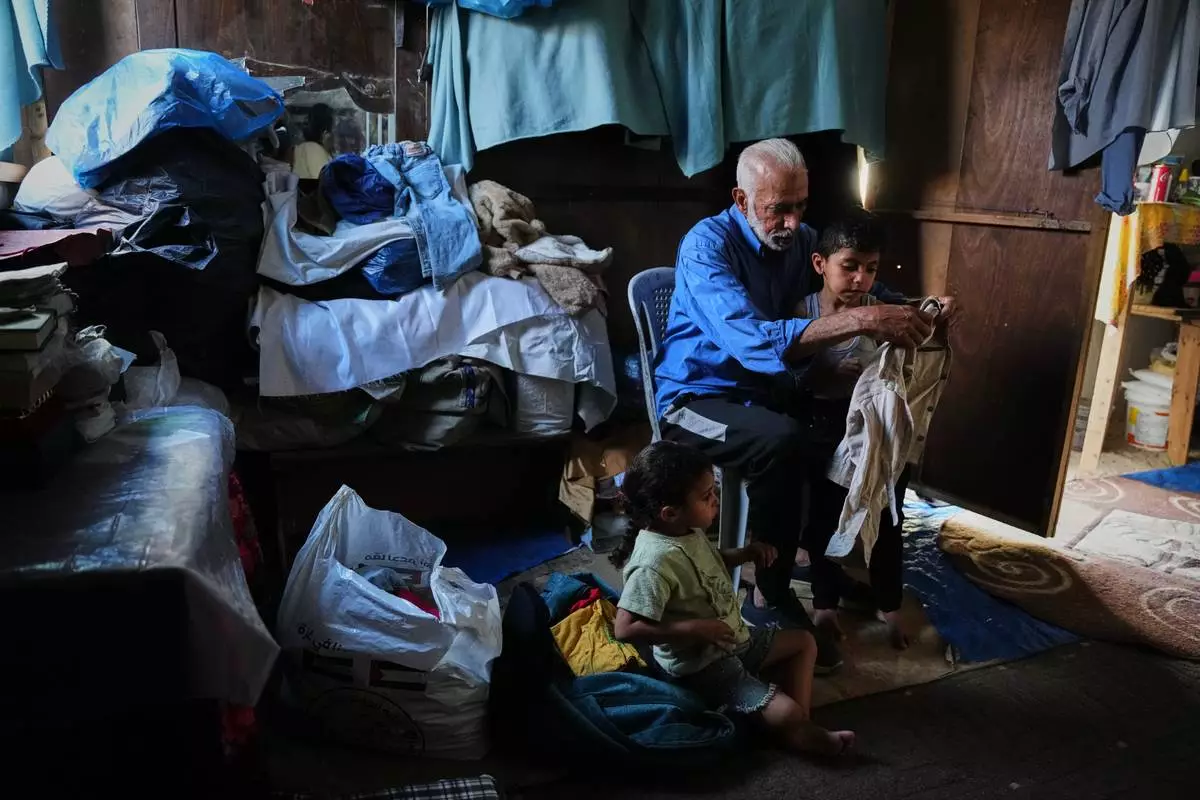
Mahmoud Nofal, 64, cares for his grandchildren, Tamim and Raneen Nofal, whom he has raised since their parents were killed in an Israeli airstrike, in Khan Younis, southern Gaza Strip, June 2, 2026. (AP Photo/Abdel Kareem Hana)
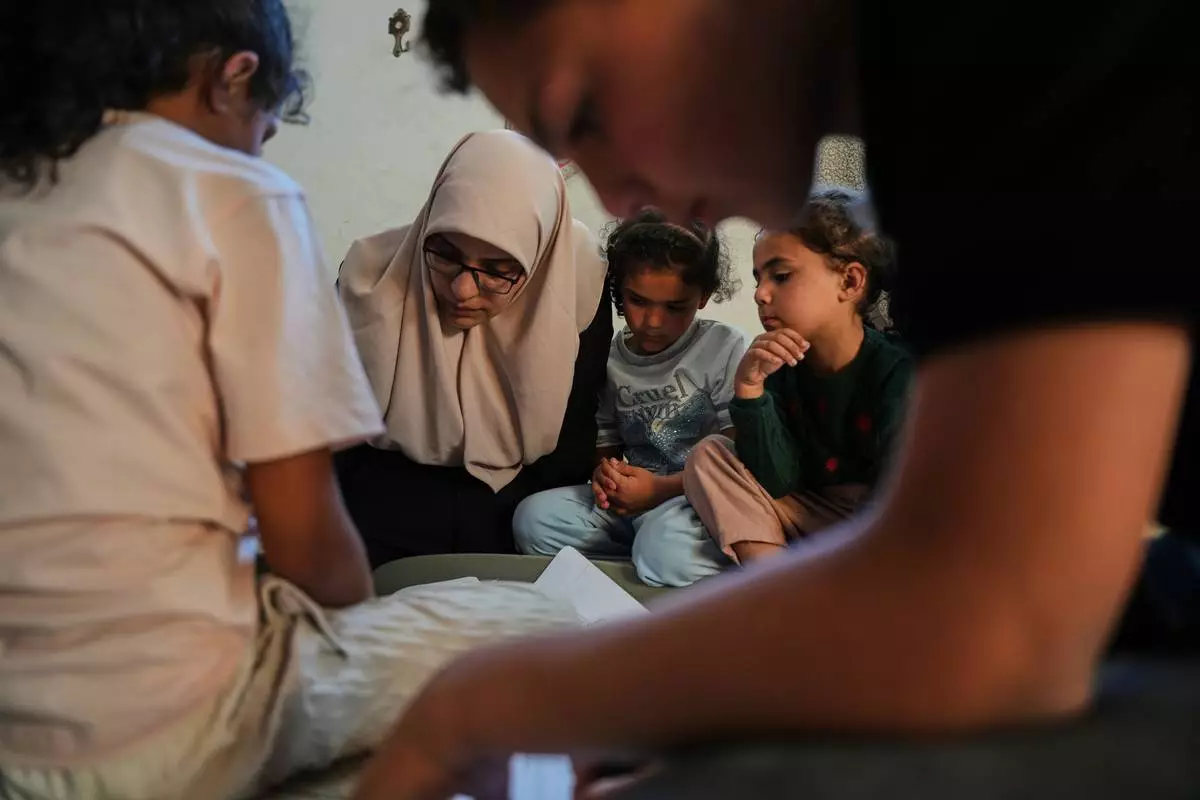
Ikhlas al-Kafarna, 35, teaches her orphaned nieces and nephews at her home in Gaza City, May 31, 2026. The children lost their parents in an Israeli airstrike. (AP Photo/Abdel Kareem Hana)
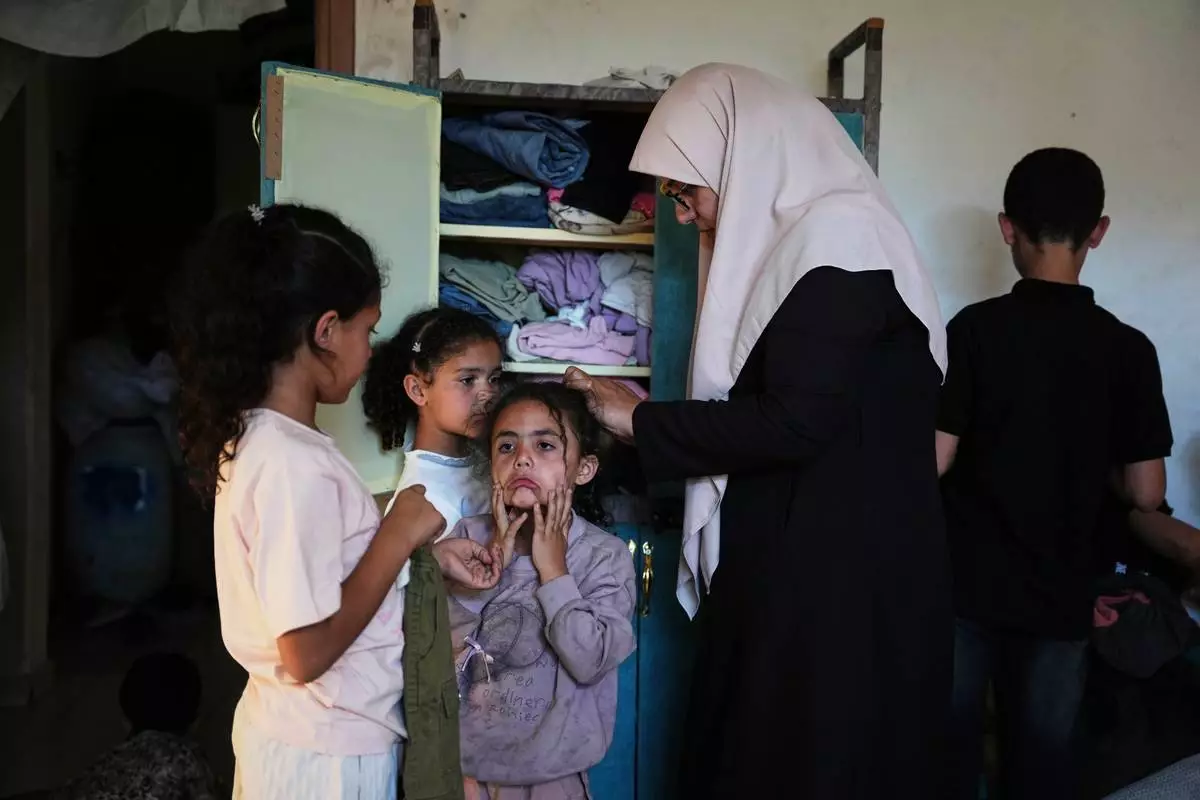
Ikhlas al-Kafarna, 35, cares for her orphaned nieces and nephews at her home in Gaza City, May 31, 2026. The children lost their parents in an Israeli airstrike. (AP Photo/Abdel Kareem Hana)
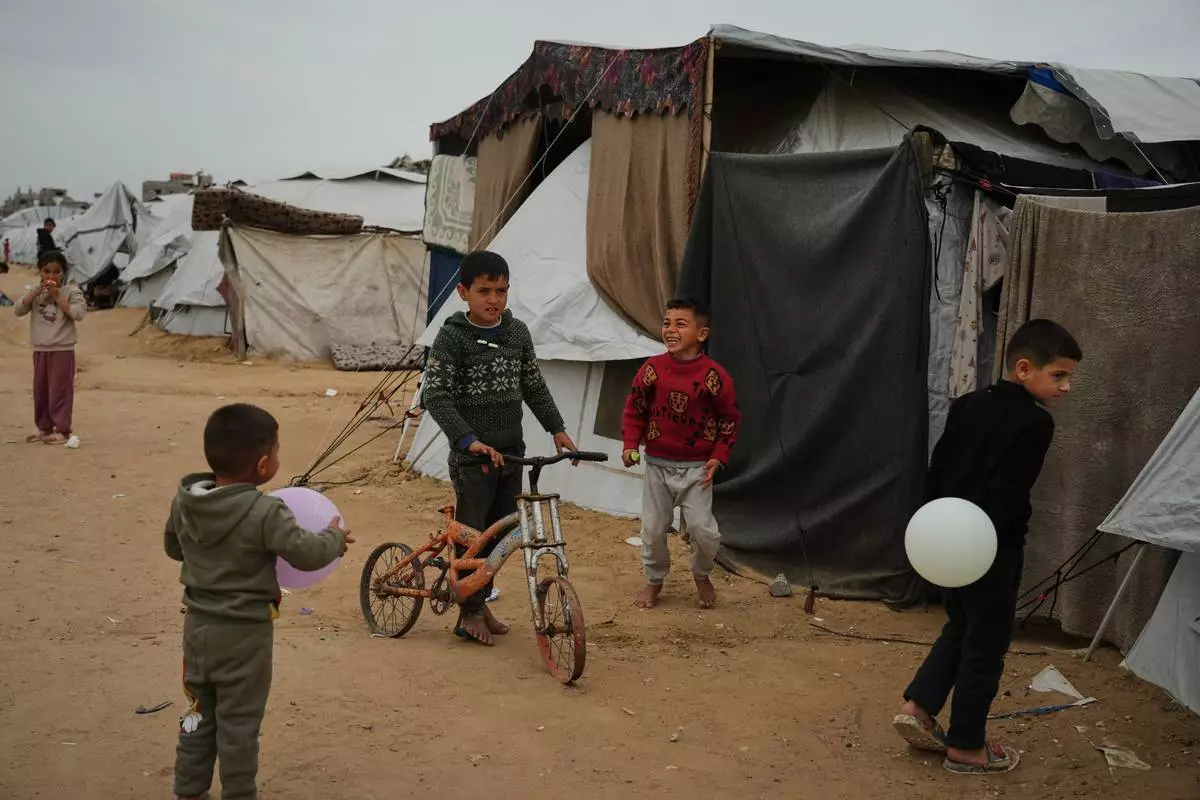
Palestinian children play at an orphanage camp in Khan Younis, southern Gaza Strip, Thursday, Feb.12, 2026. (AP Photo/Jehad Alshrafi)
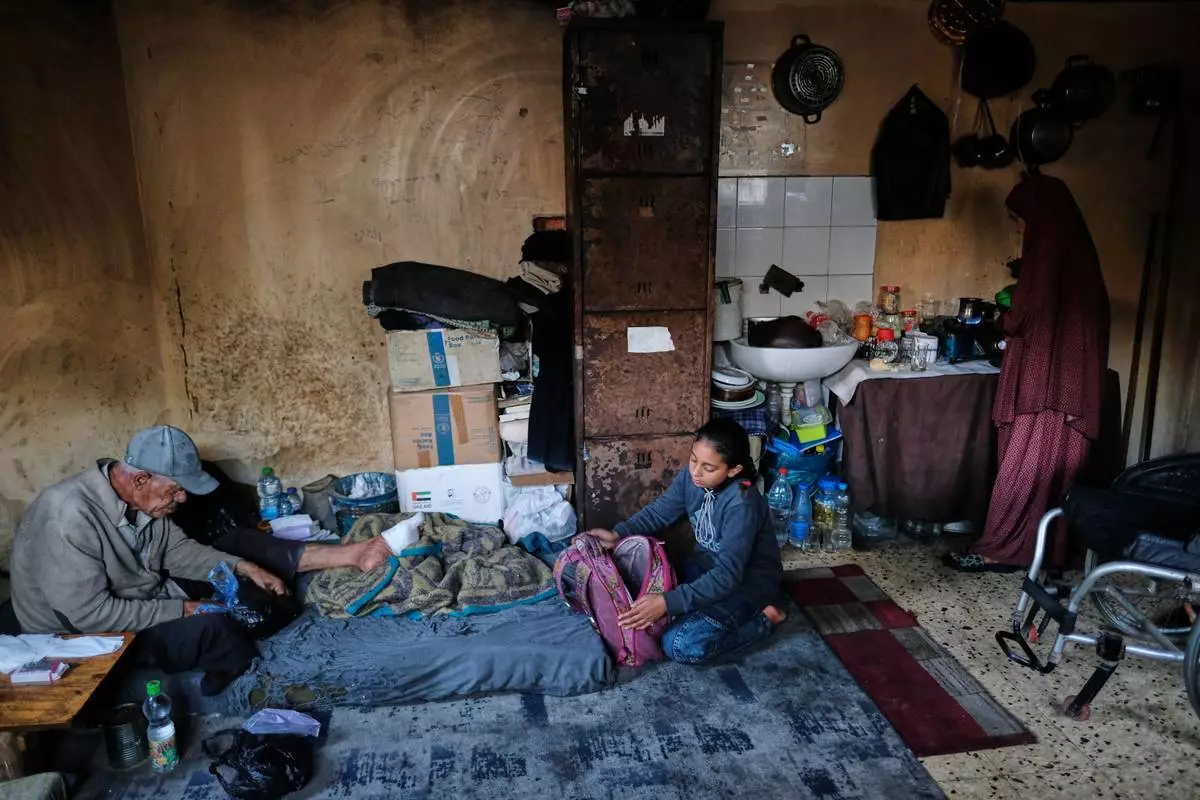
Eleven-year-old Ghazal al-Kibritti, who lost her parents and three siblings in an Israeli airstrike, prepares her school bag at her grandparents' home in Gaza City, Sunday, April 26, 2026. (AP Photo/Jehad Alshrafi)
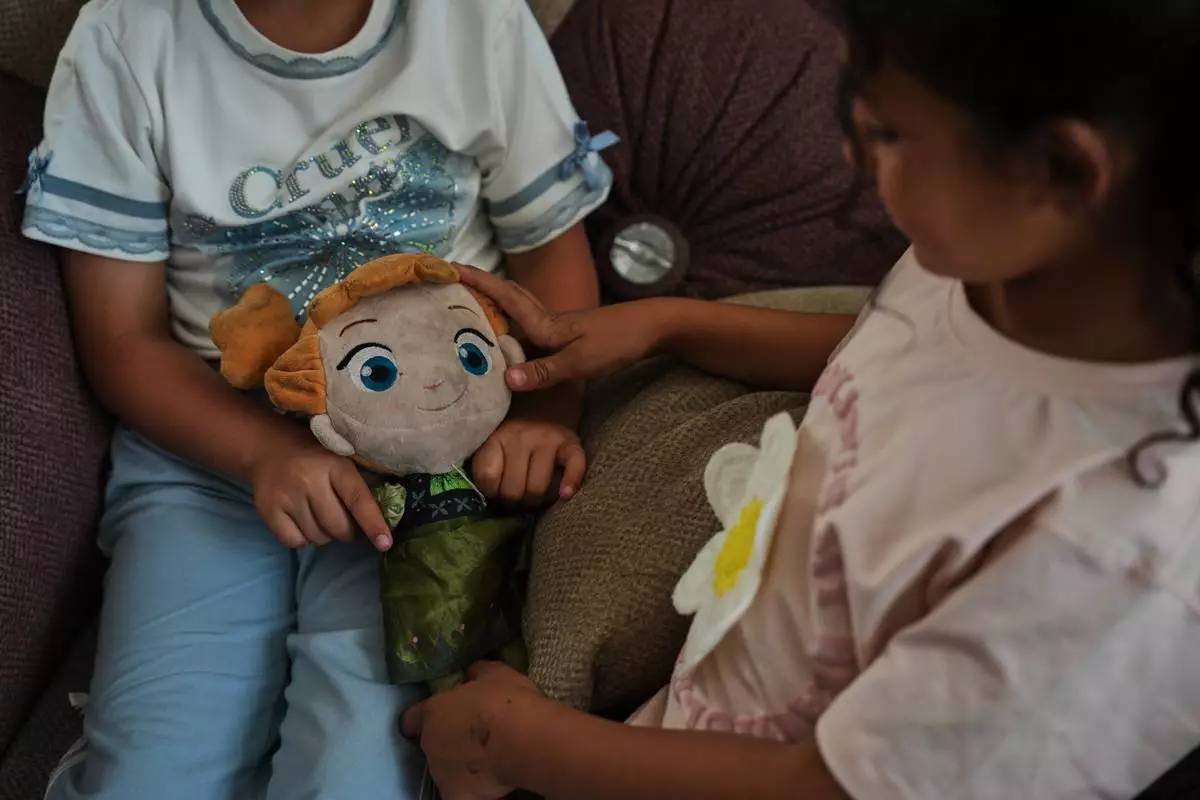
Palestinian orphan sisters Nabila and Basmala Al-Kafarna play with a doll at their home in Gaza City, May 31, 2026. Their parents were killed in an Israeli airstrike that struck a school sheltering displaced people on April 3, 2025. (AP Photo/Abdel Kareem Hana)
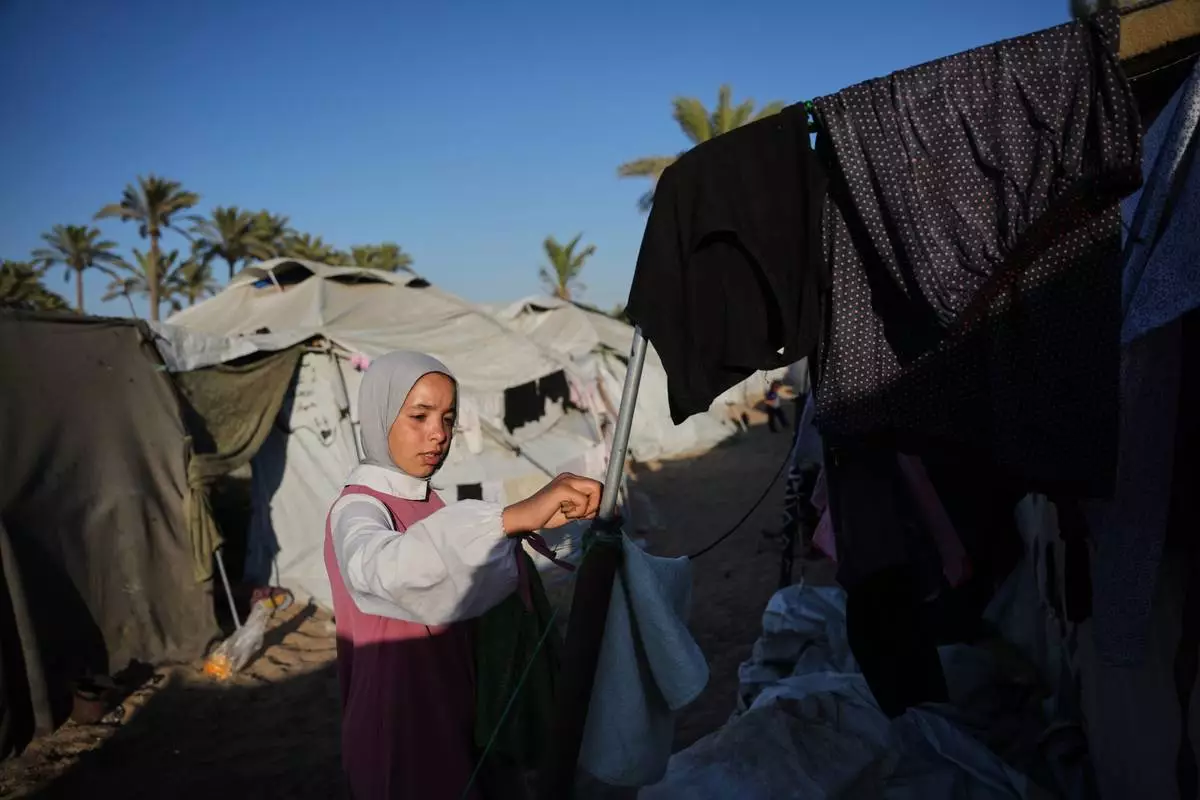
Palestinian orphan Dina Zourob, 17, hangs laundry outside her tent at an orphanage camp in Khan Younis, southern Gaza Strip, Sunday, June 7, 2026. (AP Photo/Abdel Kareem Hana)
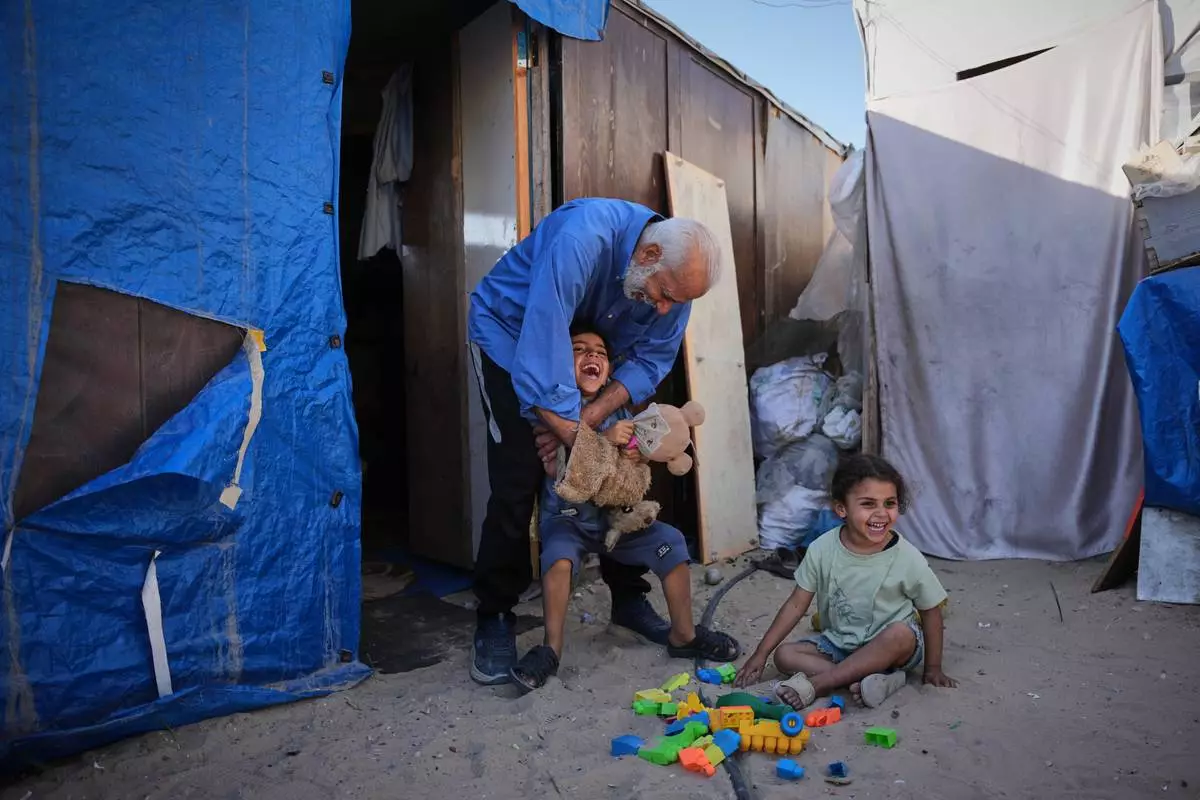
Mahmoud Nofal, 64, plays with his grandchildren, Tamim and Ranin Nofal, whom he has raised since their parents were killed in an Israeli airstrike, outside their tent in Khan Younis, southern Gaza Strip, June 2, 2026. (AP Photo/Abdel Kareem Hana)