Skip to Content Facebook Feature Image

Supreme Court sides with a Texas man who says it’s not a crime for marijuana users to have guns

News

Supreme Court sides with a Texas man who says it’s not a crime for marijuana users to have guns
News

News

Supreme Court sides with a Texas man who says it’s not a crime for marijuana users to have guns

2026-06-19 00:56 Last Updated At:01:00

WASHINGTON (AP) — The Supreme Court ruled Thursday against a broad federal ban on gun ownership by marijuana users, the latest in a line of firearm cases from a court that has expanded gun rights.

The justices decided unanimously in favor of Ali Danial Hemani, a Texas man who argued that a law barring guns from anyone who regularly uses illegal drugs violates the Second Amendment.

Justice Neil Gorsuch wrote that his opinion narrowly limits the government's power to take guns away from drug users who are not considered dangerous. Hemani, who was not charged with any other crimes or accused of using the weapon under the influence, is thankful he “finally has closure,” lawyer Zachary Newland said.

The decision is a loss for President Donald Trump’s Republican administration, which had defended the 1968 law despite arguing against other gun restrictions. Its core argument “fails under every measure,” Gorsuch wrote.

The law was originally meant to keep guns away from dangerous people, but millions of people now use marijuana, Gorsuch wrote. It is broadly legal in about half the states and has gained widespread use for health purposes.

“Whatever one thinks of these developments, the federal government has not just tolerated them; it helped fuel them,” Gorsuch wrote. “All of which leaves it awkwardly positioned to suggest that the millions of Americans who now regularly use marijuana are categorically and unusually dangerous.”

The law was also used in a case against Hunter Biden, who was convicted in Wilmington, Delaware, of buying a gun while addicted to cocaine in 2018. He was later pardoned by his father, Democratic President Joe Biden.

Someone addicted to an illegal drug could potentially still be prosecuted after Thursday’s decision.

“We do not address efforts to ban addicts, or those presently intoxicated, from possessing a firearm,” Gorsuch wrote. Prosecutors could charge a marijuana user if they had evidence the person was dangerous, he said.

Recreational use remains illegal on a federal level even after the Trump administration reclassified medical marijuana as a less-dangerous drug in April.

The case made for some unusual political alliances.

The American Civil Liberties Union and the National Rifle Association supported Hemani’s case, as did cannabis legalization groups such as NORML. On the other side were gun safety groups including Everytown that usually oppose the administration on Second Amendment issues.

The ACLU applauded the ruling, saying that nearly half of Americans have reported using marijuana at some point in their lives.

“The court has sent a strong message that the government cannot criminalize the conduct of large numbers of people by making categorical and unfounded assumptions about whether they are dangerous,” said Cecillia Wang, legal director at the ACLU.

The Second Amendment Foundation called it a “major victory for gun owners.”

The group Smart Approaches to Marijuana, which opposes legalization of the drug, condemned the court's decision.

“While the justices in this case appear to be most concerned with historical battles over Second Amendment rights, public health and safety are the collateral damage in this decision,” said CEO Kevin Sabet.

Gun control groups were more muted, with Everytown saying that the decision still recognizes that “drugs and guns can make for a dangerous mix.”

It is rare to see standalone criminal charges filed against people accused solely of owning guns and using drugs. The charge is more often filed against people also accused of other crimes.

The opinion is the latest in a series of firearm cases to reach the Supreme Court since its landmark ruling expanding gun rights in 2022 led to a wave of challenges around the country.

Since then, the high court has upheld a law aimed at protecting victims of domestic violence and strict regulations on ghost gun kits but has struck down a ban on bump stocks, an accessory that enables rapid fire. The justices are also considering a second firearm case this term over strict regulations on carrying guns in Hawaii.

Follow the AP’s coverage of the U.S. Supreme Court at https://apnews.com/hub/us-supreme-court.
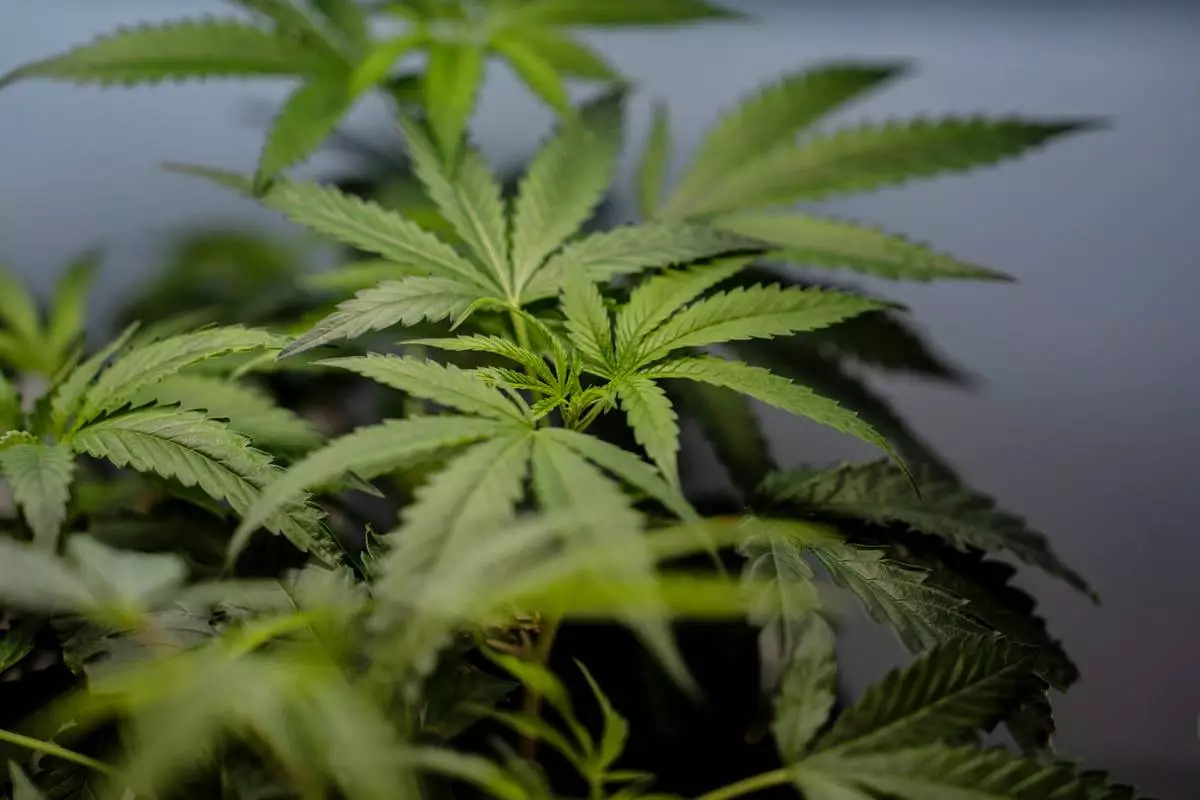
FILE - Marijuana clones are shown for sale at Tropicanna Dispensary and Weed Delivery in Santa Ana, Calif., April 23, 2026.(AP Photo/Jae C. Hong, File)
FILE - Marijuana clones are shown for sale at Tropicanna Dispensary and Weed Delivery in Santa Ana, Calif., April 23, 2026.(AP Photo/Jae C. Hong, File)

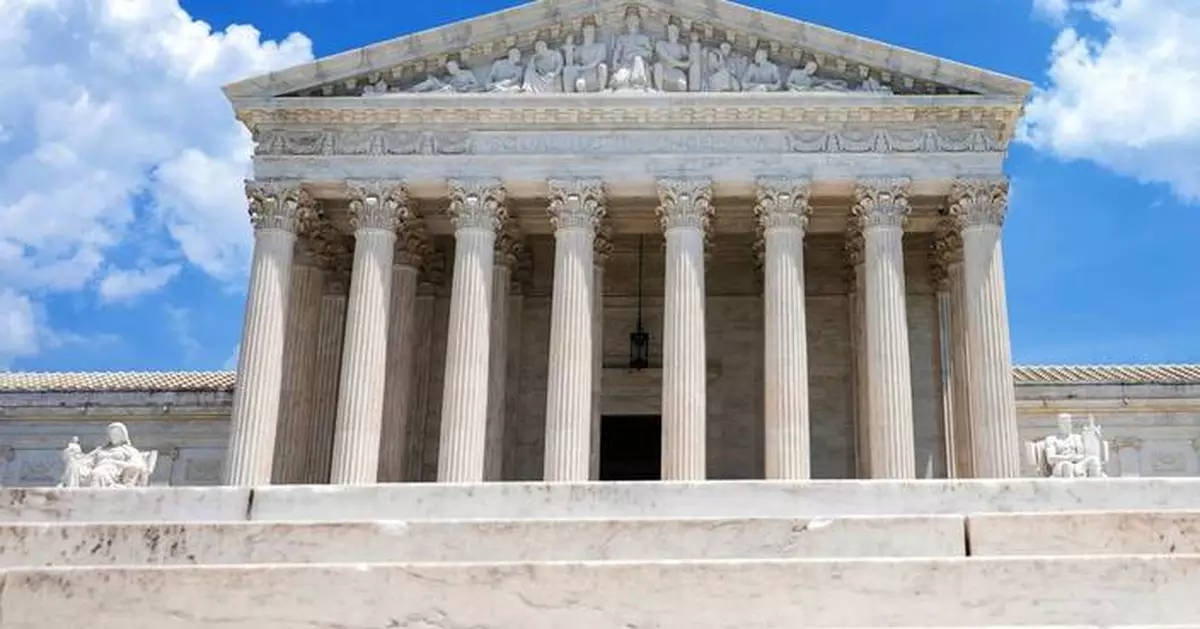
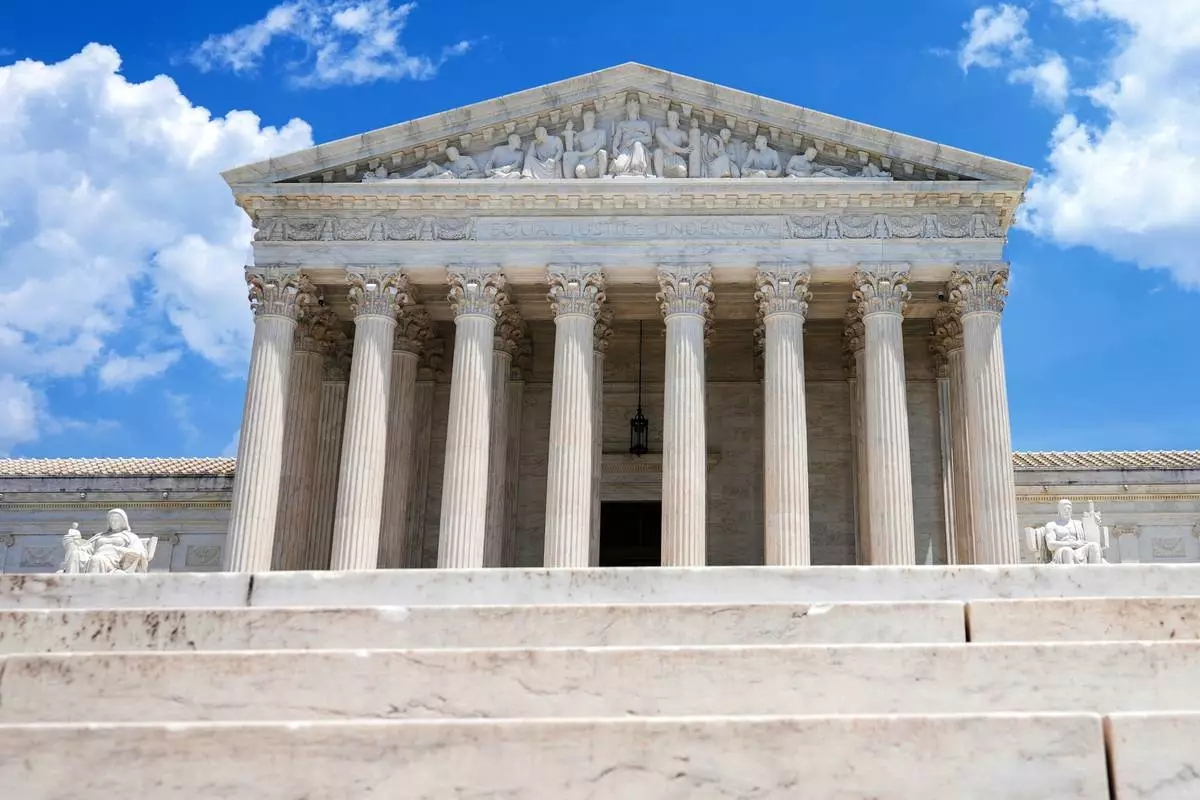
FILE - The U.S. Supreme Court is seen, June 11, 2026, in Washington. (AP Photo/Mariam Zuhaib, File)


FILE - The U.S. Supreme Court is seen, June 11, 2026, in Washington. (AP Photo/Mariam Zuhaib, File)
WASHINGTON (AP) — U.S. health advisers are debating a new kind of flu vaccine Thursday, the first made with the same mRNA technology that was key to ending the COVID-19 pandemic.

Moderna is seeking Food and Drug Administration approval of its new shot, dubbed mFlusiva, as an option for people 50 and older. The FDA advisory committee meeting is a step toward a final decision ahead of the winter flu season.

Tens of thousands of Americans die from influenza every year, and older adults are among the most vulnerable. There are various types of flu vaccines already available in the U.S., including three specifically recommended for people 65 and older. But vaccines made with the Nobel Prize-winning mRNA technology are faster to manufacture than other types — something experts say might help if the shape-shifting flu virus mutates in a way that requires suddenly brewing new doses to match.

In a study of 40,000 people age 50 and older, Moderna’s mRNA vaccine reduced flu cases by about 27% compared to those given another routinely used vaccine brand. Ahead of the meeting, FDA published a favorable review of that data and reported no safety concerns.

Moderna is seeking full approval for the vaccine’s use in the 50- to 64-year-old population — along with authorization for use in those 65 and older while it conducts additional testing. If the vaccine is cleared for use, Moderna plans a follow-up study of 400,000 people 65 and older, half given the mRNA version and the rest given today’s senior-targeted flu vaccines.

Moderna’s Dr. Rituparna Das told panelists that the company’s ability to quickly manufacture mRNA vaccines that closely match the latest flu strains could prevent thousands of hospitalizations in older Americans.

Severe flu cases in the U.S. generally rise in years when the flu shot doesn’t closely match the circulating virus. Moderna officials said flu strains for the fall vaccines now are chosen in February -- several months sooner than the yearly recipe update for COVID-19 shots that mostly are mRNA-based — and there can be a mismatch if the flu virus mutates after the recipe is made.

At the meeting, FDA vaccine reviewer Dr. Timothy Brennan suggested the agency was open to approving the vaccine for seniors ahead of the coming flu season, despite gaps in data.

Earlier this year, Moderna’s data was at the center of a highly unusual public dispute as a then-top FDA official blocked the company’s application for its first-of-its-kind shot.

The embattled vaccine chief at the time, Dr. Vinay Prasad, said the company should have compared its shot to a high-dose flu vaccine recommended for seniors rather than a standard-dose brand. It was a sign of FDA’s heightened vaccine scrutiny under Health Secretary Robert F. Kennedy Jr.

Moderna challenged that decision, noting that FDA staff had approved that main study’s design and citing a separate, smaller study comparing the mRNA shot with a high-dose vaccine for seniors. Days after the spat, the FDA accepted Moderna’s application.

The expert panel also will assess that smaller study, which found Moderna’s shot generated flu-fighting antibodies similarly to a high-dose senior shot. The FDA’s initial review noted the new vaccine lacks data on very frail older adults and those with weak immune systems.

The Associated Press Health and Science Department receives support from the Howard Hughes Medical Institute’s Department of Science Education and the Robert Wood Johnson Foundation. The AP is solely responsible for all content.

FILE - A sign marks an entrance to a Moderna building in Cambridge, Mass., May 18, 2020. (AP Photo/Bill Sikes, File)prnto

FILE - A sign marks an entrance to a Moderna building in Cambridge, Mass., May 18, 2020. (AP Photo/Bill Sikes, File)prnto

Recommended Articles