BRUSSELS (AP) — European Union leaders are holding a summit in Brussels on Thursday without Hungarian politician Viktor Orbán for the first time in 16 years.
Prime ministers, chancellors and presidents have come and gone, but Orbán has been a stable fixture in Brussels' halls of power, piloting Europe's drift to the right. He has pioneered a brand of nationalist populism that has found growing success on the continent and is idolized by the Make America Great Again movement in the U.S.
Long a foil to EU ambitions in Ukraine and beyond, the former Hungarian prime minister, who lost a pivotal election in April, is now sitting on the sidelines for the first time in a generation — and watching as his successor Péter Magyar joins leaders including Spain’s Pedro Sanchez, France’s Emmanuel Macron and Germany’s Friedrich Merz as they advance policies likely at odds with Orbán’s vision.
As the EU summit opened to discuss ramping up support for Ukraine, among other things, Orbán was surrounded by his far-right allies from his new position outside the halls of power he once roamed.
Orbán was in the Belgian capital to take part in a Thursday summit of his Patriots for Europe party group, a collection of far-right parties from across the bloc that forms the third-largest caucus in the European Parliament.
Orbán, who is now Hungary’s leading opposition figure, had repeatedly clashed with the EU as he vilified its institutions and leaders and broke regulations as he hollowed out institutional checks and balances in Hungary.
Orbán’s bruising election loss was welcomed with relief by many EU leaders and viewed by many observers as a rebuke of his combative approach to the EU and close ties to Russia. Even so, he has remained steadfast in his belief that far-right parties in Europe are on the verge of a breakthrough.
Orbán told a news conference in Brussels on Wednesday that his election defeat had not interrupted “the rise of patriotic political organizations, communities and parties across Europe.”
“No one election loss can stop this historical process,” he said. “Anti-migration and sovereigntist political forces in Europe will continue to grow stronger in the coming months and years.”
Orbán hopes the Patriots for Europe will be a vehicle for transforming the EU to his vision, for example by decreasing the bloc’s purview in matters of rule of law and democracy, taking a zero-tolerance approach to immigration and steering toward deeper cooperation with Russia and China.
He had been the primary impediment to the EU's efforts to draw Ukraine into the bloc. But Hungary’s new government, led by Magyar and his center-right Tisza party, has pledged more constructive cooperation with the EU.
Last week Hungary lifted its veto on beginning Ukraine’s accession process after weeks of negotiations with Kyiv on restoring minority rights for ethnic Hungarians in western Ukraine.
“Hungary obviously had issues that they were able to resolve to allow this to happen this week,” said Thomas Byrne, Minister for European Affairs for Ireland, which will take the rotating EU presidency in July for six months. During that time, accession talks are slated to accelerate for Ukraine and Moldova, among others.
Europe’s far right has indeed scored some recent successes. France’s National Rally, led by Marine Le Pen, gained ground in municipal elections earlier this year, while Alternative for Germany (AfD) is performing increasingly well in polls. The populist leader of the Czech Republic, Orbán ally Andrej Babis, returned as prime minister last year and is now the only Patriots member who leads an EU-member nation.
They were able to deeply reform the EU's migration policy, too, because of an alliance with the center-right European People's Party. Human rights groups have fiercely criticized recent measures to increase the bloc's surveillance authorities, ramp up deportations of migrants, and the setting up of detention centers outside the EU dubbed “return hubs.”
When the right-wing coalition won a vote to pass the migration reform on Wednesday, far-right and center-right lawmakers broke out in cheers inside the European Parliament chamber in Strasbourg, France.
“Send them back,” they chanted.
Geert Wilders, the firebrand Dutch ally of Orbán, said the victory reflects the ongoing power of the far right.
“We are still very powerful indeed,” he said to reporters before the Patriots meeting. “The influence is only growing.”
Orbán’s loss has not curbed the right-wing populists’ momentum, said Gabriela Greilinger, a researcher at the University of Georgia in the U.S.
“Far-right parties remain strong in several European countries and will continue to be electorally successful, whether or not Orbán is in power,” she said.
Still, fractures have emerged within Europe’s far right stemming from discomfort over the United States and Israel’s war in Iran as well as U.S. President Donald Trump’s threats to annex Greenland, a territory held by EU member Denmark.
And now that Orbán can no longer veto EU decisions — a tactic that increasingly defined his role at the bloc’s summits — Ukraine’s main obstacle to beginning the process of joining the EU has been taken off the table.
“Thanks to all the leaders for their for their unanimity, at last,” said Ukrainian President Volodymyr Zelenskyy ahead of the summit.
Spike reported from Budapest, Hungary. Associated Press writer Sylvain Plazy contributed to this report from Brussels.
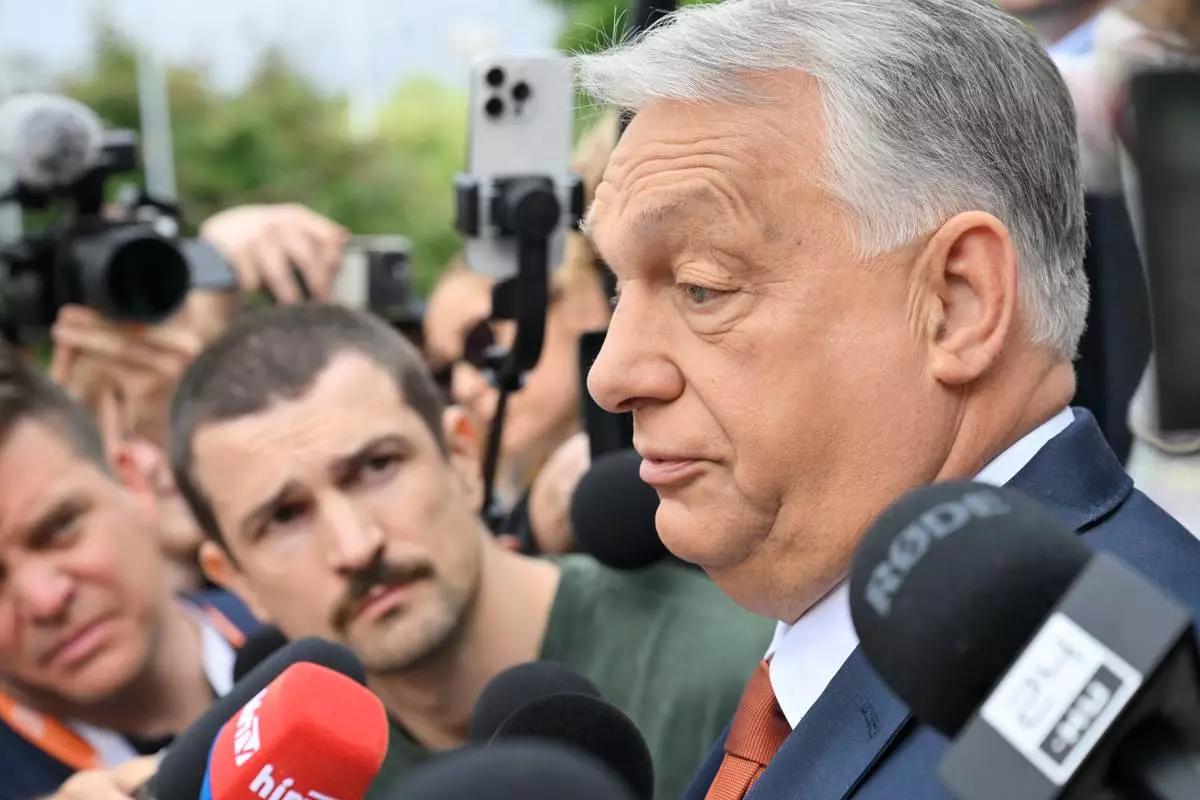
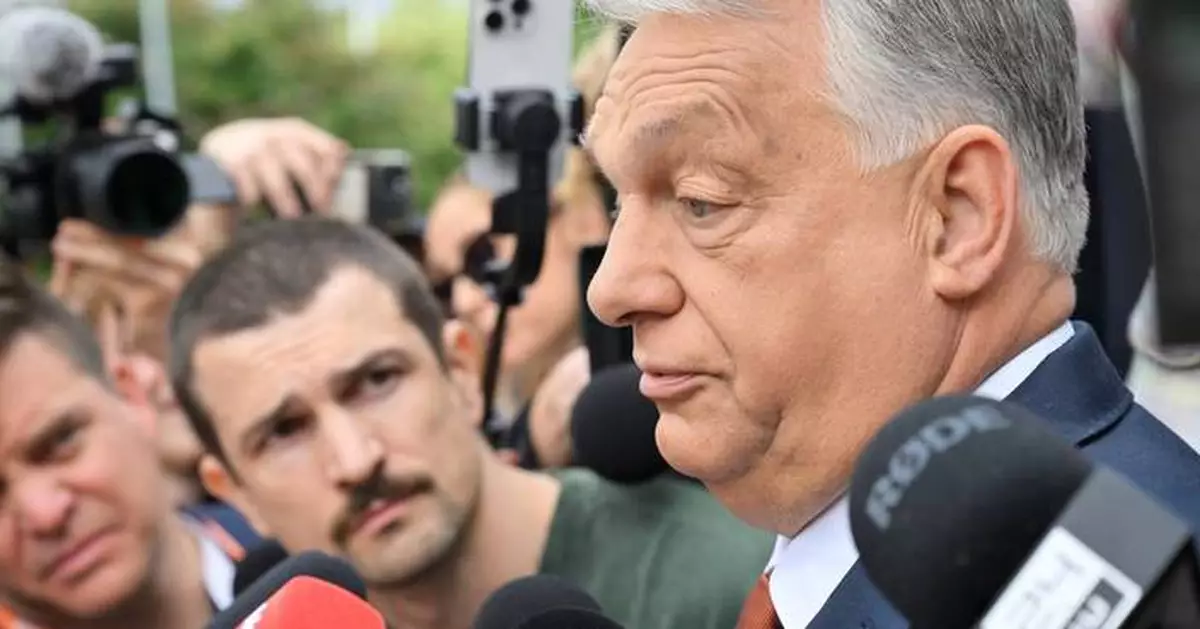
Fidesz party head and former prime minister Viktor Orban, center, speaks to the press as he arrives at the opposition Fidesz party's working congress meeting, in Budapest, Hungary, Saturday, June 13, 2026. (Zoltan Mathe/MTI via AP)
NEW YORK (AP) — Baseball owners proposed banning high school players from signing with major league teams, raising the age for international amateurs and slashing the money spent on signing bonuses in negotiations Thursday for a new collective bargaining agreement.
The amateur draft for players residing in the U.S., Canada and Puerto Rico would be cut from 20 rounds to 12 beginning in 2027 under the proposal Major League Baseball made during a bargaining session with the players' association. An identical 12-round draft would be started for international prospects, a proposal the union has rejected in the past.
Starting in 2028, a prospect for the amateur draft would have to be at least 20 years old by the Sept. 1 of his signing year and two years removed from the graduating year of his high school class — a restriction that also would eliminate players who completed their first year of junior college.
The amateur draft started in 1965, high schoolers have been eligible along with college players who are in or have just finished their junior years.
Raising signing ages would likely lead to players being older when they become eligible for free agency, which currently requires six years of major league service.
MLB cited increased revenue in college baseball as reasoning. In addition, MLB said 75% of high schoolers signed from 2012-19 did not reach the major leagues.
“Expanded scholarships, NIL opportunities, revenue sharing and significant investments in facilities and player development have made college baseball an increasingly important pathway that is producing major league-ready talent at an accelerated rate," MLB said in a statement. “By creating a draft system centered around college-aged players and making most college players eligible one year earlier, more players will benefit from both a college education and an elite development environment while reaching professional baseball — and ultimately the major leagues — more quickly.”
The players' association claimed the plan would decrease compensation by $1 billion over five years, including $400 million from this year to 2027.
“MLB made another set of proposals that are flat-out bad for baseball, ones that would cripple the next generation of players and damage the future of our game,” the union said in a statement.
ACC commissioner Jim Phillips supported keeping more prospects in college longer. He said in a statement that improvements in facilities, technology and scholarships “are creating more opportunities for student-athletes and providing additional pathways to develop at the collegiate level before taking the next step to the professional ranks.”
MLB said it will not seek to reduce the 120 minor league teams in the top four levels when it negotiates new professional development licenses in 2030 to replace expiring 10-year deals. It would cap bonuses for undrafted players at $10,000 — Middle Tennessee two-way player Trace Phillips was bypassed in the draft last July and signed with Tampa Bay for $629,200.
For international amateurs, the age to sign would be raised to 18 on the Sept. 1 of their signing year, up from 17.
“The game's greatest stars are precocious talents. We always want to have a great window for them,” said Scott Boras, baseball's most high-profile agent. “International markets recognize this, as well. When you bar a labor force from opportunity in America, it is not an American concept.”
Each separate draft would have $200 million in signing pools in 2027. There would be hard caps for each draft.
Teams would be able to trade draft picks but a club couldn't trade its first-round pick in consecutive drafts. A team couldn't acquire more than three additional selections among the first three rounds. In addition, MLB proposed requiring up to 10 prospects to attend the draft, and each would get a $50,000 draft attendance bonus.
Spending on signing bonuses for players eligible for the 2025 amateur draft have totaled $401.81 million and signing bonus pools for 2026 increased by 2.5%.
Each team would have the same amount to spend under the proposal rather than the current system which gives higher pools to teams with poorer records in the previous year. Pittsburgh is at just over $19 million this year and the World Series champion Los Angeles Dodgers at slightly under $4 million. Teams currently can go over their pools and often do as much as 5%.
Teams have spent $196.38 million on signing bonuses for international amateurs in 2026. The current signing period runs from Jan. 15 to Dec. 15 each year, but the initial international draft would be no earlier than September 2027 and no later than March 2028.
MLB proposed eliminating competitive balance round picks that began in 2023 and cutting the draft lottery that started in 2023 from the top six picks to four.
Bargaining began May 13 and the sides exchanged initial proposals two weeks later as management proposed a salary cap for the first time since 1994, which resulted in a 7 1/2-month strike and the first cancellation of the World Series in 90 years.
Baseball's five-year collective bargaining agreement expires Dec. 1 and management is expected to immediately impose a lockout, as it did in December 2021. An agreement was reached on the 99th day of the lockout, preserving a slightly delayed 162-game schedule.
AP MLB: https://apnews.com/hub/mlb
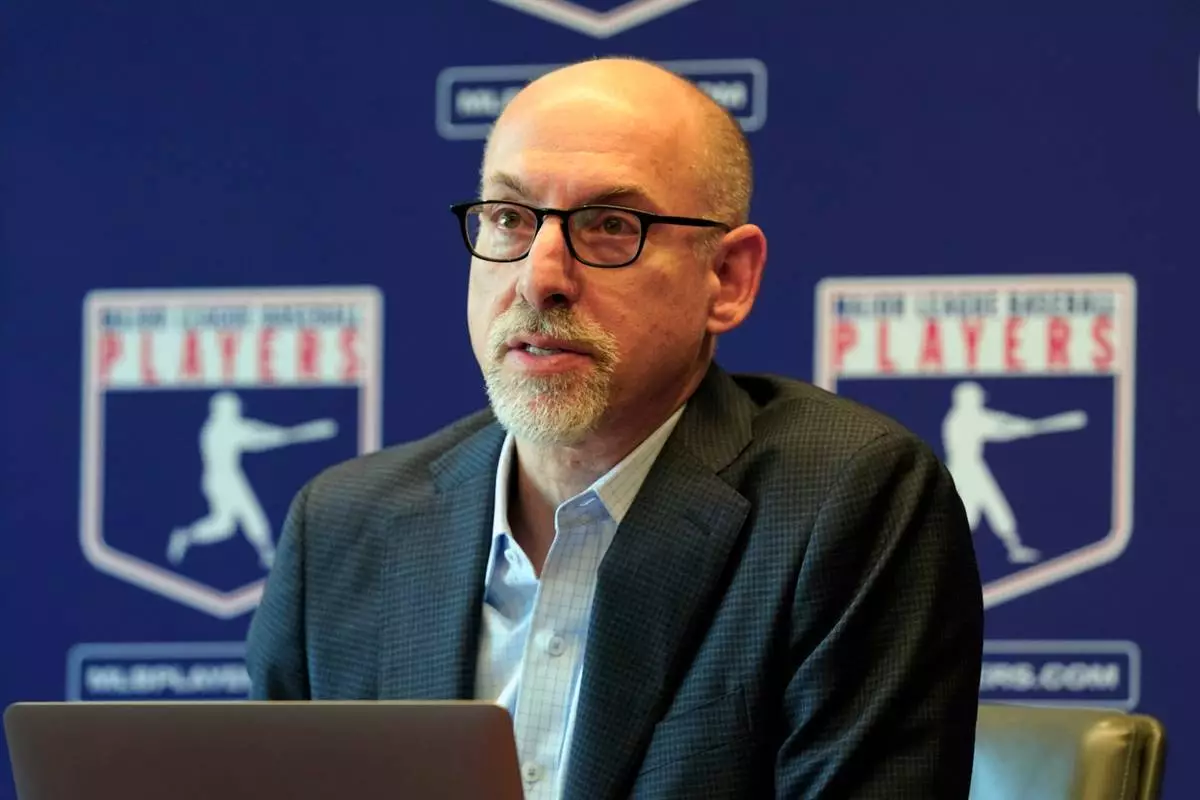
FILE - Attorney Bruce Meyer, the current interim executive director of the Major League Baseball Players Association, speaks at a news conference in New York on March 11, 2022. (AP Photo/Richard Drew, File)
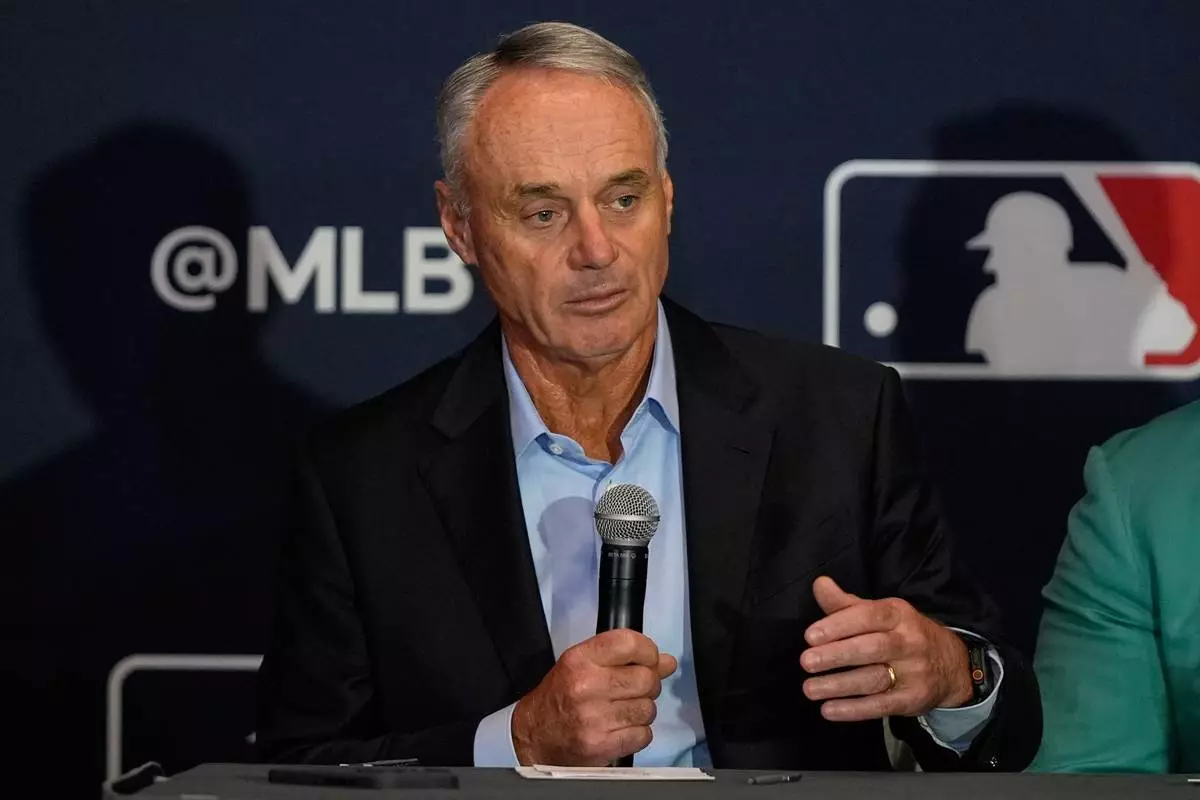
FILE - Commissioner of Major League Baseball Rob Manfred answers questions during a news conference at the MLB winter meetings, Dec. 8, 2025, in Orlando, Fla. (AP Photo/John Raoux, file)