DAKAR, Senegal (AP) — The entire Cabinet in Equatorial Guinea has resigned after failing to achieve the vast majority of the government's goals, Vice President Teodoro Nguema Obiang Mangue said.
Obiang, who is also the son of President Teodoro Obiang Nguema Mbasogo, said Tuesday that Prime Minister Manuel Osa Nsue Nsuga had submitted the Cabinet's resignation after falling far short of government targets. He said the government had achieved only 10% of its targets, but did not say how those targets were measured.
“The degree of execution achieved is clearly insufficient in relation to the expectations and commitments undertaken,” the vice president said in a statement posted on X.
The ruling Democratic Party of Equatorial Guinea, or PDGE, said the president was dissatisfied with the government’s performance, citing corruption, delays in development projects and a failure to diversify the economy.
A new government was expected to be appointed in the coming days.
The move is unlikely to alter the balance of power in Equatorial Guinea. President Obiang, who has been in power since 1979 as Africa's longest-serving president, dominates the political system and appoints the government.
There are virtually no critical voices in the oil-rich Central African country, where the authorities have been accused by rights groups and the U.S. State Department of detaining, torturing and even killing those that dare to speak out.
It is also one of ten African countries to have signed widely criticized deals with the Trump administration to take third-country deportees.

FILE - Equatorial Guinea Vice President, Teodoro Nguema Obiang Mangue, second right, arrives to attend the Holy Mass with Pope Leo XIV at the Malabo Stadium in Malabo, Equatorial Guinea, April 23, 2026. (AP Photo/Misper Apawu, File)
SAN FRANCISCO (AP) — Several brush fires were burning in Southern California on Thursday evening, stoked by hot, windy weather that caused utility companies to shut off electricity for tens of thousands of people around the state.
A rapidly spreading blaze in Malibu, a coastal town west of Los Angeles, prompted evacuation orders and warnings for a large swathe of the Santa Monica Mountains. A large cloud of black smoke over the hilltops could be seen on nearby cameras and miles away.
The blaze grew to over 100 acres (40 hectares) and was threatening a Los Angeles County juvenile detention and rehabilitative facility. The National Weather Service forecasted increased wind gusts overnight that could bolster fire activity.
Firefighters worked to contain two other fires that had sparked in the afternoon and triggered evacuation orders in the city of Azusa, north of LA, and Camp Pendleton, near San Diego.
In Northern California, nearly 62,000 customers in 26 counties in the Sierra Nevada foothills, wine country and the central coast had no electricity, according to Pacific Gas and Electric Company, which began proactively turning off power Wednesday night. An additional 65,000 customers in Los Angeles, Kern and Ventura counties lost power Thursday, Southern California Edison said.
Some of California’s worst wildfires have been sparked by power equipment, and utilities in recent years have begun proactively shutting off power during dry, windy weather in an effort to prevent blazes.
Weather conditions that increase the fire risk were expected to last through Saturday.
Los Angeles Mayor Karen Bass, who faced criticism for her city's response to deadly fires in 2025, directed the fire department to deploy personnel and equipment ahead of the winds. The fire department also requested assistance from the state’s office of emergency services.
“It’s a pretty widespread event of elevated fire weather, so the whole SoCal region should really be on alert,” said Rose Schoenfeld, a meteorologist with the National Weather Service.
Dry, warm and gusty northeast winds known as Santa Anas, which blow from the interior of Southern California toward the coast and offshore, were forecast, with the strongest winds expected Thursday afternoon through Friday afternoon.
The winds could reach 20 to 40 mph (32 to 64 kph), with gusts from 50 to 70 mph (80 to 113 kph), in the San Gabriel mountains in Los Angeles County and the Santa Susana mountains, which are mostly in Ventura County, Schoenfeld said. Elevated, though brief, critical fire weather conditions were also forecast for portions of the Santa Lucia mountains in San Luis Obispo County.
A fire that sparked Thursday in Azusa prompted evacuation orders for a neighborhood in the foothills of the San Gabriel mountains that were later downgraded to warnings. Some 200 firefighters were battling the wind-driven brush fire, which had burned over 40 acres (16 hectares), Jonathan Torres, a spokesperson with the Los Angeles County Fire Department, told KTLA-TV. Forward progress on the blaze had been stopped by mid-afternoon.
Farther south, a fire at Camp Pendleton threatened buildings. Evacuation orders were issued in the Las Flores area of the military base and lifted by evening, military officials said in a statement.
Crews with the Camp Pendleton Fire Department and the California Department of Forestry and Fire Prevention were fighting the blaze, which had grown to more than 1.5 square miles (3.8 square kilometers), sending billowing smoke into the air. Officials temporarily closed a portion of nearby Interstate 5, a key north-south route in Southern California.
The blaze threatened infrastructure and led to a power outage in the Las Pulgas area, where the fire started, military officials said.
In Northern California, some communities in the Sierra Nevada and its foothills began experiencing strong winds, high temperatures and low humidity Wednesday night, the National Weather Service said.
The service issued a Red Flag Warning for parts of central and Northern California starting Thursday and lasting through Friday morning, saying any fires would spread rapidly. Such warnings are issued when weather conditions create an increased risk of wildfires.
Pacific Gas and Electric Company said Thursday it has notified 90,000 customers in 29 counties that they may lose power.
The potential interruption in service to customers from the Central Coast to the upper corners of the Sierra Nevada could last through Saturday afternoon, the company said.
In Southern California, the Red Flag Warning for the mountainous areas in Ventura and Los Angeles counties was in effect through Friday night.
In January 2025, the Palisades Fire — fanned by Santa Ana winds — ripped through a hillside Los Angeles neighborhood, killing 12 people and destroying mansions with spectacular ocean views. Authorities determined the Palisades Fire was a carryover from another fire that authorities alleged was started intentionally by a 29-year-old man.
Another fire that burned at the same time in the city of Altadena, in Los Angeles County, killed 19 people and destroyed more than 9,400 homes and businesses. That fire was caused by sparks from an idle transmission tower owned by Southern California Edison, officials said.
Schoenfeld said the Santa Ana winds are not going to be as strong as during those fires, when they were gusting 60 to 100 mph (96 to 160 kph).
Southern California Edison is considering public safety shutoffs that could affect 207,000 customers, with most of them — 105,000 — in Ventura County, just north of Los Angeles.
Ding reported from Los Angeles.
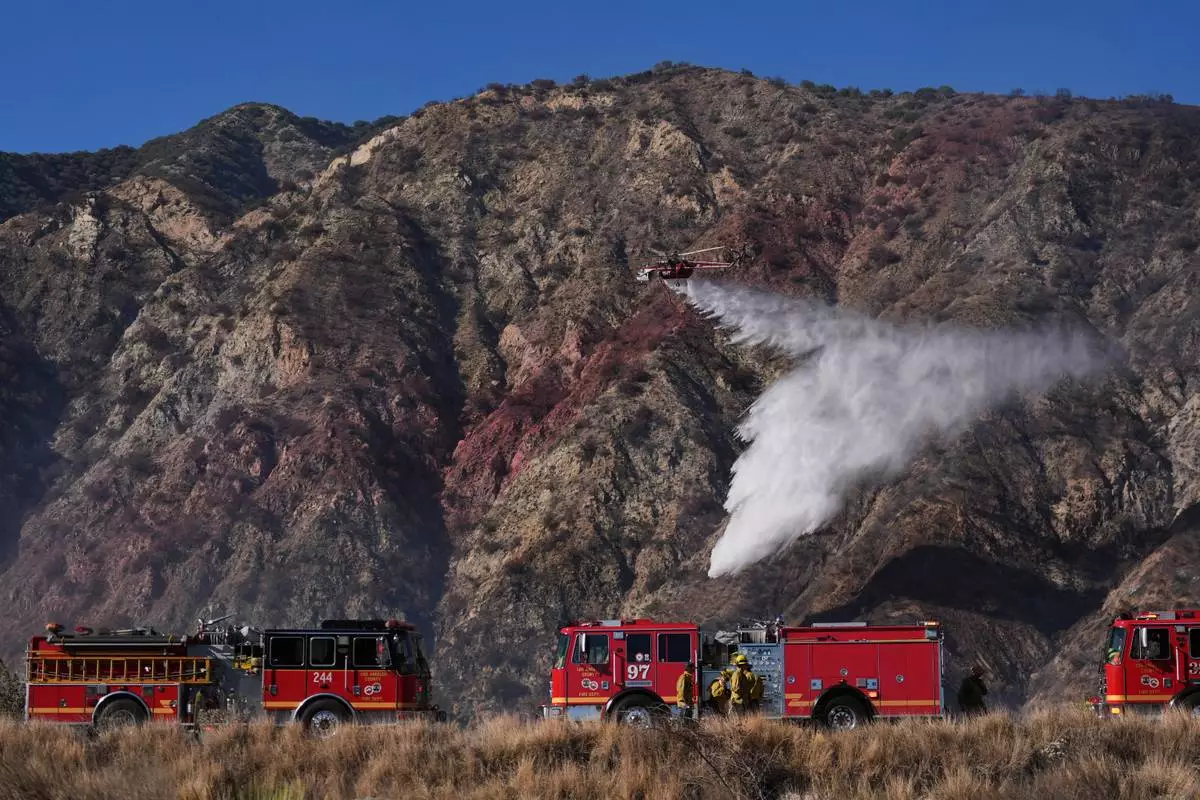
Water is dropped on the Peak Fire by helicopter on Thursday, Oct. 15, 2026, in Azusa, Calif. (AP Photo/Jae C. Hong)
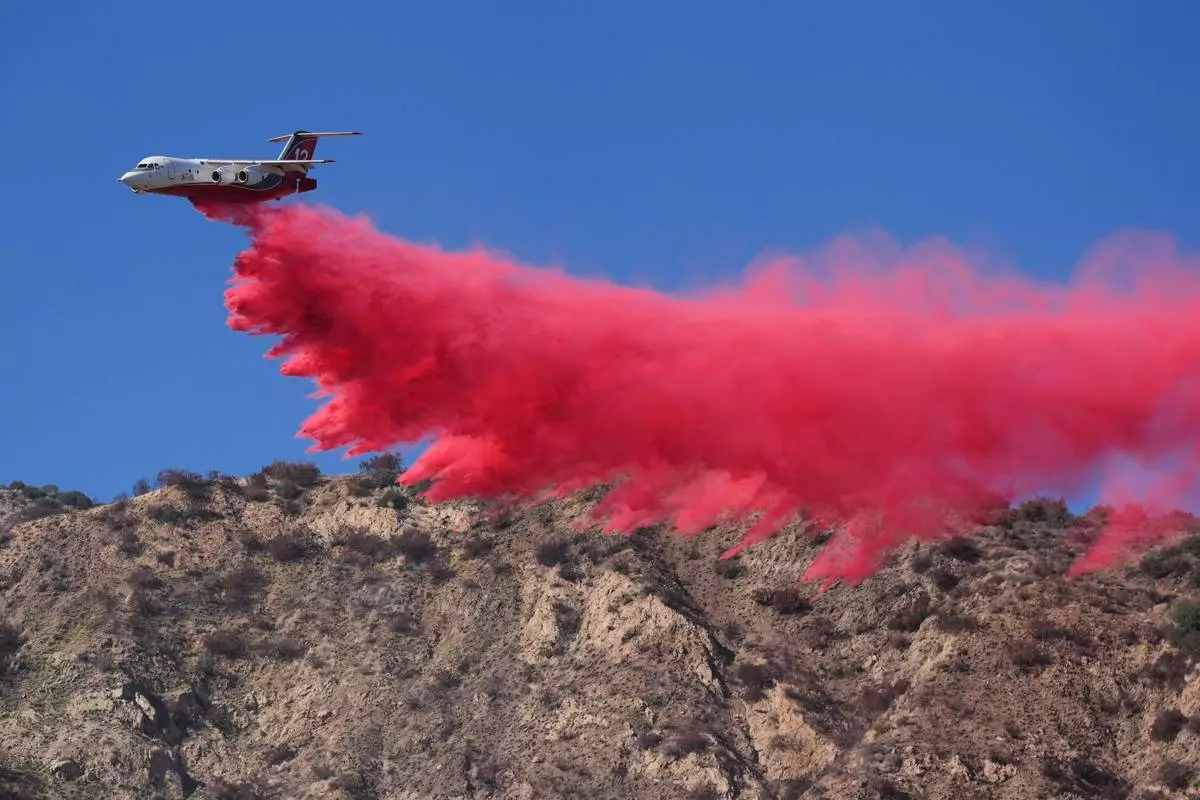
A tanker drops retardant on the Peak Fire Thursday, Oct. 15, 2026, in Azusa, Calif. (AP Photo/Jae C. Hong)
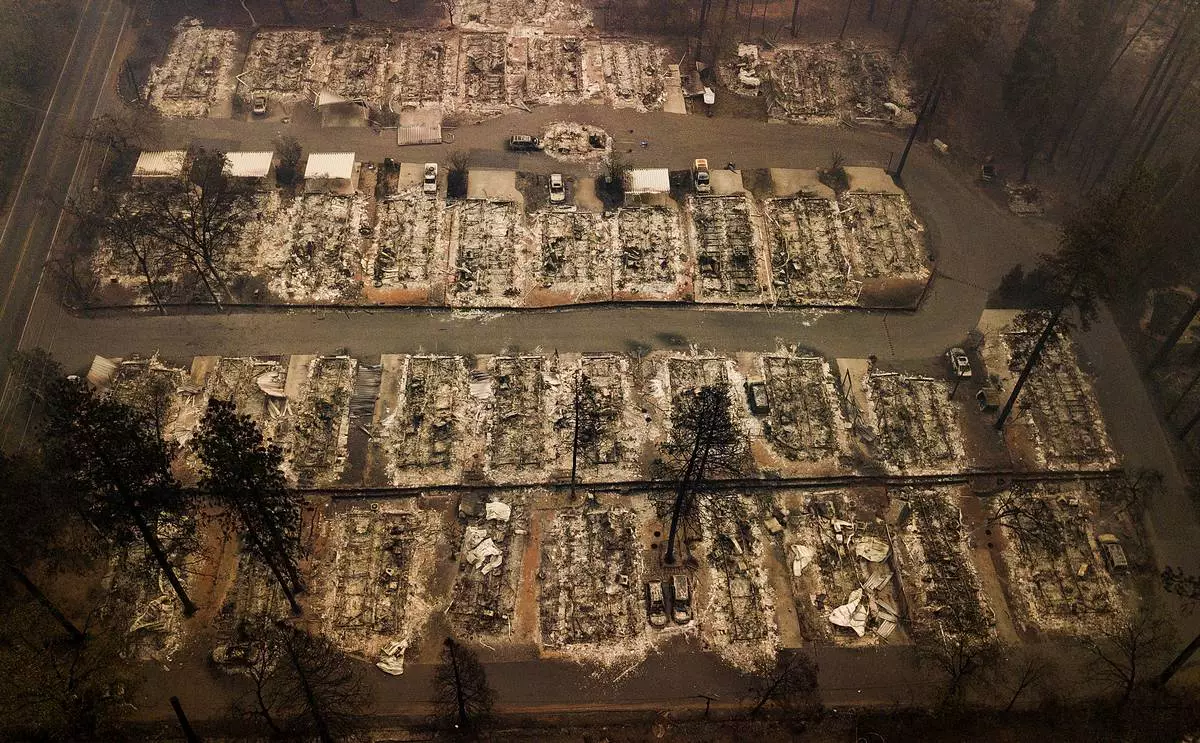
FILE - Residences leveled by a wildfire in Paradise, Calif., are seen on Nov. 15, 2018. (AP Photo/Noah Berger, File)
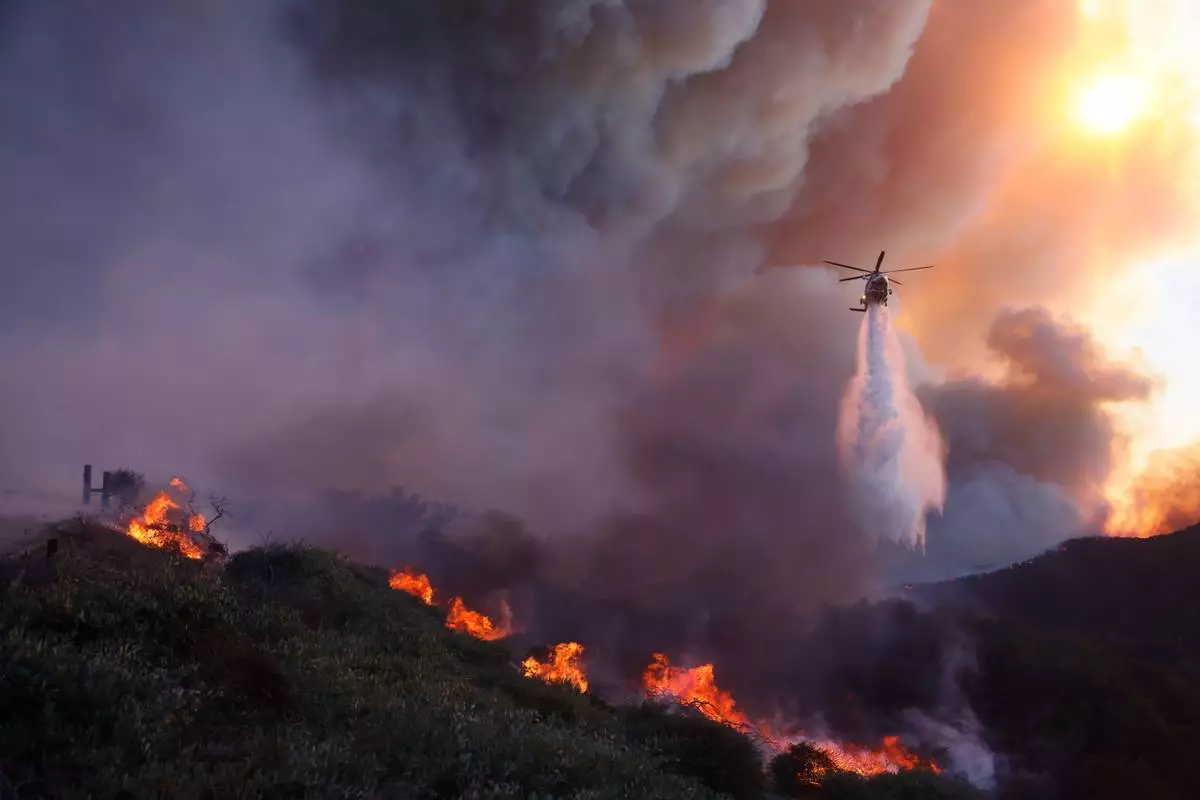
FILE - Water is dropped by helicopter on the advancing Palisades Fire in the Pacific Palisades neighborhood of Los Angeles, Jan. 7, 2025. (AP Photo/Etienne Laurent, File)
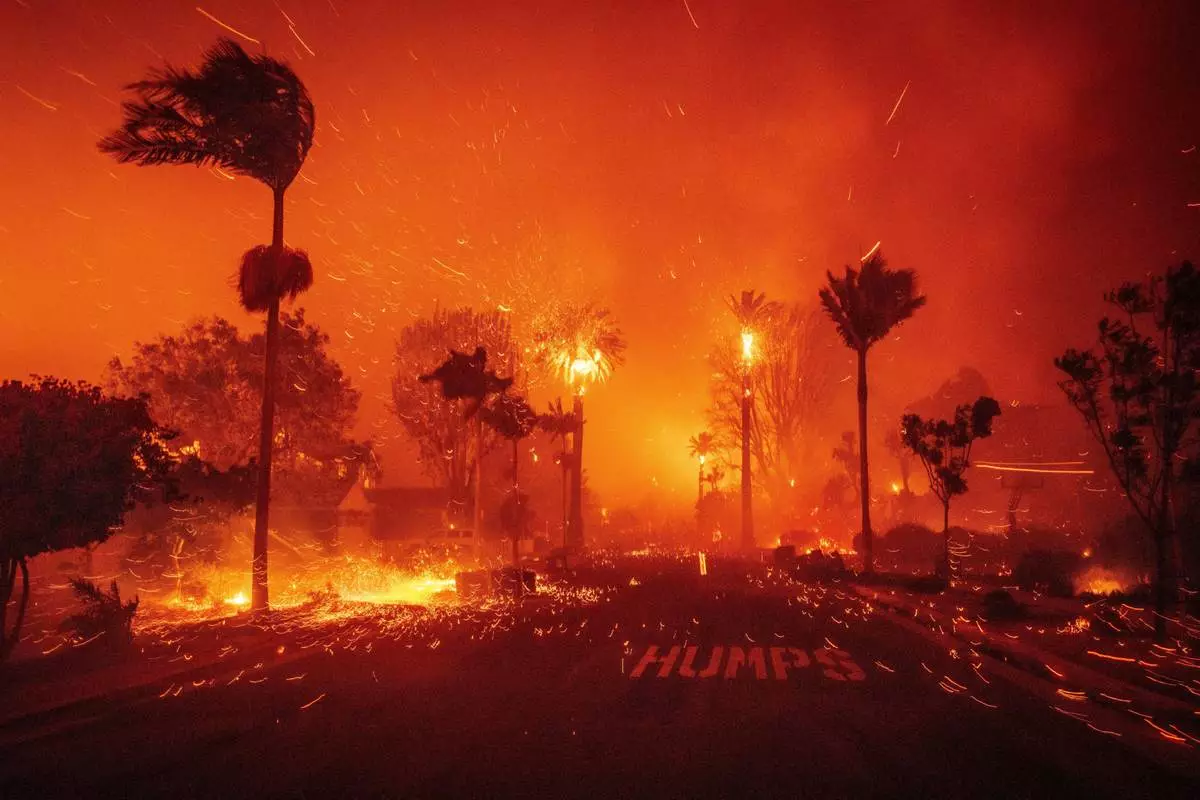
FILE - The Palisades Fire ravages a neighborhood amid high winds in the Pacific Palisades neighborhood of Los Angeles, Jan. 7, 2025. (AP Photo/Ethan Swope, File)
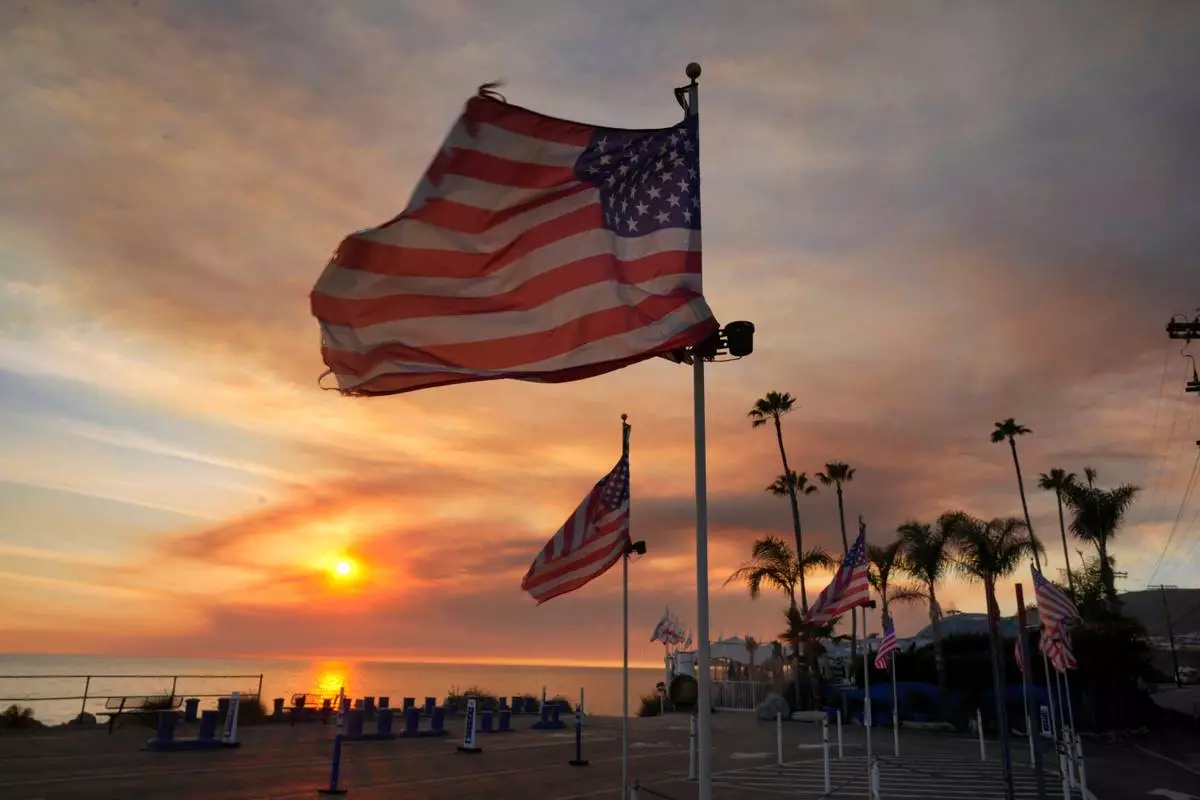
FILE - Flags fly under heavy winds before sunset as a plume of smoke from the Franklin Fire rises over the ocean Tuesday, Dec. 10, 2024, in Malibu, Calif. (AP Photo/Damian Dovarganes,File)