Efforts by Major League Baseball teams to promote LGBTQ+ inclusivity during Pride Month haven't been embraced with open arms by some of its rank-and-file players, and the league's response is prompting criticism from prominent Republican politicians.
Several members of the San Francisco Giants added Bible verses or opted not to wear the themed cap at all during the club's Pride Night on June 12. A few nights earlier, two Los Angeles Dodgers players did not wear rainbow-themed caps with their teammates.
MLB warned Giants players that writing on the caps is a violation of league policy, though the league added its issue was not with the content of the respective messages but the act of modifying the cap itself.
The fallout has included criticism from notable politicians, including Vice President JD Vance and Missouri Sen. Josh Hawley.
Here’s what to know about MLB and Pride Night:
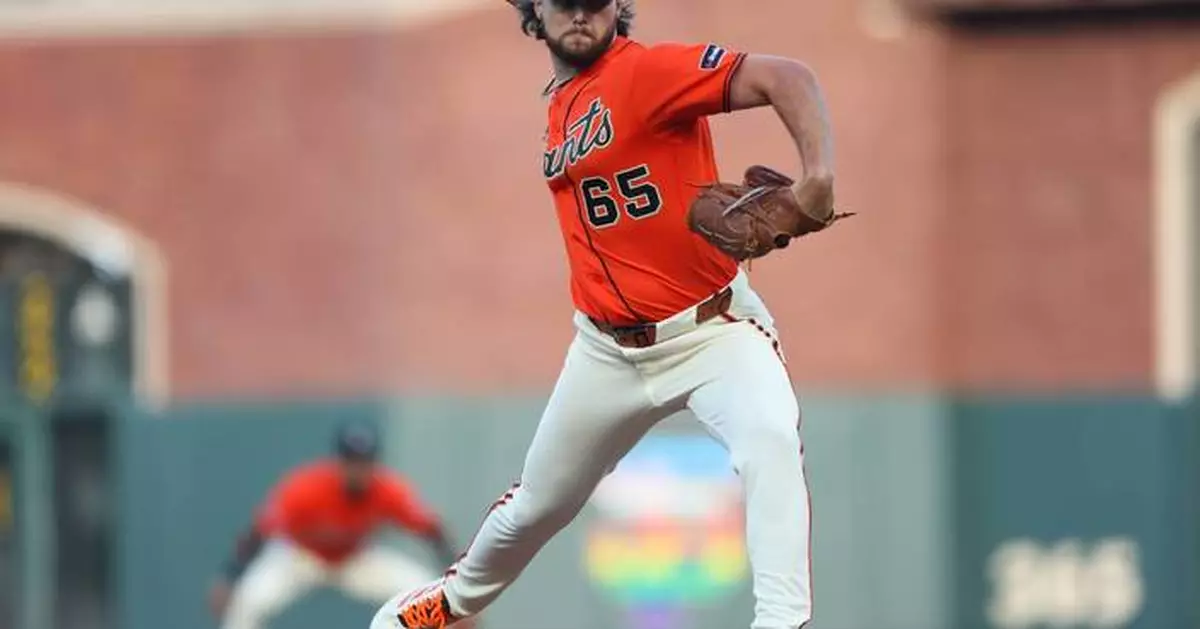
Several members of the San Francisco Giants pitching staff — starter Landen Roupp and relievers JT Brubaker and Ryan Walker — added Bible verses to their caps during a 5-1 home loss to the Chicago Cubs during San Francisco's annual Pride Night.
Roupp, a North Carolina native, wrote “Gen 9:12-16” in a silver marker on the front of the black cap, which had the team's classic “SF” logo filled in with colors of the rainbow, long a symbol of the LGBTQ+ community.
The Genesis passage includes, “I have set my rainbow in the clouds, and it will be the sign of the covenant between me and the earth,” according to the Bible's New International Version translation.
“It’s just about God’s covenant and a promise he makes to us and his faithfulness and his mercy,” Roupp told reporters afterward. “Just kind of something I believe in and I stand firm in that and thankfully we live in a country where you know, we have freedom to believe what we want, yeah, and express what we want.”
Giants reliever Sam Hentges eschewed the Pride-themed cap altogether, opting instead for the club's regular black version with the “SF” in orange.
The league issued a pair of statements in response.
The first noted that writing on the cap violates the league's rules, and warned players about future violations.
The league issued another statement Tuesday to clarify that the “routine verbal warning” had nothing to do with the content of the respective messages but the act of modifying the uniform.
“We have given the same warning numerous times in the past to players for messages such as, ‘Dad’, ‘Happy Mother’s Day, I Love Mom,’ and names of family members,” the league said.
Vance quote-tweeted a post mentioning MLB's warning, writing, “Trump won we don't have to do this anymore.”
President Donald Trump's second administration has taken aggressive action against members of the LBGTQ+ community, the transgender community specifically.
Hawley penned a letter to MLB Commissioner Rob Manfred on Tuesday in which he expressed “grave concern” over the warning to the players. Hawley called the warning “dubious” because he feels MLB is already promoting a political viewpoint by having Pride-themed uniforms.
Hawley asked MLB to respond to several inquiries, including a list of all uniform violation fines over the last five years.
First-year San Francisco manager Tony Vitello, whose team entered Wednesday with the second-worst record in the National League, is trying to stay out of the fray.
“I didn’t know about the vice president, it hasn’t been in my world,” he said. "My world’s kind of been, ‘How do we find a way to beat the Braves?’ And then if we can beat them, try and beat them again. So hopefully our guys are focused on what they’ve got to do and handling their business the right way.”
In 2022, a handful of players on the Tampa Bay Rays declined to wear rainbow-colored logos during the team's Pride Night. Reliever Jason Adam, now a member of the San Diego Padres, called it a “faith-based" decision.
“It’s just what we believe the lifestyle he’s (Jesus) encouraged us to live for our good, not to withhold,” Adam told the Tampa Bay Times in 2022. “But we love these men and women, we care about them and we want them to feel safe and welcome here.”
MLB is unique among the four major North American pro sports leagues in that a portion of its regular season falls in June, which is recognized as Pride Month in many countries, including the U.S. All but one MLB team — the Texas Rangers — schedules a Pride Night during June.
Other leagues, including the NBA and NHL, do have a majority of teams hold Pride-themed nights during their seasons. The NHL had a series of high-profile dust-ups around Pride Nights during the 2022-23 season.
Several players opted not to don Pride-themed pregame jerseys that season and at least two teams — the New York Rangers and Minnesota Wild — declined to host Pride Nights after initially advertising they would. Neither team offered a reason behind the decision.
AP MLB: https://apnews.com/hub/mlb
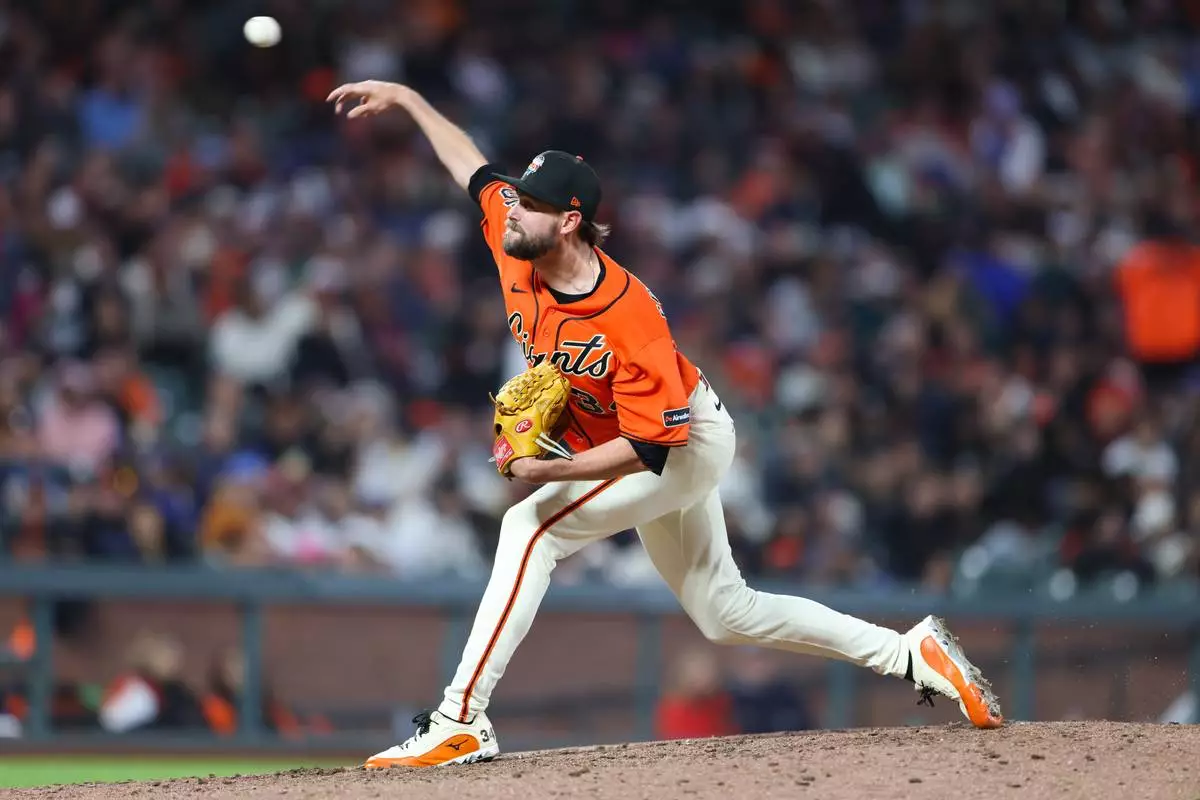
San Francisco Giants pitcher JT Brubaker throws to a Chicago Cubs batter during the sixth inning of a baseball game Friday, June 12, 2026, in San Francisco, Calif. (AP Photo/Scott Marshall)
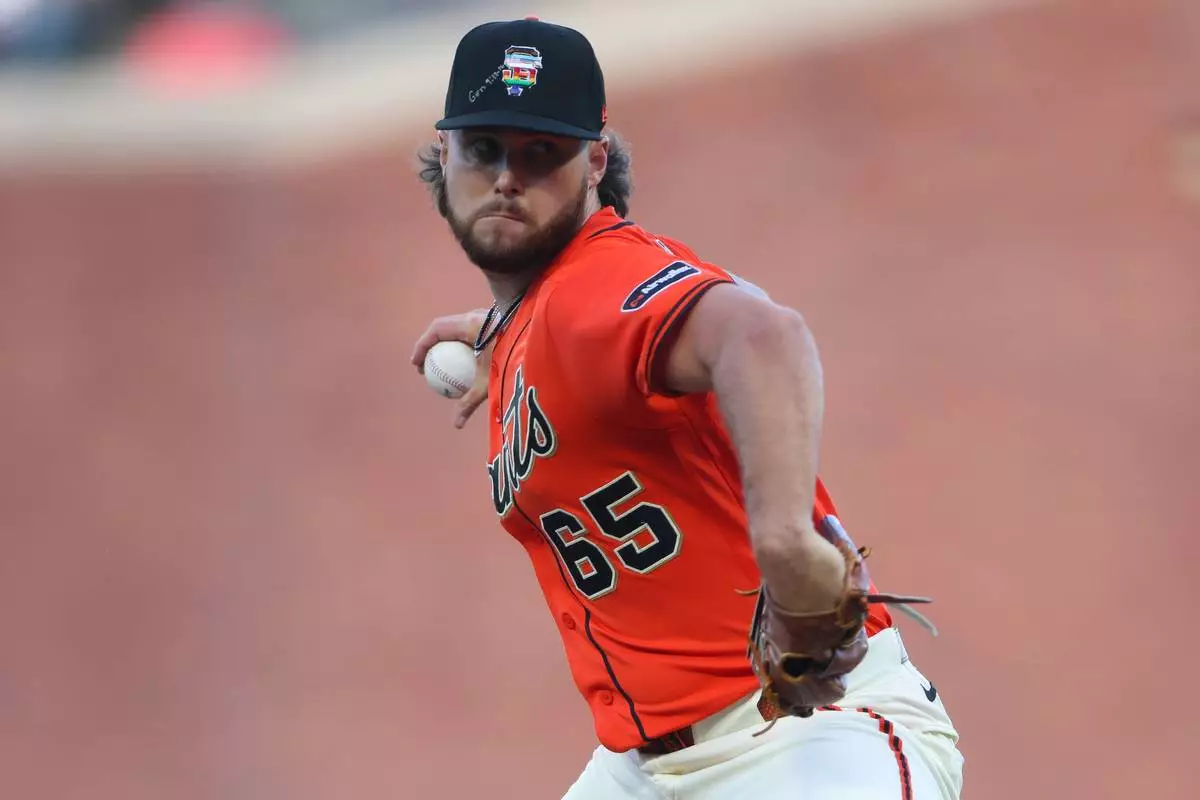
San Francisco Giants pitcher Landen Roupp throws to a Chicago Cubs batter during the first inning of a baseball game Friday, June 12, 2026, in San Francisco, Calif. (AP Photo/Scott Marshall)
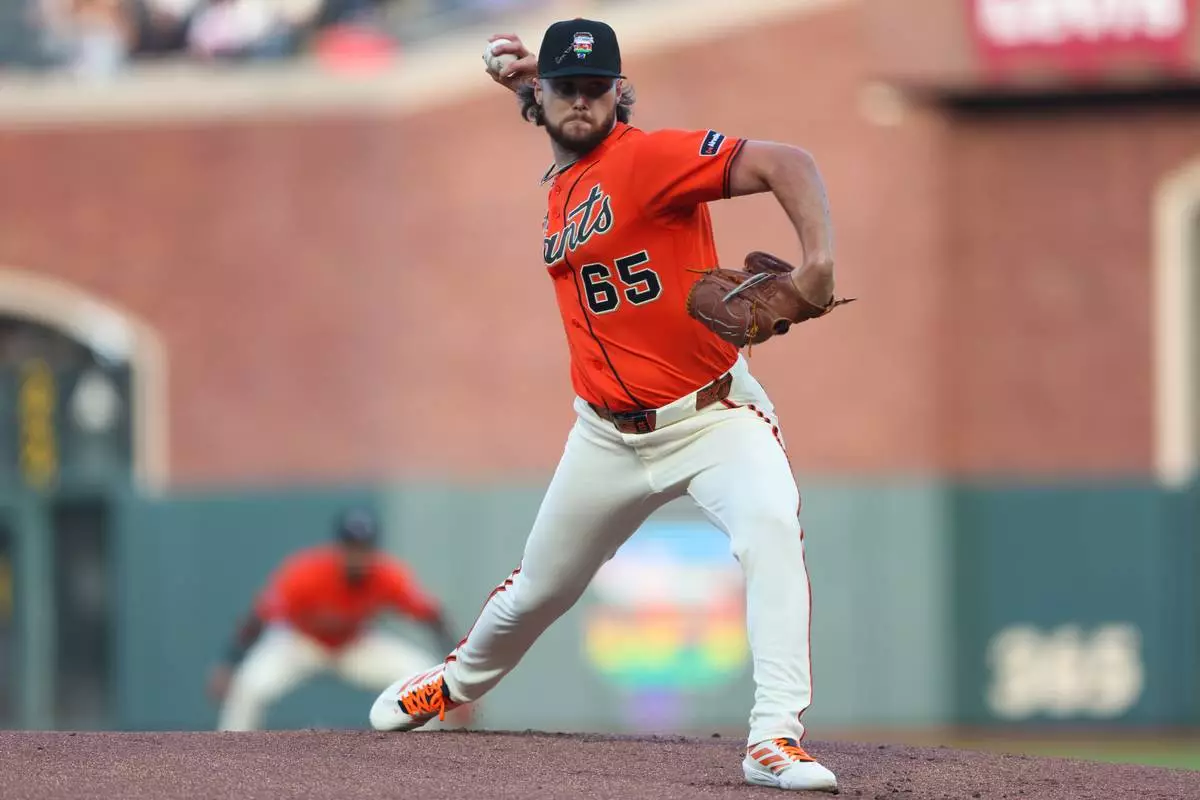
San Francisco Giants pitcher Landen Roupp throws to a Chicago Cubs batter during the first inning of a baseball game Friday, June 12, 2026, in San Francisco, Calif. (AP Photo/Scott Marshall)
WASHINGTON (AP) — Pakistan says that the deal to end the war in Iran is taking ‘immediate effect’ after both sides have signed it, but that there will still be a formal signing ceremony on Friday.
Pakistani Prime Minister Shehbaz Sharif said leaders of both the U.S. and Iran had signed the agreement and endorsed him as a mediator.
He said in a post on X that the deal “shall enter into force with immediate effect and as a first step, Islamic Republic of Iran will instantly reopen the Strait of Hormuz and the United States of America will immediately lift the naval blockade.”
Sharif said that Pakistan and co-mediator Qatar will still host an official signing ceremony on Friday in Switzerland. His post came shortly after President Donald Trump said he’d signed the agreement during a dinner at the Palace of Versailles.
THIS IS A BREAKING NEWS UPDATE. AP’s earlier story follows below.
WASHINGTON (AP) — An agreement to end the war between the United States and Iran calls for Tehran to dilute its stockpile of highly enriched uranium and would waive sanctions on the country, immediately allowing Iran to sell its oil freely in a major concession from Washington, according to language released by both countries Wednesday.
The agreement would also open the Strait of Hormuz toll-free for two months and affirm a commitment to Lebanon’s territorial integrity in the face of Israel’s invasion against the Hezbollah militant group.
U.S. officials dictated draft language to journalists after days of secrecy, speaking on condition of anonymity. Iranian state TV later released text that largely tracked what the U.S. put out.
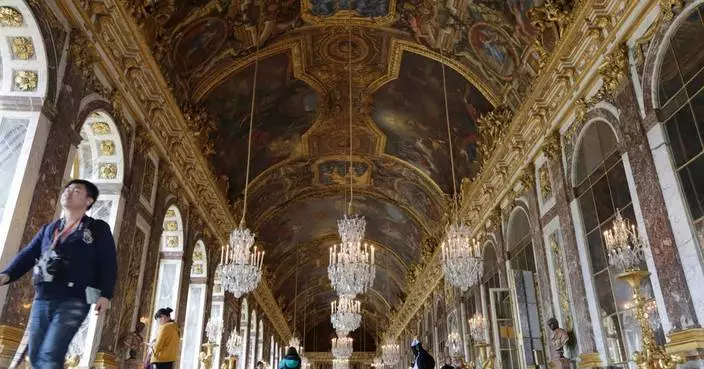
Though officials had said U.S. President Donald Trump and U.S. Vice President JD Vance had digitally signed the agreement Sunday and that a ceremonial signing would be held Friday in Switzerland, a U.S. official who spoke on condition of anonymity to share details about the agreement said Trump signed the deal while at Versailles on Wednesday.
The U.S. official said Iranian President Masoud Pezeshkian also signed it Wednesday, though Iran did not immediately comment. It wasn’t immediately clear if that act started a 60-day negotiating clock to reach a final deal. It was also not clear how Trump’s signing of the deal at Versailles differed from his digital signing on Sunday.
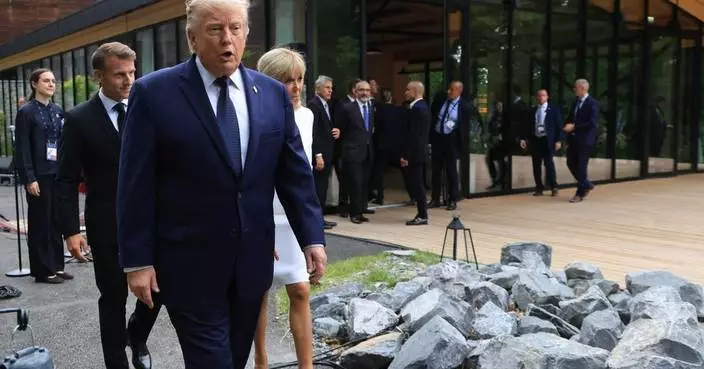
“It’s signed,” Trump said as he left Versailles, the historic palace where he dined with French President Emmanuel Macron following a trip to the Group of Seven summit in France.
Text of the agreement has not been formally released. The draft read by U.S. officials includes language that Iran agrees not to develop or procure nuclear weapons and requires that Iran’s highly enriched uranium be downgraded on site as a minimum.
In return, the U.S. will move to waive, but not eliminate, some wide-ranging sanctions against Iran. The agreement also secures free passage of the strait for only 60 days, and it does not preclude fees in future, according to the U.S. officials and the Iranian draft.
It was not immediately clear if a ceremony would still be held Friday in Switzerland or whether the summit would instead be used for further negotiations.
The U.S. and Israel went to war on Feb. 28 in part to prevent Iran from ever getting a nuclear weapon. Trump has cited various goals for the war, including at times vowing it would end Iran’s nuclear and missile programs and its support for Hezbollah and other proxy groups in the region. He also suggested it could lead to toppling the Iranian government.
The interim deal falls short of all those goals, but Trump hailed it Wednesday.
“Nobody knows what it is, but it’s very strong,” Trump said in France, where he attended a Group of Seven summit.
But he also opened the door to abandoning it: “It’s a memorandum of understanding, and if I don’t like it, we’ll go back to shooting at them, dropping bombs.”
Much of the agreement would restore the status quo before the war, including ending hostilities, restarting talks between the U.S. and Iran over Tehran’s nuclear program, and reopening the strait, the crucial passage for the world’s oil and natural gas and whose closure created a historic energy crisis.
It opens a two-month period for nuclear negotiations and appears to offer Iran several benefits up front while extracting little in return.
The U.S. agreement to immediately allow Iran to sell its oil freely and the offer to eventually lift all sanctions represent major concessions that go beyond the terms of Iran’s 2015 nuclear deal with world powers. Trump withdrew America from that Obama-era pact in his first term, declaring it the “worst deal ever.”
The Islamic Republic maintains that its nuclear program is peaceful.
The accord likely will draw intense opposition in Washington, and it appears to be a major setback for Israeli Prime Minister Benjamin Netanyahu, who has come under criticism at home from the media, his opponents and even some allies as details emerge.
Under the Obama-era nuclear agreement with Iran that Trump pulled out of, Iran also agreed to restrictions on its nuclear program and promised never to build an atomic weapon.
The new U.S.-Iran deal includes an end to the fighting in Lebanon between Israel and the Iranian-backed militia Hezbollah. That is one of the most delicate parts of the agreement because Israel has maintained it will continue to defend itself and to occupy vast swaths of Lebanon. Iran has said Israel must withdraw under the deal.
The document also has provisions to ensure the territorial integrity of Lebanon after Israel’s latest attacks against Hezbollah in Lebanese territory. Israel has rejected the prospect of withdrawing from Lebanon, but the agreement expressly states that military operations in Lebanon must stop with the signing of the memorandum.
Some concessions to Iran — including the full lifting of sanctions and the release of frozen assets — would happen gradually and be linked to progress in the nuclear talks, according to officials from Pakistan, a key mediator. They outlined some of the deal’s major points on condition of anonymity because of the sensitivity of the issue.
But in the meantime, the U.S. will issue waivers to sanctions that allow Iran to sell oil freely.
The Islamic Republic's oil export revenues in 2024 were more than $46 billion. Its main buyer of oil, China, is believed to have bought at below-market prices because of its willingness to ignore the sanctions.
Granting oil waivers at the start of the 60-day talks strips the U.S. of a major point of leverage. Only at the conclusion of the overall deal in 2015 were sanctions on Iran's oil lifted.
The interim deal also opens the door to ending all sanctions Iran faces from the U.S. and at the U.N. — including those over Tehran’s weapons programs and human rights abuses — though it says the schedule for that will be worked out later. Still, that far surpasses the 2015 deal, which only lifted some sanctions in exchange for Iran drastically reducing its enrichment and stockpile of uranium.
The accord would also provide Iran with at least $300 billion to rebuild — an extraordinary figure and another major benefit for Iran. The money also appears dependent on the progress of further negotiations.
Vance has said Gulf Arab nations would invest that amount. But Gulf countries would likely be reluctant to help Iran after Iranian attacks in the war destroyed oil facilities and other sites in their territory.
Trump reiterated Wednesday that the U.S. would not contribute and said it was up to other countries if they wanted to invest.
The deal provides a major win for the global economy — the reopening of the Strait of Hormuz, the narrow mouth of the Persian Gulf through which a fifth of all traded oil and natural gas once passed before the war began. Since then, Iranian attacks on shipping and the threat to vessels effectively shut the strait.
The strait's closure drove up energy prices around the world and made many basics, including food, more expensive. Iran let through some vessels that paid tolls, something never done before in the strait, which has long been considered an international waterway. The U.S. later provided military support to get other tankers out, but traffic was nowhere near levels before the war.
The deal also says the U.S. will lift a blockade imposed on Iranian ports and that the strait will return to its prewar traffic levels in 30 days, while acknowledging Iranian mines may need to be destroyed.
Gambrell reported from Dubai. Magdy reported from Cairo. Catalini reported from Morrisville, Pennsylvania. Associated Press writers Aamer Madhani in Evian-les-Bains, France, Darlene Superville in Geneva, Angela Charlton in Paris and Munir Ahmed in Islamabad contributed to this story.
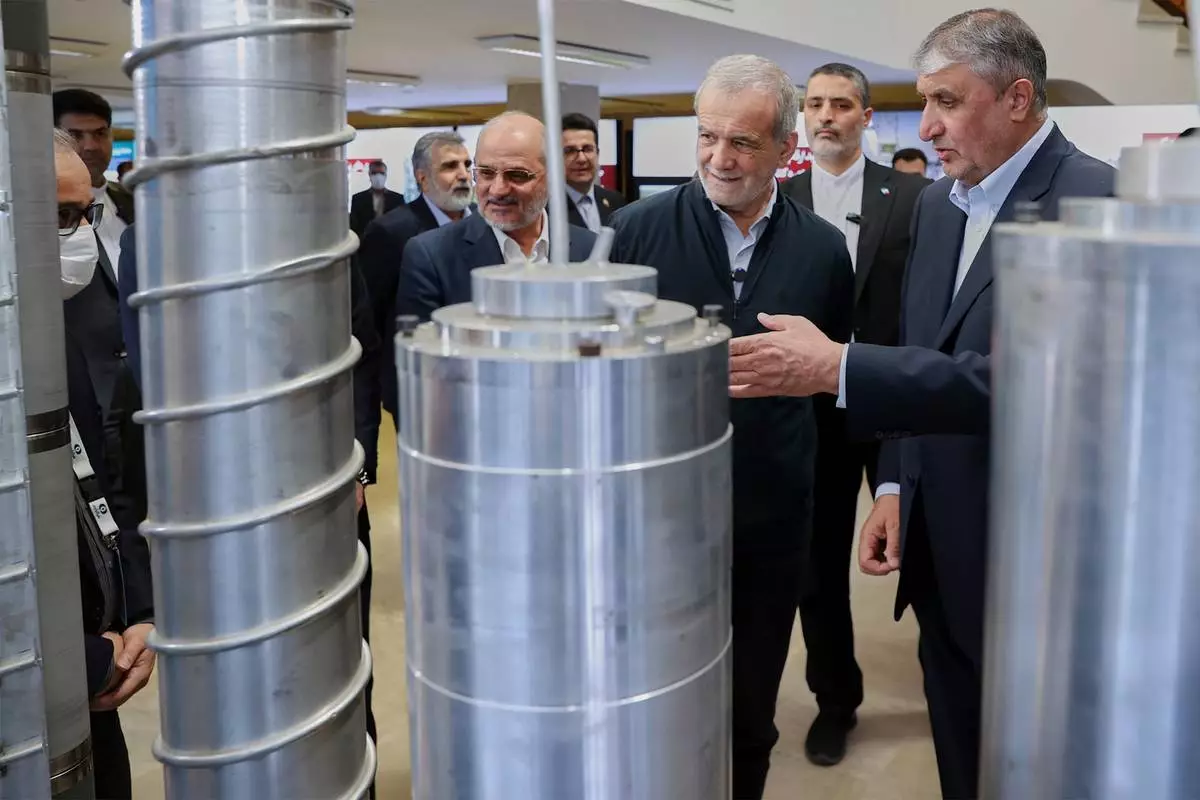
FILE - In this photo released by the Iranian Presidency Office, President Masoud Pezeshkian, second right, listens to head of Atomic Energy Organization of Iran Mohammad Eslami as he visits an exhibition of Iran's nuclear achievements, in Tehran, Iran, April 9, 2025. (Iranian Presidency Office via AP, File)
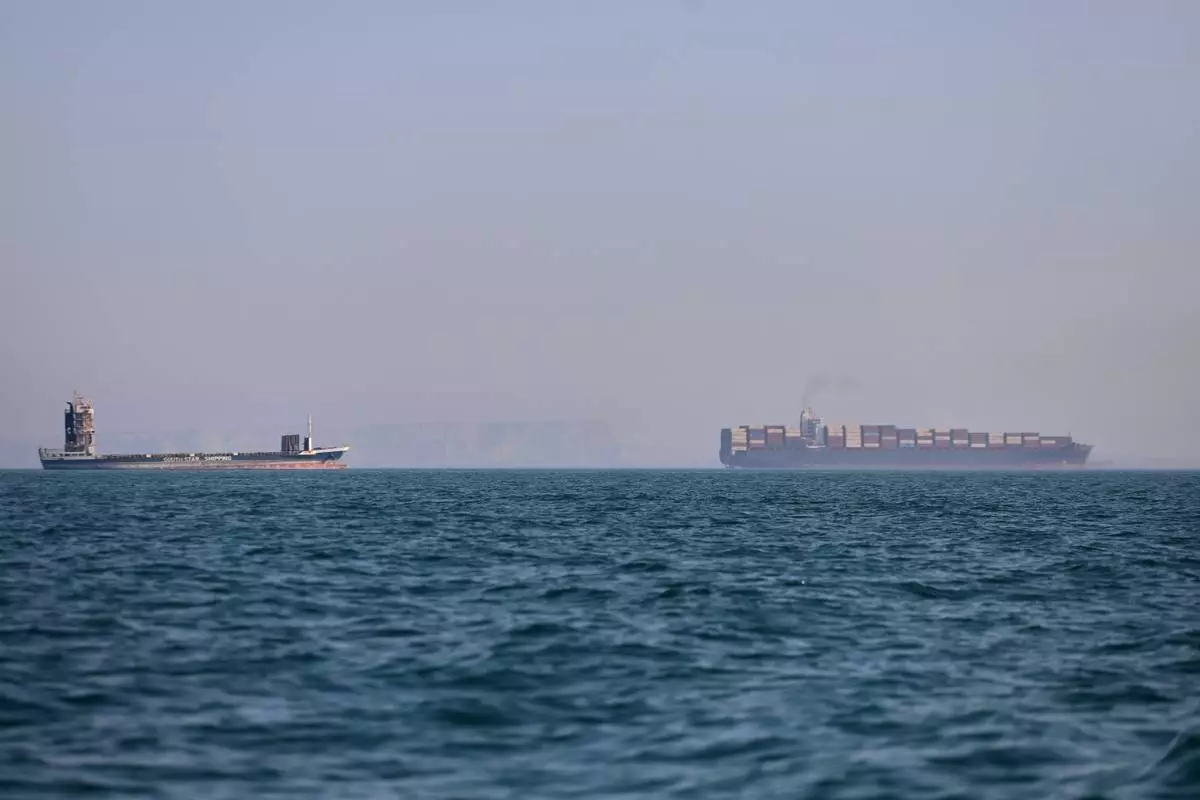
A container ship, right, and a cargo vessel are seen in the Strait of Hormuz off Bandar Abbas, Iran, Wednesday, June 17, 2026. (Amirhosein Khorgooi/ISNA via AP)

A small motorboat passes anchored vessels in the Strait of Hormuz off Bandar Abbas, Iran, Wednesday, June 17, 2026.(Amirhosein Khorgooi/ISNA via AP)
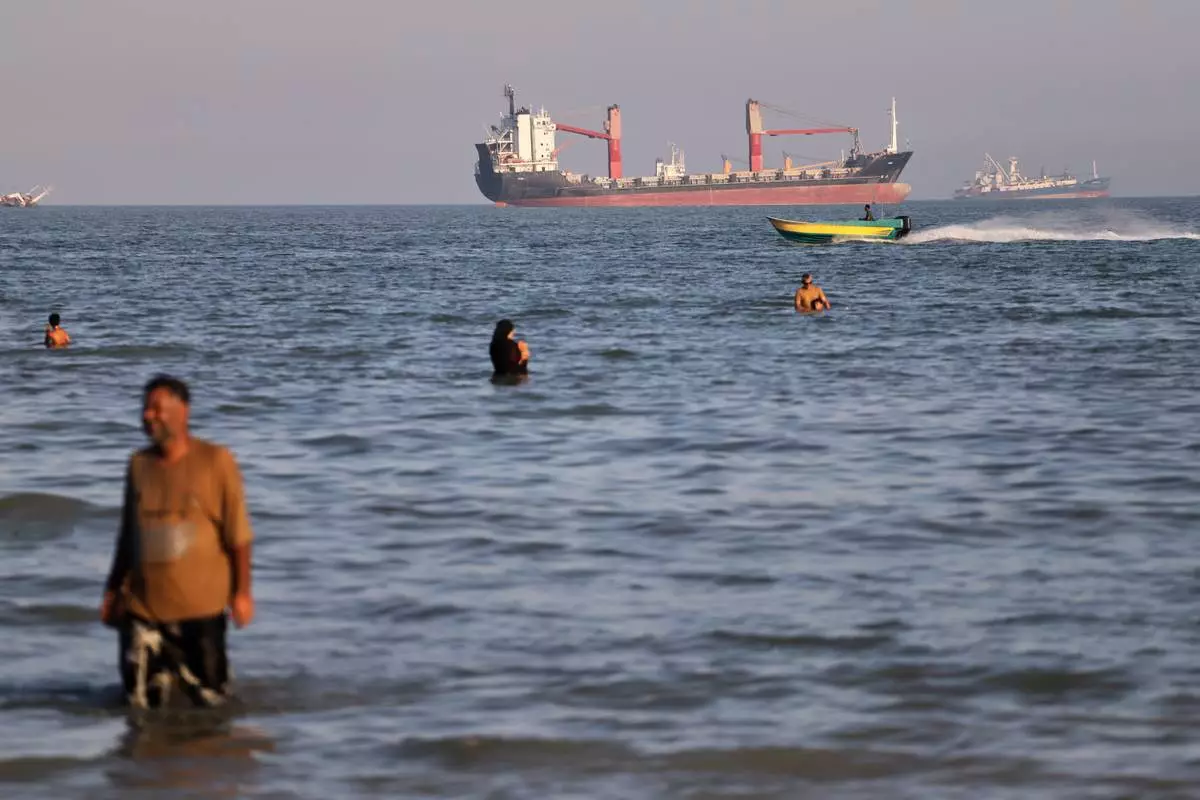
Residents swim in the waters of the Strait of Hormuz as a small motorboat passes cargo ships and other commercial vessels offshore near Bandar Abbas, Iran, Wednesday, June 17, 2026. (Amirhosein Khorgooi/ISNA via AP)
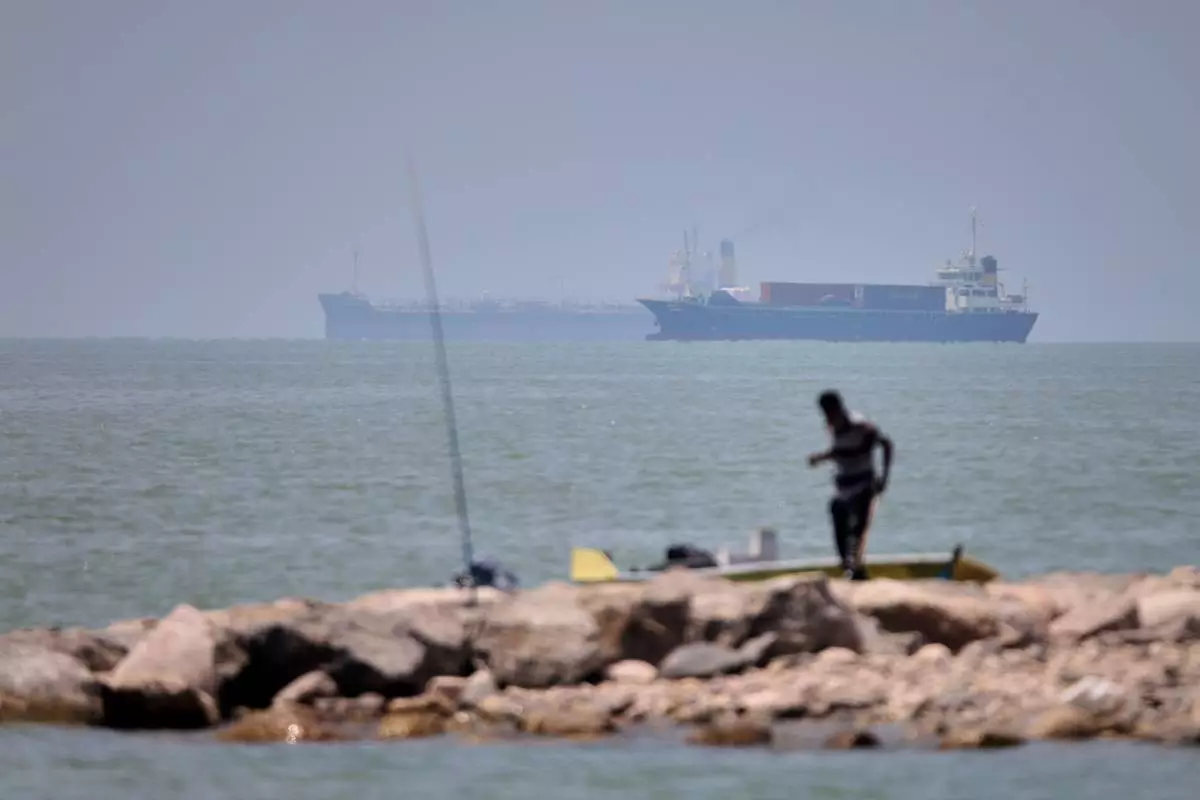
A man stands beside a fishing pole along the shore as cargo ships and commercial vessels are seen in the Strait of Hormuz off Bandar Abbas, Iran, Wednesday, June 17, 2026. (Amirhosein Khorgooi/ISNA via AP)
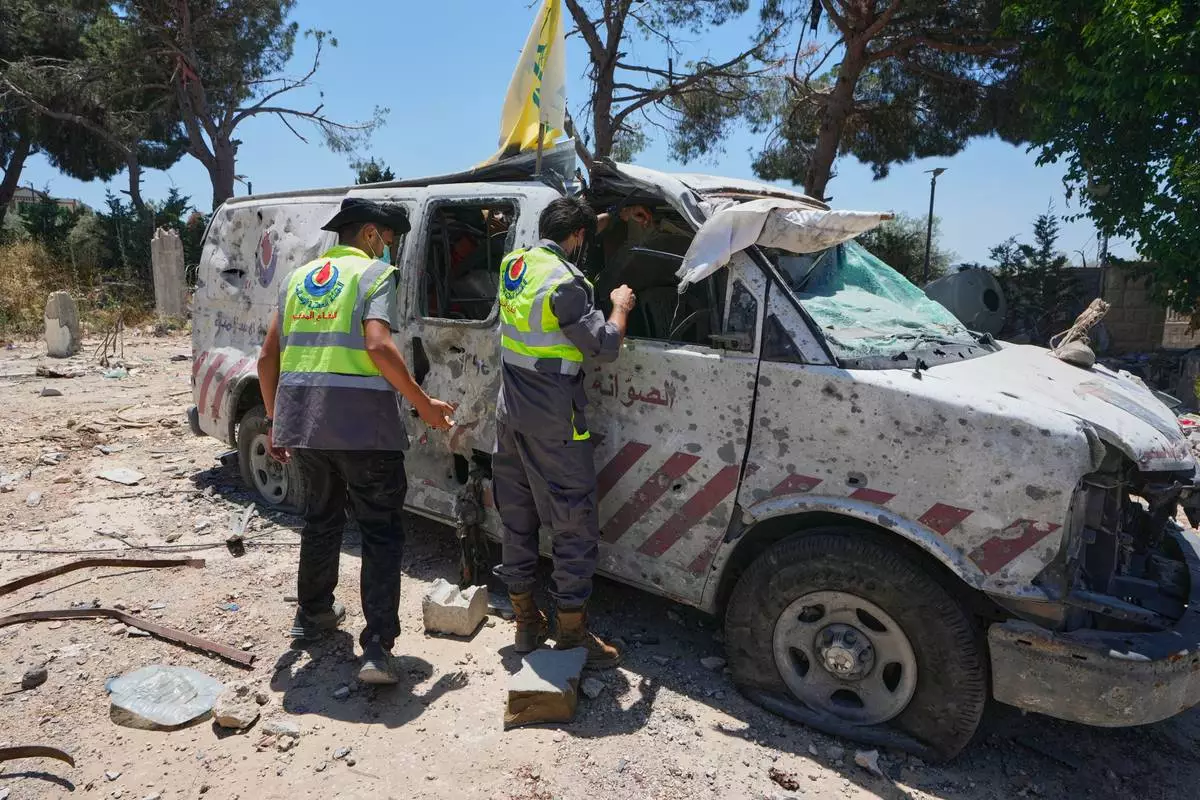
Rescue workers inspect a damaged ambulance belonging to Hezbollah's health unit that was hit in a previous Israeli airstrike in the southern village of Souaneh, Lebanon, Tuesday, June 16, 2026. (AP Photo/Mohammed Zaatari)
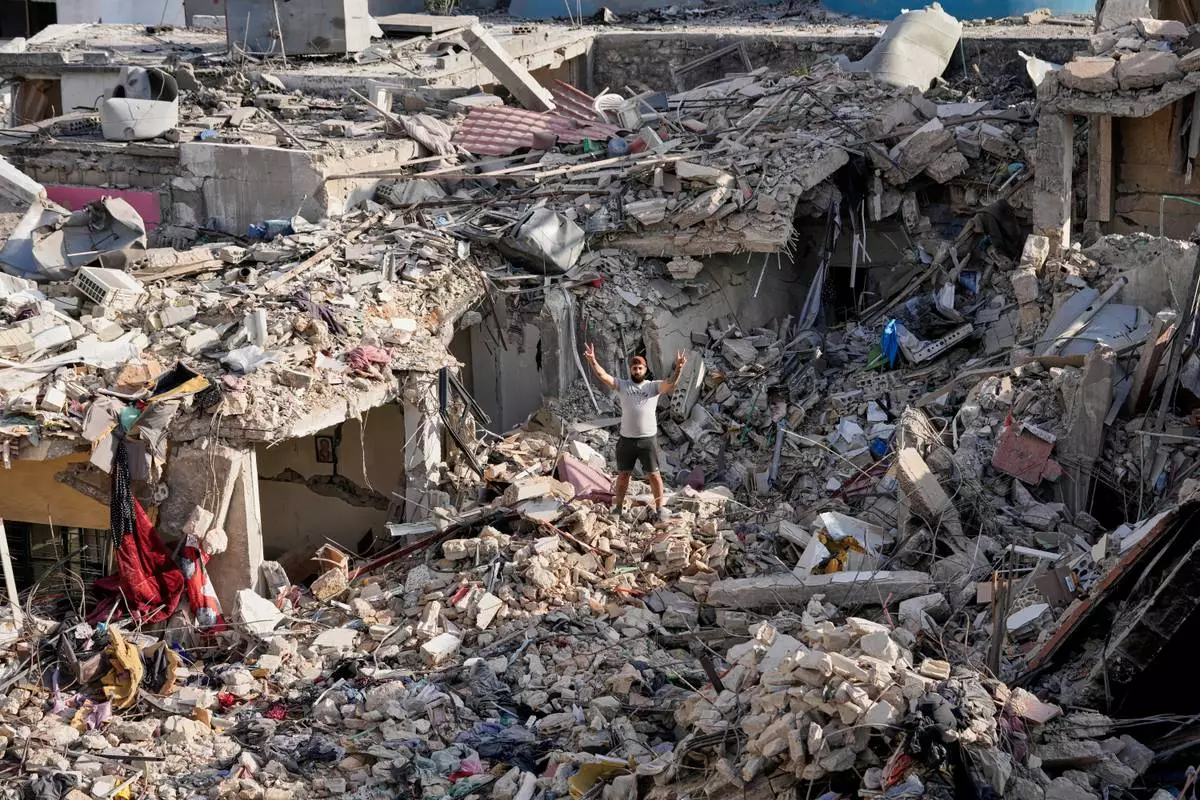
A man who returns to his village following the announcement of an initial ceasefire agreement between the United States and Iran, flashes victory sign as he stands on the rubble of his destroyed house in Nabatiyeh town, southern Lebanon, Tuesday, June 16, 2026. (AP Photo/Hussein Malla)
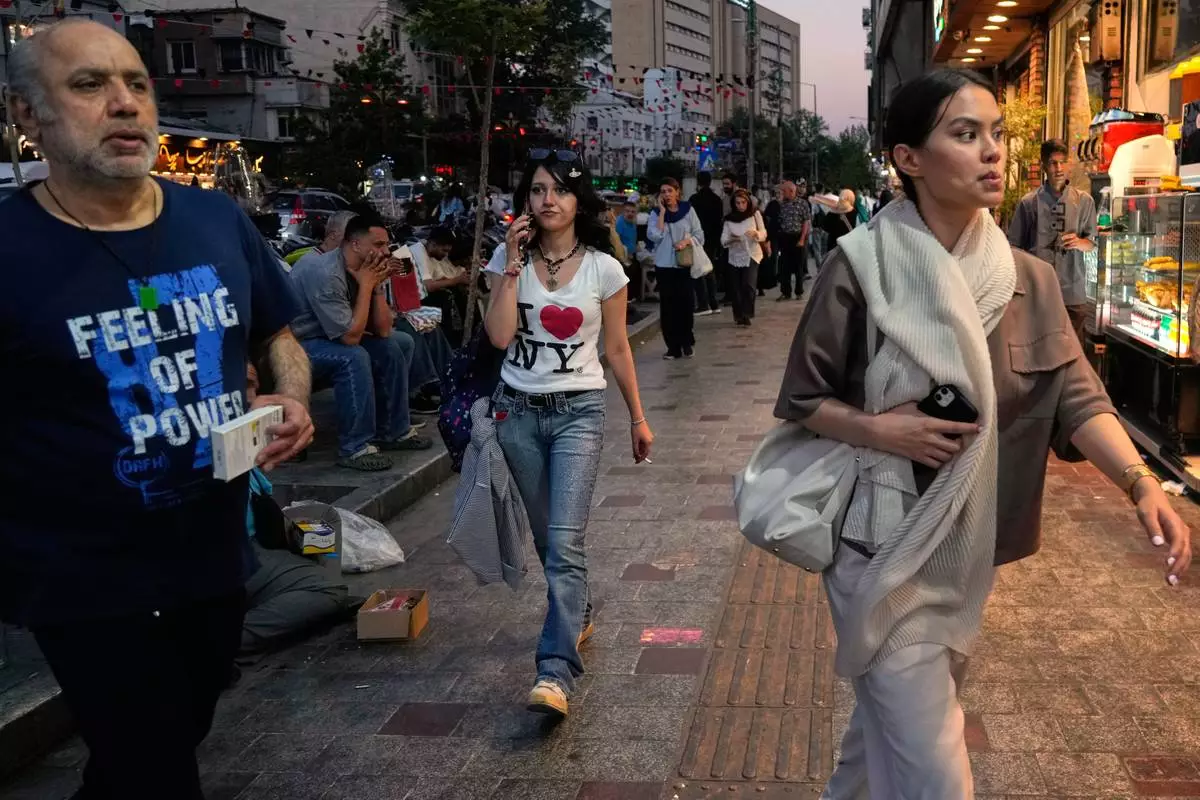
People walk along Tajrish square in northern Tehran, Monday, June 15, 2026. (AP Photo/Vahid Salemi)
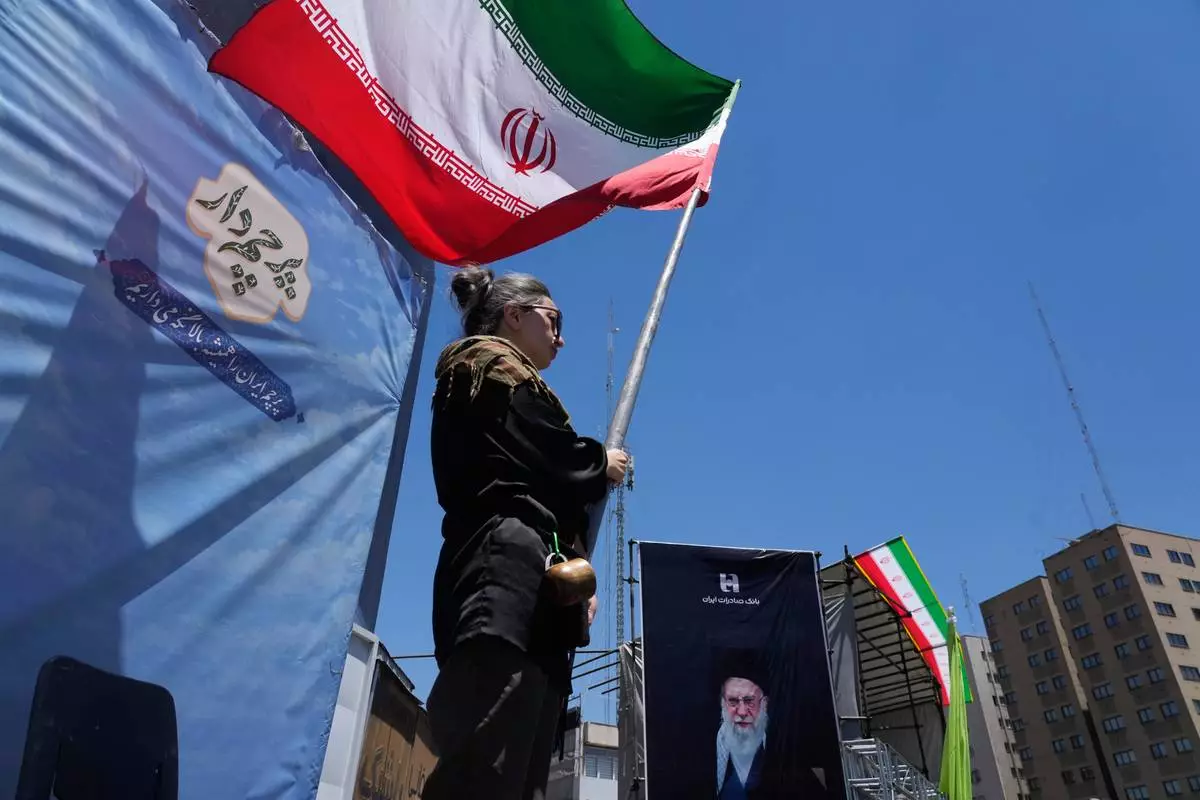
A woman waves an Iranian flag during a pro-government campaign as a portrait of the slain Supreme Leader Ayatollah Ali Khamenei, who was killed in U.S. and Israeli strikes on Feb. 28, is displayed at right, in downtown Tehran, Iran, Monday, June 15, 2026. (AP Photo/Vahid Salemi)