BEIJING, June 18, 2026 /PRNewswire/ -- A report from People's Daily:
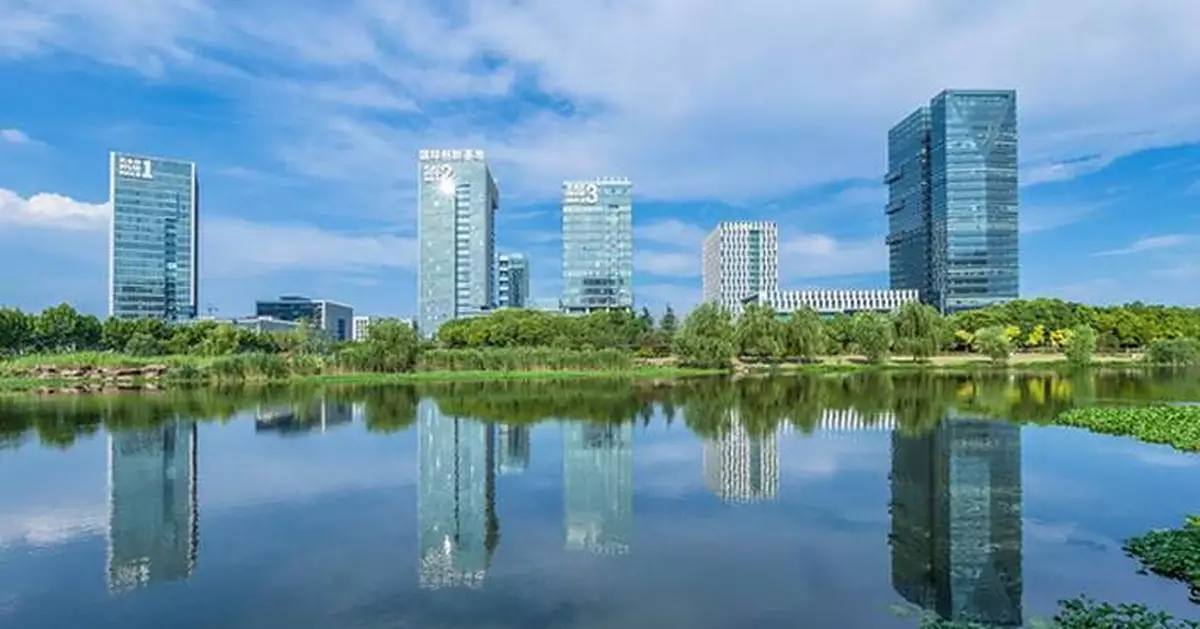
Nestled at the heart of the Yangtze River Delta, Changzhou, east China's Jiangsu province, is a city where rich cultural heritage meets modern vitality. Leveraging its comprehensive industrial ecosystem, high-quality business services, and inclusive urban environment, Changzhou has steadily expanded its opening up and become fertile ground for both living and working.
The city continues to attract global talent and resources. Today, more than 4,000 foreign residents have made their homes and careers there, evolving from witnesses to the city's development into active participants who grow alongside it and contribute to its success.
A Robust Industrial Ecosystem
Industry forms the backbone of urban development and provides the foundation for greater opening up. Changzhou's well-developed industrial chains and full-cycle business support services offer solid backing for both foreign-invested enterprises seeking long-term growth and international professionals pursuing career development.
One notable example is Germany's industrial giant Thyssenkrupp, which has increased its investment in Changzhou six times over the past six years, becoming a vivid illustration of mutually beneficial cooperation between foreign investors and the city.
According to Arne Mayer, a German national and general manager of Bilstein, a German manufacturer of high-performance shock absorbers and suspension systems under Thyssenkrupp, the city's mature industrial and supply-chain ecosystem is a key factor attracting companies to establish long-term operations there.
"Here, personal growth, business growth, and industrial development are closely interconnected and reinforce one another," he said.
Beyond its strong industrial support system, Changzhou's efficient and business-friendly environment has also earned widespread recognition from foreign enterprises.
In October 2022, Ypsomed Manufacturing Co., Ltd., a subsidiary of Switzerland's Ypsomed Group, a leading developer and manufacturer of self-injection systems for liquid medications, established its first production base in the Asia-Pacific region in Changzhou.
Reto Felber, head of Ypsomed Manufacturing Co., Ltd., said that the city's excellent business environment was what impressed the company most. Government departments work efficiently, listen attentively to businesses, and actively help solve practical challenges, he noted.
Today, more than 3,000 foreign-invested companies run operations across Changzhou. A total of 107 Fortune Global 500 companies have launched 216 projects within the city. Changzhou is also home to 34 provincial-level regional headquarters and functional institutions of multinational corporations, as well as 35 foreign-funded research and development centers. In addition, it has developed six provincial-level international cooperation parks, including China-Germany and China-Switzerland cooperation zones.
Inclusive Urban Governance
In 2024, Brazilian football coach Cassiano came to Jiangsu Changzhou Economic Zone to work in youth football training. Through the Jiangsu Football City League, a wildly popular amateur football tournament in Jiangsu province, he experienced firsthand the city's vibrant sporting culture and open-mindedness.
During his free time, Cassiano enjoys wandering through Changzhou's streets and alleys, soaking in the charm of this historical city. He has visited cultural landmarks such as Qingguo Lane and sampled local specialties including magao, or sesame cakes, and shrimp cakes. The authentic flavors of local cuisine have left a lasting impression on him.
The warmth of everyday life gives the city its character, while its openness and inclusiveness encourage foreign residents to put down roots and integrate into local society.
In 2011, British national Steven William Ronald joined Changzhou Institute of Technology as a foreign teacher. In January 2025, he was invited, as an expat representative, to attend the fourth session of the 17th Changzhou Municipal People's Congress as an observer.
"It was a very special invitation," Ronald said. "It reflected the city's openness and inclusiveness and made me genuinely feel that foreign residents are not bystanders but participants in Changzhou's development."
In recent years, Changzhou has positioned itself as a magnet for young people. Its youthful spirit and multicultural atmosphere have attracted growing numbers of young international professionals.
Regular cross-cultural exchange events have further strengthened ties between foreign residents and the city. Since 2012, Changzhou has continuously organized an "Love Changzhou" expat salon, welcoming more than 3,000 participants from countries including Germany and Argentina. Foreign-invested enterprises in the city are also sending cheering groups to the Jiangsu City Football League, and nearly 1,200 participants have joined relevant activities in 12 batches.
Thanks to its diverse cultural fabric and welcoming community, Changzhou ranks third among major Chinese cities in attractiveness to foreign talent. Increasing numbers of international visitors are coming to experience, contribute to, and build their futures in the city.
A Comfortable and Fulfilling Life
When early summer arrives, Arne Mayer often cycles along Changzhou's riverside greenway with his family. Nine years into his life in the city, he has raised his family here and enjoys a stable, deeply satisfying lifestyle.
"I have found a perfect balance between work and life here in Changzhou," he said.
A sports enthusiast, Mayer particularly appreciates the city's steadily improving recreational facilities. Football pitches, baseball and softball fields, pocket parks, and other leisure spaces are now widely available, greatly enriching residents' daily lives. He is also impressed by the ecological improvements along the Yangtze River.
"The picturesque riverside greenway has become a wonderful place for recreation and exercise," he said.
A pleasant environment and convenient daily life are experiences shared by many foreign residents in Changzhou.
Xavier Desfertilles, a 50-year-old French national and general manager of a Changzhou-based metal company, has lived and worked in the city for 27 years.
In his view, daily life here offers remarkable convenience. Public facilities throughout the city are equipped with clear bilingual signage; international bank cards and mobile payment services are widely accepted; and major hospitals have English-speaking medical staff, making healthcare easily accessible for foreign residents.
** This press release is distributed by PR Newswire through automated distribution system, for which the client assumes full responsibility. **
Livable Changzhou emerges as magnet for global investment, talent