Skip to Content Facebook Feature Image

One Tech Tip: Watch out for scams when buying World Cup tickets

News

One Tech Tip: Watch out for scams when buying World Cup tickets
News

News

One Tech Tip: Watch out for scams when buying World Cup tickets

2026-06-18 12:01 Last Updated At:12:11

Looking for a World Cup ticket? The buzz around the soccer tournament now under way across North America might inspire a last-minute search online, but fans should be wary of cyber scammers.

Experts and authorities warn that criminals will be deploying a range of tactics targeting soccer fans desperate to attend big-name matches at the event, which kicked off June 11. The World Cup runs until July 19, and the most important games are still to come.

With FIFA charging record ticket prices, some games are sold out, but plenty more have seats remaining.

Here are some pointers on how to avoid getting scammed:

If you see a Facebook post offering last-minute tickets to a popular game at a good price, take a beat before handing over your money. Ask yourself if the offer is too good to be true.

As with many other types of scams, World Cup fraudsters will try to capitalize on surging demand to pressure people into paying for non-existent tickets.

Watch out for classic pressure phrases such as “lots of interest” or “I need to sell right now," the Britain's Home Office warned fans last month as part of an ongoing fraud awareness campaign.

“Scammers often use urgency to push you into making hasty decisions,” it said.

Social media sites are a cesspit of soccer scammers.

The U.S. Federal Trade Commission warned fans in a March consumer alert that fraudsters use social media posts to funnel people to scam websites, where they advertise fake tickets or sell the same seat to many people.

Or, according to the British government, scammers might advertise a spare ticket on social media, then move the discussion to an encrypted messaging app like WhatsApp and push the buyer to transfer money to a bank account before blocking the victim and disappearing.

Meta Platforms announced two weeks ahead of the event's kickoff that when Facebook users search for World Cup tickets, they will see pop-up notifications reminding them to buy tickets from verified sources and telling them how to report suspicious listings.

Experts say criminals are using artificial intelligence to create realistic messages, polished online storefronts and convincing fake endorsements and promotions.

“My advice: assume any World Cup deal that reached you through a social media ad or search result is suspect until proven otherwise,” said Chris Olson, CEO of digital safety company The Media Trust.

He said the World Cup is fueling a surge of “phishing attacks and cloaking schemes."

In general, "AI-powered phishing campaigns are becoming more sophisticated, more targeted, and more difficult to detect. We’ve seen it all, from data harvesting to fake ticket sales,” Olson said

To obtain World Cup tickets, fans should first go to the official FIFA website ticket for direct or secondhand sales. Resale tickets are also available on established third-party sites like StubHub and SeatGeek, though FIFA warns that buying outside official channels risks fake or invalid tickets, or inflated prices.

Another danger is copycat FIFA sites. The FBI warned in a public service announcement that scammers are creating spoof FIFA websites to trick people into providing personal details or sell fake tickets or hospitality packages.

The bureau listed three dozen spoof FIFA websites it's aware of with URLs that appear at first glance to be authentic, such as fifa-online.com and fifa-ticket.live. Most have stopped working and some have been flagged as malware, but the FBI warned new ones would continue to appear.

The FBI outlined a number of precautions fans should take, such as typing fifa.com directly into your browser's address bar instead of using a search engine. If you do resort to Google, avoid clicking on sponsored search results, which the agency said could be “paid imitators” trying to divert online traffic.

Many more fans won't be able to make it to a game in person and will instead try to catch the action on TV.

But not all matches will be available on free broadcasts, and experts warn that scammers will try to tap demand by setting up dodgy streaming sites.

Cybercriminals typically set up copycat sites and promote them on Telegram, Facebook, Discord, Reddit and other online forums, according to a report by Assaf Morag, a researcher at cybersecurity company Flare.

Based on experience from previous major sporting events, illegal streams will pop up right before a game kickoff. Crooks then deploy myriad methods, including showing viewers scam ads and fake software updates, harvesting their data, or earning commissions by sending them to gambling or adult content sites.

“Nearly 40% of users who access illegal streams experience direct financial losses due to scams, fraud, or compromised payment information,” Morag said. “The trap is incredibly easy to fall into. You click a ‘Play’ button, and the site immediately forces your browser through multiple hidden layers of tracking, pop-ups, and advertising infrastructure explicitly designed to hide malicious software — all while the match never actually loads.”

Is there a tech topic that you think needs explaining? Write to us at onetechtip@ap.org with your suggestions for future editions of One Tech Tip.

Seating rises beyond the pitch at Arrowhead Stadium as it is transformed to Kansas City Stadium ahead of the FIFA World Cup 2026 soccer tournament Monday, June 8, 2026, in Kansas City, Mo. (AP Photo/Charlie Riedel)

Seating rises beyond the pitch at Arrowhead Stadium as it is transformed to Kansas City Stadium ahead of the FIFA World Cup 2026 soccer tournament Monday, June 8, 2026, in Kansas City, Mo. (AP Photo/Charlie Riedel)
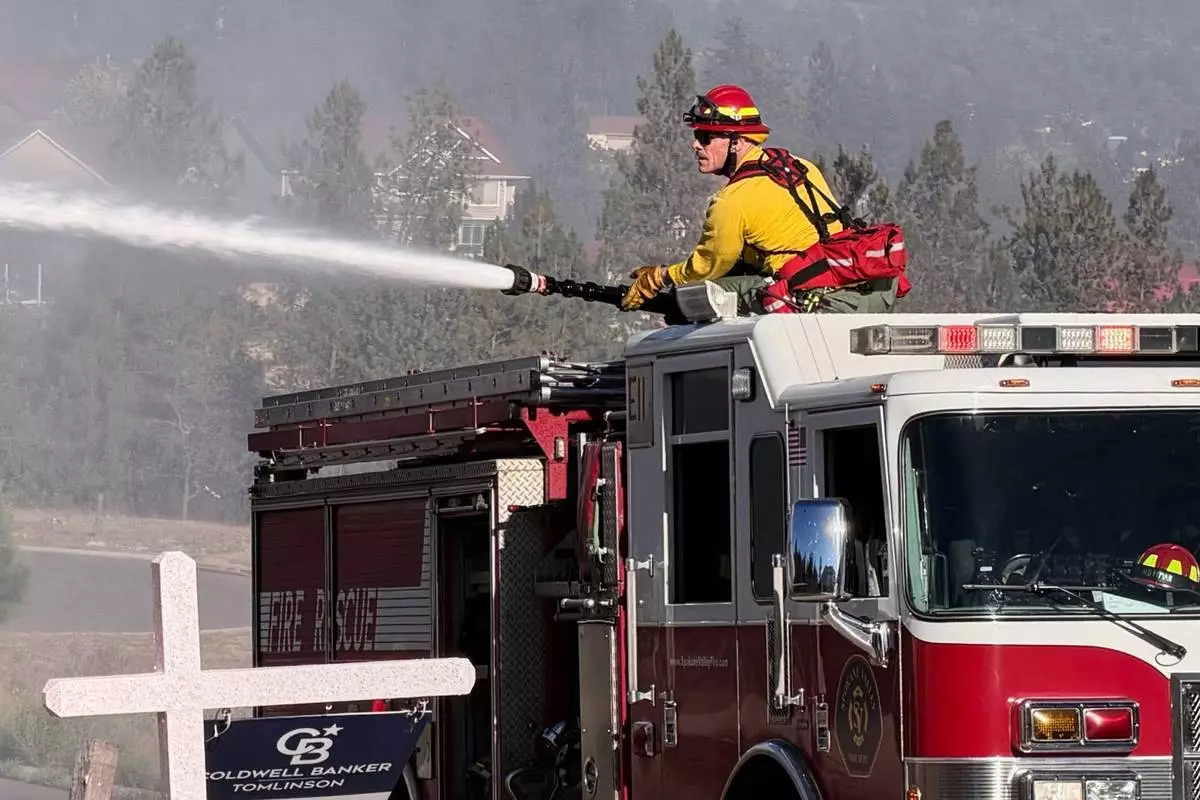
High winds drove a wildfire into an eastern Washington neighborhood, forcing the evacuation of about 1,500 people and destroying at least 15 homes, officials said Wednesday.

The Spokane County Sheriff's Office announced Wednesday that its forensic unit found what appeared to be human remains inside a home destroyed in the fire. A family member had requested a wellness check at the home because one of the residents had refused to evacuate and could not be reached, officials said in a news release. They were working to confirm whether authorities found human remains, and if so, identify who they were and how they died.

Authorities have not reported any injuries.

Many people living in the densely populated neighborhoods had to flee on a moment's notice — sometimes after an officer knocked on their door — leaving behind belongings and in some cases, critical medications, Spokane County Sheriff John Nowels said during a news conference.

People were being escorted Wednesday by an officer to their homes one-by-one to access those essential needs, but then they were taken back out, Nowels said.

The evacuation order for the 1,500 residents remained in effect Wednesday, said Chandra Fox, deputy director for Spokane County Emergency Management.

“Our concern is for increased winds Wednesday afternoon,” Fox said.

The blaze started just after noon on Tuesday and quickly moved up a hill, said fire district spokesman Robert Gray. Winds then shifted, sending flames into a neighborhood, Gray said. Spokane is about 280 miles (450 kilometers) east of Seattle near the border with Idaho.

John Leavell, battalion chief with the Spokane Valley Fire Department, was one of the first people to spot the fire. He said he was driving near Interstate 90 when he saw a column of smoke.

“As I approached it, I thought this is going to be a big event — this is going fast,” he said. “It looked like waves of fire going up the hill.”

He pulled into a driveway and found a house fully engulfed in flames, so he contacted surrounding agencies and the local fire district took over while his crew started building fire lines, he said. Leavell said he didn't know if they fire began at the house or quickly consumed it. The cause is still under investigation.

Fire crews from Washington state and Idaho attacked the fire from the ground and air, but it quickly grew to 225 acres (.35 square miles). It was 10% contained Wednesday morning, according to the National Interagency Fire Center. Avista turned off power for the area as the fire progressed for the safety of firefighters. It remained off Wednesday in some areas.

The weather was working in the firefighters’ favor.

Winds were lighter on Wednesday and were expected to decrease after sunset, according to Rachael Fewkes, a meteorologist with the National Weather Service in Spokane. The temperature also dropped a few degrees from the mid-80s on Tuesday to a high of 80 on Wednesday, she said.

The Federal Emergency Management Agency said Wednesday that they authorized the use of Fire Management Assistance Grant funds to help with firefighting costs for the Spokane blaze. The regional FEMA director said the fire had the potential to constitute a major disaster. Besides threatening homes, it also threatened a school, power lines, parks, businesses and wildlife.

FEMA said this was the first fire grant awarded this season to fight a Washington wildfire.

More than 32,000 fires have burned more than 3,900 square miles (10,100 square kilometers) so far this year in the United States, according to the fire center, which coordinates the mobilization of large-scale firefighting efforts.

That’s significantly higher than the 10-year average of just under 24,000 fires burning about 2,200 square miles (5,700 square kilometers) by early June, according to the fire center, even though fire activity has been relatively light in recent weeks.

Weather and fuel models that predict conditions like wind, lightning and how likely plants and other materials are to burn also show an increased danger of fires in multiple areas across the U.S. in coming weeks, according to the fire center. Some regions with critical conditions for fire include portions of California, and the Southwest, Great Basin and Rocky Mountain areas.

__

Bellisle reported from Seattle. Associated Press journalists Rebecca Boone in Boise, Idaho, and Hannah Schoenbaum in Salt Lake City contributed reporting.

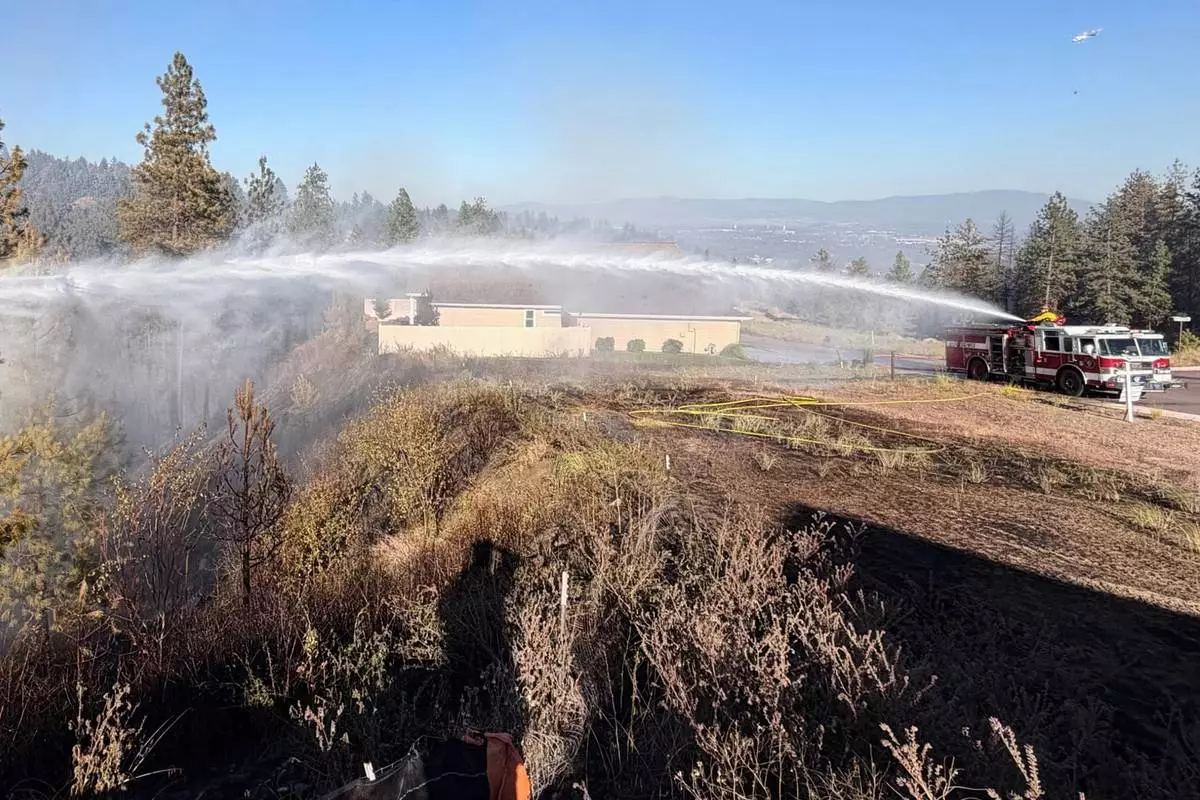
Fire crews battle the Upriver Fire on Tuesday, June 16, 2026 east of Spokane, Wash. (Spokane Valley Fire Department via AP)

Fire crews battle the Upriver Fire on Tuesday, June 16, 2026 east of Spokane, Wash. (Spokane Valley Fire Department via AP)

Fire crews battle the Upriver Fire on Tuesday, June 16, 2026, east of Spokane, Wash. (Spokane Valley Fire Department via AP)

Fire crews battle the Upriver Fire on Tuesday, June 16, 2026, east of Spokane, Wash. (Spokane Valley Fire Department via AP)

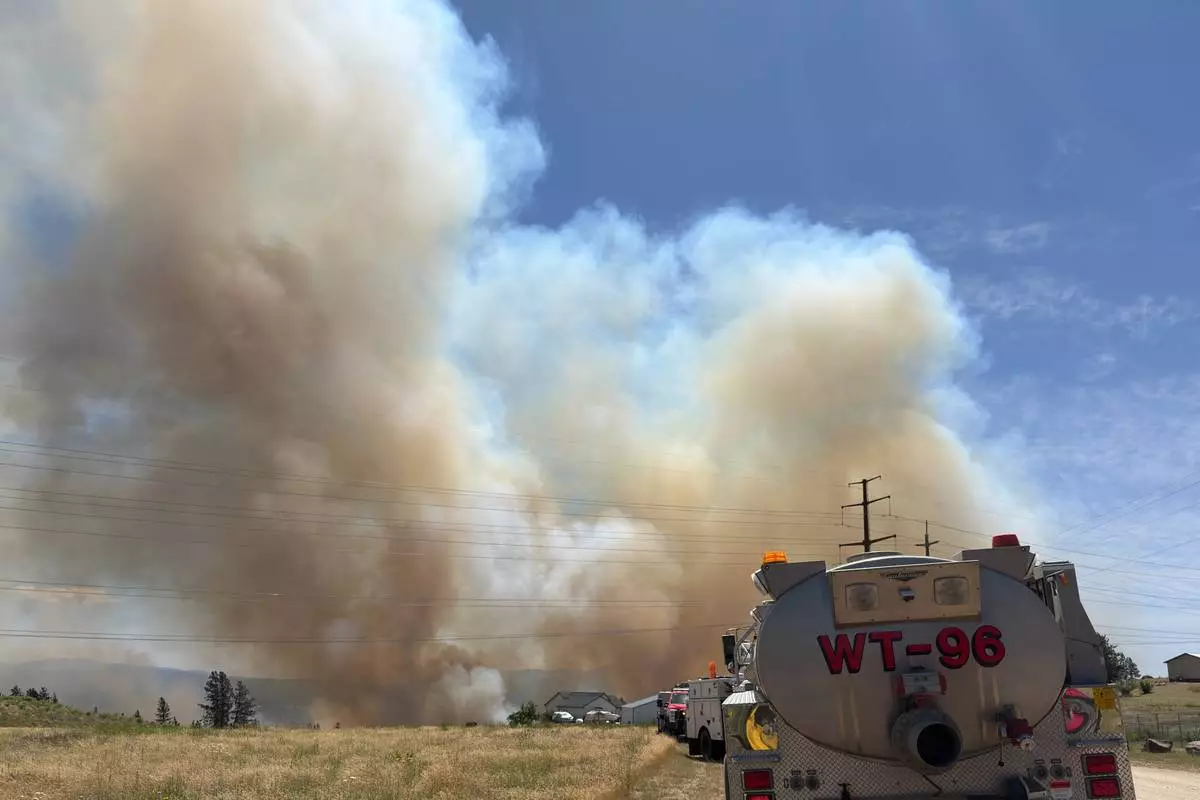
This photo provided by Spokane Fire District 9 shows smoke rising from the Upriver Fire burning northeast of Spokane, Wash., on Tuesday, June 16, 2026. (Robert Gray/Spokane Fire District 9 via AP)

This photo provided by Spokane Fire District 9 shows smoke rising from the Upriver Fire burning northeast of Spokane, Wash., on Tuesday, June 16, 2026. (Robert Gray/Spokane Fire District 9 via AP)

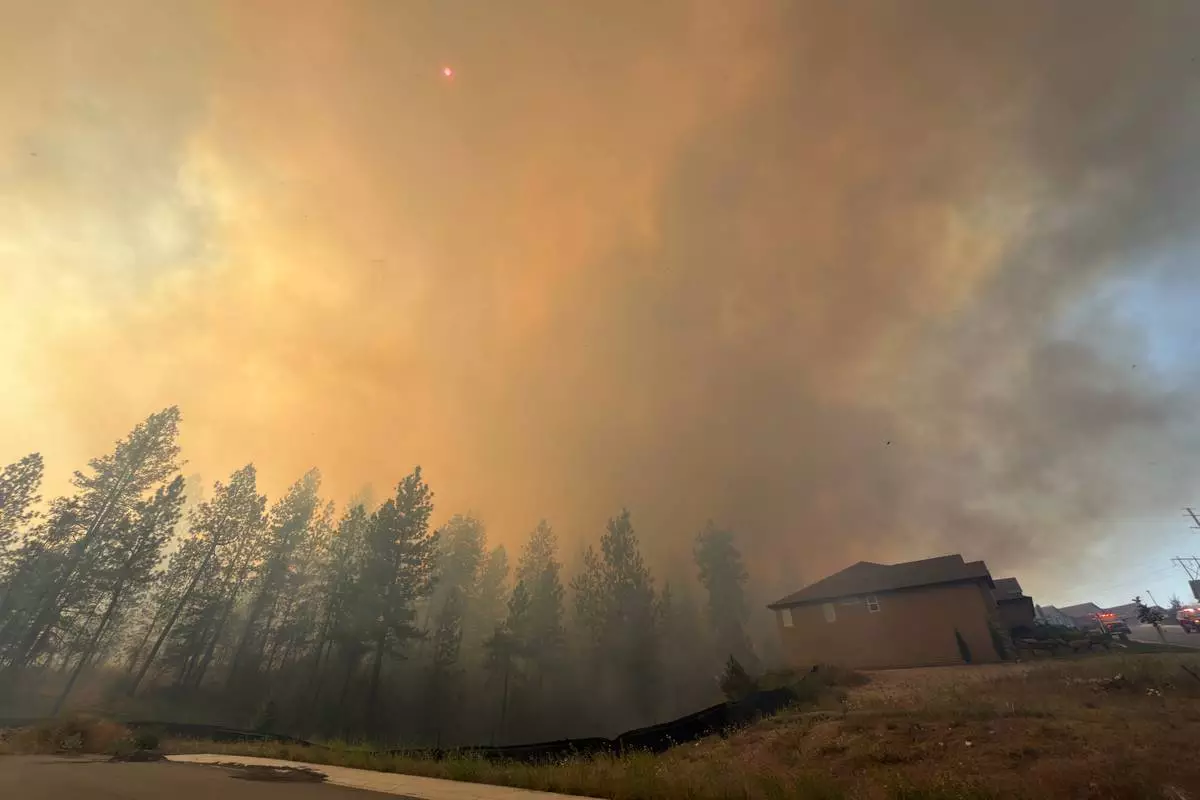
This photo provided by Spokane Fire District 9 shows the Upriver Fire burning northeast of Spokane, Wash., on Tuesday, June 16, 2026. (Robert Gray/Spokane Fire District 9 via AP)

This photo provided by Spokane Fire District 9 shows the Upriver Fire burning northeast of Spokane, Wash., on Tuesday, June 16, 2026. (Robert Gray/Spokane Fire District 9 via AP)

Recommended Articles