LONDON (AP) — A massive ancient oak tree linked to the legend of Robin Hood may have been loved to death.
The 1,200-year-old Major Oak in Sherwood Forest is believed to have died after it didn’t sprout leaves this spring, the Royal Society for the Protection of Birds said Thursday.
Visitors over the past two centuries who viewed the tree's gnarled limbs and sprawling canopy in Nottingham compressed the soil, making it difficult for rain to reach its roots, the conservation group said.
The forest has been under threat for years and the tree had been rumored to have died in the past — only to have the group confirm it was still alive.
That is no longer the case.
“The tree’s failure to produce leaves this year is heartbreaking for everyone,” Hollie Drake of the RSPB said in a statement announcing the death.
The tree is said to have sheltered Robin Hood, the legendary 13th-century bandit who stole from the rich and gave to the poor and took refuge in the forest when being pursued by the sheriff of Nottingham.
It got its name after being mentioned in a book on oaks by Major Hayman Rooke in 1790 that led to the first wave of fans who flocked to the forest.
It's impossible to say what killed the tree, but the footprints of millions contributed to its downfall, along with intervention to shore up its massive limbs using cables and poles. Climate change that has brought heat waves and drought was also blamed.
Tree experts found the root system strangled and starved.
“Ancient trees like the Major Oak are the ‘conservation white rhinos of the U.K.’ but their decline is far less visible,” said Ed Pyne, of the Woodland Trust. “Saving them is vital to the health of the world we live in and yet most disappear quietly, without the recognition or care given to the Major Oak.”
In addition to its place in folklore, the forest is known for Sherwood oaks that floated the ships of Vice Admiral Horatio Nelson’s Royal Navy in the late 18th and early 19th centuries and as timbers in the roof of St. Paul’s Cathedral in London.
The Major Oak was spared from the saw and has been protected by a fence since the 1970s.
“The Major Oak will continue to stand at the heart of Sherwood as a natural monument for visitors to come and see, living on in the legend of Robin Hood and continuing to provide as much support to the forest’s ecosystem in death as in life,” Drake said.
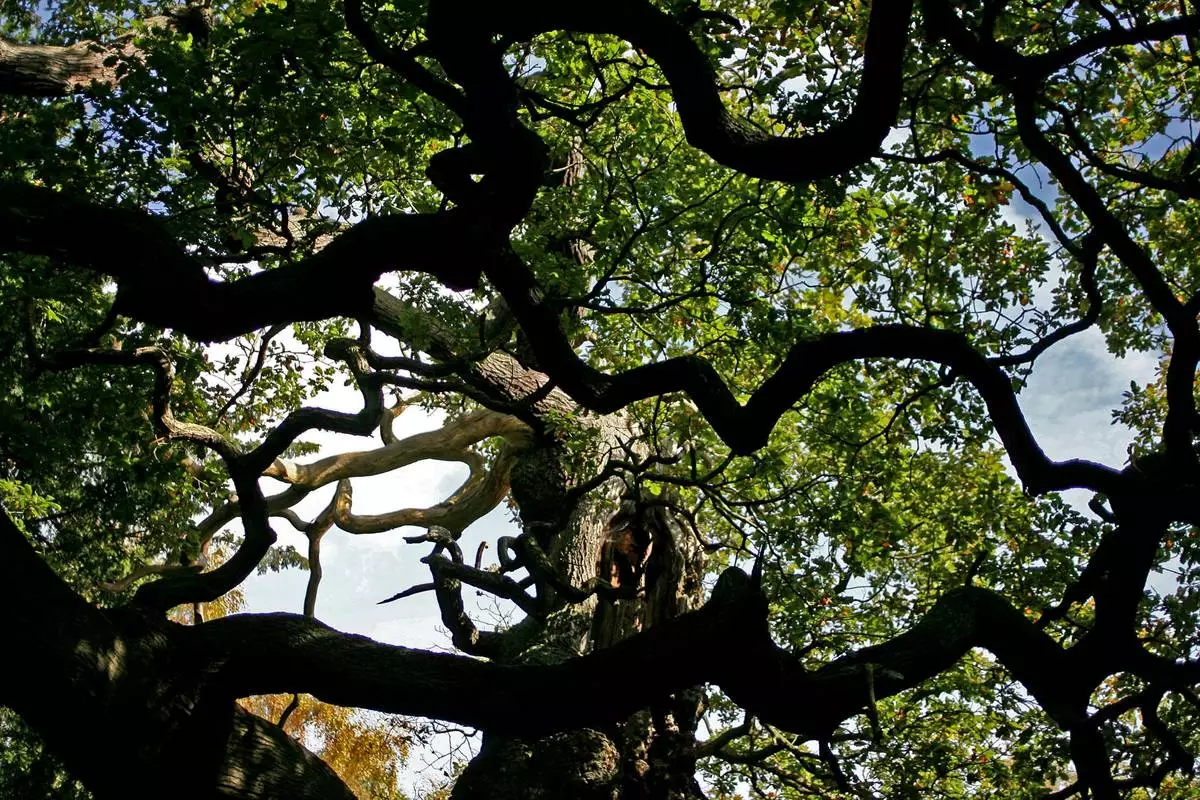
FILE - A 1,200-year-old Major Oak tree, where Robin Hood allegedly used as a hide out, stands in Sherwood Forest near Nottinghamshire, England, on Oct. 19, 2007. (AP Photo/Simon Dawson, File)

FILE - A 1,200-year-old Major Oak tree, where Robin Hood allegedly used as a hide out, stands in Sherwood Forest near Nottinghamshire, England, on Oct. 19, 2007. (AP Photo/Simon Dawson, File)
WATERTOWN, Mass.--(BUSINESS WIRE)--Jun 18, 2026--
Today, Portal Biotechnologies, Inc. (“Portal”), a cell engineering and drug discovery platform company, announced updates on significant commercial progress and the closing of an oversubscribed $9M financing round led by NFX and participation from existing investors including IA Ventures, Pear VC, Undeterred Ventures, IKJ Capital, and TechU Ventures.
This press release features multimedia. View the full release here: https://www.businesswire.com/news/home/20260618787432/en/
Portal is building the universal infrastructure for cell engineering across drug discovery and cell therapy. The proprietary platform leverages mechanoporation to enable efficient, scalable delivery of RNA, gene editors, probes, and other molecules into hard-to-transfect cells across many cell types and workflows.
The capital will accelerate commercial scaling of the Portal ® platform, which solves one of biology's ultimate bottlenecks: delivering a broad range of complex molecules safely and efficiently inside cells without compromising their function.
Portal’s expansion efforts are focused on three key areas:
"Portal is achieving what very few biotech platforms manage in their first three years: meaningful commercial revenue, technical validation from the world's largest companies, and a genuinely game-changing vision," said Omri Amirav-Drory, Ph.D., General Partner at NFX Bio. "With an elegant, scalable engineering platform, Portal is perfectly positioned to underpin future drug discovery, TechBio, and cell therapy ecosystems. We are thrilled to lead this round and back the Portal team."
Since its launch, Portal's proprietary mechanoporation technology has seen rapid adoption by top pharma, AI x Bio tech giants, and world-renowned academic centers. Recent highlights include:
"Portal unlocks many biology applications far beyond what has been feasible with existing technologies," said Armon Sharei, Ph.D., Founder and CEO of Portal. "We’re excited to work with frontier partners to unlock new possibilities in cell engineering, drug discovery, and AI data generation."
About Portal Biotechnologies: Portal is building the universal infrastructure for cell engineering across drug discovery and cell therapy. The proprietary platform enables efficient, scalable delivery of RNA, gene editors, probes, and other molecules into hard-to-transfect cells across many cell types and workflows. At more than 100 customer sites, including the top 10 pharma, researchers use Portal to run high-throughput, physiologically relevant screens and de-risk targets earlier, while cell therapy developers leverage the platform to multi-engineer cells beyond the limits of viral or electroporation methods. Integrated with leading high-throughput robotics and with GMP manufacturing systems, Portal is powering both next-generation discovery and laying the groundwork for future point-of-care cell therapy manufacturing. For more information, please visit https://portal.bio/.
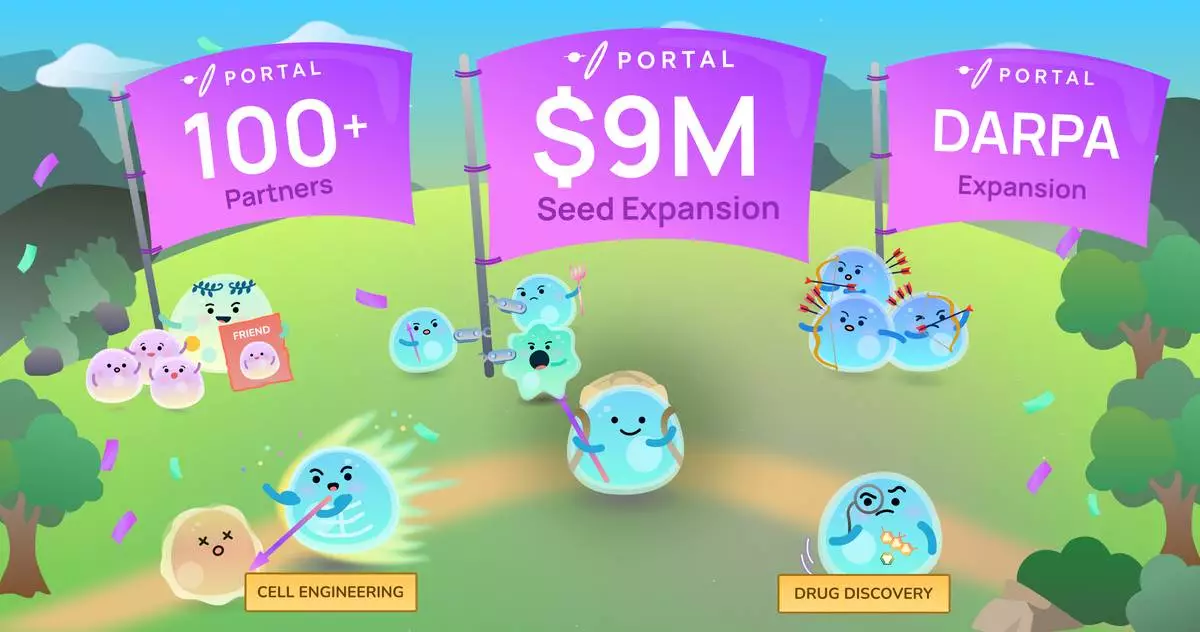
Portal Biotechnologies Accelerates Growth with Latest Round Led by NFX, Expanded DARPA Contract, and Broad Adoption Across Top Pharma and Academic Centers