The China-proposed Global Governance Initiative (GGI) represents the building of a "ground level of multilateralism", an increasingly necessary step in an interconnected world, said a Brazilian expert.
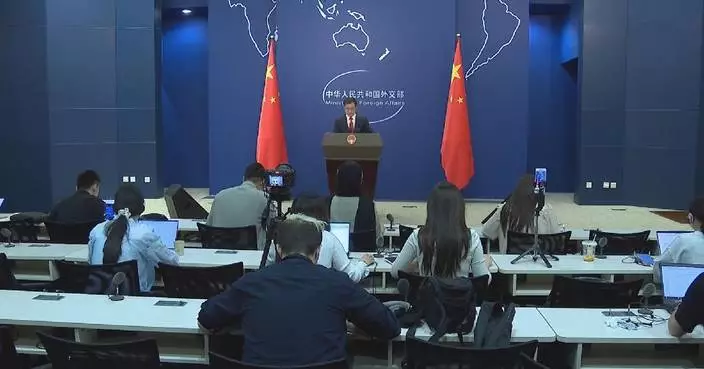
On Wednesday, China released a white paper on global governance in which it gave a favorable response to propositions by Global South countries on the pathway forward.
Paulo Borba Casella, coordinator of the BRICS Study Group at the University of Sao Paulo, said in an interview with China Global Television Network (CGTN) that regardless of disagreements on the specifics, countries must move forward with concrete steps toward an effective global governance system.
"Global governance is a topic that is unavoidable, so countries and public opinion in general, we have to take that into account. Growing interdependence among countries in the world makes it more necessary than ever. But how to put it into operation is another question. So that's something we all agree is necessary," he said.
Chinese President Xi Jinping proposed the GGI in 2025. The initiative is designed to offer a Chinese solution to the two pressing questions of the era: what kind of global governance system should be established, and how global governance can be reformed and improved.
Upon its introduction, the GGI swiftly gained support from nearly 160 countries and international organizations, with over 60 countries joining the Group of Friends of Global Governance. The international community believes that the GGI sends a clear signal: uphold multilateralism, unite forces, and pursue a fair future, according to the expert.
Casella said the initiative should cover issues related to peace and security, while calling for concrete actions to implement it.
"Indeed, because peace and security are requirements for development. To the extent you are involved into conflict to your party, or in a war, you cannot focus on other issues that have to be taken care of when you are not fighting with another country or with other groups. This is something which the interdependence in energy matters, in development matters, so it is interconnected. So this is not only just -- it is good to talk about -- but it's not enough just to talk. You have to do it in a way or in another," he said.
The expert also recognized China's adherence to multilateralism by advancing the implementation of the initiative together with other parties while navigating the complex challenges of geographical, cultural and political differences.
"No country can do it all by itself. You have to work together. So this is not only in a closed circle, so the neighboring countries, but also with other countries with which you have less in common. Countries that are farther away from you, not only geographically, but also culturally and politically. The more you can have playing together, it is better for everyone. This is basically the ground level of multilateralism. So try to play by the rules, and try to avoid unnecessary damage and trouble. So this remains true and will probably remain true in the future as well," said Casella.

Brazilian expert advocates jointly implementing GGI despite divergences