Agriculture is emerging as one of the strongest pillars of China-Myanmar relations, with joint research, talent exchanges and expanding trade driving the partnership forward.
In southwest China's Yunnan Province, researchers from both countries are working side by side to boost innovation and productivity in key crop sectors.
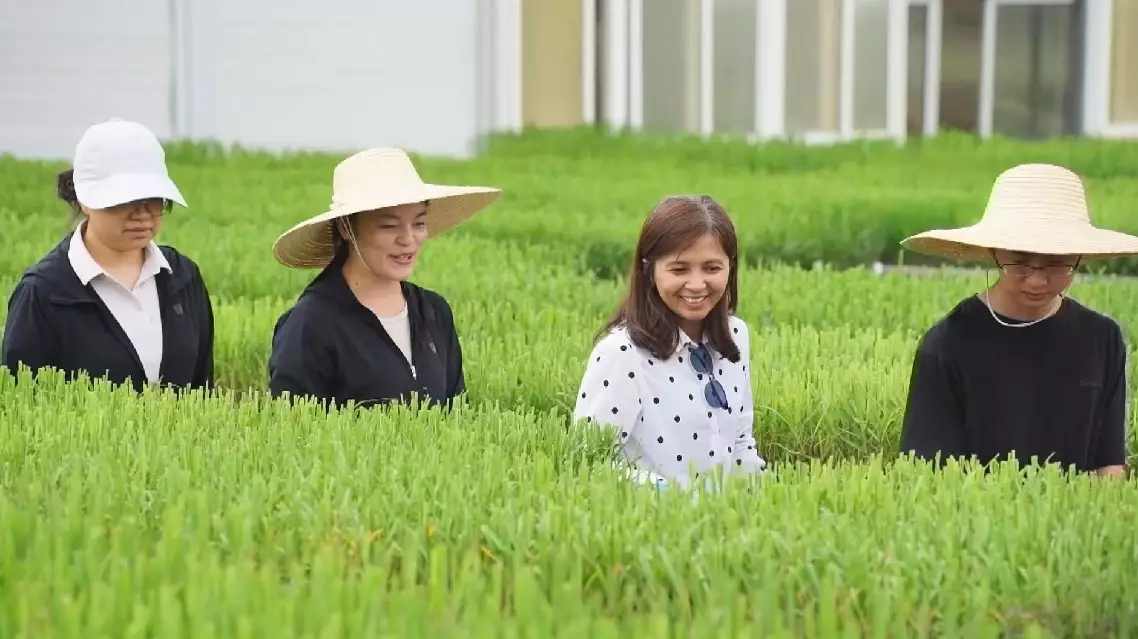
Myanmar's researcher April Nwet Yee Soe is spending a year at the Yunnan Academy of Agricultural Sciences, studying biological control methods for sugarcane diseases.
"In the sugarcane area and other areas, China is very advanced. And I think if I come here and learn some advanced technologies, then after I come back, I can contribute to my community and my country," she said.
Sugarcane is one of Myanmar's major cash crops and an important source of income for many families. For the country's agricultural botanists, research done in Yunnan on sugarcane presents a valuable opportunity for collaboration, as well as the start of a longer scientific journey.
"Now, I am finding the pathogenic fungi from sugarcane smut-infected plants. And then, after I get the pathogenic fungi, I will go do the molecular work for biocontrol," April said.
April's research builds on years of agricultural cooperation between China and Myanmar. Since 2008, the academy has worked with Myanmar partners on sugarcane breeding, cultivation techniques and technology transfer.
"Through the introduction of our sugarcane varieties and cultivation techniques, average sugarcane yields in Myanmar have increased from 3.8 to 4.5 tonnes per mu (about to 57 to 67 tonnes per hectare)," said Zhao Yong, director of the Agronomy Center at the Sugarcane Research Institute under the Yunnan Academy of Agricultural Sciences.
Higher yields have also strengthened agricultural trade. During the 2025-26 sugarcane crushing season, Myanmar exported more than 2 million tonnes of sugarcane to Yunnan, creating jobs in Myanmar while supporting for China's sugar industry. Cooperation has since expanded to upland rice, soybeans and tropical fruits, covering the entire agricultural value chain from breeding to quality testing.
Talent exchange remains at the heart of the partnership. The academy has hosted 14 Myanmar researchers and sent nearly 40 Chinese experts to Myanmar. The next focus is to build capacity in agricultural standards and quality testing, according to the Chinese side.
"Through the standardized system for agricultural product quality testing, we aim to enhance the capacity of young Myanmar scientists in building such standards. With this improvement, agricultural products from China and Myanmar will be able to achieve mutual recognition, facilitating trade between the two sides," said Wang Zhiyuan, director of the academy's International Cooperation Department.
President of Myanmar Min Aung Hlaing is on a state visit to China from June 15 to 19, at the invitation of Chinese President Xi Jinping, putting agricultural cooperation between the two sides once again in the spotlight.
China, Myanmar strengthen agricultural ties through research, trade