China will further promote the coordinated integration of major infrastructure networks during the 15th Five-Year Plan period (2026-2030), with efforts focused on optimizing the matching of supply and demand, improving system-wide efficiency and enhancing overall performance, the country's top economic planner said on Thursday.
The country will step up efforts to advance the coordinated development of computing and power infrastructure and accelerate the building of a unified national computing network, according to the National Development and Reform Commission (NDRC).
"In terms of 'hard investment,' we will explore more effective models for coordinated development of computing and power resources. We will strengthen innovation in the integration of computing and network infrastructure, and appropriately expand the capacity of direct interconnection lines between national computing hubs to further reduce network transmission latency. Meanwhile, in terms of 'soft development,' we accelerate the construction of a nationally integrated computing network that features interconnected scheduling, universal accessibility, and green and secure development," NDRC spokeswoman Li Chao said at a press conference.

China to further integrate major infrastructure networks in 2026-2030 period
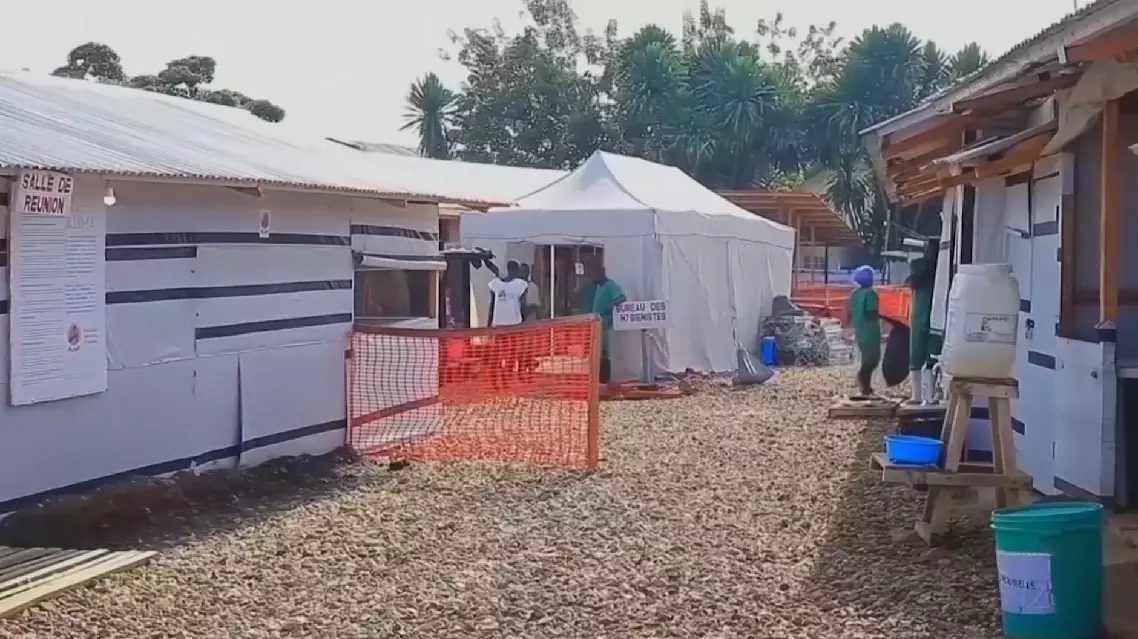
The number of confirmed Ebola cases in the Democratic Republic of the Congo (DR Congo) had risen to 896, including 232 deaths, the country's public health authorities said Thursday.
Twenty-one new confirmed cases, including six deaths, were reported Wednesday in the eastern provinces of Ituri and North Kivu, the health ministry said in its daily update.
The outbreak, caused by the Bundibugyo ebolavirus, has affected 33 health zones across three eastern provinces --Ituri, North Kivu and South Kivu.
Health authorities said 383 patients were either in isolation or hospitalized, while 78 patients had recovered, including 11 newly declared recoveries following negative control tests.
A total of 151 suspected cases, including 35 deaths, were also reported on Wednesday. Authorities said 6,367 contacts were under follow-up across the three provinces, of whom 4,525 were reached during the reporting period, representing a follow-up rate of 71.1 percent.
The report said the number of confirmed cases has continued to rise week by week, indicating ongoing community transmission. It also warned that rapid geographic spread remained possible if public health measures were not implemented swiftly.
The current outbreak, DR Congo's 17th Ebola outbreak, was officially declared on May 15.
The ongoing outbreak of the Bundibugyo strain of Ebola virus originated from a new spillover event from wildlife to humans rather than long-term latent transmission among the population, a joint scientific team from DR Congo and Uganda said on Thursday.
Genetic sequencing of the virus, conducted jointly by the Uganda National Health Laboratories and DR Congo's National Institute of Biomedical Research, confirmed that the current strain differs significantly from the genotypes responsible for the 2007 outbreak in Uganda and the 2012 outbreak in DR Congo.
The findings rule out the possibility that the current epidemic was triggered by a residual virus lurking dormant in human survivors from past outbreaks.
Researchers urged authorities to deepen cross-border epidemic prevention and control between DR Congo and Uganda, saying that cross-border cooperation is essential for tracking the transmission, reinforcing border screenings, and containing the wider spread of the virus.
DR Congo's Ebola cases rise to 896: health authorities