TYRE, Lebanon (AP) — Adnan Kaour returned on Thursday to check on his home in southern Lebanon 's coastal city of Tyre — once known as an idyllic summer getaway spot — just a week after Israel issued warnings for all of its residents to evacuate.
The warnings were followed by sweeping airstrikes, which Israel said targeted the Lebanese Hezbollah militant group.
Click to Gallery
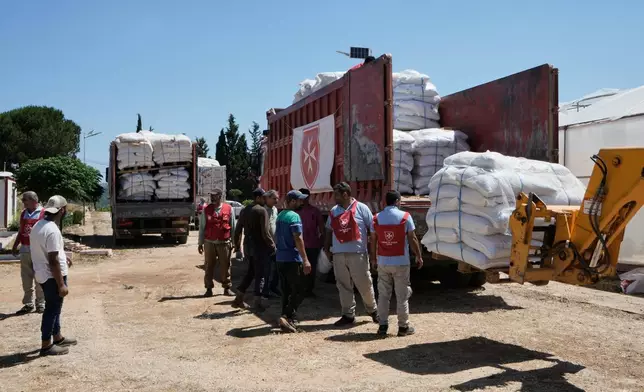
Workers unload emergency livestock feed and supplies for farmers from an aid convoy organized by the Order of Malta, a Catholic lay religious order, in the southern Christian village of Ain Ebel, Lebanon, Thursday, June 18, 2026. (AP Photo/Bilal Hussein)
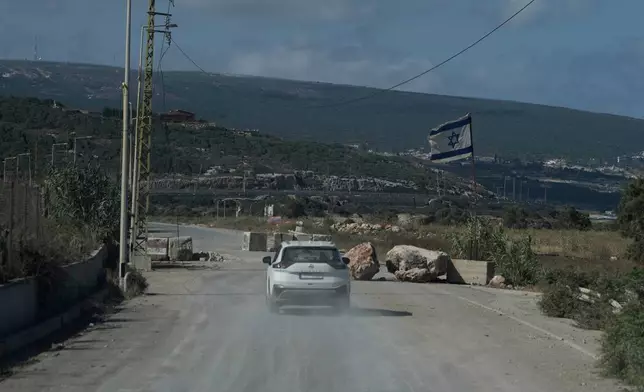
A car drives past an Israeli flag placed along a road in the southern town of Naqoura, Lebanon, Thursday, June 18, 2026. (AP Photo/Bilal Hussein)
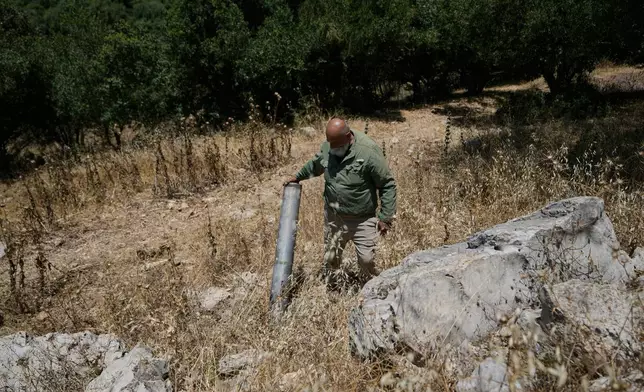
Zaki Maron inspects part of a rocket that fell on his farm in the southern Christian village of Ain Ebel, Lebanon, Thursday, June 18, 2026. (AP Photo/Bilal Hussein)

Residents inspect debris inside a building damaged in Israeli strikes as they return to check their apartments in the southern port city of Tyre, Lebanon, Thursday, June 18, 2026. (AP Photo/Hassan Ammar)

Resident Adnan Kaour inspects his apartment after it was damaged in Israeli strikes in the southern port city of Tyre, Lebanon, Thursday, June 18, 2026. (AP Photo/Hassan Ammar)

A portrait of former Hezbollah leader Hassan Nasrallah hangs on a wall inside a burned apartment damaged in Israeli strikes in the southern port city of Tyre, Lebanon, Thursday, June 18, 2026. (AP Photo/Hassan Ammar)

Resident Adnan Kaour stands amid debris outside his apartment building, which was damaged in Israeli strikes in the southern port city of Tyre, Lebanon, Thursday, June 18, 2026. (AP Photo/Hassan Ammar)
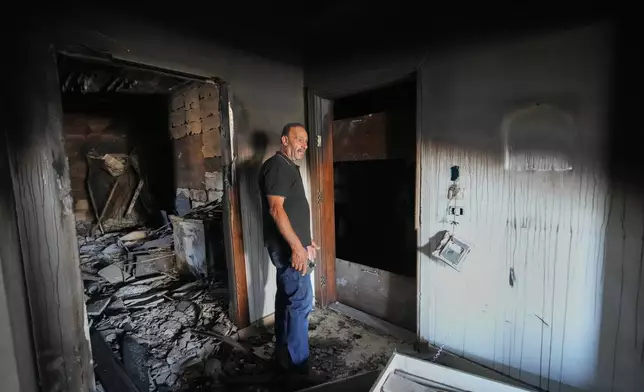
Resident Samih Haidar reacts as he inspects his burned apartment damaged in Israeli strikes in the southern port city of Tyre, Lebanon, Thursday, June 18, 2026. (AP Photo/Hassan Ammar)
What Kaour found back in Tyre shattered his hopes. His dream family apartment overlooking the shimmering Mediterranean Sea was a heap of rubble and shattered glass.
His return came after the announcement of an agreement between the United States and Iran to end the war in the Middle East. The deal also calls for an end to the war in Lebanon, where Israel has been fighting Hezbollah, but it's unclear what that means in practice.
Israel and Hezbollah are not parties to the agreement. Iran insists Israel must withdraw from the large swath of southern Lebanon it is occupying, but the wording of the interim deal doesn’t explicitly require that and only ensures Lebanon’s “territorial integrity.”
Israeli Prime Minister Benjamin Netanyahu said Thursday that Israel’s military will stay in a “security zone” of southern Lebanon as long as "Israel’s security needs require it.”
For its part, Hezbollah has said that it's committed to resisting any occupation by Israel. Fighting between the two sides, which was still underway on Thursday in some parts of southern Lebanon, could derail the deal.
For residents in the south of crisis-battered Lebanon, hopes of better times are mixed with skepticism after many ceasefire announcements that had failed to halt the fighting.
Kaour lives in Germany, but spends most of the summer in Tyre. Last month, when an Israeli strike hit their street without warning, he was abroad with his family.
When he returned, he saw his building, with a popular sweets shop and an electronics store on the ground floor, was still standing, unlike surrounding structures that were leveled to the ground.
But walls and windows had been blasted out. He was relieved his family had not been there, he said.
“I’m hopeful for peace, and God willing this is the end of the war, and everyone can go back to their homes," he said. “We are living abroad, but our minds are here in our country.”
Outside, the street filled with people trying to clear the rubble.
Kaour's neighbor one floor above, Samih Haidar, had also just returned and found his door bolted by wooden boards.
He tried to kick them down, but failed, then anxiously waited as two men who had been clearing rubble on another floor came and unscrewed the bolts.
Through a gap, Haidar climbed in. He didn't know what to expect. He had rented the apartment out to a family displaced from another area in the south, people who came to him through a friend.
His anxiety turned into shock: broken furniture, shattered glass, rubble and a burned out kitchen that had caught fire after the strike. He slowly walked through each room, quietly filming with his phone. He doesn't know what became of the tenants — displaced from Tyre like scores of others, he presumed.
“We want things to work out and live in safety, so there can be stability for us and everyone else,” Haidar said.
Farther south, the Christian village of Ain Ebel is one of a few enclaves in Lebanon's border area where residents have remained during the war. Christian villages, where Hezbollah has little presence, have been largely spared the destruction of neighboring Shiite villages. But they have their own problems.
The village is cut off from the rest of Lebanon by fighting and Israeli checkpoints, relying on aid convoys that require extensive coordination to get through. One such convoy, organized by the Order of Malta, a Catholic lay religious order, arrived Thursday bearing emergency livestock feed and supplies for farmers.
Cattle farmer Boutros Maroun said people in Ain Ebel are exhausted.
“We don’t care about America and Iran, we want the Lebanese people to live comfortably and happily," he said. "Every two years there’s a new war, and we can no longer take it.”
The convoy was delayed in returning to Beirut because of explosives found on the road, which had to be cleared by U.N. peacekeepers.
The fighting subsided but did not stop Thursday. Lebanon's state-run National News Agency reported several Israeli drone strikes, including one on a car in the town of Kfar Tebnit that killed one person and critically wounded another. Hezbollah later said in a statement that its fighters clashed with Israeli troops trying to advance on the town. Israel did not comment.
To the north, some 80 kilometers (50 miles) away, displaced families huddled along the waterfront in Beirut. Most of them have been sleeping in tents for months, living in limbo. For others, it's a bench or a mattress on the ground.
Many said they're not convinced that the U.S.-Iran deal will hold or that they will be able to return to their homes — if they still exist. In the border area close to Israel, many Lebanese villages have been almost completely demolished.
“I haven’t felt relieved at all,” said Mohammed Ashmar, displaced from the border village of Deir Seryan, holding a cup of coffee and sitting near his tent on the waterfront. “Until I get back to my home ... I won’t be convinced of anything.”
The Israel-Hezbollah war has displaced more than 1 million people in Lebanon, and killed more than 3,900, according to Lebanese officials. About 30 Israeli soldiers and a defense contractor have been killed in or near southern Lebanon, and two civilians have been killed in northern Israel, according to Netanyahu’s office.
Speaking during a visit by foreign dignitaries on Thursday, Lebanon’s Social Affairs Minister Haneen Sayed said the country faces urgent humanitarian needs but also the daunting task of planning for the return of displaced families and reconstruction of the destroyed areas.
“The Lebanese people deserve peace," she said. “They deserve to return safely to their homes, rebuild their communities, and look to the future with confidence and hope.”
Associated Press journalists Fadi Tawil in Beirut and Melanie Lidman in Tel Aviv, Israel, contributed to this report. Hussein reported from Ain Ebel, Lebanon.
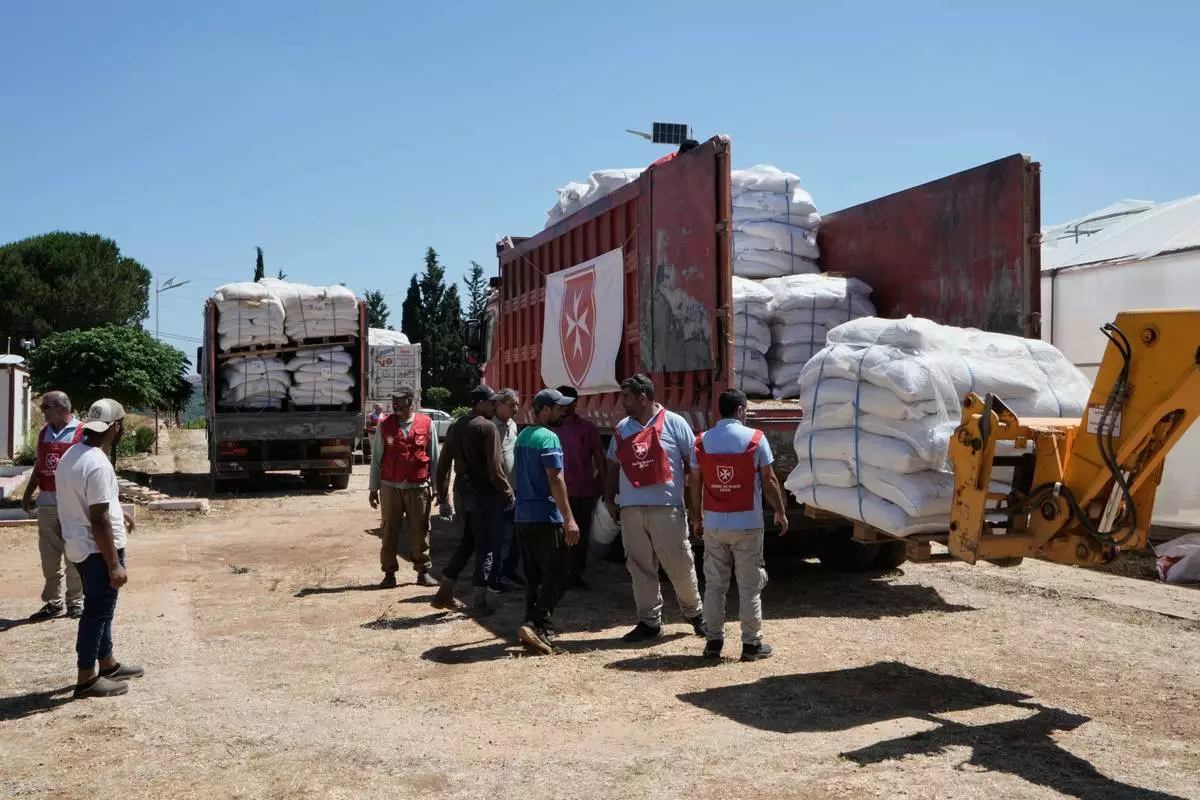
Workers unload emergency livestock feed and supplies for farmers from an aid convoy organized by the Order of Malta, a Catholic lay religious order, in the southern Christian village of Ain Ebel, Lebanon, Thursday, June 18, 2026. (AP Photo/Bilal Hussein)
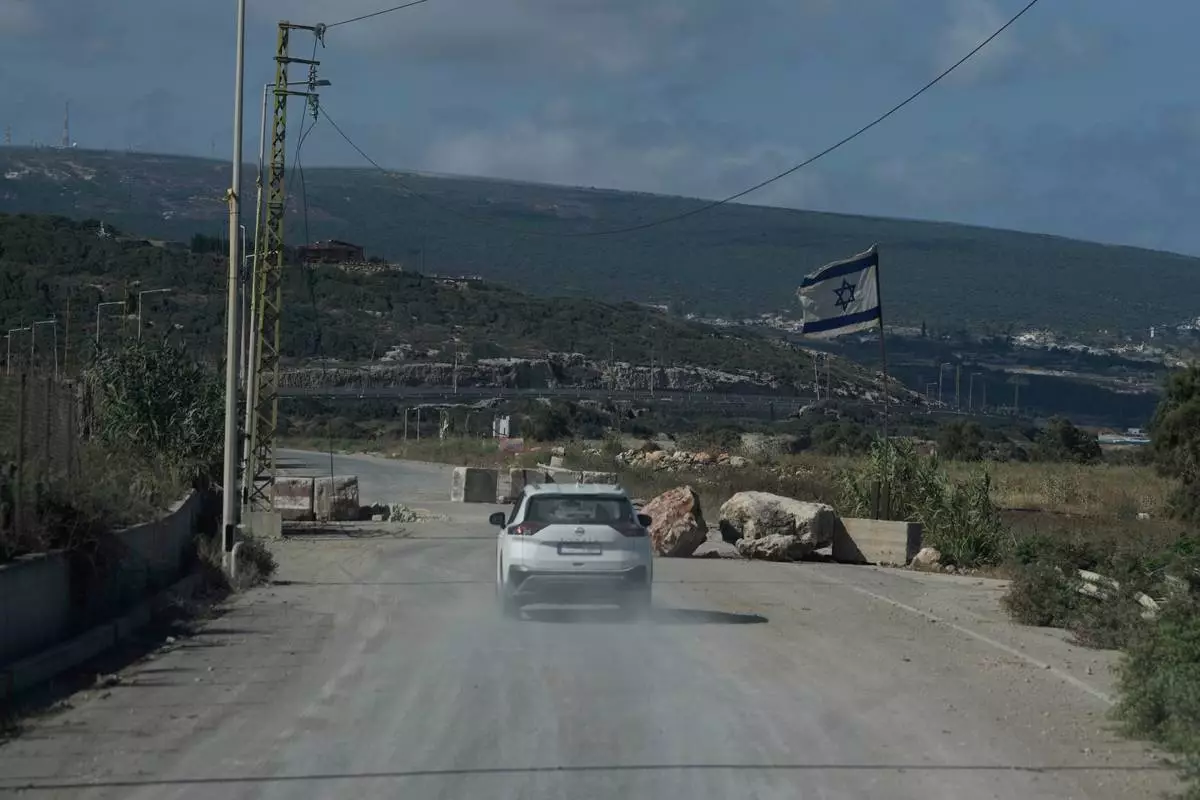
A car drives past an Israeli flag placed along a road in the southern town of Naqoura, Lebanon, Thursday, June 18, 2026. (AP Photo/Bilal Hussein)
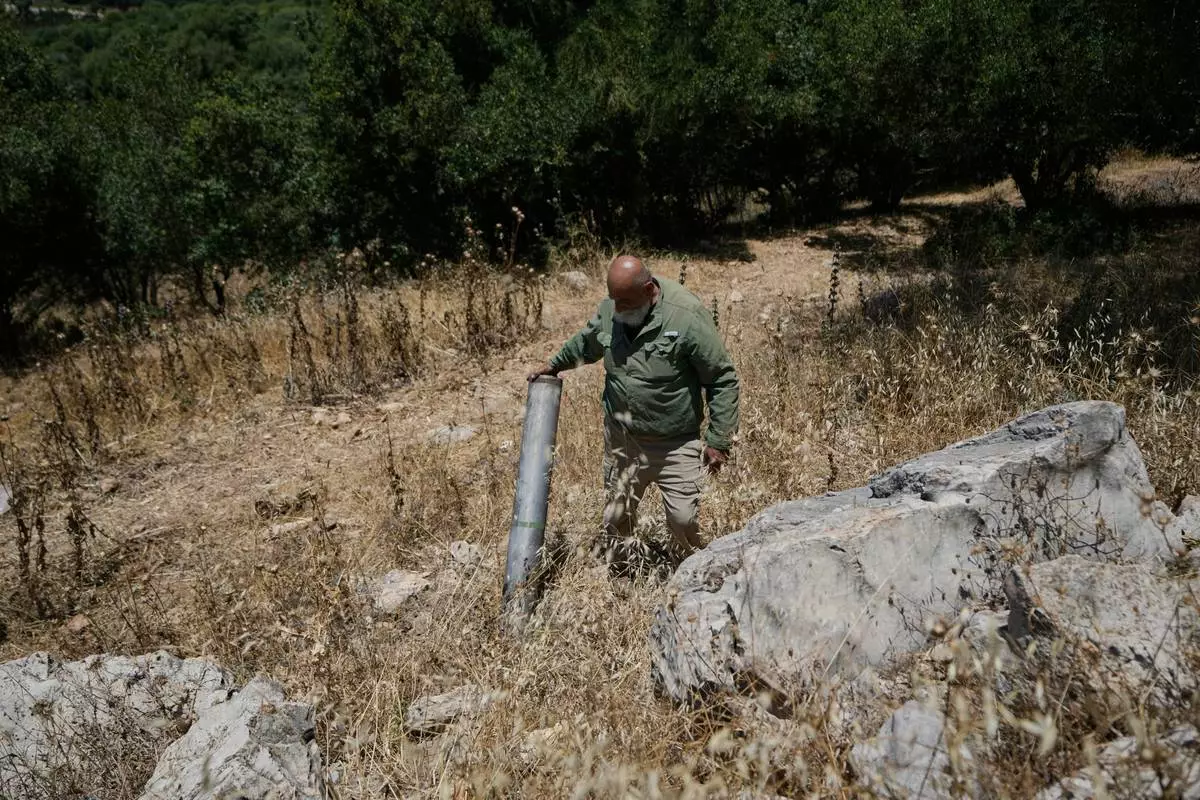
Zaki Maron inspects part of a rocket that fell on his farm in the southern Christian village of Ain Ebel, Lebanon, Thursday, June 18, 2026. (AP Photo/Bilal Hussein)

Residents inspect debris inside a building damaged in Israeli strikes as they return to check their apartments in the southern port city of Tyre, Lebanon, Thursday, June 18, 2026. (AP Photo/Hassan Ammar)

Resident Adnan Kaour inspects his apartment after it was damaged in Israeli strikes in the southern port city of Tyre, Lebanon, Thursday, June 18, 2026. (AP Photo/Hassan Ammar)

A portrait of former Hezbollah leader Hassan Nasrallah hangs on a wall inside a burned apartment damaged in Israeli strikes in the southern port city of Tyre, Lebanon, Thursday, June 18, 2026. (AP Photo/Hassan Ammar)

Resident Adnan Kaour stands amid debris outside his apartment building, which was damaged in Israeli strikes in the southern port city of Tyre, Lebanon, Thursday, June 18, 2026. (AP Photo/Hassan Ammar)

Resident Samih Haidar reacts as he inspects his burned apartment damaged in Israeli strikes in the southern port city of Tyre, Lebanon, Thursday, June 18, 2026. (AP Photo/Hassan Ammar)