China's white paper on global governance addresses risks and challenges, pinpointing the most pressing issues and responding to the common concerns of the international community, according to experts from different countries.
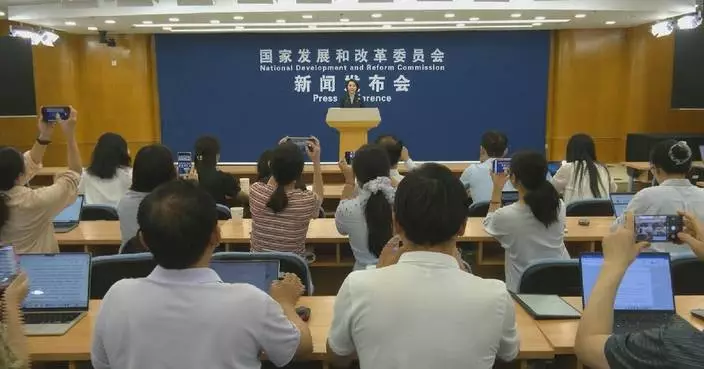
China's State Council Information Office on Wednesday released a white paper titled "More Just and Equitable Global Governance: China's Principles, Proposals and Actions."
The white paper was published to introduce China's approach to global governance, foster broader consensus within the international community, ensure more effective responses to global challenges, and build a more just and equitable global governance system.
Analysts said China's efforts in global governance bears significant meaning against the backdrop of a turbulent international environment.
"In recent years the global community has witnessed a lot of instability, which is driven by a shift toward unilateral policies and trade protectionism, and this leads to a fragmentation in the global system that is challenging for the major economies. In this context, the value of the four initiatives proposed by President Xi Jinping lies in their ability to restore predictability to the international system and reinforce multilateral cooperation,” said Daniel Balazs, senior research analyst at the Institute for China-Europe Studies in Brussels.
"The world is going through a very rocky period. We are living in turbulent times. But what China is doing and what President Xi has put forward is the importance of stabilizing this very unwieldy situation. So, what China is doing is providing a sense of stability and continuity in world order,” said Jorge Heine, a professor at the Frederick S. Pardee School of Global Studies at Boston University.
"We live in the same world and are all citizens of this planet. We must work together to ensure that the global problems we face are solved. Different systems and different countries must cooperate to create the best possible future for humanity. This requires cooperation from all countries in formulating rules to effectively address these challenges, and China has made significant contributions to this process," said Gunther Beckstein, former governor of Bavaria, Germany.
Other experts said that global governance is a common cause addressing the well-being of humanity, and building a just and equitable global governance system is a shared vision pursued by people from across the world. The white paper demonstrates the responsibility of China as a major power in promoting the building of a more just and equitable global governance system.
"The concept of the Global Governance Initiative is correct, and China is capable of supporting the United Nations to truly play its due role in maintaining peace," said Pino Arlacchi, an Italian sociologist and former UN under-secretary-general.
"This white paper, this concept, the way you look at it, it's just an equitable representation, equitable voice. So for me, it's very laudable, it's very proactive. If you look at the history of the global governance architecture, financial architecture, the UN, the WHO, all these organs were actually conceived prior to independence of Africa. And the intention and incentive for that, for this white paper, is actually to throw the global architecture open,” said Paul Ogwu, executive director of the Africa Institutional and Sustainable Development Foundation.
"The fundamental issue here is the global governance system is not working right now. It's lending itself towards conflicts, global conflicts, supply chain disruptions, and a unilateral and unipolar world. So an equitable governance system that is heavily weighted towards partnerships and development is what we favor here as Africans. And I think this is what the white paper lends itself to," said Stavros Nicolaou, senior representative of South Africa to BRICS Business Council.

China's white paper on global governance in line with international concerns: experts