Three oil tankers and one liquefied natural gas (LNG) carrier navigated through the Strait of Hormuz on Thursday, after the United States and Iran signed a memorandum of understanding (MoU) aimed at ending their conflict, according to data from ship tracking platform Kpler and the London Stock Exchange Group.
However, Iranian officials indicated that vessel passage through the chokepoint still requires coordination with the Islamic Revolution Guard Corps (IRGC) Navy.
The three Saudi-flagged tankers, carrying a combined 6 million barrels of crude oil, represent the largest crude export convoy to pass through the strait in recent weeks.
Ships were broadcasting their positions as they sailed through the strait on Thursday, after weeks of concealing their voyages through the waterway by switching off their transponders.
The French-flagged LNG carrier Mraikh also transited through the strait on Thursday after loading its cargo at Qatar's Ras Laffan port on June 12 and 13. It was originally scheduled to arrive at Port Qasim in Pakistan on Thursday.
The United States and Iran released the official text of the peace MoU on Wednesday. Under the terms of the agreement, the U.S. will immediately begin lifting its naval blockade on Iran. In return, Iran will make every effort to ensure that merchant vessels can travel safely and toll-free between the Persian Gulf and the Gulf of Oman within a 60-day period.
Addressing the situation on Thursday, Fatih Birol, Executive Director of the International Energy Agency (IEA), said that the Strait of Hormuz "must reopen without conditions", adding that relevant negotiations should be concluded within the next 60 days.
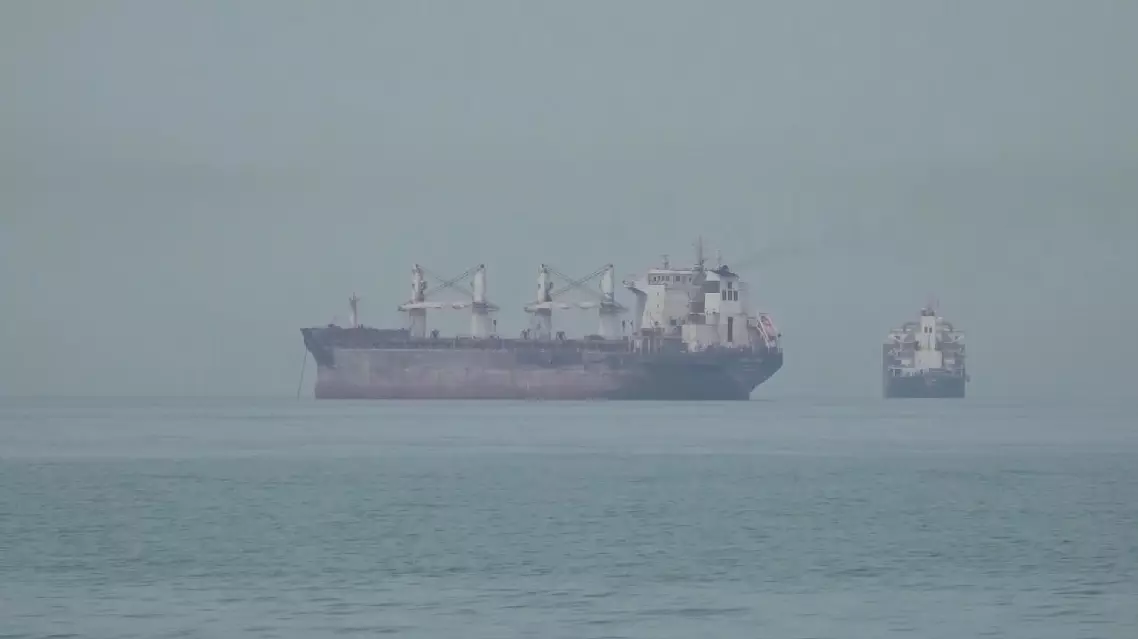
Three oil tankers, one LNG carrier pass through Strait of Hormuz after Iran deal signed
The U.S. Central Command (CENTCOM) announced on Thursday that it has officially lifted its naval blockade on all maritime traffic to and from Iranian ports and coastal areas.
"Today, U.S. forces lifted the blockade on all maritime traffic entering and exiting Iranian ports and coastal areas, in accordance with the President's direction," CENTCOM said in a statement published on social media platform X.
CENTCOM confirmed that U.S. forces are no longer impeding the movement of vessels traveling to and from Iranian ports in the Arabian Gulf and the Gulf of Oman, marking the cessation of all U.S. military blockade operations in the region.
Despite that, U.S. Naval ships "will remain in the general area to make sure that all aspects of the agreement are adhered to, obeyed and in full force and effect", according to the statement.
Iran's official news agency IRNA on Wednesday evening published the full text of a recently finalized memorandum of understanding (MoU) between Tehran and Washington aimed at ending their conflict.
According to IRNA, immediately upon the MoU's signing, the United States will begin to lift its anti-Iran naval blockade and stop any harassment or obstruction against the country, and will fully end the blockade within 30 days.
It added during this period, traffic by vessels will return to the pre-war level to be restored by Iran, and the United States also undertakes to withdraw its military forces from areas around Iran within 30 days after the final agreement.
The report said by signing the MoU, Iran will make arrangements to the best of its ability to provide safe passage for commercial ships free of charge, only for a period of 60 days, from the Gulf to the Gulf of Oman and vice versa, adding that commercial ships' passage will commence immediately and will be established within 30 days given the need for removing technical and military obstacles and demining by Iran.
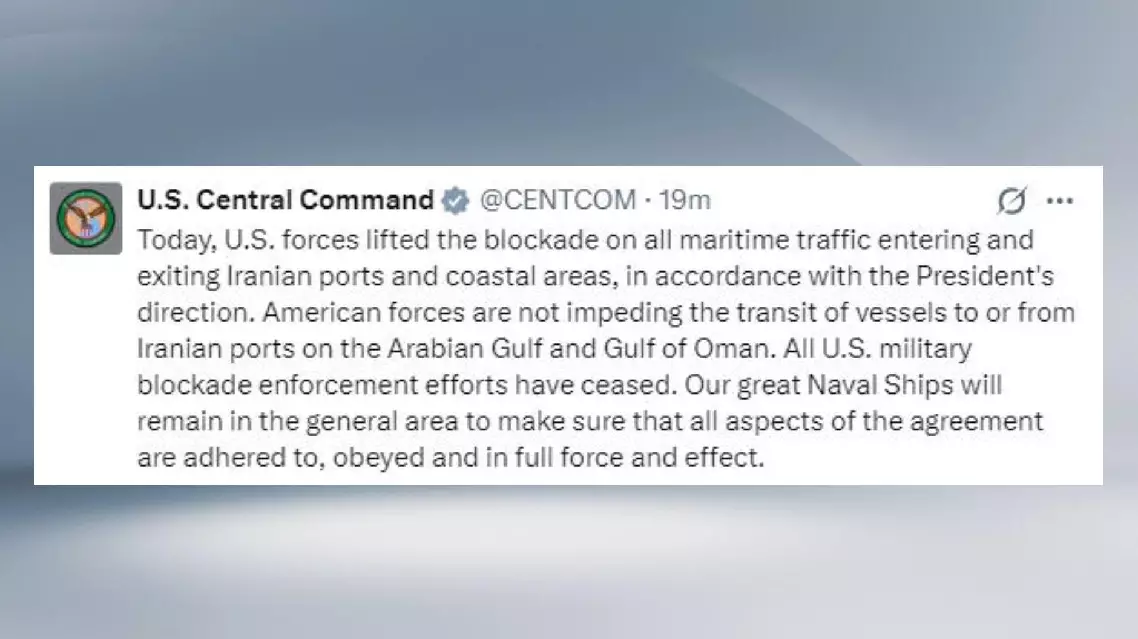
U.S. lifts naval blockade against Iran