Two men, including one whose life sentence was commuted by then-South Dakota Gov. Kristi Noem, have been charged in the death of a 14-year-old girl whose body was found in a rural area five days after she went missing in March.
McKenna Wendel was reported missing March 13 and last seen alive in her hometown of Sioux Falls early on March 14. Her body was found outside Brookings, an hour's drive north of Sioux Falls, on March 19.
Wendel's uncle, Mark Milk, 51, also of Sioux Falls, now faces five counts related to her death. Milk was almost three decades into a life term on a manslaughter conviction when Noem commuted his sentence in 2023.
Wendel was raised by her grandparents, loved animals and had a “vibrant personality and a zest for life,” according to her obituary. She and her grandparents were Rosebud Sioux Tribe members and attended powwows often.
“She loved the singing and the beautiful sounds of the drums,” her obituary read.
Details about Wendel's death remained thin as authorities who announced the charges in a Sioux City, Iowa, news conference Thursday kept close what they knew to protect their investigation.
Authorities have said an autopsy was done, but the findings have not been released. The cause and manner of Wendel's death would not be released yet per Justice Department policy, said Leif Olson, U.S. attorney for northern Iowa.
Milk faces five counts including possession with intent to deliver cocaine that caused Wendel's death. He is also charged with transportation of a minor with the intent to engage in criminal sexual activity, according to court documents.
Jon Rogness, 38, of Brookings faces conspiracy and accessory charges in an alleged attempt to cover up the crimes. The counts against the men were the “most serious, readily provable” charges and all originated in Iowa, Olson said.
“This is a horrific case,” FBI special agent Gene Kowel said. “There are no cases that we investigate that are more heart-wrenching and more tragic than the ones that involve children or the death of a child.”
Court records showed no lawyers listed for Milk and Rogness, and no relatives could immediately be located through phone records and social media to speak on their behalf.
In February 2023, Noem commuted Milk’s life sentence for a manslaughter conviction in an October 1993 stabbing death. Milk, then 19, had been involved in several altercations in the city of Winner that ended with the death of Shawn Peneaux, according to records.
Milk was in jail on unrelated allegations of driving under the influence and eluding police when Wendel's body was found. His name came up in public discussion about the case from the start. But prosecutors, who finished their investigation in late May, did not formally link him to Wendel's death until filing charges Wednesday.
South Dakota Attorney General Marty Jackley said in a late March news conference the decision to commute Milk's life sentence was strictly Noem's.
“It is fairly often that you see law enforcement oppose commutations," Jackley remarked without commenting further on Noem's decision.
The commutation documents were sealed and even he had not seen them, he noted.
The Associated Press left a message Thursday for Noem on seeking comment through NovaRed Mining, a Canadian firm she recently joined in a “strategic advisory role."
A Republican, Noem, 54, was South Dakota's lone congressperson from 2011 to 2019 and governor from 2019 to 2025. She was Homeland Security secretary before being fired in March by President Donald Trump amid criticism of her handling of the administration’s immigration crackdown and disaster response.
Trump praised Noem's leadership and said he was making her special envoy for “The Shield of the Americas." The new organization of Western Hemisphere nations is focused on supporting democracy and security in the region.
Gruver reported from Fort Collins, Colorado, and Billeaud from Phoenix, Arizona.
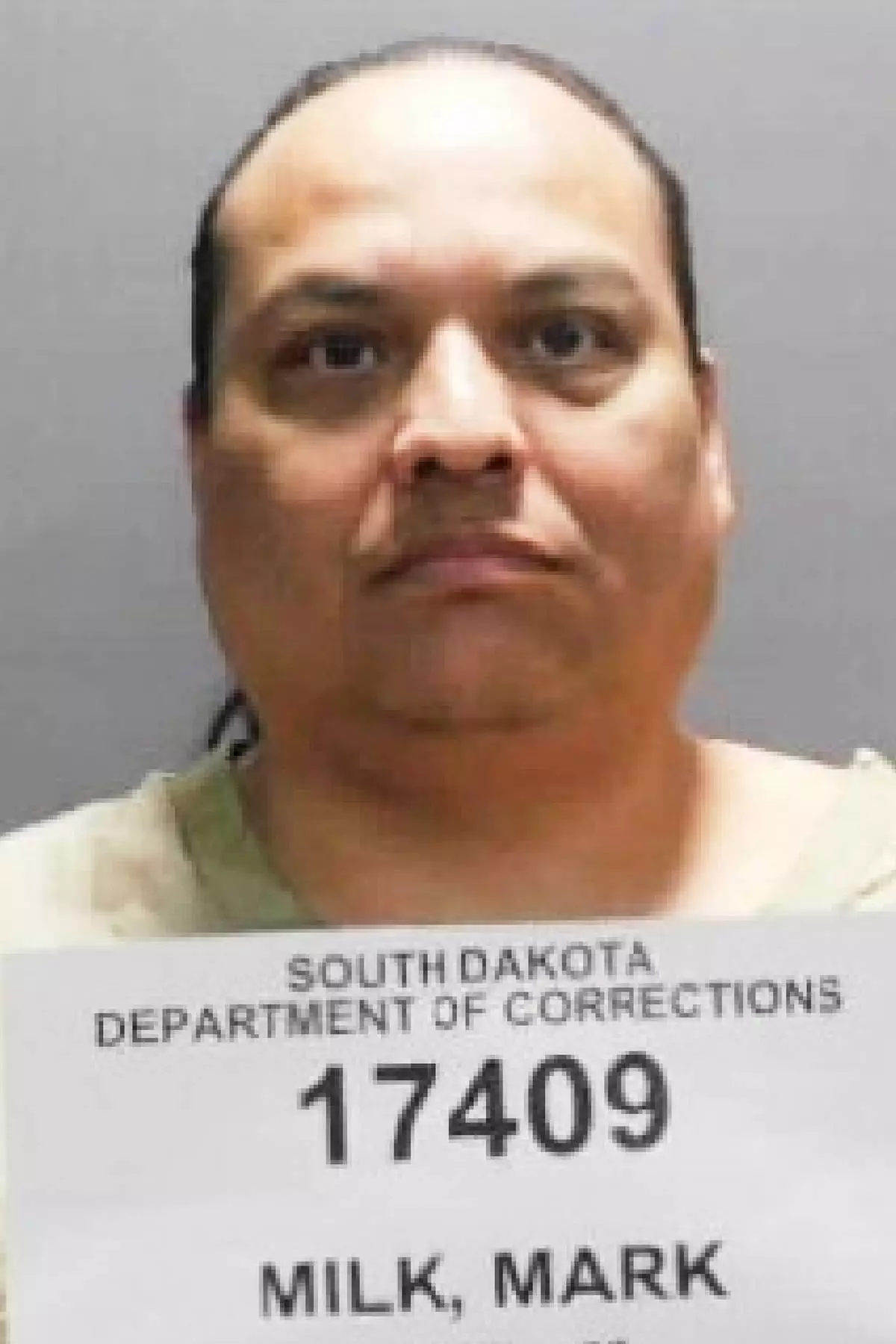
This undated booking photo released by the South Dakota Department of Corrections on Thursday, June 18, 2026, shows Mark Milk. (South Dakota Department of Corrections via AP)

FILE - Homeland Security Secretary Kristi Noem appears for an oversight hearing before the Senate Judiciary Committee at the Capitol in Washington, March 3, 2026. (AP Photo/J. Scott Applewhite, File)
NEW YORK (AP) — The death of a young tourist who jumped from a runaway horse carriage in Central Park has intensified calls to ban the old-time attraction from one of New York City’s most recognizable destinations.
Romanch Mahajan, 18, died after he got off of the four-wheeled carriage as its horse sprinted through the park without the driver.
He is believed to be the first person to die in a horse carriage accident since they were introduced in Central Park more than 150 years ago, according to the labor union representing the industry and the Central Park Conservancy, which manages the 843-acre (341-hectare) park.
The conservancy was among those arguing Thursday that the carriage industry should be suspended until more protections can be put in place. Mahajan’s death was the eighth horse-related incident in the park over the past 13 months, the group said.
“The record is undeniable: crashes, runaways, horse deaths, injuries, and now a devastating loss of human life,” said Edita Birnkrant, head of the animal welfare group New Yorkers for Clean, Livable, and Safe Streets.
Animal rights activists have long claimed the carriage horses are overworked, can get easily spooked on city streets and live in inadequate stables while their drivers regularly flaunt city rules. All of those allegations have been denied by the horse and carriage owners, who say the animals are well cared for and the stables are fine.
The conservancy has argued that horses can no longer safely share park roads teeming with joggers, cyclists, pedestrians and motorized scooters, noting that other U.S. cities, including Chicago and San Antonio, have also recently done away with the nostalgic rides.
But carriage industry leaders said the fatal crash underscores the need for better protections, not outright elimination of the quaint attraction that harkens back to a romanticized, bygone New York.
“We’re absolutely gutted and stunned by this tragedy,” said Alexander Kemp, a vice president with the Transport Workers Union Local 100, the labor union representing carriage drivers and owners. “We have shuttered the stables and ceased operations today while we have extensive internal discussions of safety protocols and how they can be improved.”
Horse carriages weren’t running Thursday and it was not immediately clear when the rides, which cost about $72 for the first 20 minutes, would resume.
The owner of the carriage involved in the fatal crash also suspended the driver indefinitely, and has plans to retire the horse from the business, according to the union. It said the driver improperly dismounted to take a photograph of his passengers.
Mahajan had been on a family trip celebrating his recent high school graduation when the family decided to take a ride on one of the park’s often photographed, richly decorated carriages.
His father, Deepak Mahajan, told The New York Times the family had arrived from India on Monday, the same day Romanch learned he had been accepted to a university in Jaipur.
They had spent the trip visiting many of the city’s popular tourist attractions, including the Statue of Liberty and the Brooklyn Bridge.
The carriage driver hopped off to take a photograph of the family near a fountain when the horse suddenly bolted, Mahajan said.
Romanch’s mother fell out of the carriage, and the teen jumped out in an attempt to save her, according to his father.
“He was screaming, ‘Mom!’” Deepak Mahajan recounted to the Times.
But Romanch hit his head on the ground before the carriage clipped another horse-drawn vehicle and eventually toppled over. The father, his wife and younger son escaped with minor injuries.
“This incident should be taken very seriously,” Mahajan said. “It took my son’s dream away.”
New York City leaders vowed to work swiftly to end the industry in the wake of Romanch's death.
City Council Speaker Julie Menin said the legislative body would hold a hearing next month on a long-simmering bill that would ban horse carriages and help drivers transition into new jobs.
Last year, the park conservancy revived debate over the carriages when, for the first time, it threw its support behind what’s known as Ryder’s Law.
“The time to act is now,” she wrote on the social platform X.
Mayor Zohran Mamdani also reiterated his support for ending the industry, saying he’d work with the council, the industry and animal welfare advocates to “deliver a just transition that protects workers while ending horse-drawn carriages in Central Park once and for all.”
Other recent mayors have made similar pronouncements. Mayor Bill de Blasio vowed to shut down the industry “on Day One" in office, only to come up against years of council opposition. Mayor Eric Adams, Mamdani’s predecessor, came out against the industry near the end of his single term.
Onur Altintas, who owns four horses and a carriage operating in Central Park, was among those worried about an end to their livelihood. He said the industry provides hundreds of jobs to drivers, stable hands, farriers, and others in horse-related trades.
“We are sad about what happened. Nobody wants that. But it’s not like this is happening every day,” said Altintas. “Car crashes and plane crashes are happening every single day. One horse makes an accident, and the world is destroyed? Come on.”
The longtime owner and driver said the industry needs better regulations to make it safer. He said “90%” of horse-related accidents could be avoided simply by installing hitching posts throughout the park so drivers could safely tether and secure their horses, including at popular tourist photo stops.
The Transport Workers Union on Thursday said legislation recently introduced into the council would do just that.
“Drivers can’t leave their carriage. They have to be on it all the time,” Altintas said. “But it’s impossible. We have to go to the restroom. We have to eat. We have to do things.”
Ramer reported from Concord, New Hampshire.
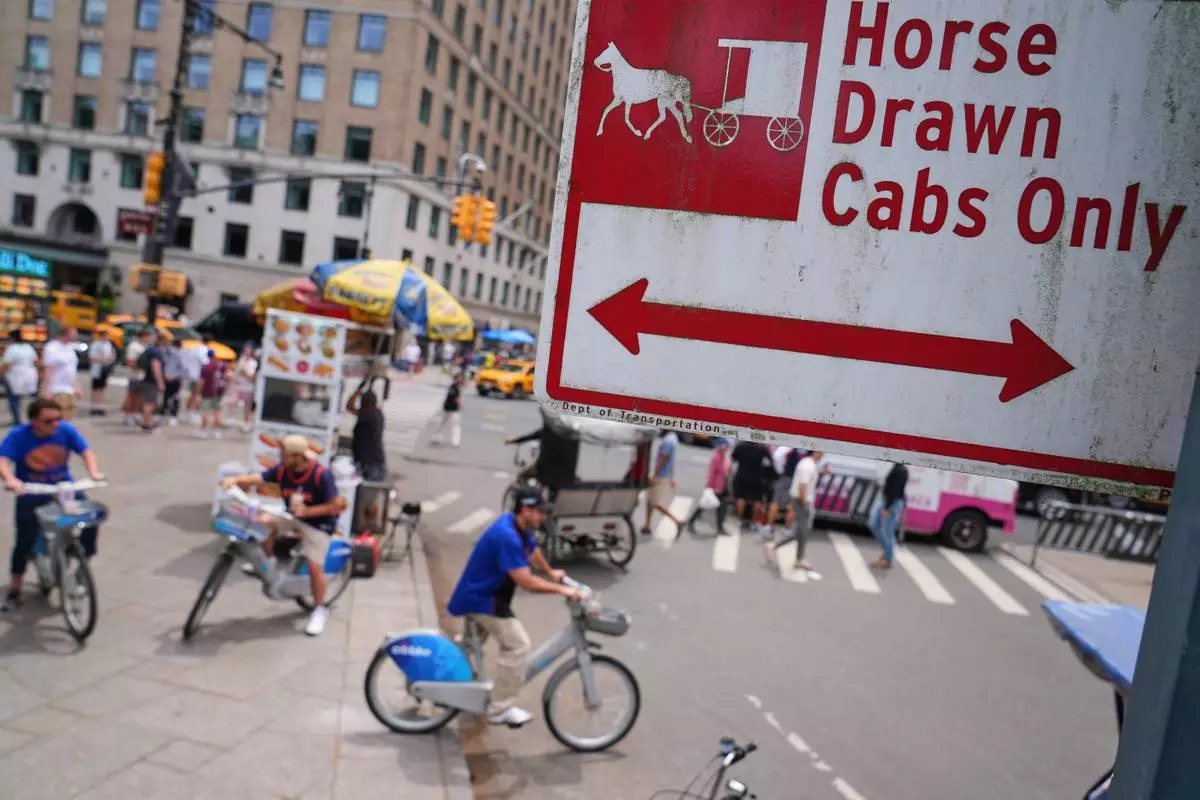
Cyclist and Pedicabs gather near Center Drive and Central Park South Thursday, June 18, 2026, in New York. (AP Photo/Frank Franklin II)
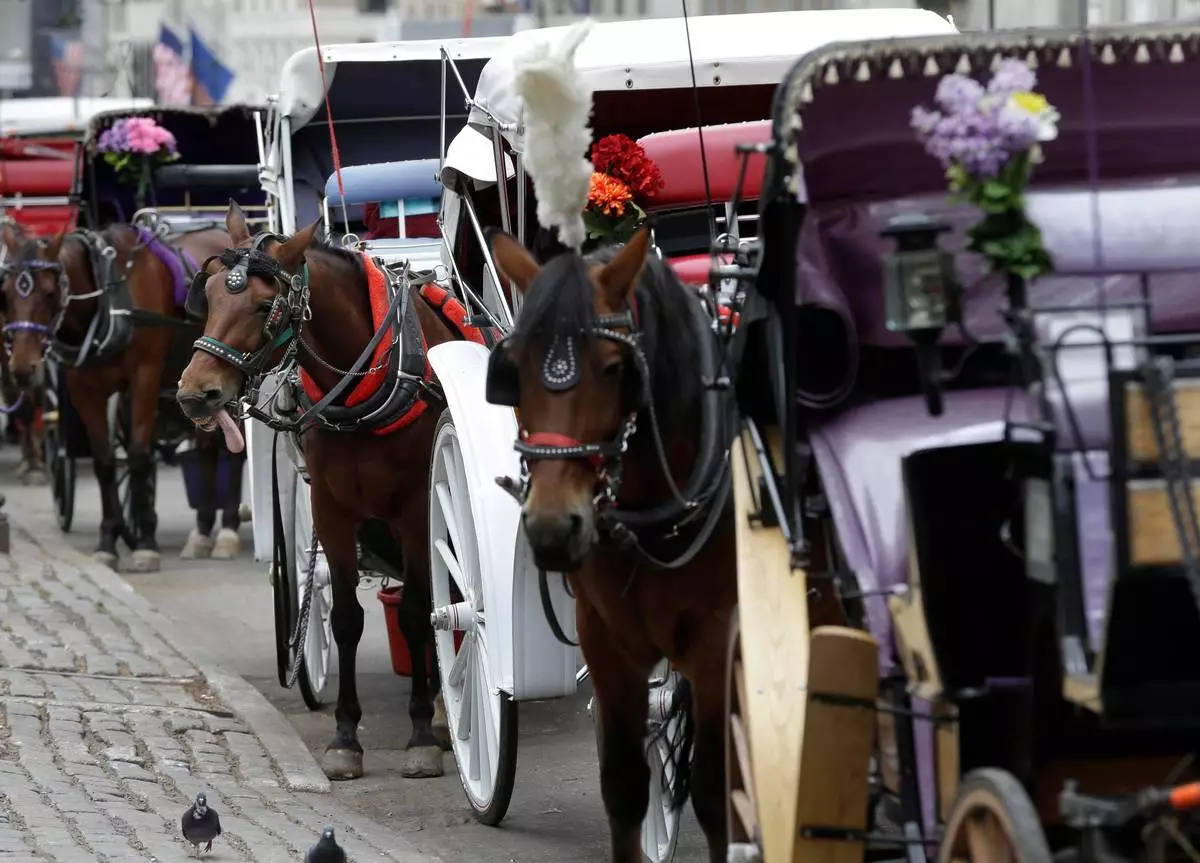
FILE - Horses and carriages wait for customers on Oct. 23, 2013, near Central Park in New York. (AP Photo/Seth Wenig, File)

Police investigate the scene after a Central Park carriage horse bolted away from its driver killing a teenager from India on Wednesday, June 17, 2026 in New York. (WABC-TV via AP)