Skip to Content Facebook Feature Image

Jabil Expands Manufacturing Capacity in India

Business

Jabil Expands Manufacturing Capacity in India
Business

Business

Jabil Expands Manufacturing Capacity in India

2026-06-19 10:30 Last Updated At:10:51

PUNE, India--(BUSINESS WIRE)--Jun 18, 2026--

Jabil Inc. (NYSE: JBL), a global leader in engineering, supply chain, and manufacturing solutions, today announced the opening of a new factory in Pune, marking a significant expansion of the company’s India manufacturing capacity.

This press release features multimedia. View the full release here: https://www.businesswire.com/news/home/20260618400989/en/

Located in the Maharashtra Industrial Development Corporation (MIDC) industrial zone, this facility is the latest addition to Jabil’s India footprint, which has grown from 500,000 square feet to 1.2 million square feet over the past year. This ongoing growth has also increased Jabil’s regional headcount from 5,000 to almost 11,000 employees.

“Expanding in Pune reflects Jabil’s long-term commitment to India, especially as the country grows its position as a global manufacturing leader,” said Andy Priestley, Jabil’s Executive Vice President of Operations. “This new facility will help us bring together more skilled manufacturing talent and engineering capability to build the highest quality products with speed at scale. As we continue developing our people here in Pune, we’re strengthening Jabil’s ability to execute consistently in India.”

The expansion reflects Jabil’s confidence in Maharashtra as a strategic location for advanced manufacturing and comes on the heels of a MoU signing with the state government.

“Maharashtra continues to be a preferred destination for global manufacturers because of our skilled workforce, and commitment to enabling investment and growth,” said Devendra Fadnavis, Chief Minister of Maharashtra. “Jabil’s expansion in Pune is a welcome addition to the state’s manufacturing landscape and an encouraging example of how world-class companies are contributing to India’s industrial progress, job creation, and long-term economic development.”

“As the Make in India initiative continues to evolve, we remain committed to building a robust ecosystem that enables companies like Jabil to innovate, scale, and thrive in India,” said Ashwini Vaishnaw, Minister of Railways, Information and Broadcasting, and Electronics and Information Technology.

In India, Jabil serves a wide range of industries, such as telecommunications, AI cloud data centres, automotive, and digital commerce.

In 2025, Jabil was recognized with the Great Place To Work Certification in India; selected as one of India’s top 100 mid-sized companies to work for; and named as India’s Best Workplaces™ in Electronics 2025.

To learn about and apply for open positions at Jabil’s new Pune facility, visit jabil.com/careers.

About Jabil

At Jabil (NYSE: JBL), we are proud to be a trusted partner for the world's top brands, offering comprehensive engineering, supply chain, and manufacturing solutions. With 60 years of experience across industries and a vast network of over 100 sites worldwide, Jabil combines global reach with local expertise to deliver both scalable and customized solutions. Our commitment extends beyond business success as we strive to build sustainable processes that minimize environmental impact and foster vibrant and diverse communities around the globe. Discover more at www.jabil.com.
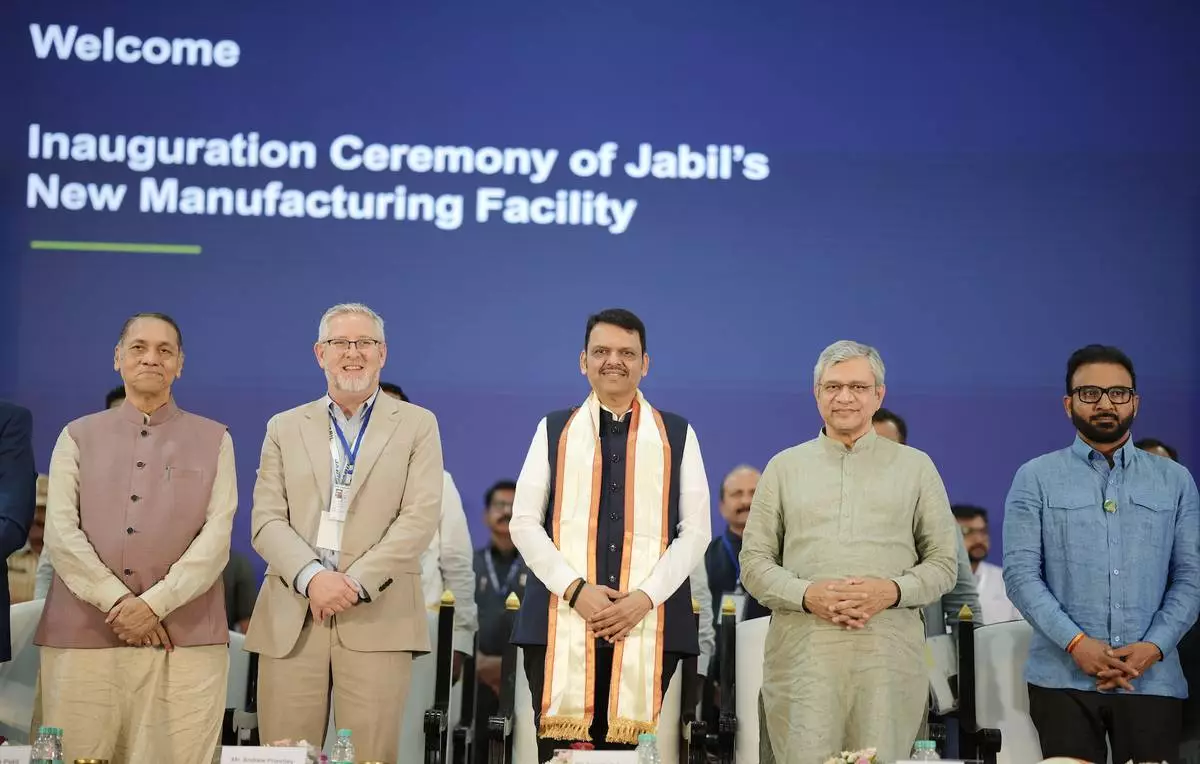
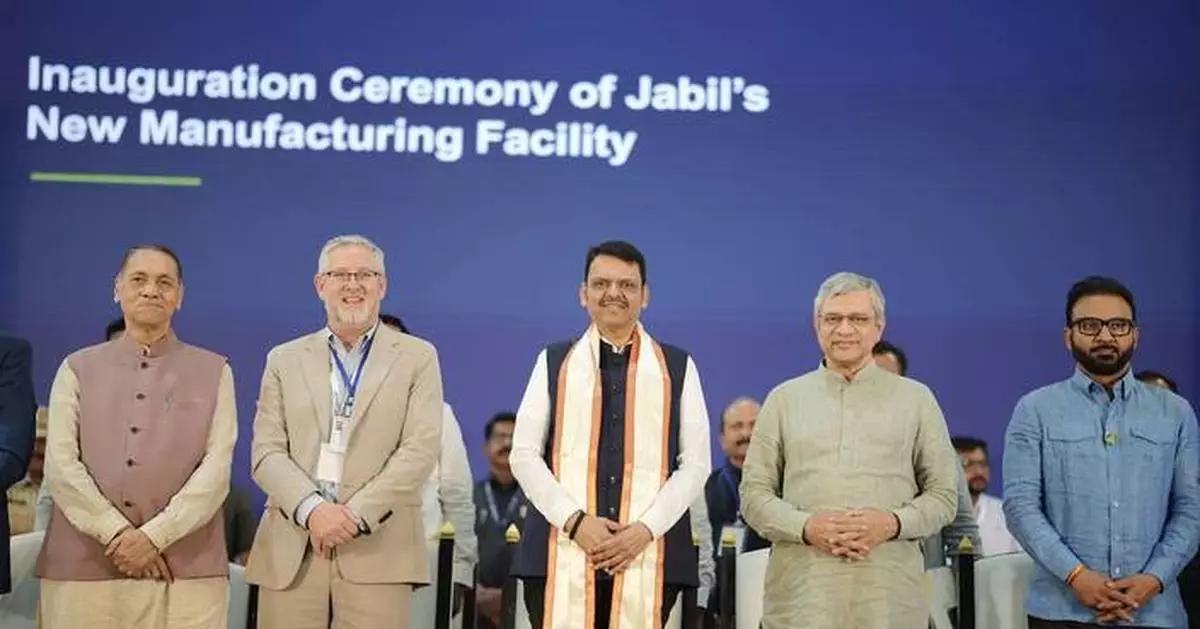
Jabil's new facility in Pune, India, was inaugurated on 16 June 2026, with honored guests including (left to right) Shri Dilip Walse Patil, Executive Vice President and Chief Operations Officer Andrew Priestley, The Honourable Chief Minister of Maharashtra, Shri Devendra Fadnavis Ji, Honorable Minister for Railways, Information & Broadcasting, and Electronics & Information Technology, Shri Ashwini Vaishnaw Ji, and Shri Dnyaneshwar Katke.


Jabil's new facility in Pune, India, was inaugurated on 16 June 2026, with honored guests including (left to right) Shri Dilip Walse Patil, Executive Vice President and Chief Operations Officer Andrew Priestley, The Honourable Chief Minister of Maharashtra, Shri Devendra Fadnavis Ji, Honorable Minister for Railways, Information & Broadcasting, and Electronics & Information Technology, Shri Ashwini Vaishnaw Ji, and Shri Dnyaneshwar Katke.

BRUSSELS (AP) — U.S. Defense Secretary Pete Hegseth lashed out at NATO allies on Thursday as he announced a six-month Pentagon review of American forces in Europe whose outcome will depend on how fast the Europeans take responsibility for their own security.

The review was yet another surprise for European allies and Canada as they learn to deal with an increasingly unpredictable ally. U.S. officials and senior military officers had promised to coordinate closely with the Europeans as America draws down.

In recent months, U.S. President Donald Trump and the Pentagon have sent conflicting signals about whether America is reducing or increasing its military footprint in Europe, as well as threatening to annex Greenland, a semiautonomous island that is part of ally Denmark. Just weeks ago, the Trump administration said that it would no longer provide as much military support should any NATO member come under attack.

“This will be a real review. It will be designed to ensure that NATO is moving fast and irreversibly toward Europe leading, stepping up to take primary responsibility for the defense of Europe,” Hegseth told his NATO counterparts. “It’s a review that some countries will fail and others will pass with flying colors.”

German Chancellor Friedrich Merz later said the allies have long been aware of U.S. plans to pull troops from Europe at some point and that they must take care of their own security.

“We know that we must do more and we are doing it,” Merz said.

In a fiery speech at NATO headquarters in Brussels, Hegseth lambasted European allies for failing to provide U.S. forces access to bases in Europe to launch attacks on Iran, calling it “shameful.”

“These allies, they put America’s sons and daughters, our sons and daughters, at risk by denying them the predictable access, basing and overflight that never should have been in question at all,” he said. The review would also assess whether the U.S. has full access and overflight “when we need it.”

While defense ministers and military officers sat in silence, Hegseth railed against migration and gender equality policies in Europe, in remarks reminiscent to those of Vice President JD Vance in February last year that angered many Europeans.

“Instead of tanks and fighters and air defenses, the focus has been on gender equity and climate change and defense austerity. Europe’s borders flew wide open, welfare states expanded, defense budgets cratered, along with Europe’s belief in itself and its civilization,” Hegseth said.

Hegseth's comments largely mischaracterized European policies today. On defense, European allies and Canada have launched an unprecedented effort to boost defense spending and expand their armed forces. NATO Secretary-General Mark Rutte noted on Thursday that they spent $90 billion more on defense last year, a 20% increase over 2024. And while Europe accepted large numbers of migrants and asylum seekers more than a decade ago, most countries have tightened their borders since.

It does not augur well for a summit of NATO leaders in Turkey on July 7-8.

It was a rare visit to NATO by Hegseth, his first this year after skipping a meeting in February. The Pentagon chief did not stay long, leaving well before the gathering was over and hours before Ukraine's President Volodymyr Zelenskyy was due to press allies for more weapons for his country.

Speaking to reporters at Brussels airport before flying home, Hegseth said, “It was great to hear country after country say, ‘We’re going to meet our target. We’re going to meet our target.’ There are still a few outliers, and we will be clear with them as we do this review.”

NATO’s supreme allied commander, an American, is working on backup plans to defend Europe after the U.S. signaled on June 3 that it would no longer supply an aircraft carrier and support ships, aerial refueling planes and dozens of fighter jets, among other military assets, in a crisis.

The Trump administration insists that it needs to be able to plan for two simultaneous conflicts and wants more military resources at hand should it clash with China in the Indo-Pacific region.

Under NATO’s collective security guarantee – Article 5 of its founding treaty – the 32 allies pledge that an attack on one of them will be considered an attack on all. It does not oblige them to provide military support, although many likely would.

In essence, the United States is scaling back how it might help should an ally trigger Article 5.

The U.S. has by far NATO’s biggest armed forces. It does not intend to withdraw its nuclear weapons in Europe, which are key to NATO’s deterrence. To underscore that point, NATO’s Nuclear Planning Group issued its first statement in 19 years after Thursday’s meeting.

In the statement, it “recalled that the strategic nuclear forces of the Alliance remain the supreme guarantee of Allied security and underpin NATO’s extended deterrence architecture.”

The ministers “agreed to continue enhancing NATO’s nuclear deterrence mission by modernizing NATO’s nuclear capabilities, strengthening its nuclear planning capacity, and adapting to achieve its security interests.”

Rutte played down the impact of the U.S. decision, saying that the NATO Force Model – the system for organizing what forces member countries will provide commanders in times of peace, crisis or conflict – is just “a planning tool,” and not a reflection of what would actually happen.

“If war breaks out, we will all max out what we need to do to make sure we can fight the war,” Rutte told reporters. “In the planning phase, it is important to know what we can count on. What is in theory there.”

Geir Moulson in Berlin contributed.

Germany's Chancellor Friedrich Merz arrives for the EU summit in Brussels, Thursday, June 18, 2026. (AP Photo/Omar Havana)

Germany's Chancellor Friedrich Merz arrives for the EU summit in Brussels, Thursday, June 18, 2026. (AP Photo/Omar Havana)

Italy's Defense Minister Guido Crosetto, fourth right, greets United States Defense Secretary Pete Hegseth, front second left, during a group photo of NATO defense ministers at NATO headquarters in Brussels, Thursday, June 18, 2026. (AP Photo/Virginia Mayo)

Italy's Defense Minister Guido Crosetto, fourth right, greets United States Defense Secretary Pete Hegseth, front second left, during a group photo of NATO defense ministers at NATO headquarters in Brussels, Thursday, June 18, 2026. (AP Photo/Virginia Mayo)

Germany's Defense Minister Boris Pistorius, center right, speaks with Norway's Defense Minister Tore Sandvik, center left, prior to a meeting of the North Atlantic Council in defense ministers format at NATO headquarters in Brussels, Thursday, June 18, 2026. (AP Photo/Virginia Mayo)

Germany's Defense Minister Boris Pistorius, center right, speaks with Norway's Defense Minister Tore Sandvik, center left, prior to a meeting of the North Atlantic Council in defense ministers format at NATO headquarters in Brussels, Thursday, June 18, 2026. (AP Photo/Virginia Mayo)

NATO's Supreme Allied Commander Europe General Alexus Grynkewich, front right, and Chair of the NATO Military Committee Admiral Giuseppe Cavo Dragone, front left, listen to a speech by United States Defense Secretary Pete Hegseth during a meeting of the North Atlantic Council in defense ministers format at NATO headquarters in Brussels, Thursday, June 18, 2026. (AP Photo/Virginia Mayo)

NATO's Supreme Allied Commander Europe General Alexus Grynkewich, front right, and Chair of the NATO Military Committee Admiral Giuseppe Cavo Dragone, front left, listen to a speech by United States Defense Secretary Pete Hegseth during a meeting of the North Atlantic Council in defense ministers format at NATO headquarters in Brussels, Thursday, June 18, 2026. (AP Photo/Virginia Mayo)

United States Defense Secretary Pete Hegseth, right, speaks during a meeting of the North Atlantic Council in defense ministers format at NATO headquarters in Brussels, Thursday, June 18, 2026. (AP Photo/Virginia Mayo)

United States Defense Secretary Pete Hegseth, right, speaks during a meeting of the North Atlantic Council in defense ministers format at NATO headquarters in Brussels, Thursday, June 18, 2026. (AP Photo/Virginia Mayo)

United States Defense Secretary Pete Hegseth, center right, and NATO Secretary General Mark Rutte, center left, arrive for a media conference during a meeting of NATO defense ministers at NATO headquarters in Brussels, Thursday, June 18, 2026. (AP Photo/Virginia Mayo)

United States Defense Secretary Pete Hegseth, center right, and NATO Secretary General Mark Rutte, center left, arrive for a media conference during a meeting of NATO defense ministers at NATO headquarters in Brussels, Thursday, June 18, 2026. (AP Photo/Virginia Mayo)

United States Defense Secretary Pete Hegseth, left, and NATO Secretary General Mark Rutte arrive for a media conference during a meeting of NATO defense ministers at NATO headquarters in Brussels, Thursday, June 18, 2026. (AP Photo/Virginia Mayo)

United States Defense Secretary Pete Hegseth, left, and NATO Secretary General Mark Rutte arrive for a media conference during a meeting of NATO defense ministers at NATO headquarters in Brussels, Thursday, June 18, 2026. (AP Photo/Virginia Mayo)

United States Defense Secretary Pete Hegseth speaks during a press statement on arrival for a meeting of NATO defense ministers at NATO headquarters in Brussels, Thursday, June 18, 2026. (AP Photo/Virginia Mayo)

United States Defense Secretary Pete Hegseth speaks during a press statement on arrival for a meeting of NATO defense ministers at NATO headquarters in Brussels, Thursday, June 18, 2026. (AP Photo/Virginia Mayo)

Recommended Articles