Skip to Content Facebook Feature Image

Awer Mabil is proud to represent Australia as one of team's refugees playing in the World Cup

Sport

Awer Mabil is proud to represent Australia as one of team's refugees playing in the World Cup
Sport

Sport

Awer Mabil is proud to represent Australia as one of team's refugees playing in the World Cup

2026-06-19 13:02 Last Updated At:14:52

ALAMEDA, Calif. (AP) — Awer Mabil’s face quickly turned to pure joy. He beamed and fought his emotions, a reaction Australia's veteran forward hardly could have seen coming.

It had nothing to do with a soccer result, either. But rather a reflection that took him back to his tumultuous youth as a refugee and how some good fortune landed him in Australia for a new start in life.

Mabil looked into the audience during his media conference after training Tuesday and discovered a familiar face in David Basheer, the longtime commentator on Australia's SBS network who had just offered a question days ahead of the Socceroos’ World Cup matchup against the United States on Friday in Seattle.

“I grew up watching you,” Mabil said, so taken aback that he asked Basheer to repeat himself.

A touching moment, in this pressure-packed, every-four-years spectacle, and yet one more example of Mabil’s refreshing sincerity as one of the Aussies’ key faces at this World Cup, no matter how many minutes he plays.

He's an ambassador from Down Under, to be sure.

The 30-year-old Mabil also represents the persistence it took to prevail and get this far, given his daunting path. He was born in Kakuma, Kenya, to South Sudanese parents who had escaped civil war, and he moved to Australia 20 years ago at age 10 through the country’s humanitarian resettlement program. He began playing organized soccer in Adelaide, South Australia state.

It's fitting that Mabil is sharing his story during Refugee Week, with World Refugee Day on Saturday.

“It’s a Refugee Week and it’s a week that I would like to say to anybody that is misplaced all over the world that we are with you,” he said. "And we are in a world stage right now, in a big tournament — and just to tell you everything is possible, so keep going.”

Mabil is making contributions in many ways. He took part in a video message about diversity ahead of the World Cup that went viral.

The message: “No matter where you come from, football is for everyone.”

“It’s coincidence again that it’s Refugee Week in the World Cup and also at the same time you have many refugees in the team. And at the same time, when I reflect back, I’m like we all belong to this world together,” Mabil said. “And now we’re representing Australia."

He considers himself a “big brother” to teammates Mo Touré and Nestory Irankunda, fellow refugees from Africa.

The 20-year-old Irankunda became the youngest player to score a World Cup goal for the Socceroos in a 2-0 win over Turkey on Saturday in Vancouver, British Columbia.

The Australians want to show how far the country has come at the World Cup level.

“I hope we're starting to gain a little bit more respect,” defender Alessandro Circati said. “I don't want to be the underdogs for the rest of my life.”

Mabil will do his part to help the Socceroos build something special.

He played briefly as a substitute in two group-stage matches four years ago for the Aussies, then didn't get on the field for the opener this year.

“I’m proud of the boys,” he said. “A lot of the young boys now making the difference for the national team all come through Adelaide, and it’s a credit to the football community.”

He and his mates are loving the omelet bar and lining up for it at their team headquarters, the Claremont Resort and Club in nearby Berkeley. They are training at the former headquarters of the NFL's Oakland Raiders.

“Coming in as a senior player I think is more mental that you have to be present for the younger ones. Sometimes you want to slap them," Mabil joked.

"I’ll play my role to the best of my abilities to be available for the young ones and also the older ones because the older ones also they go through difficulties so they don’t have all the answers — nobody has all the answers. We just have to continue to be there for each other. In these kind of tournaments, it’s very important to remain united.”

AP World Cup: https://apnews.com/fifa-world-cup
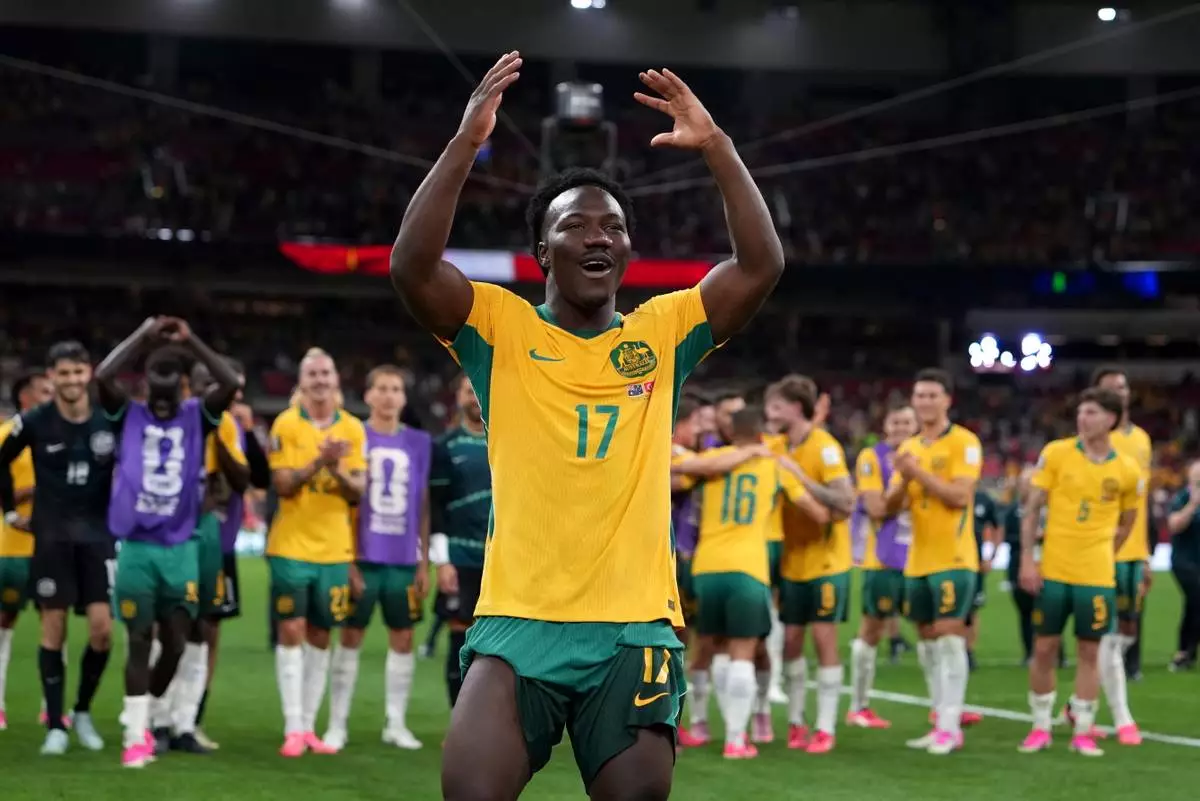
Australia's Nestory Irankunda gestures to the crowd after the World Cup Group D soccer match between Australia and Turkey in Vancouver, Canada, Saturday, June 13, 2026. (Ethan Cairns/The Canadian Press via AP)
Australia's Nestory Irankunda gestures to the crowd after the World Cup Group D soccer match between Australia and Turkey in Vancouver, Canada, Saturday, June 13, 2026. (Ethan Cairns/The Canadian Press via AP)

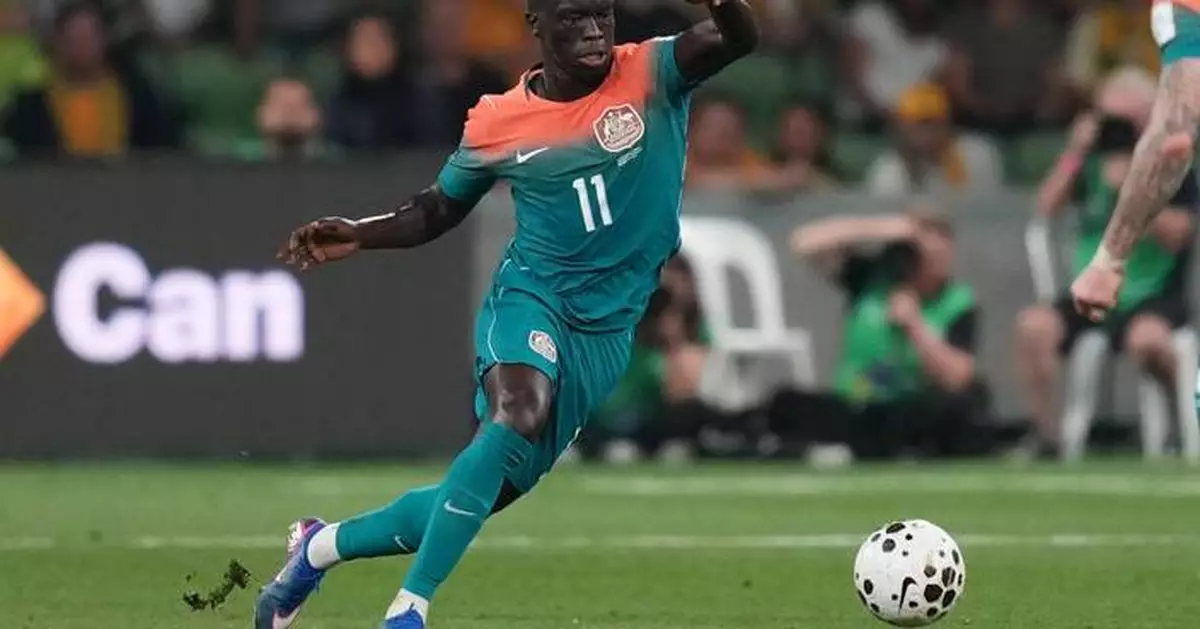
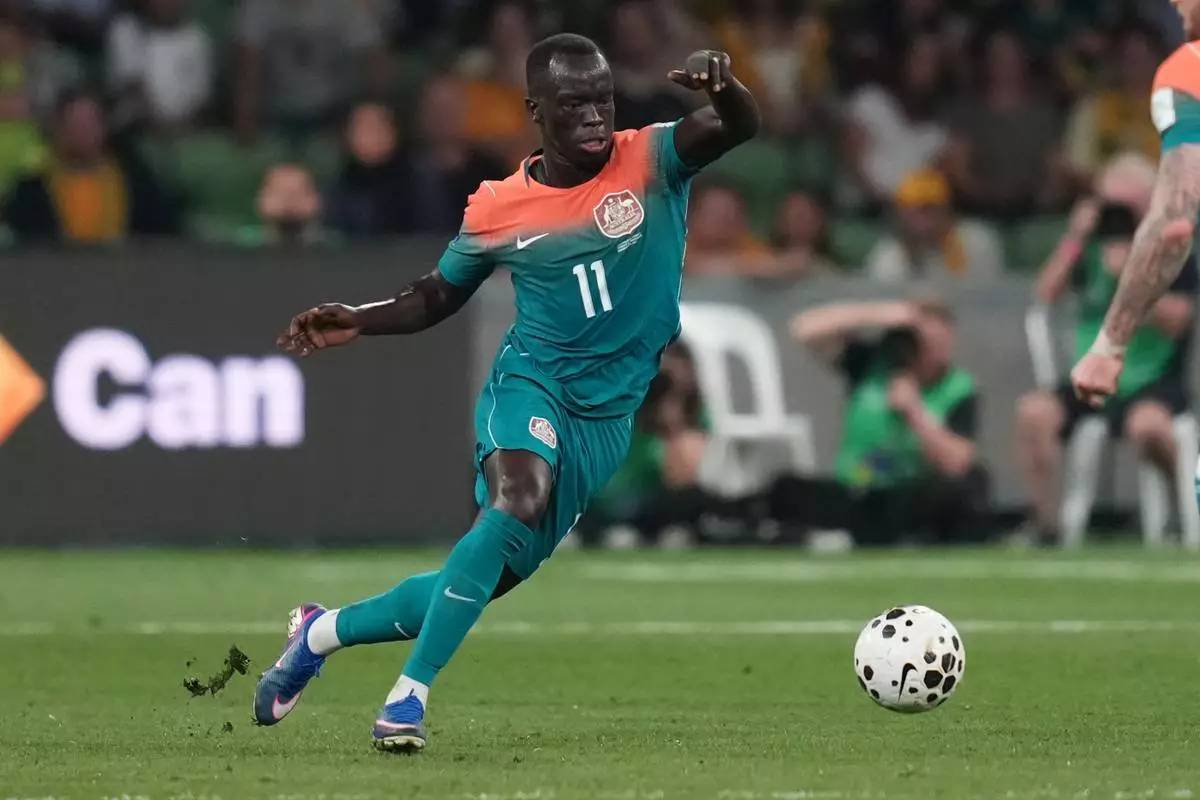
FILE - Australia's Awer Mabil during their international soccer friendly against Curacao in Melbourne, Australia, March 31, 2026. (AP Photo/Asanka Brendon Ratnayake, File)

FILE - Australia's Awer Mabil during their international soccer friendly against Curacao in Melbourne, Australia, March 31, 2026. (AP Photo/Asanka Brendon Ratnayake, File)
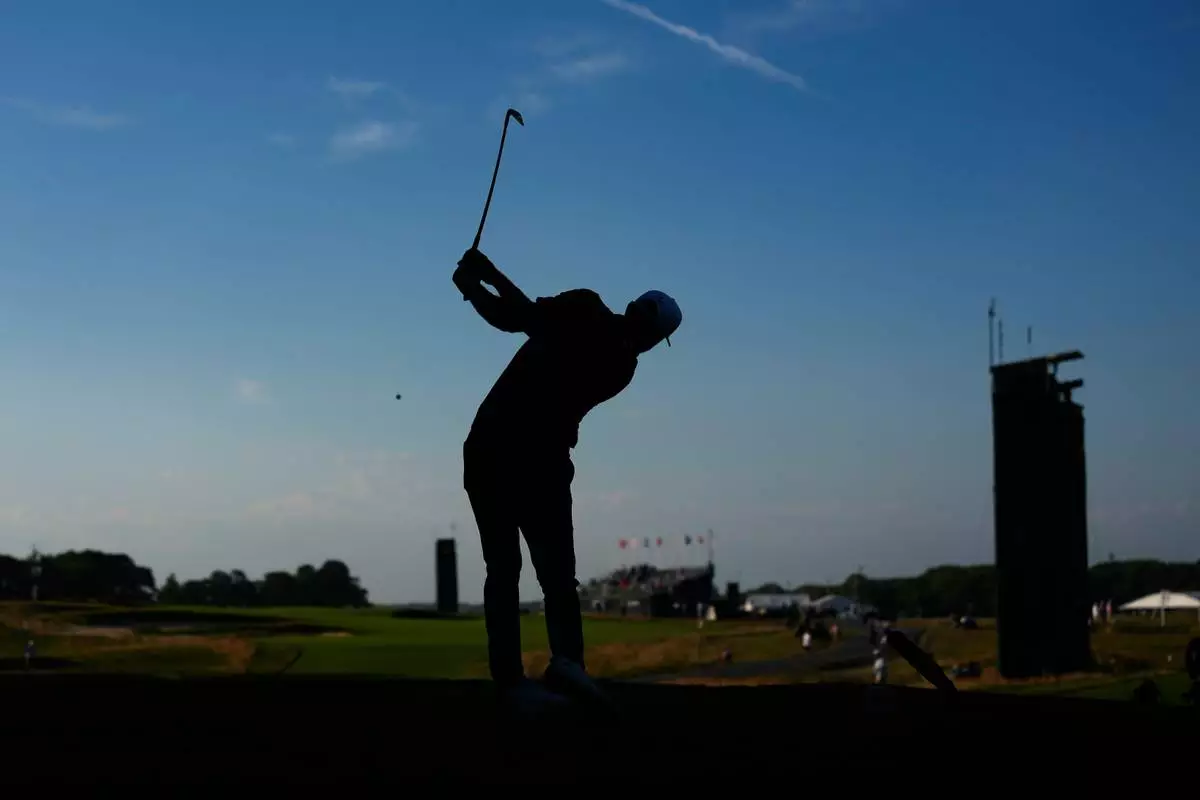
SOUTHAMPTON, N.Y. (AP) — For four holes and one golden hour of golf just before twilight Thursday, Dustin Johnson looked a lot like the player who won the U.S. Open a decade ago.

Just as quickly, he looked like the same sort of mystery he's been since leaving the PGA Tour four years ago.

Four straight birdies over those four holes briefly put the captain of LIV Golf's Aces team in a tie for the lead at the U.S. Open. Then, a missed opportunity on the par-5 fifth and a sloppy three-putt for double-bogey on No. 6 dropped him four shots behind Wyndham Clark when the first round was suspended because of darkness.

“Feels really good,” Johnson said as darkness descended Thursday night. “Finally the last couple months I feel like the game is starting to come back into form and swinging it really nicely. Yeah, looking forward to seeing what I can do.”

Johnson walked away from Shinnecock in a seven-way tie for second with three holes to finish Friday to close out the first round. His first shot when he returned was a 3 1/2-foot putt for a birdie — he made it — on the par-3 seventh. He finished the round at 4-under 66, alone in second place, only two shots behind Clark.

It's an unfamiliar spot of late for the player who held the world's top ranking for 135 weeks between 2017 and 2021 and now finds himself in the mix in a major for the first time in at least three years.

The timing is good. Johnson's 10-year exemption to the U.S. Open, earned when he won at Oakmont in 2016, expires after this year. His other major victory — at the November playing of the COVID-delayed 2020 Masters — also feels like it comes from a different era in golf.

And, in fact, it does.

Back in 2010, Johnson was the talk of the majors. He held the lead after three rounds at Pebble Beach only to play the second and third holes in 5 over in a memorable U.S. Open meltdown. Two months later, he grounded his club in a bunker he thought was a waste area at Whistling Straits, costing him two shots and a chance at a playoff at the PGA.

Only a matter of time, golf fans thought, before he finally broke through. In 2015, he three-putted on the 18th green at Chambers Bay and Jordan Spieth beat him at that U.S. Open by a shot.

It made Johnson's wins at Oakmont the next year and Augusta four years later seem like feel-good affairs. When he signed a contract worth a reported nine figures with LIV, his move felt like one of the biggest blows to the PGA Tour.

But while other LIV players — Brooks Koepka, Jon Rahm and Bryson DeChambeau — have won majors since they left, Johnson, now 41, has basically been an afterthought.

He's missed six cuts in the 14 majors since he left. His best finish was a tie for 10th at the U.S. Open that Clark won in 2023 at LA Country Club. The last time Johnson led at the end of a U.S. Open round was in 2018 — here at Shinnecock — but Koepka overtook him. The last time Johnson led at the end of a round in a major was 2020 in Augusta.

He was listed as a 200-1 long shot to win this week.

But in this round, Johnson was paired with Clark and the two former champions seemed to feed off each other. After Johnson hit drives of 403 and 330 yards for his third and fourth straight birdies, he and Clark were tied at 4-under par as they left the fourth green.

Johnson hit his first 11 fairways. On the par-5 fifth, he was pin high after two shots but a middling chip and a miss from 7 feet ended his chance at a fifth straight bridie. Clark made eagle there.

Johnson responded by missing his first fairway of the day, then three-putted for the double that dropped him four out of the lead.

AP golf: https://apnews.com/hub/golf

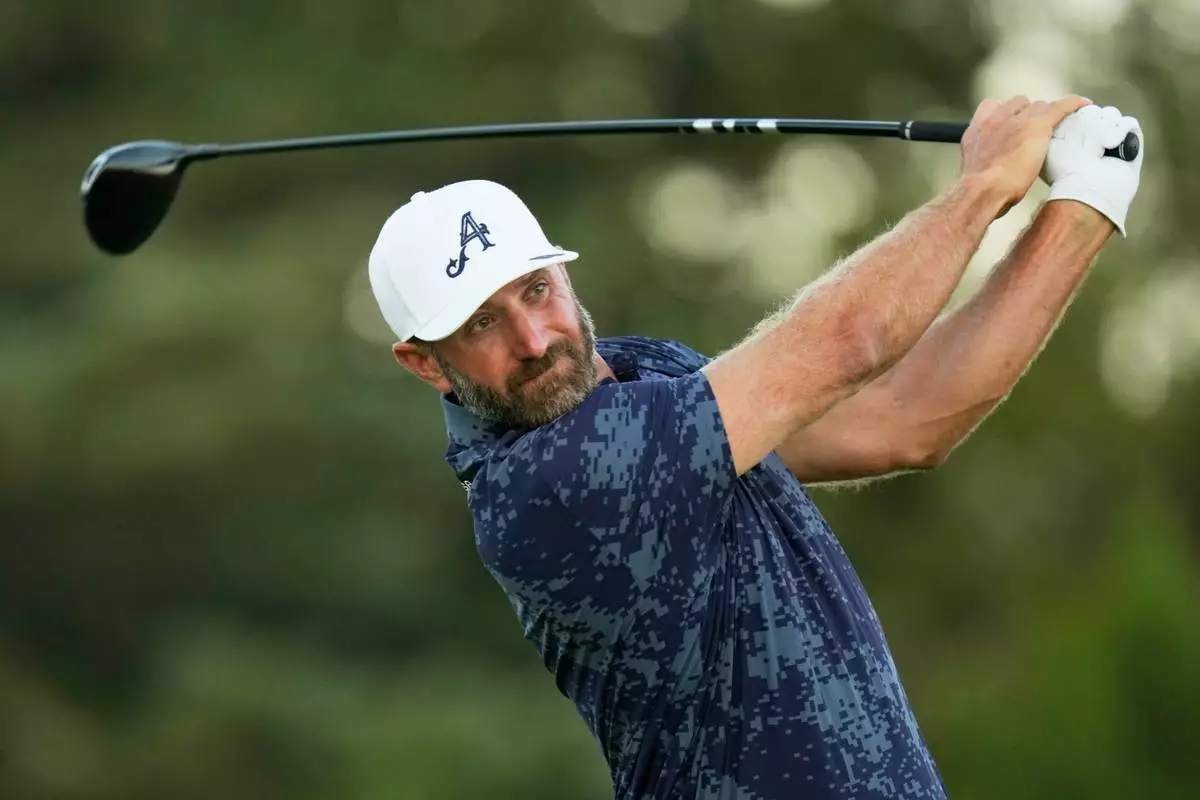
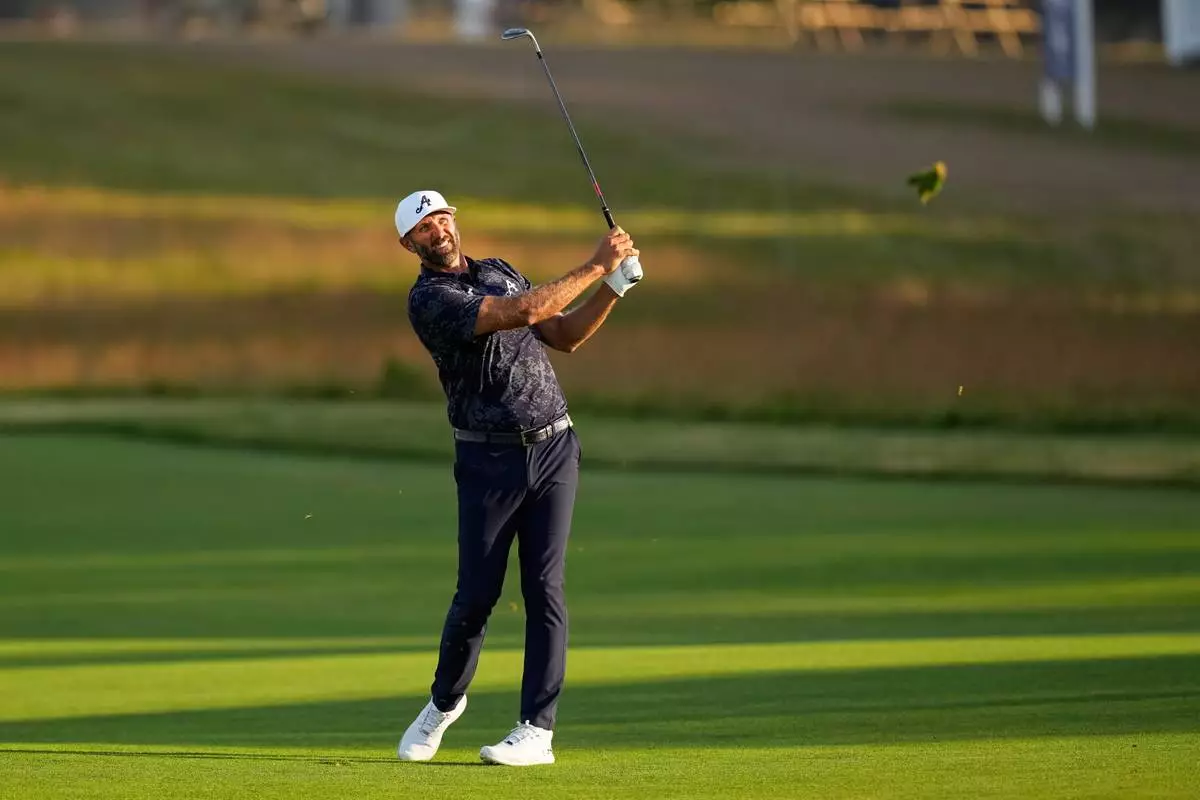
Dustin Johnson hits from the fairway on the third hole during the first round of the U.S. Open golf tournament at Shinnecock Hills Golf Club in Southampton, N.Y., Thursday, June 18, 2026.(AP Photo/David J. Phillip)

Dustin Johnson hits from the fairway on the third hole during the first round of the U.S. Open golf tournament at Shinnecock Hills Golf Club in Southampton, N.Y., Thursday, June 18, 2026.(AP Photo/David J. Phillip)

Dustin Johnson hits his tee shot on the second hole during the first round of the U.S. Open golf tournament at Shinnecock Hills Golf Club in Southampton, N.Y., Thursday, June 18, 2026.(AP Photo/David J. Phillip)

Dustin Johnson hits his tee shot on the second hole during the first round of the U.S. Open golf tournament at Shinnecock Hills Golf Club in Southampton, N.Y., Thursday, June 18, 2026.(AP Photo/David J. Phillip)

Dustin Johnson watches his tee shot on the sixth hole during the first round of the U.S. Open golf tournament at Shinnecock Hills Golf Club in Southampton, N.Y., Thursday, June 18, 2026.(AP Photo/Seth Wenig)

Dustin Johnson watches his tee shot on the sixth hole during the first round of the U.S. Open golf tournament at Shinnecock Hills Golf Club in Southampton, N.Y., Thursday, June 18, 2026.(AP Photo/Seth Wenig)

Recommended Articles