Dubbed the 'Photovoltaic Great Wall,' a massive solar installation in northwest China's Shaanxi Province is generating green electricity while shielding the Mu Us Desert's fragile ecology.
By blocking direct sunlight, the panels create a sunshade effect that significantly reduces water evaporation from the ground. Beneath and around the arrays, large areas of drought-tolerant vegetation have been planted to make effective use of the sandy terrain.
Following careful selection, the research team has placed low water-requirement, sand-stabilizing species such as alfalfa and erect milkvetch directly under and between the panels, pushing vegetation coverage to past 90 percent.
The plants also provide natural feed for livestock. The forage from the solar panel-covered land, covering about 467 hectares, can sustain 1,000 sheep for up to 10 months.
Moreover, the panels can produce enough electricity to power some 100,000 households.
"We can steadily supply 450 million kWh of green electricity to the grid every year. The photovoltaic panels reduce wind speed by 50 percent, and the soil moisture evaporation beneath the panels is cut by 30 percent," said Li Xiaolin, an engineer from the Shaanxi Coal and Chemical Industry Group.
Drawing on local sandy land resources, Shaanxi has pioneered a three-dimensional ecological protection approach: power generation atop solar panels, crop cultivation underneath and livestock grazing in the spaces between them.
This approach halts desertification while increasing farmers' income, offering a replicable example for arid regions to pursue energy transition and land restoration simultaneously.
The project is part of the country's broader efforts to halt desert expansion. Through its decades-long afforestation campaign, China has made significant strides toward this goal.
On Wednesday, the 2026 World Day to Combat Desertification and Drought, a report issued by the Northwest Institute of China's National Forestry and Grassland Administration states that all treatable mobile sand lands across Shaanxi was eliminated by the end of 2025, a landmark achievement.
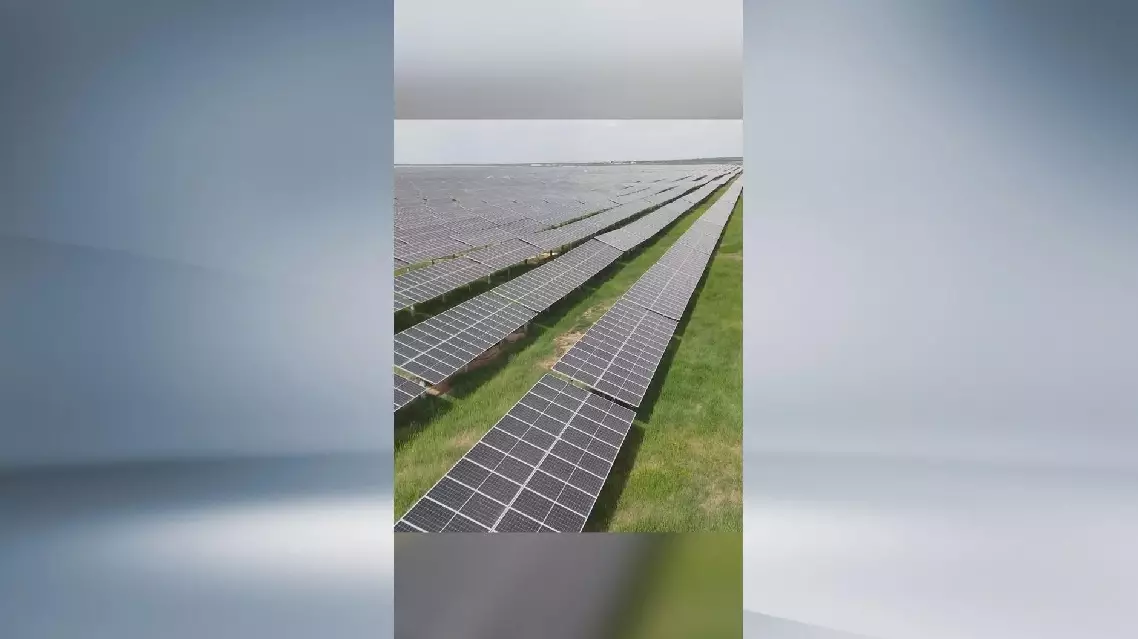
"Great Wall" of solar panels protects ecology on desert edge in Shaanxi
The head of the UN's atomic energy agency on Thursday welcomed the signing of an initial Iran-U.S. memorandum aimed at ending the war, before proposing "to sit down" with both parties to assist with concrete measures, including verification of Iran's nuclear program, a critical sticking point.
"We believe the fact that the indispensable role of the IAEA is recognized is a sound point of departure," said Rafael Mariano Grossi, director general of the International Atomic Energy Agency (IAEA), in reference to the reported text of the memorandum.
"Now it's for us to sit down with our American colleagues, our Iranian colleagues and start formulating the concrete steps that will have to be taken. So, I think it's good that the memorandum is there. Now the technical work starts," he said.
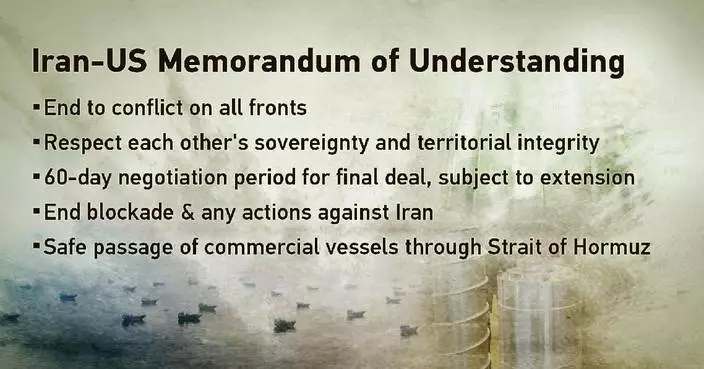
According to media reports, the memorandum of understanding provides for a maximum of 60 days of negotiations to achieve a "final deal" on issues including uranium enrichment by Iran, which must also reaffirm that it does not intend to develop a nuclear weapon.
Other requirements listed in the memorandum include reopening the Strait of Hormuz to all shipping and easing U.S. and UN Security Council sanctions on the Middle East nation. The "immediate and permanent termination of military operations on all fronts, including in Lebanon," also features prominently in the first of 14 points of the memorandum.
Refusing to speculate about the talks, Grossi said "because we are about to start and we have to initiate any negotiation on the assumption that we are all in with faith, that we want to be successful."
Responding to a question about a possible agreed reduction in the level of uranium enrichment by Iran, the IAEA chief noted that "many, many possibilities" could be explored. The agency's access to all of Iran's nuclear facilities is "not at a level and in all the locations it should be", he stressed, but contact with the authorities is ongoing and the agency has "a pretty good idea" of the "specific things, places, that we need to access."
"It's now, I'd say, that the technical work can start for real," said Grossi.
Grossi's remarks came after Iranian President Masoud Pezeshkian and U.S. President Donald Trump digitally signed the memorandum of understanding on ending the war, Iran's Foreign Ministry spokesman Esmaeil Baghaei said early Thursday.
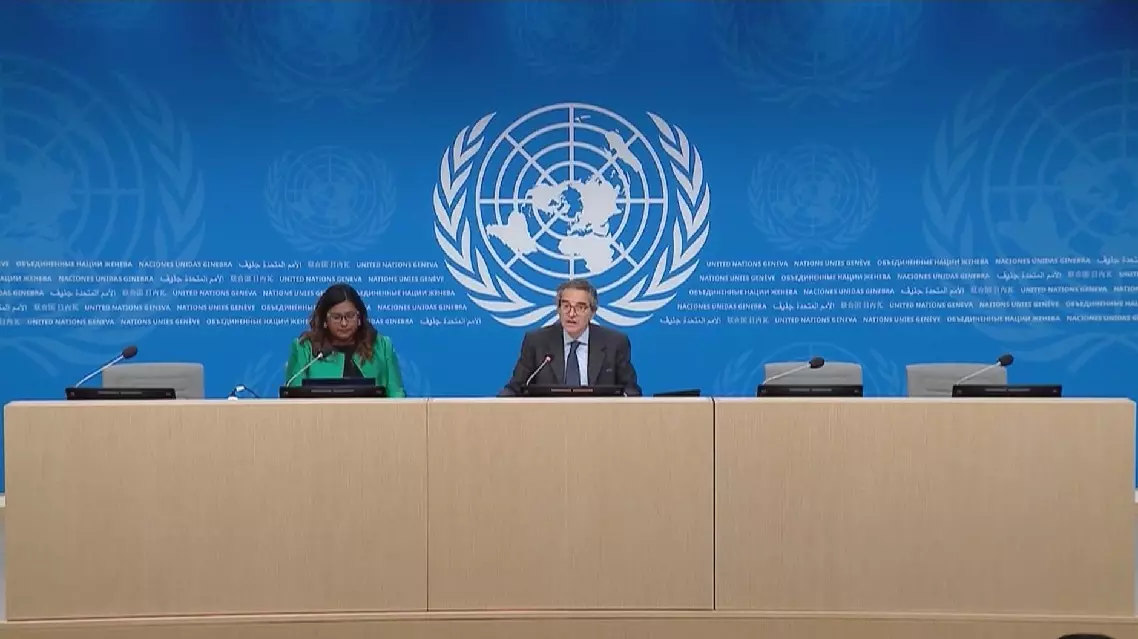
IAEA chief welcomes US-Iran peace memorandum