Extreme weather and climate-related events affected at least 13 million people and resulted in over 3,000 fatalities across Africa in 2025, a report by the World Meteorological Organization (WMO) revealed.
In its report, "State of the Climate in Africa 2025," unveiled on Thursday, the organization said extreme weather events have affected all sectors of the economy and society across the continent, resulting in rising sea levels and flooding, as well as vanishing glaciers, including on the iconic Mount Kilimanjaro.
According to the report, the African continent is warming faster than the global average. Africa's glaciers have lost more than 90 percent of their area since the late 19th century. On Mount Kilimanjaro, the glacier area has declined from 11.4 square km in 1900 to less than one square km in recent years.
Sea levels along African coasts rose from 1999 to 2025, exceeding the global average of 3.6 mm per year in several regions. Floods accounted for more than half of reported events, including severe flooding in Nigeria that led to the death of over 200 people, and flooding in the Democratic Republic of the Congo that resulted in the death of over 160 people in May and April last year, respectively, according to the report.
Noting that the continent faces a critical gap in early warning systems, the report said that only 40 percent of African countries have multi-hazard early warning systems, which are needed to save lives and livelihoods.
However, the report also noted encouraging collaborations among meteorological services, disaster management agencies, and local authorities to advance climate services and response capabilities.
"The signs of a changing climate are clear across Africa, from increasing temperatures and rising sea levels to damaging floods and drought. This report shows not only the scale of the risks, but also the growing importance of early warnings, climate services and coordinated action to protect lives and livelihoods," the report quoted WMO Secretary-General Celeste Saulo as saying.

Extreme weather affects 13 mln people, results in 3,000 fatalities in Africa in 2025: report
The number of annual China-Europe freight train trips has grown 10.8-fold over the past decade, soaring from just over 1,700 in 2016 to more than 20,000 in 2025, the operator said on Friday.
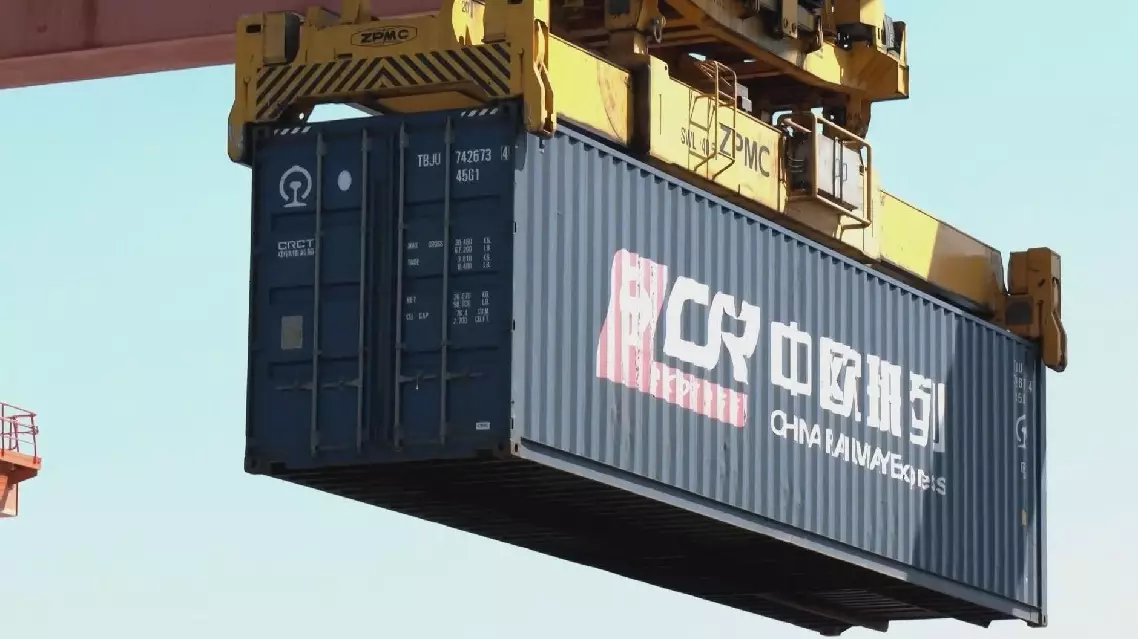
The unified "China Railway Express" brand was officially launched in June 2016, bringing together regional services such as the Chongqing-Xinjiang-Europe, Chengdu-Xinjiang-Europe, Yiwu-Xinjiang-Europe, and Wuhan-Xinjiang-Europe routes.
Over the past 10 years, the service's year-on-year volume has risen at an average annual rate of 31.5% and have remained above the 10,000-trip mark since 2020, according to China State Railway Group.
In Changsha, capital of central China's Hunan Province, China-Europe freight train departures jumped from 112 in 2016 to 589 in 2025, with annual export value exceeding 2.3 billion U.S. dollars.
"Hunan has handled a cumulative total of 4,080 China-Europe freight train trips, with two trains running daily on a stable schedule, and up to three or four during peak periods. We've ranked among the busiest provinces nationwide for seven consecutive years," said Xu Wenbin, container operations manager at the Changsha North Railway Logistics Office of China Railway Guangzhou Group.
The latest statistics show that 129 cities across China now operate China-Europe freight train services, reaching 236 cities in 26 European countries. This stands in stark contrast to 2016, when the network covered only 16 Chinese cities and 20 European cities.
Chongqing, the southwest city that launched the very first China-Europe freight train, now boasts 10 entry-exit ports and has helped foster three industrial clusters in automobiles, electronics, and advanced materials.
"Chongqing operates three major departure stations, namely Tuanjiecun, Yuzui, and Xiaonanya, along with 10 entry-exit ports, 118 overseas distribution points, and 53 stable routes reaching over 100 cities across Eurasia. This has created a broad-reaching and highly efficient international logistics network," said Xu Jiao, a senior engineer at the logistics division of China Railway Chengdu Group.
Since April this year, the CRE High-Quality Development Index Trend Chart has been updated monthly on the official China-Europe Railway Express portal, helping all stakeholders track real-time updates on coverage, transit times, port capacity, and safety performance and guiding the service toward safe, stable, healthy, and orderly growth.
As of June 10, the number of China-Europe freight train trips this year had already surpassed the 10,000-trip mark, with container volumes exceeding 1 million TEUs (twenty-foot equivalent units), both setting new records for the same period in history.
China-Europe freight train trips surge 10.8 times over decade