The four "Mini Three Links" routes -- which provide direct maritime transport between coastal areas of East China's Fujian province and the Taiwan-region-administered islands of Kinmen and Matsu -- are expected to see a travel peak during the Dragon Boat Festival holiday, with an estimated 23,000 passenger trips, up 21 percent year on year, according to the Fujian Maritime Safety Administration.
The Dragon Boat Festival, or Duanwu Festival, falling on Friday this year, is a major traditional Chinese festival, celebrated on the fifth day of the fifth month of the Chinese lunar calendar to commemorate Qu Yuan, a renowned ancient patriotic poet during the Warring States Period (475-221 BC).
The Xiamen-Kinmen route, one of the four "Mini Three Links" routes, is expected to handle nearly 20,000 passenger trips, an increase of 16 percent compared with the same period last year.
The Mawei-Matsu and Huangqi-Matsu routes are expected to carry a combined total of 1,680 passenger trips, up 50.4 percent year on year, the administration said.
During the holiday, additional ferry services will be arranged on the Xiamen-Kinmen and Huangqi-Matsu routes as needed to accommodate travel demand, according to local authorities.
The mini three links, launched on Jan 2, 2001, cover direct trade, mail, and transport services between Fujian and Kinmen and Matsu islands.
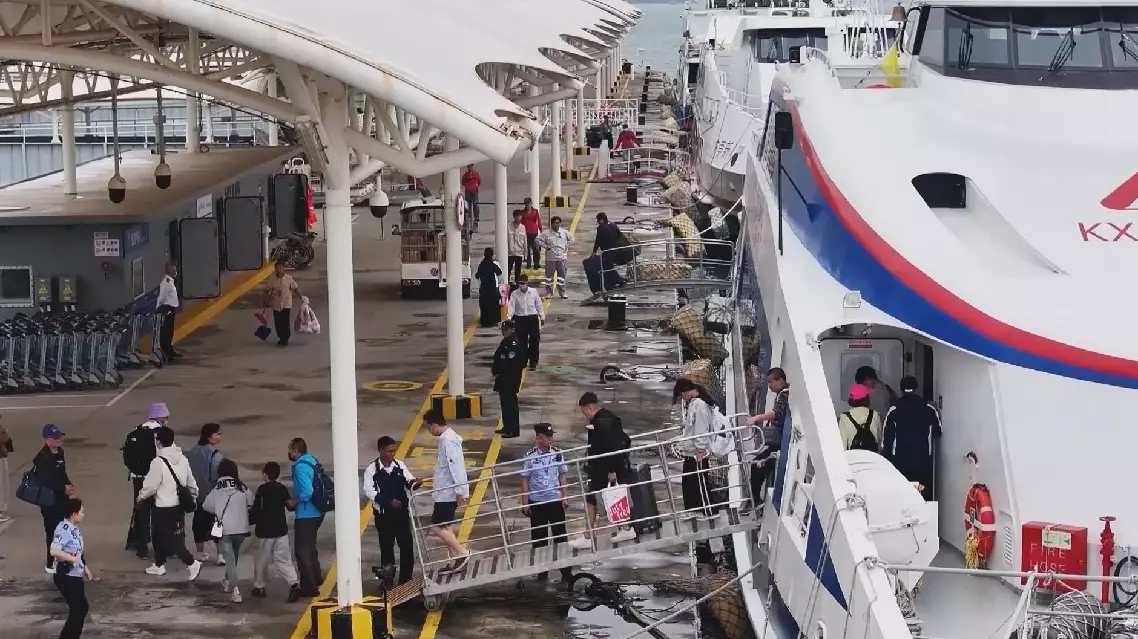
23,000 passenger trips expected during Duanwu holiday via 4 cross-strait ferry routes
Sansha, China's southernmost city, welcomed the Dragon Boat Festival on Wednesday with a spirited race over the South China Sea, where thunderous drumbeats and roaring cheers transformed the azure waters into a spectacle of tradition and unity.
The second annual South China Sea Dragon Boat Race drew 14 competing teams to the Xiyu Fishing Pier on Yongxing Island, where local fishermen reinvented their everyday workboats as majestic "fishing-style dragon vessels." With painted bows cutting through the waves, each crew chased not just victory, but pride for their community.
"It's my first time competing in this event on the island, and I've already won a championship. I couldn't be more excited and happy," said Guo Wenhao, one of the participants.
Out on the water, paddlers moved in furious unison, their oars churning the sea into clouds of white foam. Along the shore, cheer squads waved flags and shouted encouragement, each team bringing its own passionate supporters to rally them forward. The air was thick with tension and exhilaration.
"The atmosphere was incredibly intense. Every contestant worked very hard, and there were many exciting races to watch," said spectator Guo Yaru.
The competition also featured an innovative dragon-boat tug-of-war on the water, drawing several teams eager to test their strength and coordination in a whole new way.
"I'm absolutely thrilled to win this championship. We owe it to the unity of our whole team. Through every practice, even when our hands blistered from gripping the oars, not a single one of us complained," said He Shicun, a participant.
The Dragon Boat Festival, or Duanwu Festival, the fifth day of the fifth month of the Chinese lunar calendar, falls on June 19, this year. Its signature tradition -- dragon boat racing -- dates back over 2,000 years. Today, the race reflects teamwork, courage, and perseverance, while also serving as a cultural tradition and global sport that brings communities together.
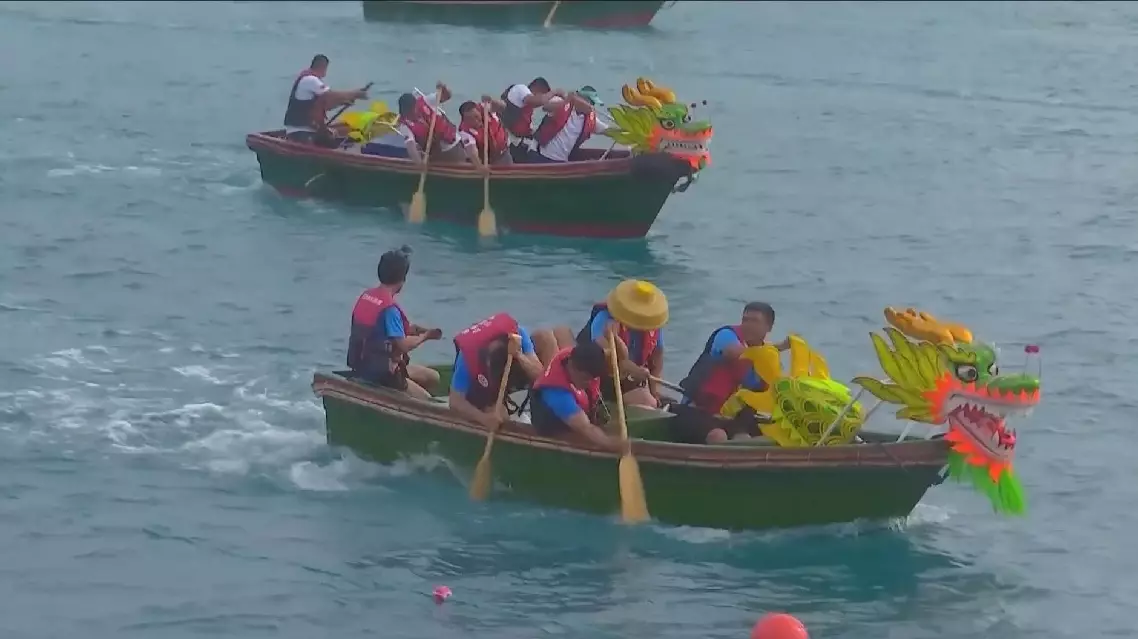
Roaring dragon boat racing brings festival fever to China's southernmost city