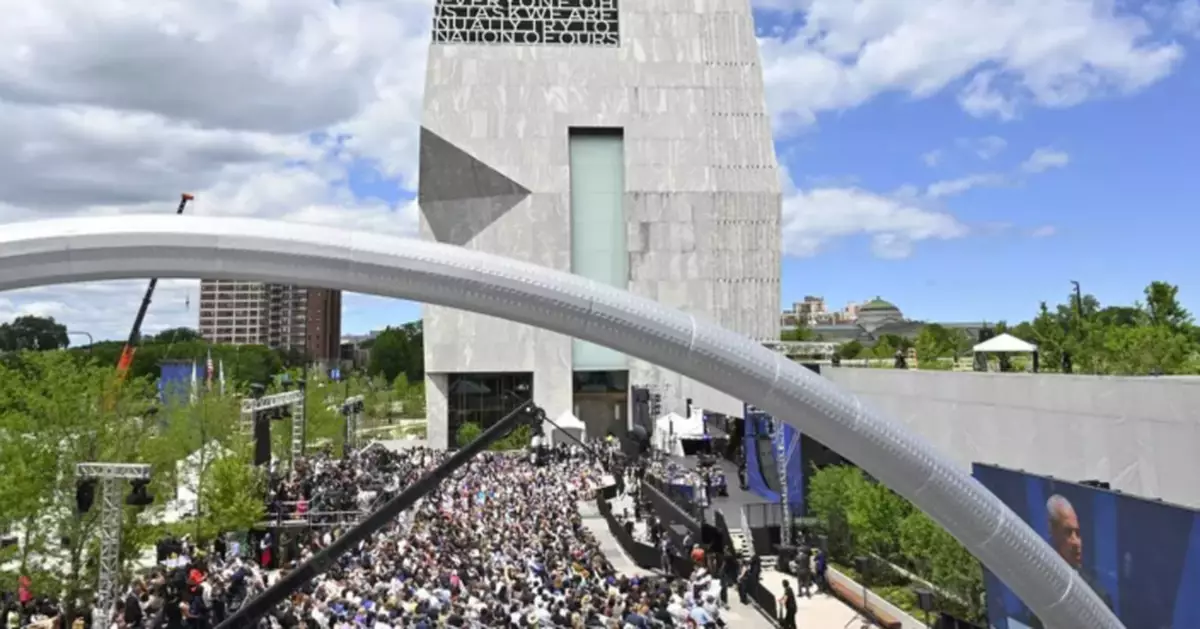
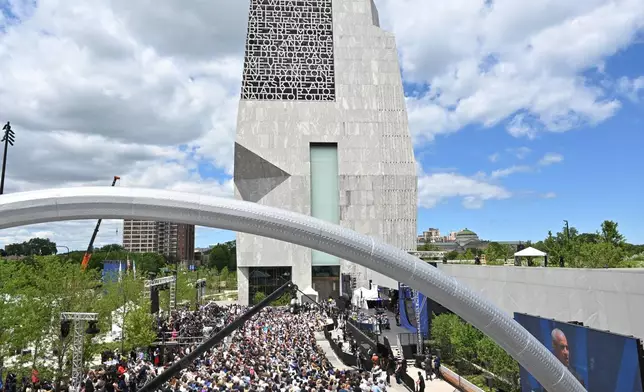
DALLAS (AP) — As people gather across the U.S. to celebrate Juneteenth on Friday, former President Barack Obama's presidential center will open its doors to the public for the first time.
Located on a sprawling campus on Chicago’s South Side, the center for the nation's first Black president has been designed to inspire people to make the change they want to see in their own communities. It's the kind of contemplation that also comes as Americans gather for Juneteenth, which celebrates the end of slavery in the U.S.
Click to Gallery
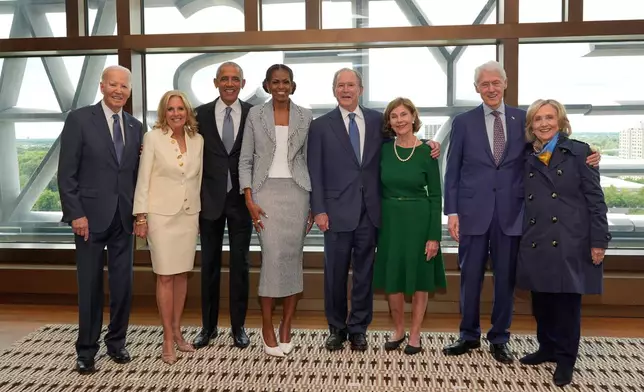
Former President Joe Biden and former first lady Jill Biden, from left, former President Barack Obama and former first lady Michelle Obama, former President George W. Bush and former first lady Laura Bush, and former President Bill Clinton and former Secretary of State Hillary Clinton, pose for a photo ahead of the dedication ceremony at the Obama Presidential Center, Thursday, June 18, 2026, in Chicago. (AP Photo/Pablo Martinez Monsivais, Pool)
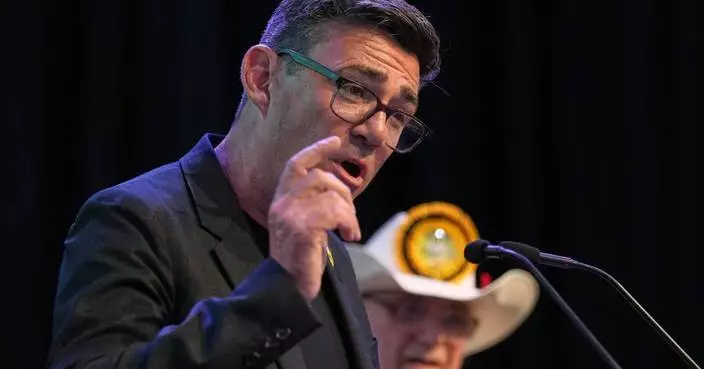
Former President Barack Obama speaks during the dedication ceremony for the Obama Presidential Center, Thursday, June 18, 2026, in Chicago. (AP Photo/Jon Cherry)
Former President Joe Biden and former first lady Jill Biden, from left, former President Barack Obama and former first lady Michelle Obama, former President George W. Bush and former first lady Laura Bush, and former President Bill Clinton and former Secretary of State Hillary Clinton, pose for a photo ahead of the dedication ceremony at the Obama Presidential Center, Thursday, June 18, 2026, in Chicago. (AP Photo/Pablo Martinez Monsivais, Pool)
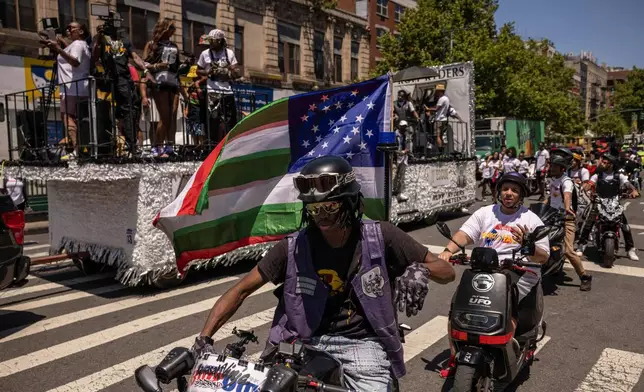
FILE - People on motorcycles participate in the 31st annual Juneteenth celebration, June 15, 2024, in the Harlem neighborhood of New York. (AP Photo/Yuki Iwamura, File)
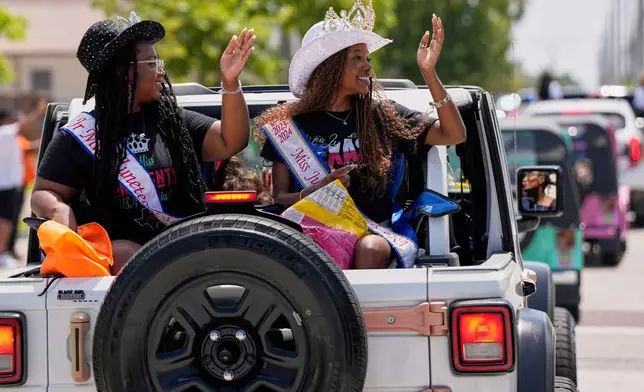
FILE - People participate during a Juneteenth parade, June 19, 2025, in Galveston, Texas. (AP Photo/David J. Phillip, File)
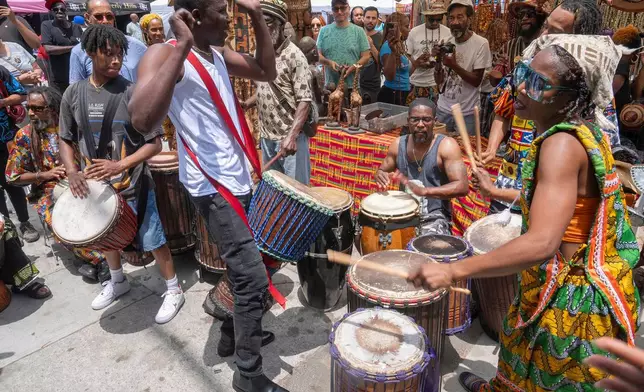
FILE - Drummers form a circle around Sika Dwimfo, better known as the, "Godfather of Leimert Park," during the neighborhood's Juneteenth celebration, June 19, 2024, at Leimert Park in Los Angeles. (AP Photo/Damian Dovarganes, File)
The holiday marks June 19, 1865, when Union troops arrived in Texas at the end of the Civil War with an order declaring the state's enslaved people were free with “absolute equality” 2 1/2 years after the Emancipation Proclamation freed enslaved people in the South.
“Juneteenth represents not just a commemoration of the end of slavery but it’s also part of the ongoing struggle for absolute equality and that ideal in American life,” said W. Caleb McDaniel, a Rice University professor and author of the Pulitzer Prize-winning book “Sweet Taste of Liberty.”
Several days of events have been planned for the grand opening of the Obama Presidential Center, including a dedication ceremony held Thursday.
The center's public opening also arrives as a symbolic convergence of legacy and liberation. The nation is grappling with deepening political division and renewed questions about the arc of racial progress as the Supreme Court hollowed out the Voting Rights Act, endangering Black political representation in Congress.
The nearly 20-acre (8-hectare) campus includes a museum featuring a life-sized replica of the Oval Office, a garden designed by former first lady Michelle Obama complete with lettuce and strawberry plants, a professional-grade basketball court, a picnic area with grills and a new branch of the Chicago Public Library.
In addition to spaces designed to bring people together, the campus that's expected to draw as many as 1 million visitors annually aims to also encourage personal reflection. Louise Bernard, the museum’s director, has said they're “inviting people to bring change home, however change may be defined, both small or large.”
The museum lets visitors experience high-tech and hands-on exhibits spanning the campaigns, key moments of Obama’s presidency and life at the White House.
This is the fifth year since Juneteenth was designated as a federal holiday by former President Joe Biden, who served as Obama's vice president. But the celebrations, which began in Texas and then spread across the country, have a rich and long history in Black America, with the day often spent gathering for picnics and cookouts.
The holiday — a combination of “June” and “nineteenth” — marks the day that U.S. Maj. Gen. Gordon Granger and his troops arrived in the Texas port city of Galveston with the declaration of freedom in General Order No. 3.
As the third year of the Civil War neared, President Abraham Lincoln had issued the Emancipation Proclamation declaring the freedom of “all persons held as slaves” in the still rebellious states of the Confederacy. Though, for many, it did not mean immediate freedom but a promise of freedom with a Union victory.
“It really required the force of arms and the success of U.S. armies to enforce the Emancipation Proclamation,” McDaniel said.
About six months after Granger's arrival in Galveston, the 13th Amendment abolishing slavery was ratified.
Galveston, the birthplace of Juneteenth, is celebrating with a daylong gathering at a park with music and fireworks, a parade and a worship service in a historic Black church. In nearby Houston, there will be a lineup of musical artists and a domino tournament at Emancipation Park, established in 1872 by a group of formerly enslaved men.
Other events across the U.S. over the long weekend include a parade in Atlanta, a bike ride in Los Angeles and a festival on Martha’s Vineyard.
Several cities across the U.S. will host walks named for Opal Lee, the Texas woman who pushed for years to make Juneteenth a federal holiday. Participants will walk 2 1/2 miles to symbolize the 2 1/2 years it took for the Emancipation Proclamation to be enforced in Texas. Lee, known as the “grandmother of Juneteenth,” turns 100 this year.
Black Texans embraced the date of Granger’s arrival as one to celebrate, and by the 1880s, “it was difficult to find a significant community in Texas where it wasn’t being marked by African Americans,” McDaniel said.
“They made it a community celebration, they made it a celebration of not only freedom but also a demonstration of community empowerment and institution-building,” he added.
Corey D. B. Walker, dean of Wake Forest University’s divinity school, said the holiday offers a way to recognize the nation’s “complex history” and what it means to be a U.S. citizen, especially amid efforts by President Donald Trump's administration to undermine the retelling of Black history.
“I think it really reminds people the importance of understanding a fuller, more robust portrait of our nation’s history and the many contributions of many individuals who have contributed to America’s experiment with democracy,” Walker said.
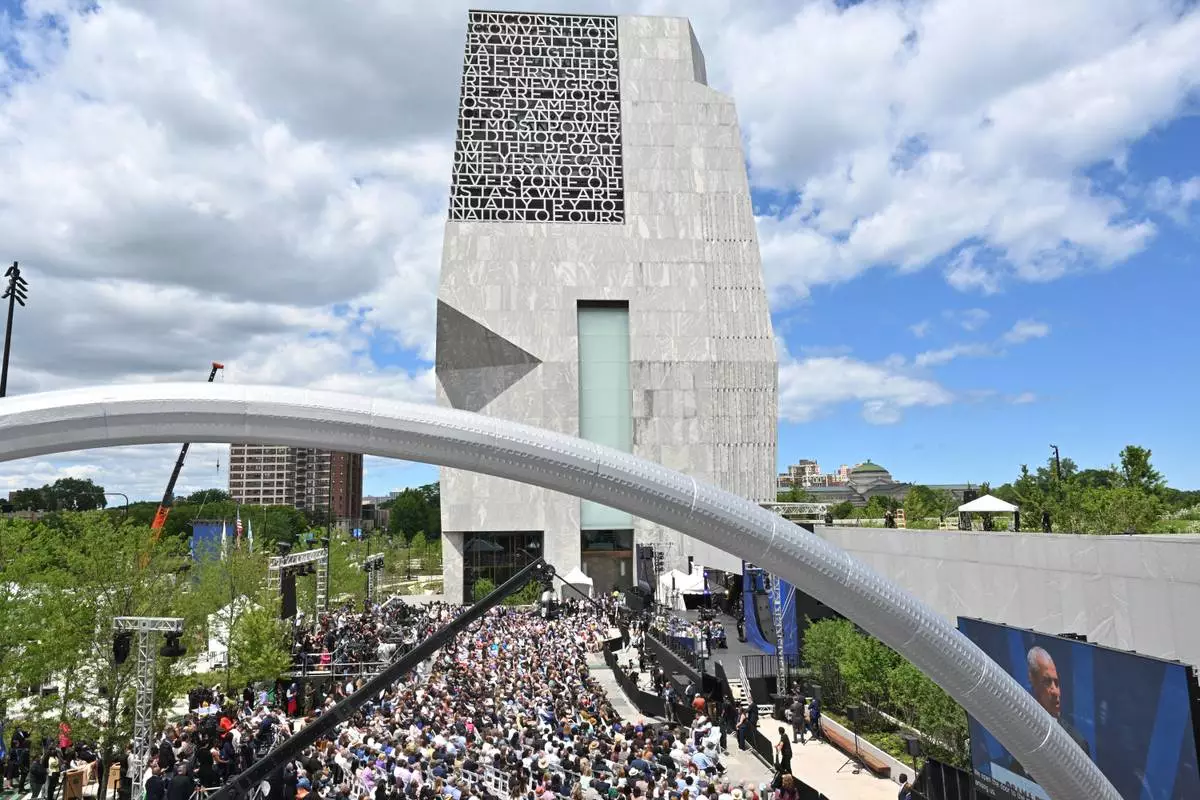
Former President Barack Obama speaks during the dedication ceremony for the Obama Presidential Center, Thursday, June 18, 2026, in Chicago. (AP Photo/Jon Cherry)
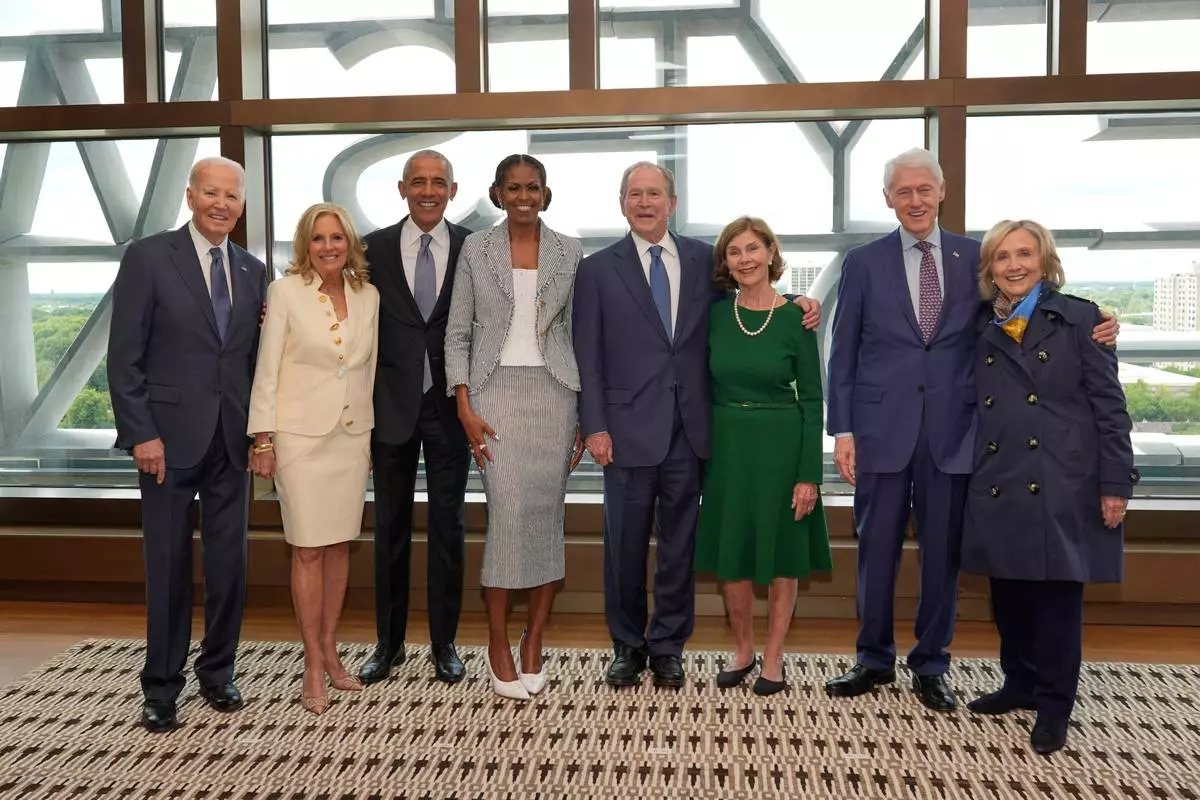
Former President Joe Biden and former first lady Jill Biden, from left, former President Barack Obama and former first lady Michelle Obama, former President George W. Bush and former first lady Laura Bush, and former President Bill Clinton and former Secretary of State Hillary Clinton, pose for a photo ahead of the dedication ceremony at the Obama Presidential Center, Thursday, June 18, 2026, in Chicago. (AP Photo/Pablo Martinez Monsivais, Pool)
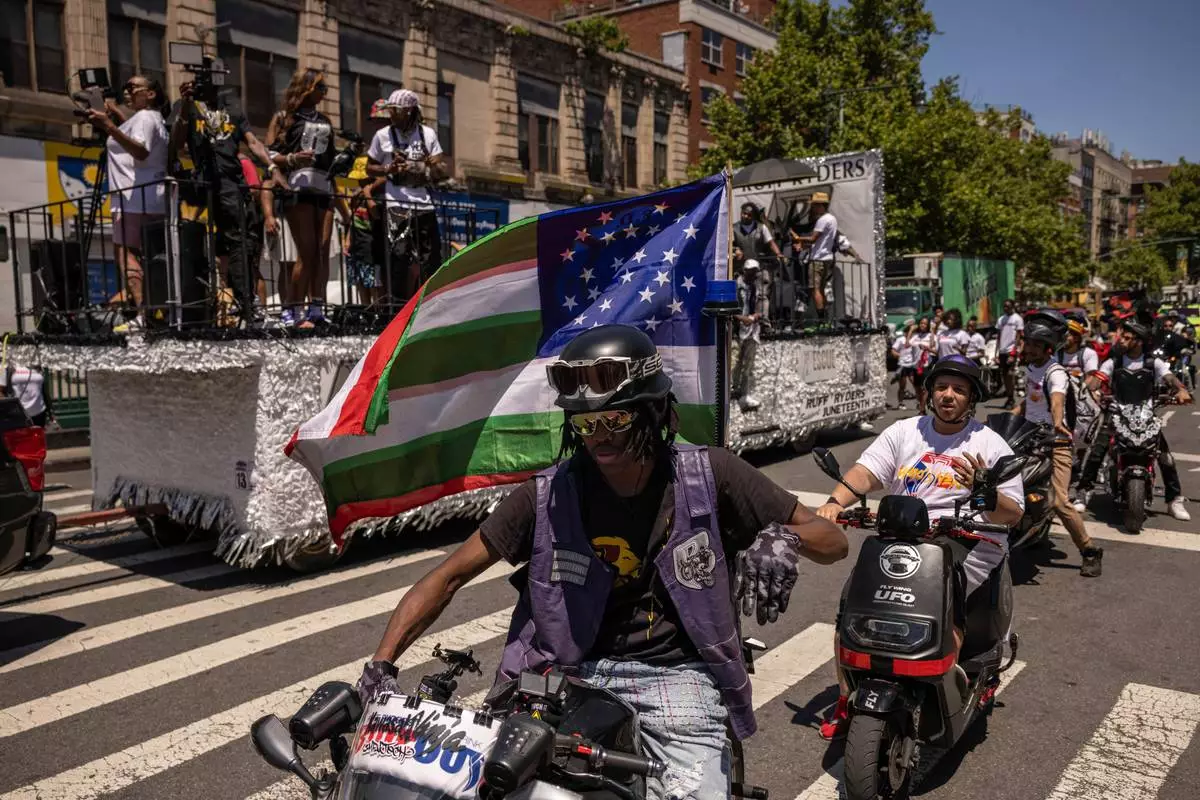
FILE - People on motorcycles participate in the 31st annual Juneteenth celebration, June 15, 2024, in the Harlem neighborhood of New York. (AP Photo/Yuki Iwamura, File)
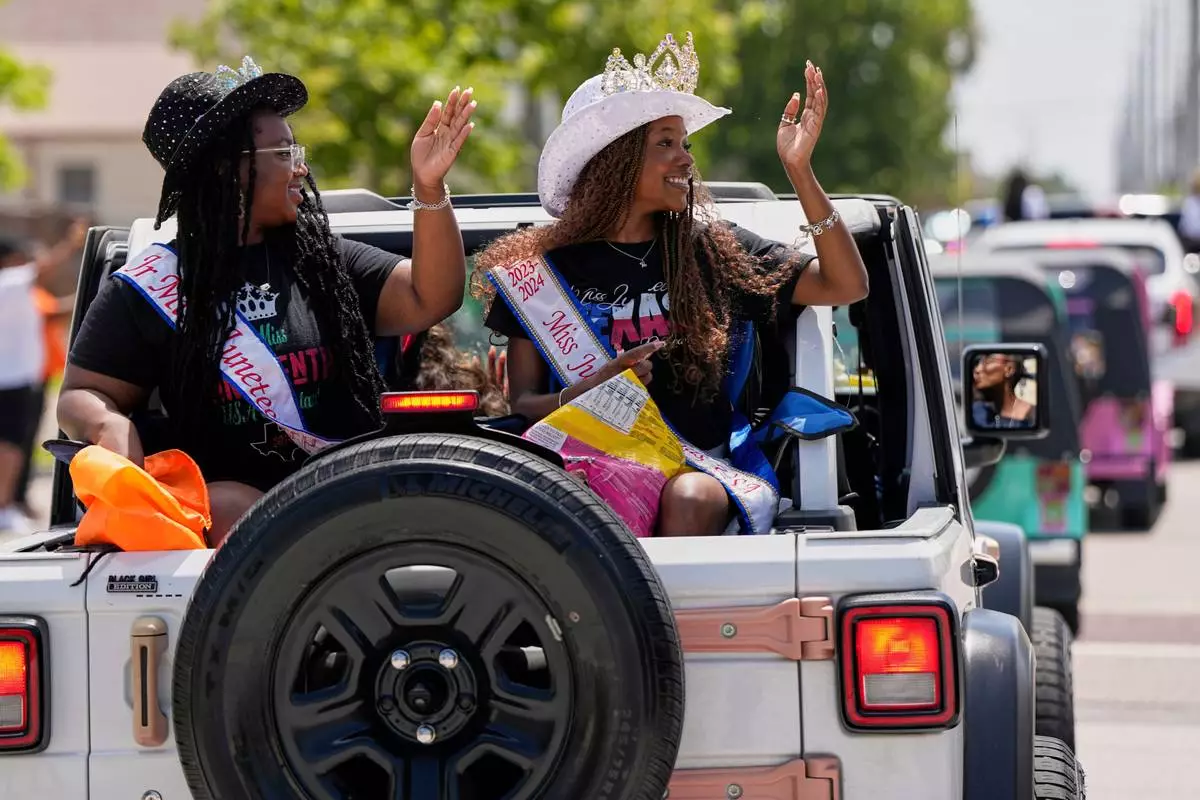
FILE - People participate during a Juneteenth parade, June 19, 2025, in Galveston, Texas. (AP Photo/David J. Phillip, File)
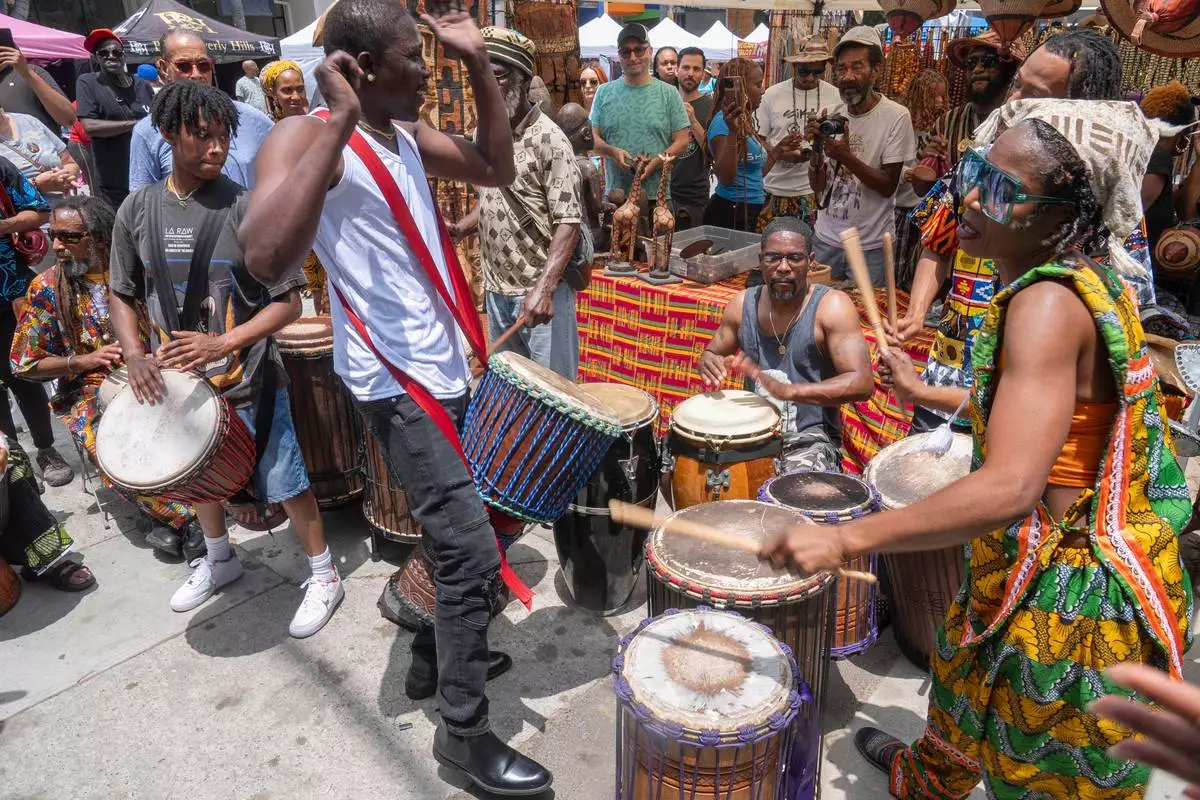
FILE - Drummers form a circle around Sika Dwimfo, better known as the, "Godfather of Leimert Park," during the neighborhood's Juneteenth celebration, June 19, 2024, at Leimert Park in Los Angeles. (AP Photo/Damian Dovarganes, File)
ZURICH (AP) — The U.S. push to quickly begin high-stakes talks with Iran hit a snag just two days after the signing of an agreement that opens a 60-day window for negotiations on Iran’s nuclear program and getting oil traffic moving through the Strait of Hormuz back to prewar levels.
Vice President JD Vance had been prepared to make an overnight flight Friday to meet with his Iranian counterparts at a mountainside resort in the tiny Swiss village of Obbürgen and begin the technical talks.
His staff and a small pack of journalists had even gathered at Joint Base Andrews outside Washington in anticipation of the trip. Meanwhile, dozens of White House officials, advance staffers and more media gathered in Switzerland to prepare for Vance's anticipated arrival.
But then abruptly on Thursday evening the trip was called off — at least for the time being.
The White House issued a statement explaining Vance — who has been tapped by President Donald Trump to lead the negotiations — and his delegation were prepared for talks, but they were unable to finalize plans and the vice president would remain in Washington.
“The logistics of these negotiations have never been simple or predictable,” the statement noted.
The announcement followed a report from Al-Mayadeen, a Pan-Arab satellite channel that is politically allied with the Iranian-backed Lebanese militant group Hezbollah, that Iran was delaying sending its delegation to Switzerland over Israel’s ongoing military campaign in Lebanon.
Fighting intensified with at least 18 killed by Israeli airstrikes, while four Israeli soldiers were killed in southern Lebanon.
Israeli Prime Minister Benjamin Netanyahu said Thursday that Israel’s military will stay in a “security zone” of southern Lebanon as long as “Israel’s security needs require it.”
Israel and Hezbollah are not parties to the agreement. Iran insists Israel must withdraw from the large swath of southern Lebanon it is occupying, but the wording of the interim deal doesn’t explicitly require that and only ensures Lebanon’s “territorial integrity.”
Hours before postponing his trip, Vance gave some indication of the state of flux when he told reporters at a White House briefing that he was uncertain if the talks were going to happen this weekend.
“Our plan is to go to Switzerland, I don’t know exactly when,” Vance told reporters. “We think these technical negotiations start sometime this weekend. That’s still the plan. But that could change.”
Soon after Vance spoke to reporters, Iran's Supreme Leader Ayatollah Mojtaba Khamenei endorsed direct negotiations with the U.S. in a terse statement read by state media that appeared to signal to the Islamic Republic’s leadership that it could move forward with a first round of talks.
“It is obvious that the face-to-face negotiations that will be held in the future will not mean accepting the enemy’s opinion,” Khamenei said in his statement.
The messaging seemed to give Khamenei, who was badly wounded in the Feb. 28 U.S. strike that killed his father, some maneuverability. Hard-liners in the Iranian government, including Khamenei’s father, have long opposed direct talks with the White House, especially after Trump, during his first term, pulled out of the 2015 nuclear deal negotiated by Democratic President Barack Obama's administration.
More importantly for the White House, it appeared to create a permission structure for the talks to start.
Vance was initially expected to go to Switzerland to sign the agreement at a formal ceremony. Instead, Trump signed the document Wednesday during a glitzy dinner at the Palace of Versailles with French President Emmanuel Macron. Iranian President Masoud Pezeshkian separately signed the agreement.
The agreement states that Iran’s stockpile of highly enriched uranium, which is believed to be buried under rubble left by U.S. military strikes last year targeting Tehran’s key nuclear sites, must at minimum be diluted under international supervision.
It also states that Iran shall not procure or develop nuclear weapons — a commitment it has made previously. But a range of other commitments remain to be worked out.
Iranians would be going into the talks with a measure of confidence after effectively shutting down the Strait of Hormuz, causing global economic reverberations, said Rosemary Kelanic, director of the Middle East Program at Defense Priorities in Washington.
She said the U.S. is now “essentially trying to negotiate our way back to the prewar status quo."
Neil Quilliam, an associate fellow with the Middle East and North Africa Program at Chatham House think tank, said the “buoyant” Iranian leadership feels it has the upper hand. The endorsement of the talks by the Iranian supreme leader “sends a very strong signal domestically: ’We’re now on an equal footing with the U.S.'”
”‘Trump has gone from calling for regime change on Feb. 28 to this: Now they’re going to sit down with us directly and talk about these big issues,'” Quilliam said of the Iranians' thinking. “So it’s intended more for the domestic audience, and telling them: ‘We are firmly in control of this. There can be no protests, no revolution: We are a new regime and we’re staying put.’”
Trump's tone has also taken a notable shift.
For weeks, he's insisted the financial costs to Americans were less important to him than stamping out Iran's nuclear program. He irked some of his fellow Republicans when he indicated its potential impact on November's midterm elections wasn't a concern.
But this week, at the G7 summit in Evian-Les-Bains, France, he acknowledged that continuing the war could have led to “economic catastrophe” and that oil reserves were on track to run out in about four weeks.
“And the one president I did not want to be was the late, great Herbert Hoover,” said Trump, referring to the 31st president whose time in office was defined by the Great Depression.
For Vance, a likely 2028 presidential contender, how the negotiations play out could have enormous ramifications for his political fortunes.
Vance's skepticism of foreign wars was a core part of his political identity during his political rise. But now he finds himself the chief defender of negotiating an endgame to Trump's conflict that Democrats have largely derided as a foolish gambit. Some hawkish Republicans are aghast that Trump is getting behind a settlement that could put billions of dollars into Iran's coffers.
Sen. Roger Wicker, the Republican chairman of the Senate Armed Services Committee, said Thursday that aspects of the deal are “completely out of step” with Trump's goals.
Trump had fiercely criticized Obama for the 2015 nuclear agreement, which Trump argued failed to stop Tehran from advancing toward a weapon and funneled billions of dollars to the Islamic Republic. The Republican exited the U.S. from the deal in 2018.
Trump has pushed back against comparisons to the JCPOA, saying he had “negotiated from strength” after a massive military campaign while asserting that Obama was paying the Iranians off and not receiving acquiescence.
Wicker was particularly concerned about the $300 billion fund for the reconstruction and economic development of Iran mentioned in the 14-point agreement, saying it "would make Iran’s payoff under Obama’s 2015 deal look like a pittance by comparison.” Trump and Vance have said no U.S. taxpayer money would go to such a fund and it would not come without concessions and reforms by Tehran.
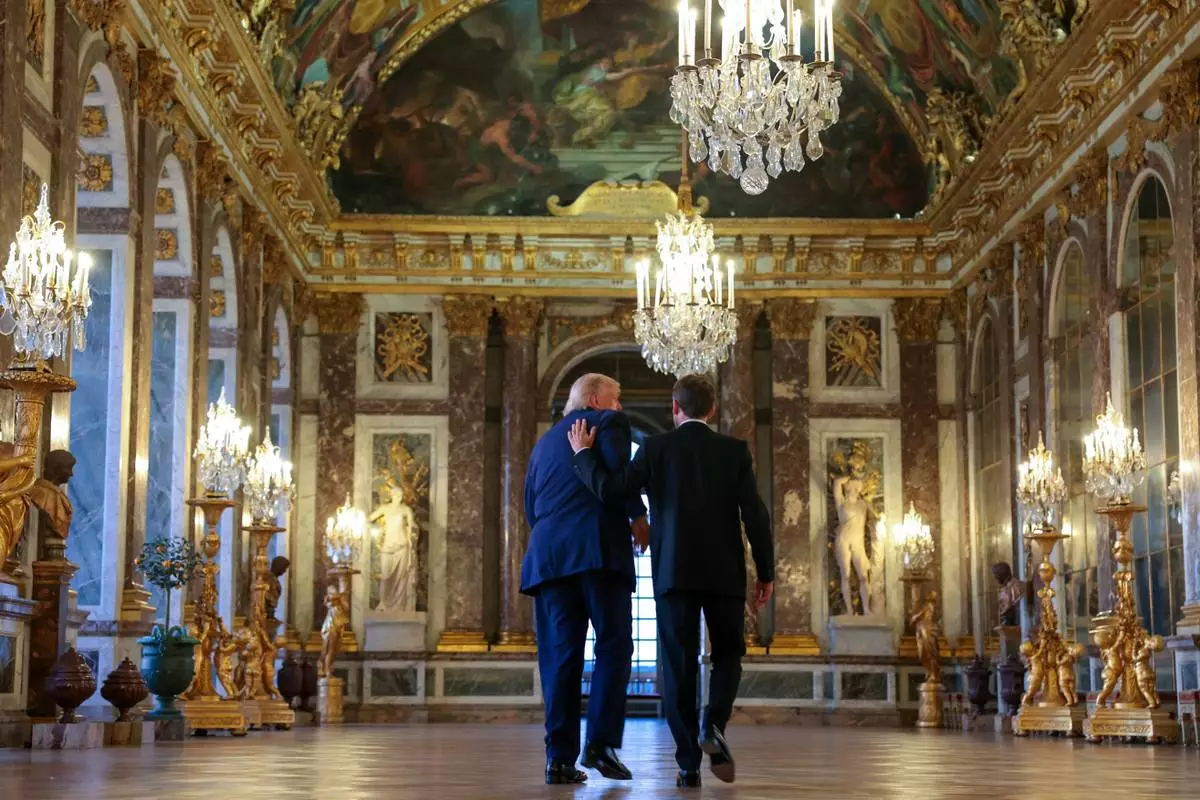
U.S. President Donald Trump receives a tour of Chateau de Versailles from President Emmanuel Macron ahead of a dinner on Wednesday, June 17, 2026 in Versailles, France, after the G7 summit in Evian, France. (Anna Moneymaker/Pool Photo via AP)
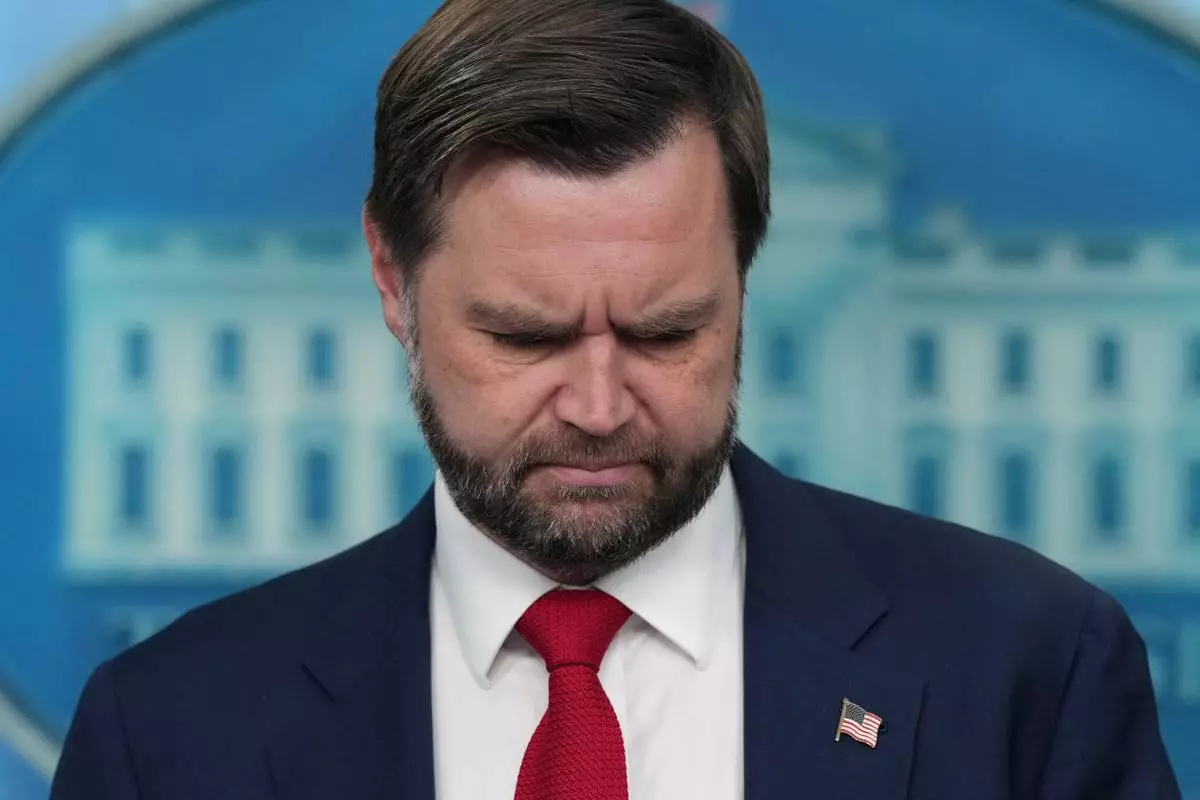
Vice President JD Vance listens as a reporter asks a question in the James Brady Press Briefing Room at the White House, Thursday, June 18, 2026, in Washington. (AP Photo/Jacquelyn Martin)
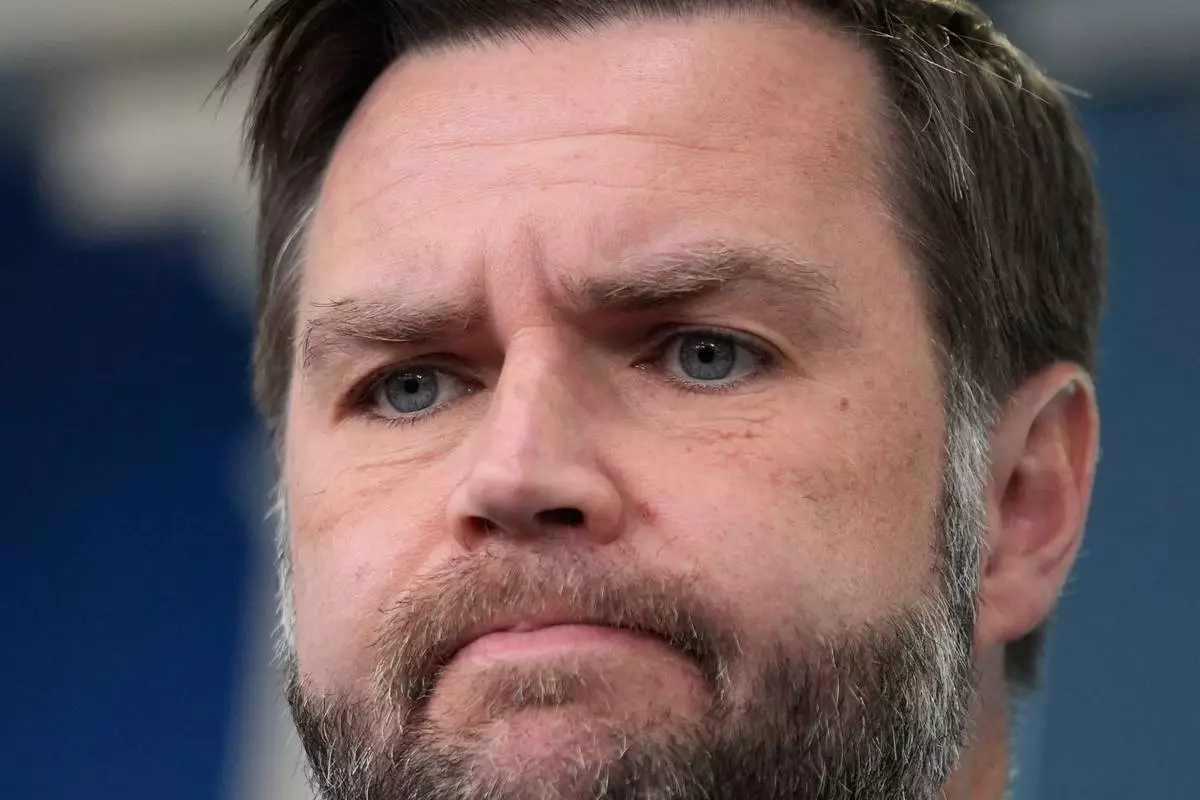
Vice President JD Vance speaks to reporters in the James S. Brady Press Briefing Room at the White House, Thursday, June 18, 2026, in Washington. (AP Photo/Manuel Balce Ceneta)