Fintech has become one of the hottest topics at the 2026 Lujiazui Forum held in Shanghai, where experts at home and aboard offered their perspectives on how to make capital and innovation complement each other under the technological wave on Thursday.
Themed "Financial Development and Cooperation under Global Governance Initiatives: New Vision, New Challenges and New Opportunities," the two-day event which kicked off on Wednesday featured eight plenary sessions covering topics including global financial governance reform and cooperation, capital market improvements, Shanghai-Hong Kong financial synergy and other hot topics in the current economic and financial sectors.
Facing constant development in technology, China's fintech requires patient capital and venture capital, especially from those who have the ability to understand science and technology, experts believed.
"When you invest, you should not only invest in technology, but also need to know technology. Most importantly, you ought to empower sci-tech innovation. With technology capital, more financial resources will be levered," said Tu Guangshao, chairman of the Executive Council of Shanghai Finance Institute.
Some experts suggested that an organic ecosystem that connects capital and innovation and links domestic and international spheres should be formed.
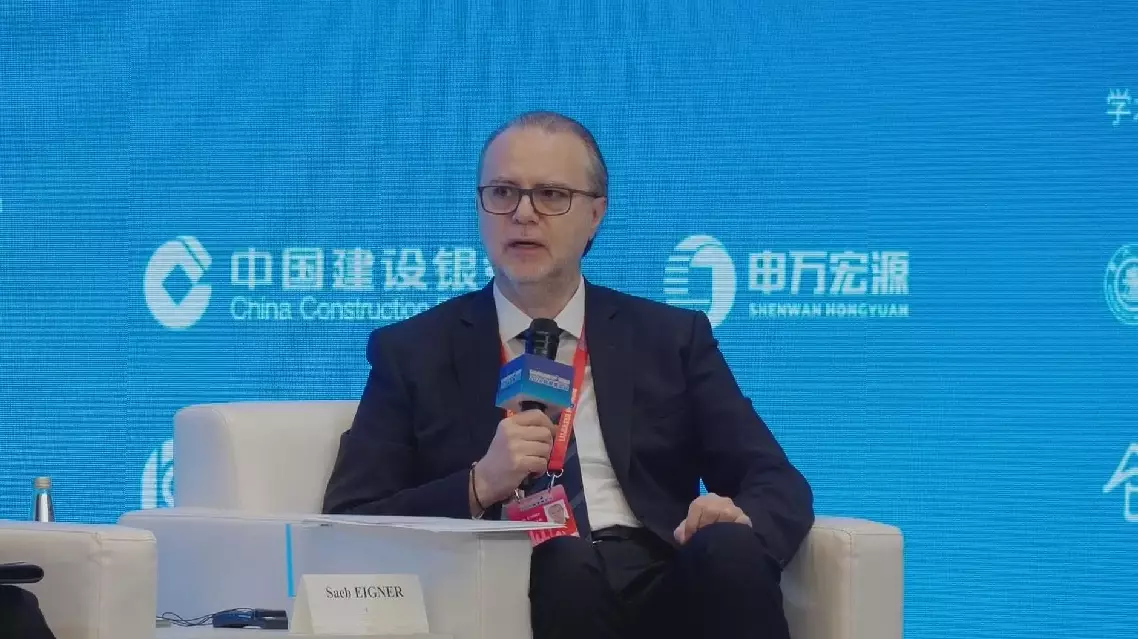
"Governments, banks, capital markets, institutional investors, venture capital, private equity and regulators, each plays a very distinct role, a very crucial role. [We should] connect them into a seamless innovation ecosystem," said Saeb Eigner, former chairman of Dubai Financial Services Authority.
Fintech under spotlight at 2026 Lujiazui Forum
Iran's Persian Gulf Strait Authority (PGSA), the body responsible for maritime traffic in the Strait of Hormuz, announced on Friday new procedures for vessels seeking passage through the waterway, including a requirement that transit requests be submitted at least 48 hours in advance.
In a post on social media platform X, the PGSA stressed that only vessels that comply with the requirements will be "cleared for passage promptly."
The PGSA said passage requests must be submitted exclusively through its website and email address, and must include vessels' "valid and accessible" contact information. To avoid delays, vessels are required to submit passage requests and necessary information "at least 48 hours prior to arrival at the strait area," it said.
The PGSA also announced that, during the 60-day period specified in the newly signed peace memorandum of understanding (MoU) between Iran and the United States, ships will be exempt from charges related to passage through the strait. Costs associated with security, safety and environmental services, as well as related Iranian insurance requirements, will be covered by the Iranian government.
Vessels must coordinate with Iranian authorities in advance regarding the designated route and time of crossing the Strait of Hormuz, it said, adding that vessel owners will bear responsibility for any failure to comply with the regulation.
The announcement came a day after Iran's Supreme National Security Council (SNSC) issued an order for the swift handling of requests by vessels for passage through the Strait of Hormuz in line with the Iran-U.S. MoU.
According to the SNSC, under the MoU, no fee will be charged for 60 days for passage by ships requesting to cross the Strait of Hormuz, and all the expenses will be covered by the Iranian government.
On Feb. 28, Israel and the United States launched joint attacks on Tehran and other Iranian cities. Iran responded with waves of missile and drone attacks targeting Israel and U.S. bases and assets in the region, and tightened its grip on the Strait of Hormuz, barring safe passage of vessels belonging to or affiliated with Israel and the United States.

Iran issues new procedures for vessels requesting passage through Strait of Hormuz