Technical-level talks between the United States and Iran under the Islamabad Memorandum of Understanding (MoU) will be held in Burgenstock, Switzerland, on Sunday, Pakistan's foreign ministry said on Saturday.
Representatives from both countries, along with mediators from Pakistan and Qatar, will participate in the discussions, according to a statement issued by the ministry.
Pakistan will continue to facilitate the process in its role as mediator, with a view to advancing the understandings reached under the Islamabad MoU, it said.
U.S. Vice President JD Vance said in a media interview on Saturday that talks with Iran could begin as early as Sunday, and negotiations are going smoothly.
The vice president said that he may travel to Switzerland in the coming days.
Vance also said there is no evidence that Iran is closing the Strait of Hormuz.
Iranian sources said on Saturday that Iran's negotiating team is heading to Switzerland to discuss the MoU with U.S. negotiators.
Iran's Foreign Ministry spokesman Esmaeil Baghaei said on Saturday that the negotiating team includes Parliament Speaker Mohammad Bagher Ghalibaf, Foreign Minister Seyed Abbas Araghchi, deputy secretary of the Supreme National Security Council Ali Bagheri Kani, as well as the governor of the Central Bank of Iran (CBI) and the deputy minister of oil.
Baghaei said that the first article of the MoU, namely "ending the war on all fronts, including Lebanon," is the core pillar of the mutual commitments made by both sides.
While Iran is fulfilling its own commitments, he said, the U.S. side, which should have forced Israel to cease its military operations in Lebanon, has failed to fulfill this responsibility, constituting a clear violation of the agreement.
Baghaei said that although some measures have been taken regarding lifting the maritime blockade and reopening the Strait of Hormuz, the MoU is essentially a "comprehensive agreement."
A violation of the first article puts the entire agreement in doubt, and if the U.S. does not take necessary measures immediately, the entire MoU will face serious problems, he said.
Baghaei stressed that the sustainability of this agreement depends on the behavior of the U.S., noting that the logic of Iranian foreign policy is very clear -- commitment for commitment and action for action,
He warned that if the U.S. refuses to fulfill its commitments or undermines their implementation, Iran will take reciprocal, severe, and deterrent countermeasures with its strategic capabilities.
The Swiss foreign ministry said in a statement on Saturday that Switzerland will continue to provide a "discreet and reliable setting" to facilitate the U.S.-Iran talks at Burgenstock, adding that "diplomats from various countries currently present are continuing their efforts to maintain the dialogue."
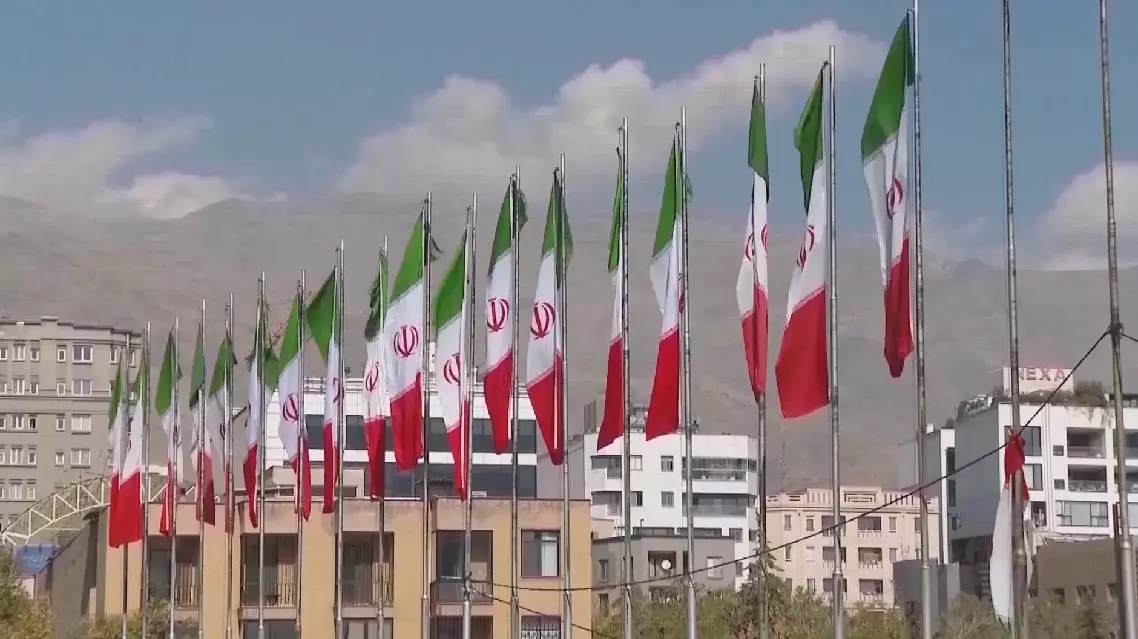
U.S., Iran to hold technical talks on Sunday in Switzerland: Pakistani foreign ministry
Angola's National Assembly President Adao de Almeida said his landmark visit to China, highlighted by the signing of a memorandum of understanding between the two countries' legislatures, will strengthen the two nations' comprehensive strategic cooperative partnership and deepen their traditional friendship and cooperation.
Almeida led a delegation to China from September 9 to 16 at the invitation of China's National People's Congress (NPC). He spoke about the significance of his visit in an exclusive interview with China Media Group.
"First, thank you for giving me this opportunity to speak in this interview about relations between Angola and China. This is my first visit to China as President of Angola's National Assembly at the invitation of China's National People's Congress. It is also the first visit to China by a president of Angola's National Assembly in nearly 20 years," he said.
The visit produced concrete results. On September 11, the two countries' legislatures signed a memorandum of understanding to institutionalize parliamentary exchanges and support broader bilateral relationship.
"Today [September 11], our two sides signed an important document of cooperation, the Memorandum of Understanding between the National Assembly of Angola and the National People's Congress of China. We will establish Angola-China Friendship Groups and also friendship groups of our respective legislatures and make full use of them to facilitate communication and maintain regular consultations on issues of common concern. As you know, [Chinese ] President Xi Jinping and [Angolan] President Joao Lourenco have maintained strategic communication. The memorandum will not only promote exchanges between our two legislatures, but also support our countries' diplomacy and help translate into reality the vision set out by our leaders for bilateral relations," he said.
Looking back over decades of engagement, he underscored China's role as a partner in Angola's postwar reconstruction and the importance he attaches to Chinese investment.
"Since Angola and China established diplomatic relations in 1983, our relationship has continued to move forward with the times. With the end of years of armed conflict and the restoration of peace in Angola during the 2002-2003 period, the bilateral relations deepened further. China became an important partner in Angola's postwar reconstruction, and we need to attach greater importance to Chinese investment in Angola. Our ties have now been elevated to a comprehensive strategic cooperative partnership. This visit is therefore highly significant. It has added a new dimension to bilateral relations through cooperation between our legislatures, while further deepening the traditional friendship and cooperation between our two countries," he said.
Angola lies on the southwestern coast of Africa, bordering the Republic of the Congo and the Democratic Republic of the Congo to the north, Zambia to the east and Namibia to the south, with the Atlantic Ocean to its west. Endowed with fertile land, a network of rivers and rich fishery resources, the country relies on oil and diamond mining as pillars of its national economy.
China and Angola established diplomatic relations in 1983, and elevated their ties to a comprehensive strategic cooperative partnership in 2024.
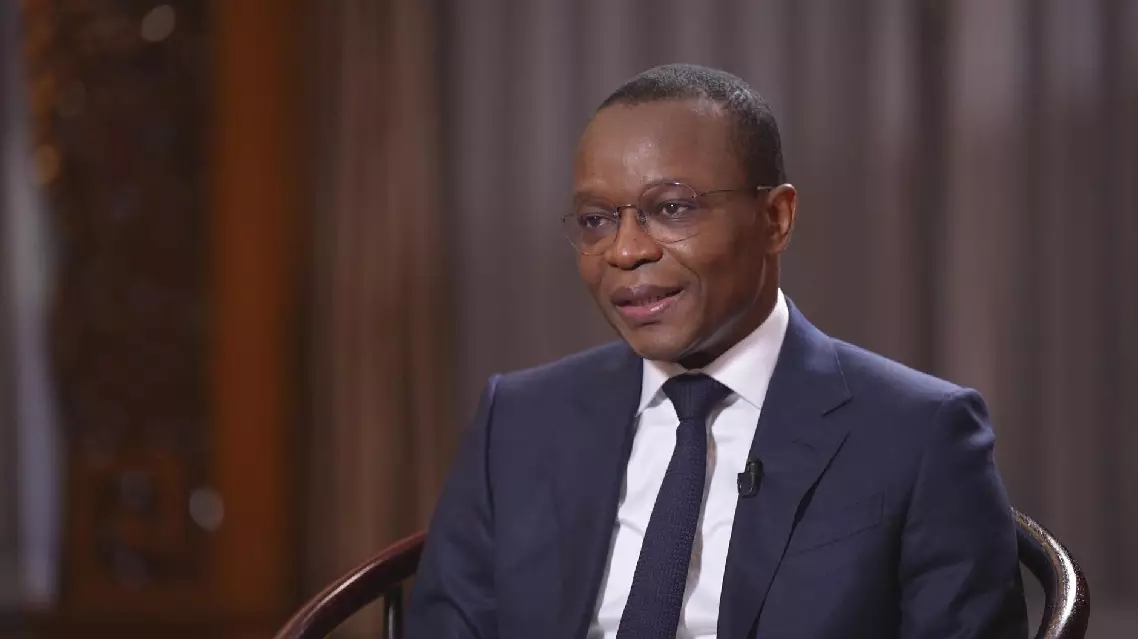
Angola's parliament president eyes deeper friendship, cooperation with China