PHOENIX (AP) — The Arizona Diamondbacks lost another starting pitcher to injury on Saturday, placing right-hander Michael Soroka on the 15-day injured list with a strained right glute.
Arizona also put utilityman Jordan Lawlar back on the IL with a strained right hamstring, which occurred in Friday’s victory over Minnesota.
Both players had MRIs on Saturday and will be sidelined at least four weeks, Diamondbacks manager Torey Lovullo said before Saturday’s game against the Twins.
Soroka left Friday’s game after throwing some warmup pitches before the second inning. The 28-year-old was having the best season of any Arizona starter, going 8-3 with a 3.07 ERA in 15 starts.
Soroka joins right-hander Ryne Nelson, sidelined earlier this week with a sprained UCL in his pitching arm, as well as Corbin Burnes, who had Tommy John surgery last year and suffered a setback in rehab. The unrelated injury, a strained muscle in his teres major muscle, will keep Burnes out until September at the earliest.
Lawlar was removed from Friday’s game after beating out an infield single. He had just returned last week from a two-month stay on the injured list after suffering a fractured right wrist when he was hit by a pitch from Atlanta’s Osvaldo Bido. The Diamondbacks’ first-round pick in 2021, who has battled injuries through most of his professional career, was batting .316 with a home run in 38 at-bats.
The Diamondbacks recalled left-handed pitcher Philip Abner and utilityman Tim Tawa from Triple-A Reno to replace the injured players. Both were up with the club earlier this season.
With the injuries to two starters, Arizona is currently carrying 10 relievers.
—
AP MLB: https://apnews.com/hub/mlb

Arizona Diamondbacks pitcher Michael Soroka throws against the Minnesota Twins in the first inning of a baseball game, Friday, June 19, 2026, in Phoenix. (AP Photo/Rick Scuteri)

Arizona Diamondbacks pitcher Michael Soroka, right, talks to a trainer, left, in the second inning of a baseball game against the Minnesota Twins, Friday, June 19, 2026, in Phoenix. (AP Photo/Rick Scuteri)
LA PAZ, Bolivia (AP) — President Rodrigo Paz on Saturday declared a state of emergency that gives the military broad power to remove road blockades that have put a stranglehold on fuel and food supplies in Bolivia's seat of government and other major cities.
A wave of protests over the last five weeks has called for Paz to step down over austerity measures imposed by the government, including the cancellation of fuel subsidies, and other issues. The demonstrations have unleashed violent confrontations between dynamite-wielding demonstrators and riot police, leading to at least 365 arrests and 37 injuries, according to authorities.
At least 17 people have died, most of them linked to a lack of medical care caused by transportation disruptions, according to Bolivia’s ombudsman’s office and human rights organizations.
Barricades erected on key roads have effectively isolated the city of La Paz, triggering fuel and food shortages, paralyzing transportation and preventing patients from reaching hospitals — causing at least seven deaths for lack of medical attention, the government says.
“This is not a state of emergency to restrict people’s lives. It is a state of emergency to give people back their freedom,” the president said in a televised address to the nation.
As businesses closed over the course of the protests, supermarket shelves emptied and hospitals ran out of oxygen, calls from some sectors of society escalated for Paz to restore order through force.
On Friday night, Paz signed an agreement with one of the labor unions, whose leaders called for the blockades to be lifted. But other protesters have demanded that Paz resign and refused to negotiate.
Paz said that the state of emergency is intended to guarantee fuel supplies, which have become increasingly scarce as roadblocks have left tanker trucks stranded.
The decree prohibits “blocking streets, avenues, roads and highways in ways that affect transportation and supplies,” and orders the armed forces to temporarily support the police “in restoring order, reopening roads and protecting the population.” The state of emergency doesn't limit due process rights or constitutional guarantees and allows people to continue their daily activities, according to the decree.
The state of emergency will last 90 days, but could be lifted earlier if “violence and threats against the population come to an end,” the government said in a statement.
Paz came to power in November, ending almost 20 years of uninterrupted rule by Bolivia’s Movement Toward Socialism party, or MAS, which delivered the country's worst economic crisis in a generation. A centrist who triumphed over more conservative candidates, Paz promised to resolve chronic fuel shortages and replenish the central bank's almost-empty coffers, while protecting the social welfare that represented a pillar of MAS' popularity.
But his austerity measures, most significantly the elimination of long-standing fuel subsidies, have exacerbated biting inflation. His government fixed fuel shortages, but with poor-quality gasoline that damaged thousands of vehicles. Reforms to encourage foreign investment and stimulate economic growth have stalled in Congress.
The highland Indigenous and rural workers' groups — who long supported MAS but helped vault Paz to power last year — have led the protests, accusing his government of neglecting their needs since entering office.
He faces rising pressure from both Bolivia's hard-right, which dominates Congress, and long-ruling left. Former President Evo Morales has supported the protests and demanded a new election from his hideout in the coca-growing tropics, where he is evading an arrest warrant on charges related to statutory rape.
The Trump administration has backed Paz, who repaired relations with the U.S. after years of anti-Western hostility in Bolivia under Morales.
U.S. Secretary of State Marco Rubio called Paz to inform him last week that Washington was “ramping up emergency assistance and logistics operations support” to help alleviate shortages caused by the blockades.
U.S. Secretary of Defense Pete Hegseth denounced the protests as “attempts to overthrow the legitimate government,” and issued a stark warning to those who he said were “profiting on death and destruction in our hemisphere.”
“The United States is watching,” he wrote on X.
Isabel Debre reported from Buenos Aires.
Follow AP’s coverage of Latin America and the Caribbean at https://apnews.com/hub/latin-america
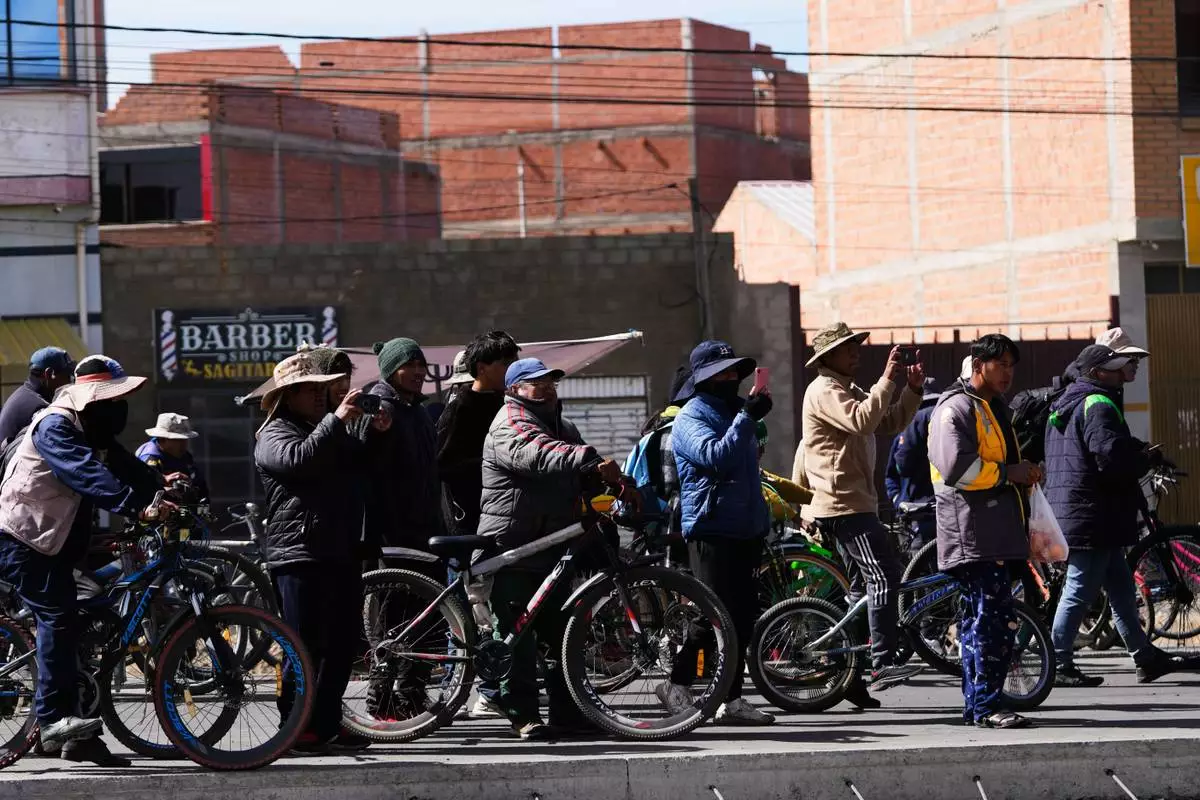
Residentes take pictures at police clearing a highway blocked by protesters after President Rodrigo Paz declared a state of emergency in El Alto, Bolivia, Saturday, June 20, 2026. (AP Photo/Juan Karita)
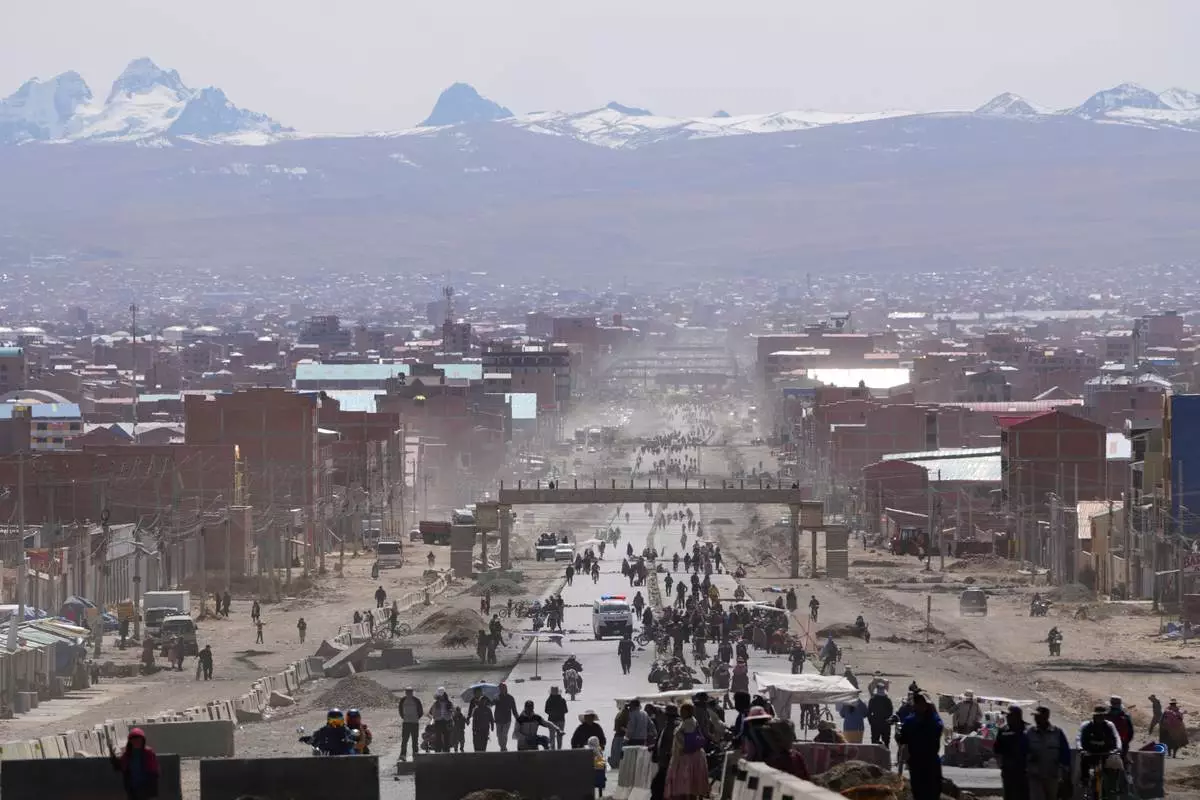
Residents walk on a highway after President Rodrigo Paz declared a state of emergency to empower the military to remove road blockades, in El Alto, Bolivia, Saturday, June 20, 2026. (AP Photo/Juan Karita)
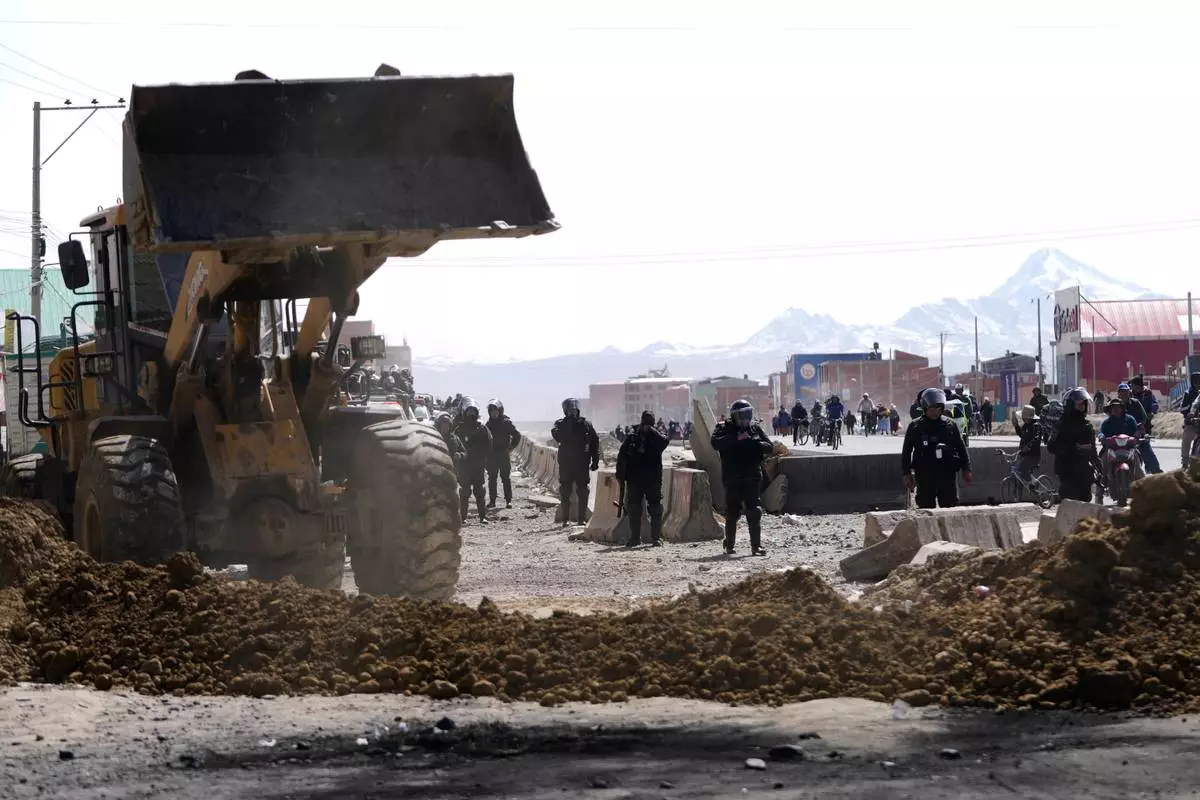
Police clear a highway blocked by protesters after President Rodrigo Paz declared a state of emergency in El Alto, Bolivia, Saturday, June 20, 2026. (AP Photo/Juan Karita)
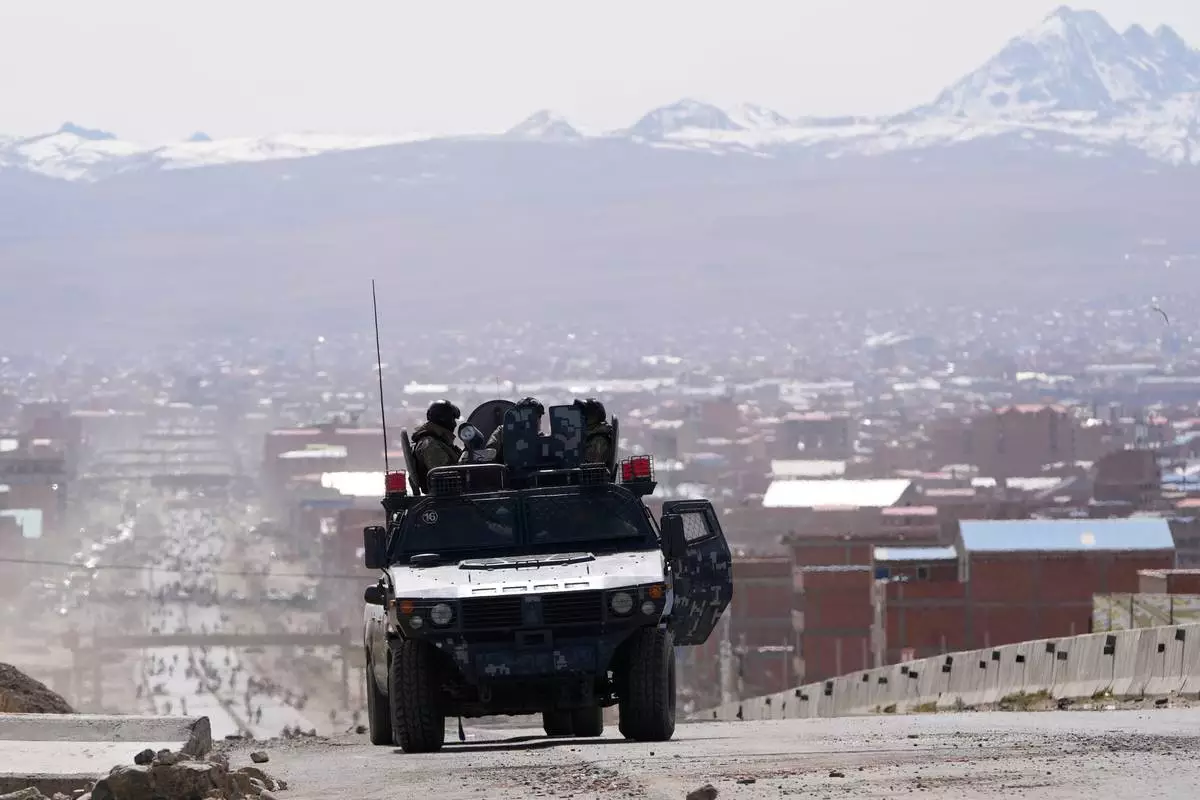
Police patrol a highway after President Rodrigo Paz declared a state of emergency to empower the military to remove road blockades, in El Alto, Bolivia, Saturday, June 20, 2026. (AP Photo/Juan Karita)
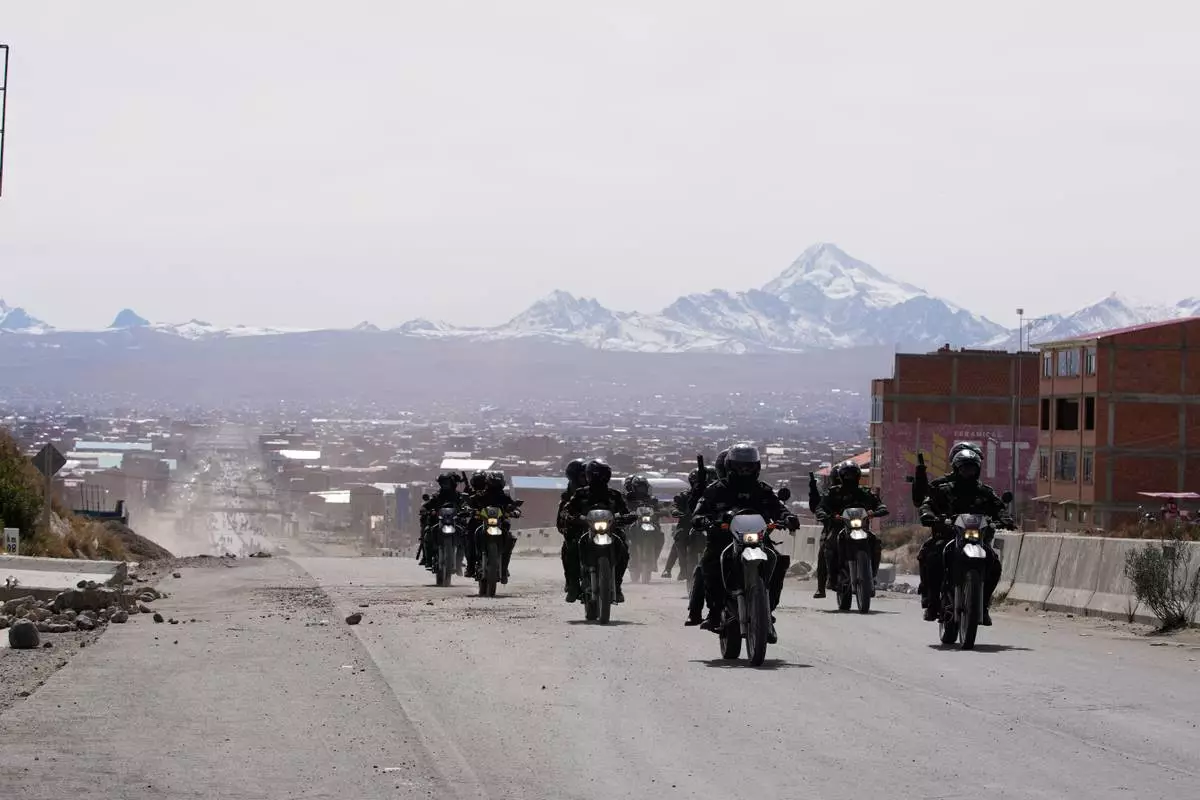
Police patrol a highway after President Rodrigo Paz declared a state of emergency to empower the military to remove road blockades, in El Alto, Bolivia, Saturday, June 20, 2026. (AP Photo/Juan Karita)
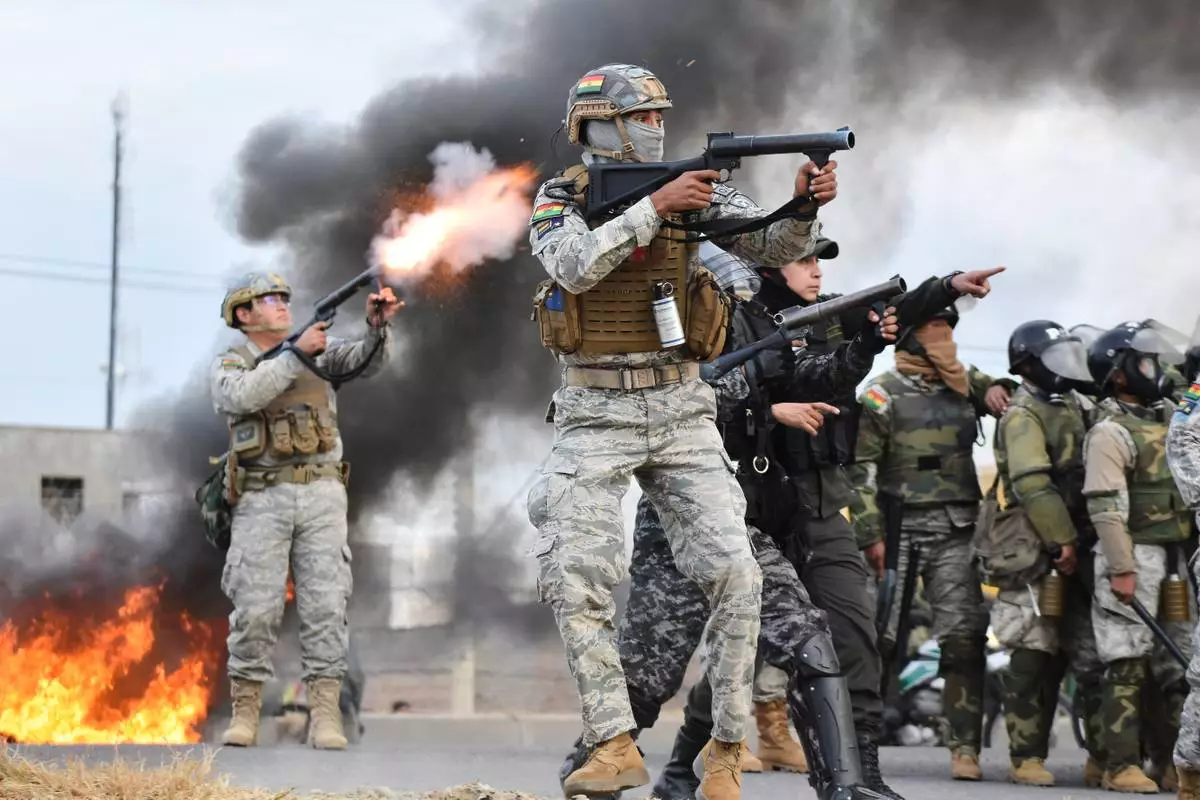
Police fire tear gas at anti-government protesters blocking a highway in Vinto, Bolivia, Monday, June 8, 2026. (AP Photo/Dico Soliz)
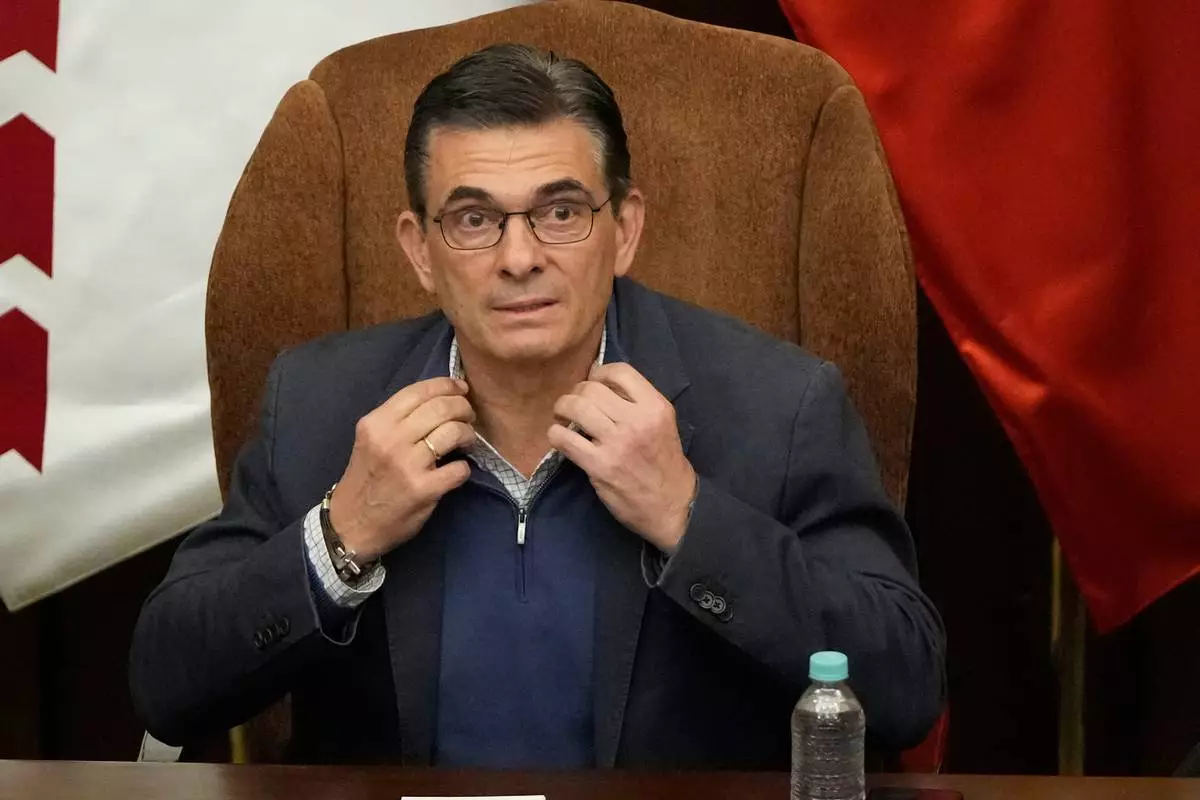
Bolivian President Rodrigo Paz meets with leaders of the Bolivian Workers' Central, or COB, in La Paz, Bolivia, Wednesday, June 17, 2026, after weeks of protests and road blockades across the country.(AP Photo/Juan Karita)