The Middle East has one of the world's largest displaced populations, with 24 million people uprooted across the region, Tarik Argaz, spokesperson for the Regional Bureau for the Middle East and North Africa of UNHCR, the UN Refugee Agency, said on World Refugee Day which was marked on Saturday.
The latest figures published by UNHCR in its yearly Global Trends report shows that 117.4 million people are displaced across the world.
"Some of the world's largest displacement situations continue to be Afghanistan, the Democratic Republic of Congo, Syria, and Sudan. And when it comes specifically to the Middle East, some 24 million people are displaced, making it one of the largest displacement regions globally," said Argaz.
"And the countries originating this displacement are Syria, with 1.7 million refugees in the region, and 1.5 (million) refugees hosted in the region from Sudan, which also remains one of the biggest or largest refugee situations,” he continued.
Over one million people are displaced in Lebanon, said the UNHCR spokesperson, noting: "We have seen that 600,000 Syrians and Lebanese have crossed from Lebanon to Syria."
"While in Yemen, it's a country with over 5 million internally displaced people. It's a country that is going through a deep and chronic crisis, driven by economic collapse, by conflict and by climate stress, with extreme humanitarian dependency," he said.
Gaza currently has 1.9 million people, or 90 percent of the population, displaced, with many people having been forced to flee Israeli attacks several times.
"So 90 percent are internally displaced, often displaced several times, not once. And adding to that, these are people that are unfortunately constrained in one little space and cannot move outside of that space, so it makes it even more difficult to access safety or to access basic services," said Argaz.
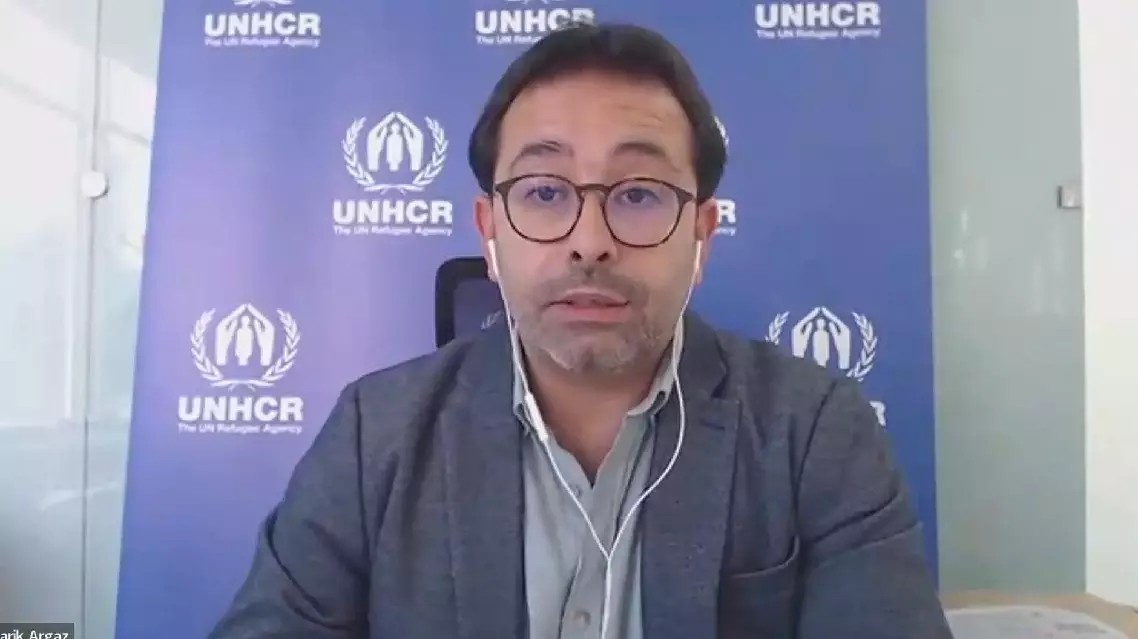
24 million people uprooted in Middle East, North Africa: UNHCR spokesperson
Multinational companies are deepening their footprint in China's high-tech industries, expanding research and production to seize opportunities from the country's ongoing industrial upgrade.
According to the latest Multinational Corporations in China report, Research and Development spending in the country accounted for 14.3 percent of global totals in 2025, while 14,000 new foreign-funded firms were established in scientific research and technology services, up 27.2 percent year on year.
At the 7th Qingdao Multinationals Summit, executives talked about how strong demand in sectors such as EVs, semiconductors, and batteries is prompting companies to expand capacity and embed innovation centers across China.
"Now we are opening our 4th product line, our 4th operating plant at the end of this year. So our investment will be around 25 million U.S. dollars. We will double the capacity in every product line that we make and we continue to advance and invest in new technologies, cutting-edge technologies and R and D equipment to advance our products for the Chinese market," said Charles Compson, chief commercial officer of Almatis.
Heraeus Group executives say China’s rapid development in emerging sectors have made the country a key base for innovation, with nearly all of the company’s divisions now operating research centers there.
"China is developing so fast and it is also leading in many aspects, be it robotics, be it electric vehicles, be it also some aspects of semiconductors that we really want to innovate in China. So virtually all of our units, divisions have an innovation center in China," said Klemens Brunner, managing director for Semiconductor, Electronics, and Industrials at Heraeus Group.
Gregor Idekeit, vice president and CFO for China at Claas, highlighted China’s push to modernize agriculture through electrification and smarter machinery.
"It's a big push for modernization of agriculture as we adopt more and more electric components in our machinery and more intelligent machinery. We will continue here to develop and bring products to the Chinese market here on the high end," he said.
In the first four months of this year, more than 3,000 foreign‑funded companies expanded investment in China. The country is also opening high‑tech and modern service sectors, creating new opportunities in areas such as culture, tourism, and digital industries.
"As China continues to expand its high-level opening up to the world, exciting opportunities are emerging across culture, tourism, creative industries and digital technologies. A greater openness will strengthen our cultural experiences and allow us to create a greater level of Chinese story that goes out to the world," said Richard Taylor, co-founder and CEO of Weta Workshop.
"Every time I come to China, I get quite energized and excited about the speed of change. So we're going to continue, of course, building and growing hopefully here," said Mike Doustdar, Novo Nordisk's president and CEO.
The three-day Qingdao Multinationals Summit, which drew 357 multinational companies from 44 countries and regions, concluded Wednesday in east China's Shandong Province.
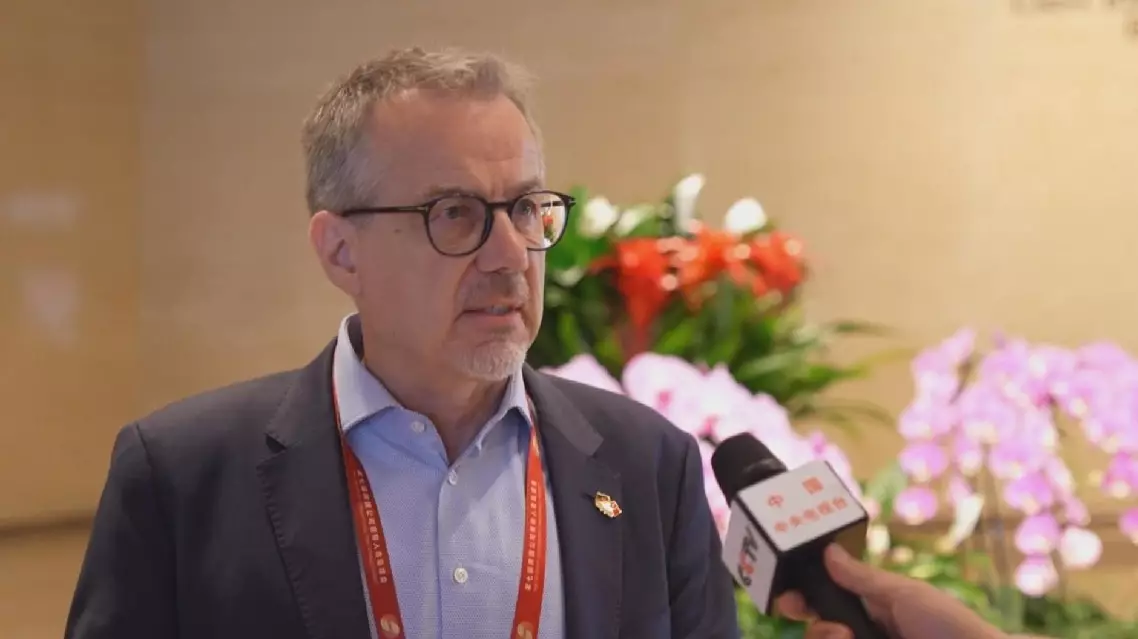
Multinationals deepen investment in China's high-tech industries