
Service consumption ranging from immersive experiences of traditional customs to technology-enabled new consumption scenarios emerged as a key driver of the holiday economy during the Dragon Boat Festival.
The Dragon Boat Festival, also known as the Duanwu Festival, falls on the fifth day of the fifth lunar month, on Friday this year. The public holiday for the festival runs from Friday to Sunday.
The integration of sports and cultural tourism emerged as a key driver of consumption during the holiday.
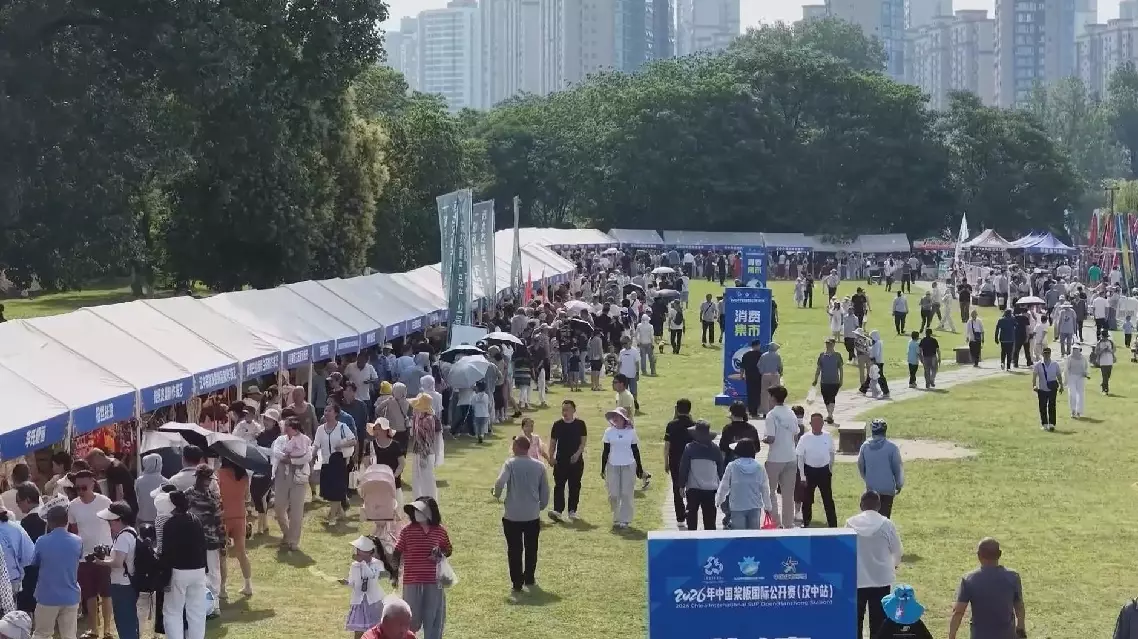
In Hanzhong, northwest China's Shaanxi Province, an international paddleboard competition drew over 600 athletes from 13 countries, while specialty markets along the race venue buzzed with activity. Even days before the holiday, the event was already fueling spending by blending spectating with shopping.
According to platform data, hotel searches near dragon boat race venues surged by over 200 percent year-on-year during the holiday, while orders for leisure and entertainment increased by 76 percent.
The momentum in service consumption is spreading from competition venues to commercial districts, where Guochao, or "China-chic," is becoming increasingly integrated with retail spaces.
In Shanghai's Minhang District, a Zongzi bazaar featuring more than 50 Chinese heritage brands opened its doors, offering customers a fresh take on traditional flavors.
In Changxing County, east China's Zhejiang Province, a commercial district revitalized from a 1,000-year-old fish market, drew large crowds with Zongzi-making contests and a lineup of interactive folk activities.
"I want my child to experience the festive atmosphere of the Dragon Boat Festival and learn about our traditional culture," said Lin Xue, a consumer.
According to data from the Ministry of Commerce, during the first two days of the holiday, the 78 pedestrian streets and commercial districts under its monitoring saw a year-on-year increase of four percent in foot traffic and 3.5 percent in revenue.
Since this year, a series of policy measures have helped boost quality services.
For instance, the Ministry of Commerce and seven other government departments Thursday released an implementation guideline document to accelerate the development of "artificial intelligence (AI) plus consumption."
It includes 17 measures in five areas to promote deeper integration of AI with consumer markets by expanding smart product consumption, empowering services consumption and creating new consumption scenarios.
During the holiday, in Jingzhou, central China's Hubei Province, visitors were treated to spectacular light shows that combined water, land, and aerial performances against the backdrop of the ancient city wall.
In Kashgar, northwest China's Xinjiang Uygur Autonomous Region, tourists experienced a fascinating blend of tradition and innovation -- watching water-screen films and traditional iron fireworks, while also interacting with robot dogs and humanoid robots.
In the first five months of this year, sales in the service sector rose 5.4 percent compared with the same period last year, up 0.2 percentage points. Travel consulting and rental services, along with cultural, sports, and leisure services, all achieved double-digit growth.
Service consumption drives Duanwu Festival holiday economy