TURIN, Italy--(BUSINESS WIRE)--Jun 22, 2026--
Music and artificial intelligence come together at the Reply AI Music Contest to explore the relationship between AI and live performance. The competition, created by Reply and organized in collaboration with Kappa FuturFestival — one of Europe’s leading festivals dedicated to electronic music and cultural innovation — announces the five finalists selected by an international jury of professionals from music and creative industries: Agoria, Max Cooper, Fleur Shore, Tini Gessler, Ali Demirel, Albi Scotti, Oliver Bohl and Sarah Grimaldi. The finalists represent a new generation of innovators using AI to explore new forms of integration between sound, visual arts and live performance.
This press release features multimedia. View the full release here: https://www.businesswire.com/news/home/20260622111182/en/
Creativity as a new form of imagination — Imaginatio Nova — is the theme of the 2026 edition of the contest, inviting participants to discover how human creativity can be revitalised through its encounter with technology. The high level of participation confirms the success of the Reply AI Music Contest: more than 1,400 applications from 45 countries and over 300 performances submitted, an increase of more than 55% when compared with the previous edition.
The five selected projects reflect the variety of languages that define AI-assisted artistic experimentation, ranging from immersive audiovisual performance to contemporary club culture. Among the finalists is Violeta Valcheva from Spain, a multimedia artist based in Barcelona who develops immersive performances where sound composition, AI-generated imagery and interactive visual environments merge into a single narrative experience. She is joined by the Spanish collective POLARIS, which will bring to the stage an audiovisual live show built around collaboration between musicians, visual artists and performers. The project explores the potential of artificial intelligence as a shared creative tool, creating a performance in which sound and image interact in real time. Italy will be represented by Ciauru, the alias of Simone Privitera, a DJ and producer who integrates artificial intelligence tools into a musical practice rooted in the contemporary electronic scene. His project combines music production, AI-generated visuals and diverse cultural influences, transforming the live set into a multisensory experience. From the United States comes Yichu Li from New York, an artist and creative innovator who uses AI to develop new forms of audiovisual expression. Her research spans digital art, computational design and musical experimentation, offering a reflection on the role of generative technologies in contemporary creation. Completing the selection is PARAFRAME & Avis Vox, an international duo based in Frankfurt combining melodic techno, vocal performance and visual design. Their proposal explores new forms of interaction between artist and machine, creating immersive audiovisual environments where music, imagery and AI converge in a single narrative.
This selection is the result of a project that confirms the growing interest in a new multidisciplinary ecosystem connecting music and artificial intelligence. The five finalists will perform their live sets on the Nova Stage powered by Reply, active until the end of Kappa FuturFestival, on Friday 3 and Saturday 4 July. At the end of the performances, the jury will announce the winner of the contest.
“ I see AI as an Alternative Intelligence. Its purpose is not to imitate what musicians already know how to do, but to make possible what would be impossible without it. The goal is to improvise together with AI and to experience, in creating with it, the same pleasure one feels when using any other traditional instrument or expressive medium,” commented Agoria.
“ What impressed me most about the submissions received for this second edition of the AI Music Contest was the diversity of creative approaches,” commented Filippo Rizzante, Chief Technology Officer at Reply. “ The finalists do not use artificial intelligence simply as a technical tool, but as a new expressive medium to explore different artistic territories. From immersive audiovisual live performances to experimentation across sound, image and interaction, a generation of artists is emerging that is helping to redefine the very concept of performance. It is exciting to see how AI can amplify human imagination, opening up creative possibilities that did not exist just a few years ago. ”
The AI Music Contest is part of the Reply Challenges programme, a series of technological and creative competitions that reflects Reply’s commitment to developing innovative learning models capable of engaging new generations. Today, the Reply Challenges community includes more than 250,000 participants worldwide.
Reply
Reply [EXM, STAR: REY, ISIN: IT0005282865] specialises in the design and implementation of solutions based on new communication channels and digital media. As a network of highly specialised companies, Reply supports major industrial groups in the telecom and media; industry and services; banking and insurance and public sectors in defining and developing business models enabled by the new paradigms of AI, cloud computing, digital media and the internet of things. Reply's services include: consulting, system integration and digital services. www.reply.com

Finalists announced for the second edition of the Reply AI Music Contest, the international competition exploring the relationship between AI and live performance
OBBUERGEN, Switzerland (AP) — Senior negotiators from the U.S. and Iran on Monday wrapped up a lengthy round of initial talks aimed at solidifying a permanent end to the war between the countries.
The mediation effort in Switzerland started Sunday and had rocky moments. But it also led to some agreements between the two sides.
Mediators Qatar and Pakistan hailed what they called “encouraging progress” made during the talks as Iran and the United States agreed to create a “de-confliction cell” to address the fighting in Lebanon. A senior U.S. diplomat claimed progress on multiple fronts, including the establishment of “mechanisms” to ensure the Strait of Hormuz, a vital waterway for global energy shipments, remains open and that a ceasefire in southern Lebanon holds.
Yet the talks between the U.S. and Iran, who were accompanied by Qatari and Pakistani officials, was jolted by blistering statements from U.S. President Donald Trump, who from thousands of miles away from the Swiss negotiating venue at a mountainside resort near Lake Lucerne was firing off comments that offended the Iranians.
Iranian state media said talks had paused after the “publication of an insulting message by the U.S. President.” The Iranian delegation then met with Qatari mediators and left the negotiating site, state media said. The senior U.S. diplomat, who spoke on condition of anonymity to brief journalists on the ongoing talks, said late Sunday that the Iranians remained on site and the negotiations were on.
Iranian state television reported Monday that the Iranian delegation had left the summit site to head to the airport in Zurich to fly back to Tehran.
Iranian President Masoud Pezeshkian had vowed to “never back down from the right to enrich uranium,” according to state media, and Trump later told Fox News in a phone interview that Pezeshkian should watch what he says and also threatened to take over Iran, according to one of the news channel's correspondents.
Trump also continued to issue warnings against Iran on social media, posting as negotiators worked: “Iran must immediately stop their highly paid PROXIES in Lebanon from causing trouble. If they don’t, we’ll hit Iran very hard again, just like we did last week, only harder!!!”
The chief negotiators for the U.S. include JD Vance, the vice president; special envoy Steve Witkoff, and Jared Kushner, the son-in-law of the president. Iran is represented by Mohammad Bagher Qalibaf, Iran’s parliamentary speaker, and Foreign Minister Abbas Araghchi.
It’s unclear when Vance will depart Switzerland, although he told Fox News in an interview Saturday that he anticipates staying only a “day or two.” Kushner and Witkoff are handling much of the technical details on behalf of the U.S. delegation.
In a joint statement, Pakistan and Qatar said the high-level talks had ended and that technical negotiations would continue in Switzerland for the rest of the week. The statement said the sides had agreed to establish a “communication line” to ensure safe passage of ships in the Strait of Hormuz, as well as a mechanism to bring about an end to the fighting between Israel and the Iranian-backed militant group Hezbollah in Lebanon.
The U.S. offered no immediate comment, while Iran praised the meditators’ work.
Araghchi wrote on X that Pakistani and Qatari mediators delivered "major progress to end the Lebanon War.” He added that the first “real test” of negotiations would be whether the mechanism succeeded in halting the fighting between Israel and Hezbollah.
The senior U.S. diplomat said among the issues discussed was Iran’s messaging as it related to the Strait of Hormuz, which Iran’s military said it closed Saturday in response to continued fighting in Lebanon. U.S. Central Command has disputed that Iran closed the strait again.
The interim deal to end the fighting in Iran, signed last week by the leaders of the U.S. and Iran, outlines a 60-day period for negotiators to settle the future of Tehran’s nuclear program amid concerns that it wants to use it for military purposes, a claim Iran denies. The fate of frozen Iranian assets, among other thorny issues, are also on the agenda.
Though the talks will encompass a vast array of complex matters, Iran first wants to focus on addressing the fighting in Lebanon.
Saturday’s renewed ceasefire in Lebanon appeared to be holding, and Israel’s military said it would lift movement restrictions for residents near the Israel-Lebanon border on Monday morning. Neither Israel nor Hezbollah is a signatory to the U.S.-Iran deal.
There was cautious calm Monday in Lebanon, with no Israeli strikes reported overnight after a day of quiet Sunday. Hezbollah likewise has not announced any attacks on Israeli forces since Saturday.
The lull in fighting in Lebanon is the longest since the outbreak of the latest Israel-Hezbollah war on March 2.
Kim reported from Washington. Associated Press reporters Abby Sewell in Beirut, David Rising in Bangkok and Jon Gambrell in Dubai, United Arab Emirates, contributed to this story.
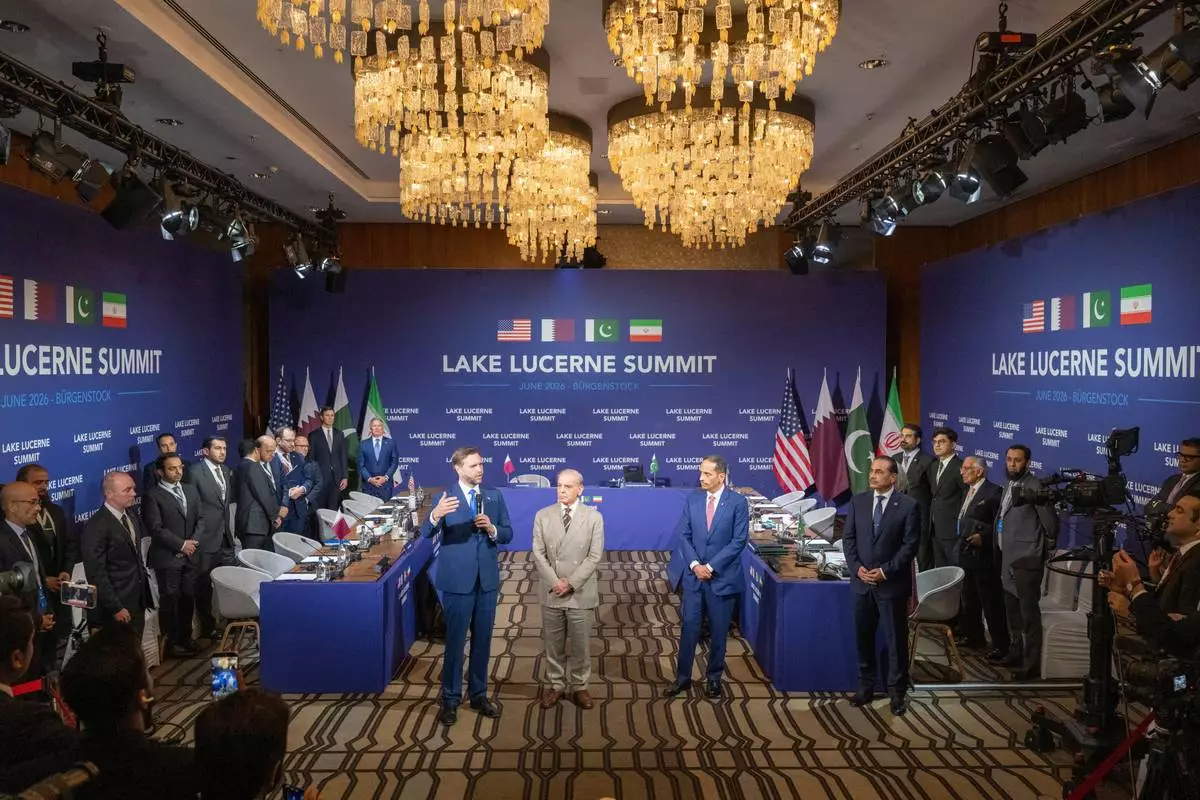
From left, US Vice-President JD Vance, Prime Minister of Islamic Republic of Pakistan, Shehbaz Sharif and Premier minister of Qatar Mohammed bin Abdulrahman bin Jassim Al Thani, at the Buergenstock resort resort in Obbuergen, near Lucerne, Switzerland, Sunday, June 21, 2026. (Urs Flueeler, Pool Photo via AP)
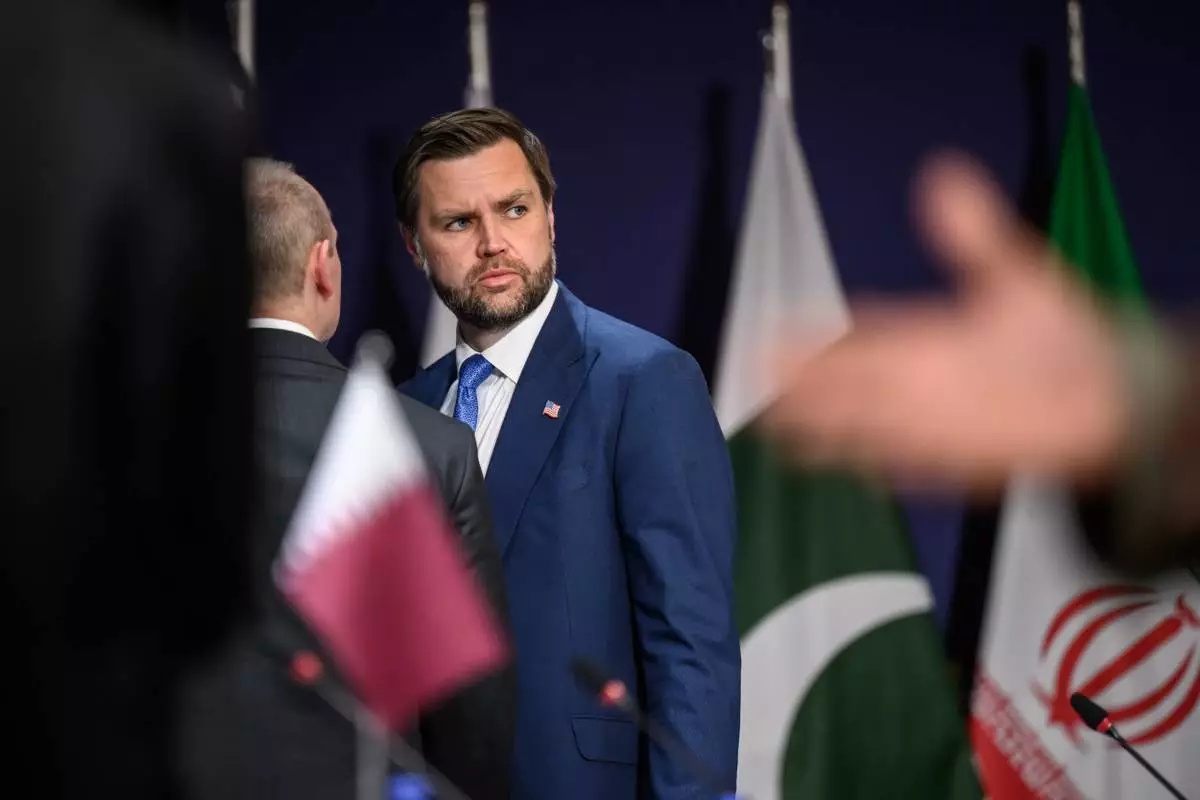
US Vice President JD Vance prior to a quadrilateral meeting between the United States, Iran, Pakistan and Qatar at the Burgenstock luxury hotel complex overlooking Lake Lucerne, Switzerland, Sunday June 21, 2026. (Fabrice Coffrini/Keystone via AP)
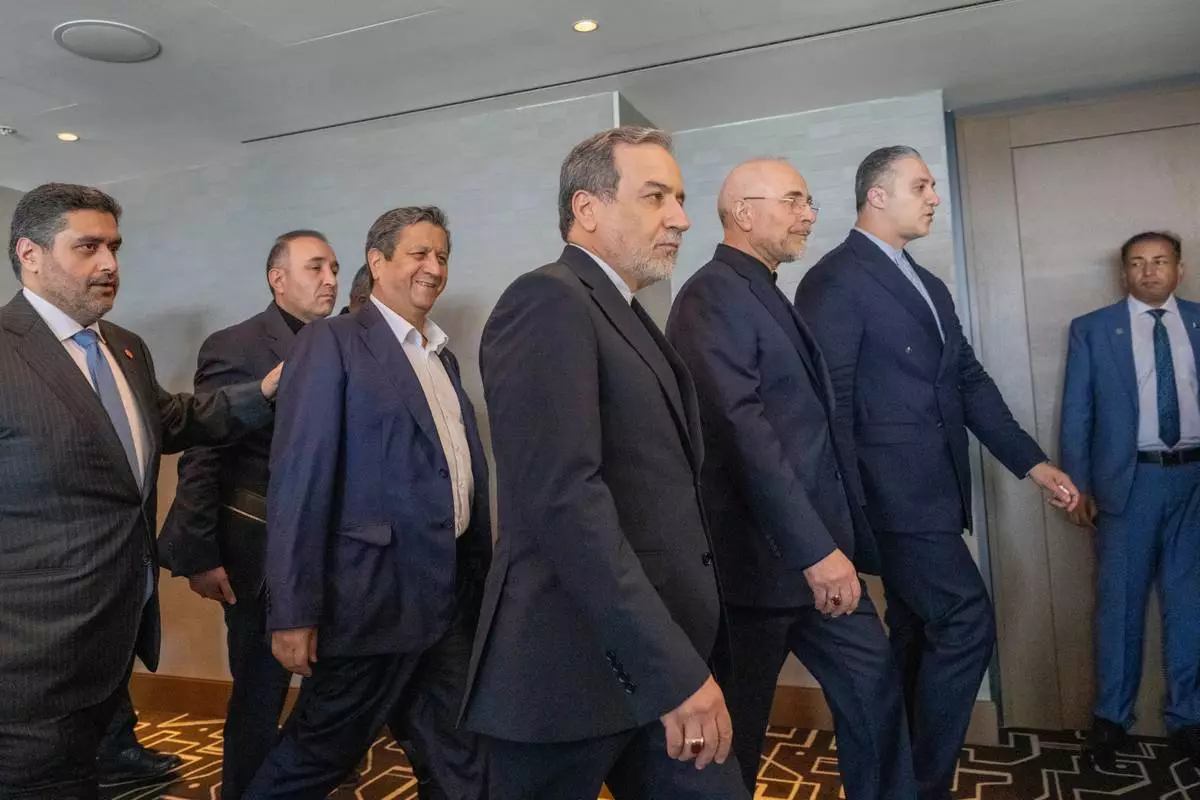
Minister of Foreign Affairs of Iran, Seyyed Abbas Araghchi, 3rd from right, and Speaker of the Islamic Parliament of Iran, Mohammed Bagher Ghalibaf, 2nd from right, with the Delegation of Iran at the Lake Lucerne Summit at the Buergenstock resort in Obbuergen, near Lucerne, Switzerland, Sunday, June 21, 2026. (Urs Flueeler, Pool Photo via AP)