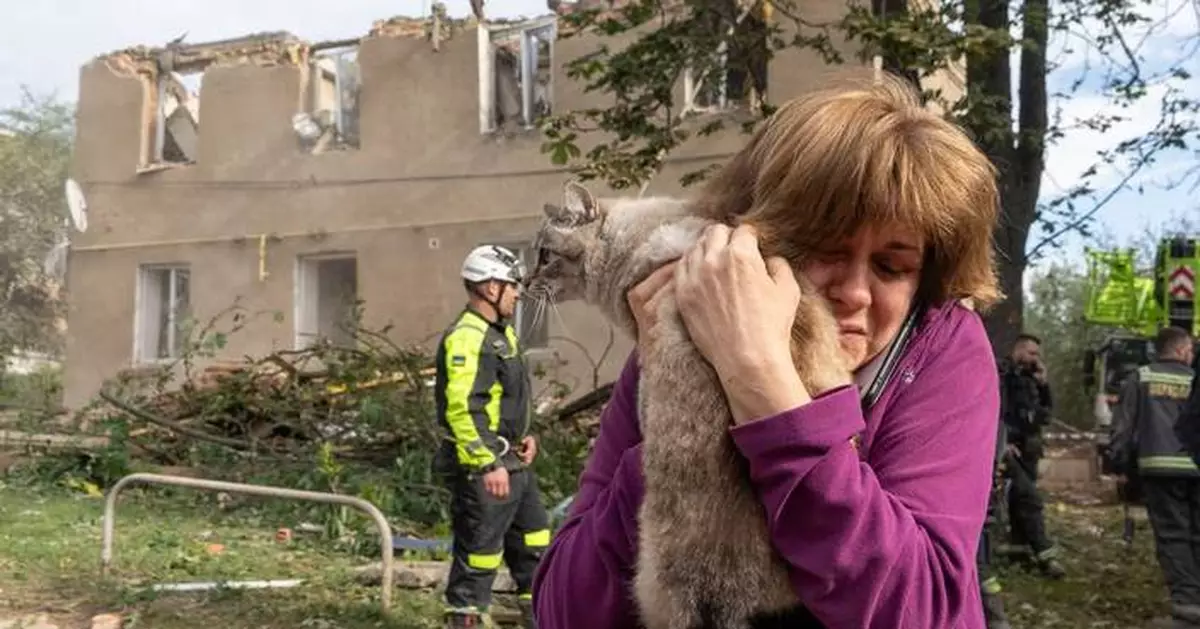
KYIV, Ukraine (AP) — A Russian drone strike on the city of Sumy in northeastern Ukraine killed three members of the same family, including a 13-year-old boy and his father, and wounded another two, a regional official said Monday.
Russia has pounded civilian areas of Ukraine with drones and missiles since it launched its all-out invasion of its neighbor more than four years ago, with a United Nations tally saying more than 16,000 civilians have died in the war. U.S.-led peace efforts have failed to stop the fighting.
The Sumy attack hit a home and killed a 36-year-old man, his 13-year-old son and a 73-year-old woman who was the mother of the man’s partner, according to Oleh Hryhorov, the head of the regional military administration. The man’s partner and 10-year-old son were wounded, he said.
“Their home was destroyed,” Ukrainian President Volodymyr Zelenskyy said on X. “An ordinary home — not a military target whatsoever.”
The number of civilian casualties in Russian attacks has jumped recently, according to the U.N. Human Rights Monitoring Mission in Ukraine, as Moscow’s forces struggle to gain momentum on the battlefield.
At least 274 civilians were killed and 1,763 injured in Ukraine in May — the highest monthly total of civilian casualties since April 2022, it said earlier this month. Most casualties are in cities far from the front line, it said.
A Russian nighttime drone strike also killed a woman and wounded three people, including an 11-year-old boy, in the southeastern Ukrainian city of Zaporizhzhia, regional head Ivan Fedorov said.
In total, Russia launched 88 long-range attack drones and one ballistic missile overnight, Ukraine’s air force said, with air defenses shooting down or jamming 79 of the drones.
Ukraine, meanwhile, fired many more drones toward Russia and territories it controls, according to the Russian Defense Ministry, as Kyiv sustained its long-range campaign against oil facilities, military transport and infrastructure.
The campaign's success has prompted Russian-held Crimea to halt civilian gasoline sales. Also, all summer camps in illegally annexed Crimea on Monday stopped accepting children and new bookings until Sept. 1 for security reasons, the Russian-installed governor of the occupied peninsula, Sergei Aksyonov, said.
The Russian Defense Ministry said Monday its forces intercepted 301 Ukrainian drones during the night over multiple Russian regions, the Crimea peninsula, the Azov Sea and the Black Sea.
Moscow Mayor Sergei Sobyanin said that 84 Ukrainian drones targeting the Russian capital were shot down.
He didn’t say whether the attack caused any damage, but all four Moscow airports temporarily halted flights in the wake of the attack.
Also, some residential buildings were evacuated in Russia’s Vladimir region east of Moscow and the Tula region south of the capital as a result of the attack, local authorities reported.
Air defenses also intercepted several aerial targets over the city of Voronezh in southwestern Russia, Gov. Alexander Gusev said.
An industrial plant that he didn’t name sustained unspecified damage and three people were injured, Gusev said.
Ukraine's General Staff said it used high-precision, air-launched cruise missiles to hit a Voronezh factory that produces electronic parts for Russian missile and air defense systems. It described the strikes as “successful,” without elaborating.
Follow the AP’s coverage of the war in Ukraine at https://apnews.com/hub/russia-ukraine
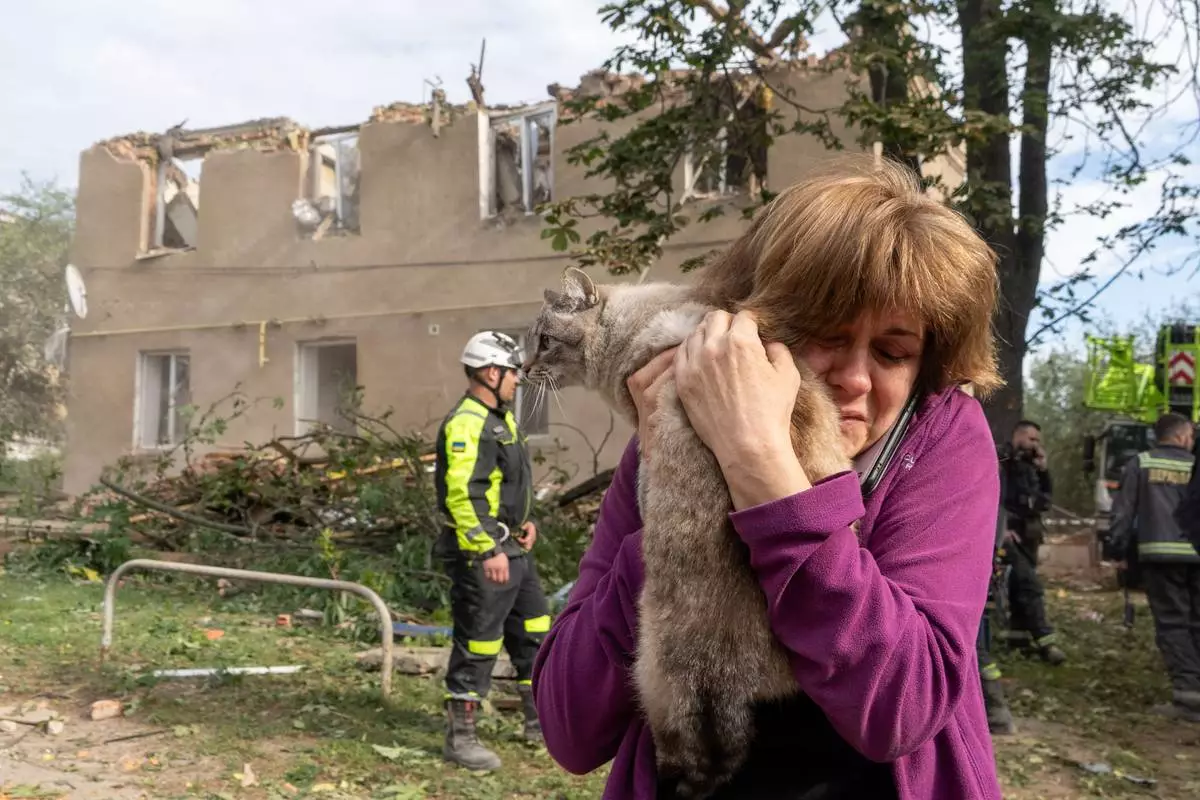
A woman holds her cat after it being found during search and rescue works in the damaged residential building following Russia's missile attack in Kharkiv, Ukraine, Saturday, June 20, 2026. (AP Photo/Andrii Marienko)
OBBUERGEN, Switzerland (AP) — Vice President JD Vance said Monday peace talks with Iran had created a “good foundation for a successful final deal” to end the war that began at the end of February.
“The final deal is the house,” Vance told reporters. “We set the foundation. We haven’t built the house, but we’ve laid a successful foundation to get to a good place for the American people.”
The vice president noted that Iran’s team did threaten to walk out of the talks, but he defended social media posts by U.S. President Donald Trump that had caused Iranian officials to feel offended.
“What we told the Iranians yesterday is when you guys engage in what us millennials might call ‘trash talk,’ you can’t expect the president of the United States not to respond and not to correct the record,” Vance said.
THIS IS A BREAKING NEWS UPDATE. AP’s earlier story follows below.
OBBUERGEN, Switzerland (AP) — U.S. Vice President JD Vance and Iran's parliamentary speaker Mohammad Bagher Qalibaf on Monday wrapped up a lengthy round of initial talks aimed at solidifying a permanent end to the war between the countries.
The mediation effort in Switzerland, which started Sunday and stretched into the early hours of Monday, had rocky moments. But the talks also led to some agreements between the two sides.
In a joint statement, mediators Pakistan and Qatar said that while the high-level engagement had ended, technical negotiations would continue in Switzerland this week.
Vance was expected to make remarks from the resort at 1 p.m. local time, his office said.
The mediators hailed what they called “encouraging progress” made during the talks. A senior U.S. diplomat claimed progress on multiple fronts, including the establishment of “mechanisms” to ensure the Strait of Hormuz, a vital waterway for global energy shipments, remains open and that a ceasefire in the fighting between Israel and Iran-backed Hezbollah militants in southern Lebanon holds.
Yet the talks between the United States and Iran were jolted by blistering statements from U.S. President Donald Trump, who, from thousands of miles away from the Swiss negotiating venue at a mountainside resort near Lake Lucerne, was firing off comments that offended the Iranians.
Iranian state media said talks had paused after the “publication of an insulting message by the U.S. President," according to Iranian state media.
Ultimately, the Iranians remained on site and negotiations continued, according to the senior U.S. diplomat, who was not authorized to comment publicly and briefed reporters on the condition of anonymity.
Iranian state television reported Monday that the Iranian delegation had left the summit site to head to the airport in Zurich to fly back to Tehran.
Trump didn't attend what was dubbed the “Lake Lucerne Summit," but his presence certainly loomed large.
Ahead of the talks, Iranian President Masoud Pezeshkian had vowed to “never back down from the right to enrich uranium,” according to state media.
Trump on Sunday told Fox News in a phone interview that Pezeshkian should watch what he says and also threatened to take over Iran, according to one of the news channel's correspondents.
Trump also continued to issue warnings against Iran on social media, posting as negotiators worked: “Iran must immediately stop their highly paid PROXIES in Lebanon from causing trouble. If they don’t, we’ll hit Iran very hard again, just like we did last week, only harder!!!”
It’s unclear when Vance will depart Switzerland. Trump envoys Jared Kushner and Steve Witkoff are handling many of the technical details on behalf of the U.S. delegation.
Iranian Foreign Minister Abbas Araghchi wrote on X that Pakistani and Qatari mediators delivered "major progress to end the Lebanon War.” But, he added, the first “real test” of negotiations would be whether the mechanism succeeded in halting the fighting between Israel and Hezbollah.
The senior U.S. diplomat said among the issues discussed was Iran’s messaging as it related to the Strait of Hormuz, which Iran’s military said it closed Saturday in response to continued fighting in Lebanon. U.S. Central Command has disputed that Iran closed the strait again.
The interim deal to end the fighting in Iran, signed last week by the leaders of the U.S. and Iran, also sets a 60-day period for negotiators to settle the future of Tehran’s nuclear program amid concerns that it wants to use it for military purposes, a claim Iran denies. The fate of frozen Iranian assets, among other thorny issues, are also on the agenda.
Though the talks will encompass a vast array of complex matters, Iran has insisted on first addressing the fighting in Lebanon.
Saturday’s renewed ceasefire in Lebanon appeared to be holding, and Israel’s military said it would lift movement restrictions for residents near the Israel-Lebanon border on Monday morning. Neither Israel nor Hezbollah is a signatory to the U.S.-Iran deal.
There was cautious calm Monday in Lebanon, with no Israeli strikes reported overnight after a quiet Sunday. Hezbollah likewise has not announced any attacks on Israeli forces since Saturday.
The lull in fighting in Lebanon is the longest since the outbreak of the latest Israel-Hezbollah war on March 2.
Kim reported from Washington. Associated Press reporters Abby Sewell in Beirut, David Rising in Bangkok and Jon Gambrell in Dubai, United Arab Emirates, contributed to this story.
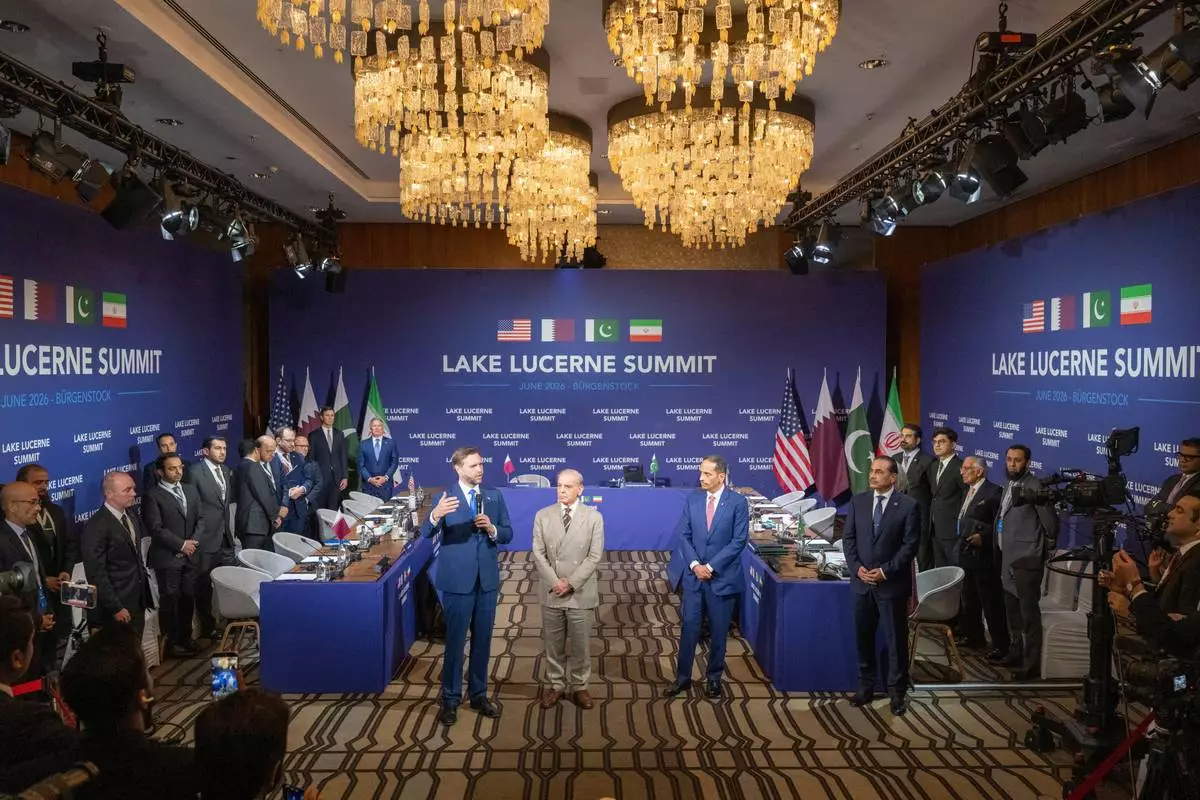
From left, US Vice-President JD Vance, Prime Minister of Islamic Republic of Pakistan, Shehbaz Sharif and Premier minister of Qatar Mohammed bin Abdulrahman bin Jassim Al Thani, at the Buergenstock resort resort in Obbuergen, near Lucerne, Switzerland, Sunday, June 21, 2026. (Urs Flueeler, Pool Photo via AP)
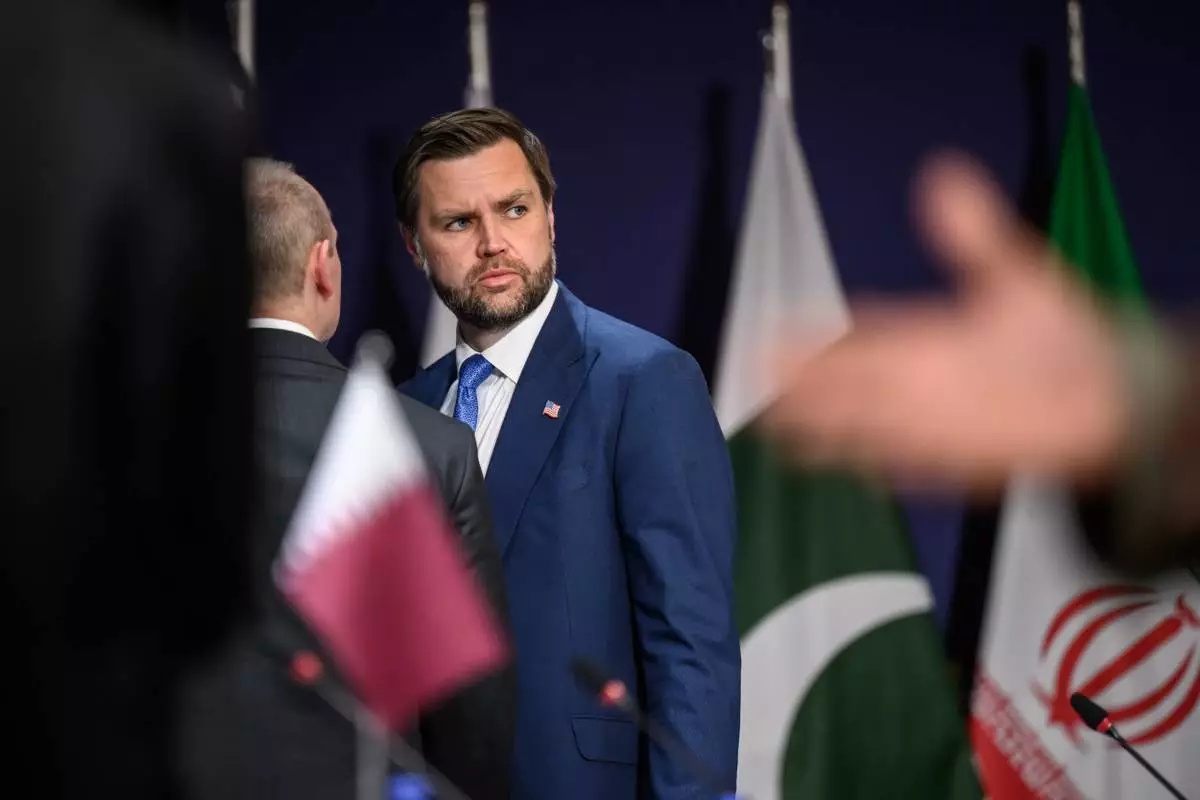
US Vice President JD Vance prior to a quadrilateral meeting between the United States, Iran, Pakistan and Qatar at the Burgenstock luxury hotel complex overlooking Lake Lucerne, Switzerland, Sunday June 21, 2026. (Fabrice Coffrini/Keystone via AP)
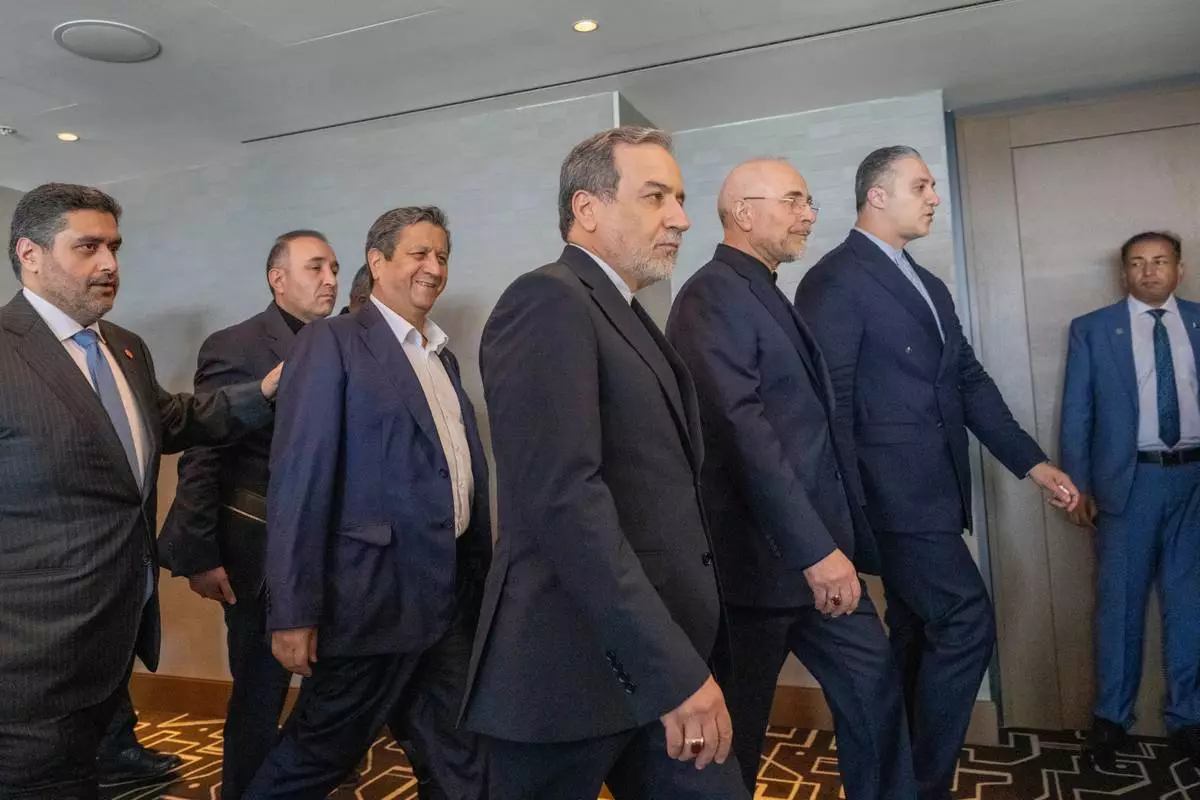
Minister of Foreign Affairs of Iran, Seyyed Abbas Araghchi, 3rd from right, and Speaker of the Islamic Parliament of Iran, Mohammed Bagher Ghalibaf, 2nd from right, with the Delegation of Iran at the Lake Lucerne Summit at the Buergenstock resort in Obbuergen, near Lucerne, Switzerland, Sunday, June 21, 2026. (Urs Flueeler, Pool Photo via AP)