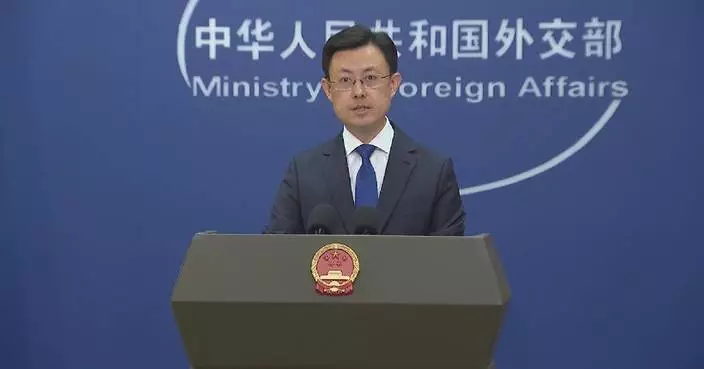
China hopes that Iran and the United States will sustain the momentum of negotiations and continue to make concerted efforts to achieve positive progress in their talks, Foreign Ministry spokesman Guo Jiakun said at a press briefing in Beijing on Monday.
U.S. and Iranian negotiators, under Qatari and Pakistani mediation, held talks on Sunday at the Burgenstock mountain resort in central Switzerland, marking the first direct talks between the two sides since the signing of the Islamabad MoU.
The first session of U.S.-Iran talks was conducted in a positive and constructive atmosphere, with encouraging progress made, including the creation of a mechanism for further technical talks, according to a joint statement issued by Qatar and Pakistan on Monday.
"China supports the mediation efforts made by Pakistan, Qatar and other parties, and hopes that both Iran and the United States will sustain the momentum of negotiations, continue to work towards each other, and strive for positive progress in the talks," said Guo.
Spokesman on Iran-US talks
Spokesman on Iran-US talks
New energy vehicles (NEVs) accounted for 56.9 percent of all new car sales in China in May, against 50.8 percent in 2025 and 40.9 percent in 2024, according to the latest data from the China Association of Automobile Manufacturers (CAAM).
With nearly 1.5 million units sold last month, the country's NEV market is growing at a pace that continues to outstrip global expectations.
Chen Shihua, deputy secretary-general of CAAM, attributed the momentum to a combination of falling costs, rapid technological upgrades and a fundamental change in consumer preferences. Even as traditional gasoline car sales soften, NEVs have carved out an independent growth trajectory.
For Chinese buyers, the appeal of NEVs goes far beyond cost savings. The battleground has shifted to the software-defined cabin. Domestic AI models are increasingly being integrated into vehicles, transforming the driving experience from a mechanical task into something highly intuitive.
Some models now use sensors and facial recognition to detect a driver's mood, automatically adjusting ambient lighting, music and even cabin fragrances. As a dealership manager in Chongqing noted, consumers are no longer obsessing over horsepower; they are prioritizing smart features and the overall user experience.
This tech-heavy push is happening alongside a dramatic drop in prices. As battery material costs stabilize and advanced manufacturing techniques, such as integrated die-casting, become standard, automakers are passing the savings directly to consumers.
Brands like BYD and Leapmotor are now offering vehicles with advanced driver-assistance systems for under 100,000 yuan, with some entry-level NEVs priced around 80,000 yuan.
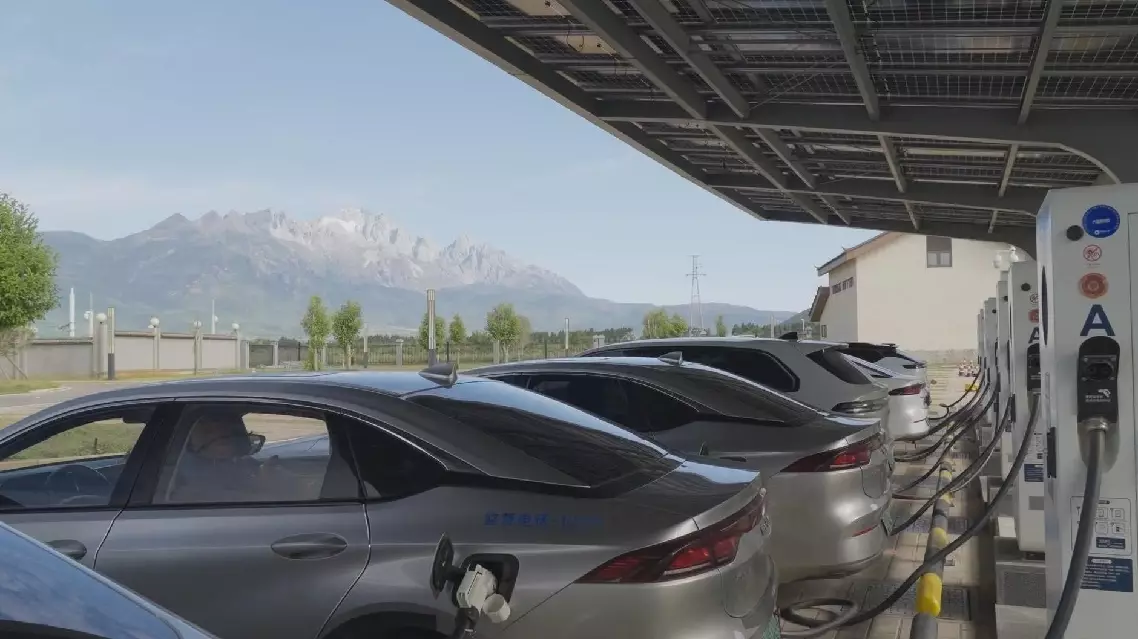
Charging infrastructure, long cited as a potential bottleneck, is also keeping pace with demand. According to the National Energy Administration, China had deployed nearly 22 million charging facilities nationwide as of April.
The network now spans from urban centers to remote rural areas, making the promise of charging as convenient as refueling a tangible reality for millions of drivers. Government incentives, including trade-in subsidies, are further fueling this momentum.
Chinese consumers embrace NEVs