The Hukou Waterfall on the Yellow River presented a spectacular view of clear water cascading during the Dragon Boat Festival holiday, attracting a large number of tourists.
The Dragon Boat Festival, also known as the Duanwu Festival, falls on the fifth day of the fifth lunar month, on Friday this year. The public holiday for the festival runs from Friday to Sunday. Thanks to moderate water flow, settled sediment and clear sunny weather, the rare sight of clear waterfalls and a rainbow stretching across the river valley fascinated the visitors there.
This year's Dragon Boat Festival holiday marks the first holiday break since the implementation of a ticket integration policy for the Shaanxi and Shanxi sides of the waterfall. The policy, which took effect on June 1, allows visitors to purchase tickets from either side and use them to visit both sides of the waterfall within two days.
Statistics show that the two sides received a total of about 10,000 visitors on Saturday, with an estimated 14,000 arrivals expected on Sunday.
The Hukou Waterfall is the second largest waterfall in China and the largest on the legendary Yellow River.
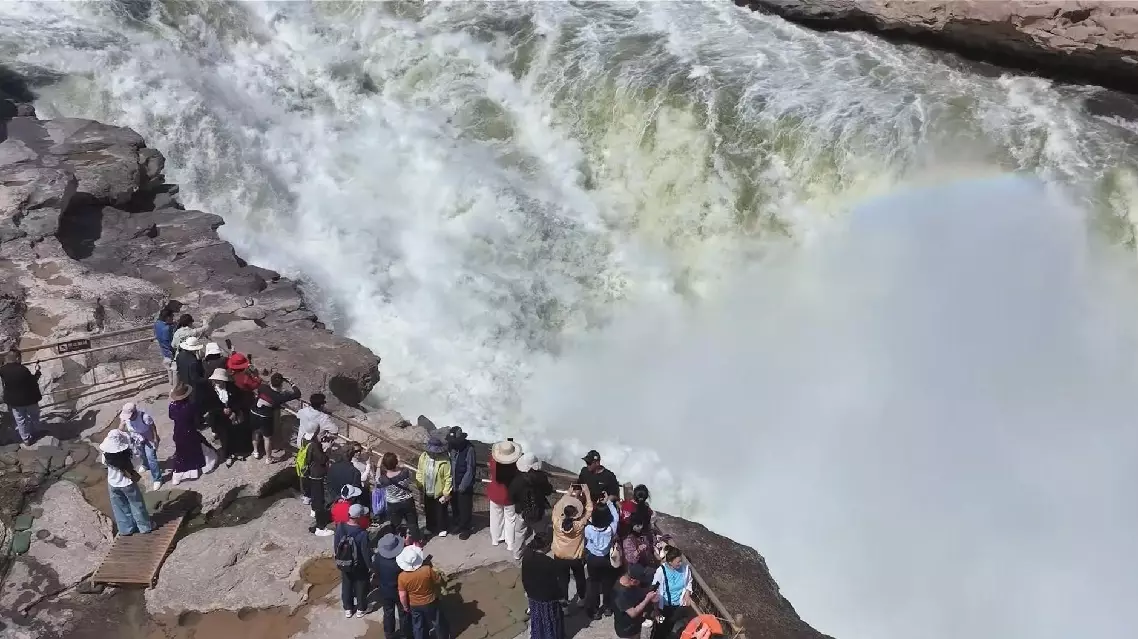
Hukou Waterfall offers dramatic sights during Dragon Boat Festival
Chinese Premier Li Qiang emphasized advancing agricultural modernization and ensuring food security when making investigation in northeast China's Heilongjiang and Jilin provinces from Monday to Wednesday.
In Heilongjiang Province, Li, also a member of the Standing Committee of the Political Bureau of the Communist Party of China Central Committee, visited a state farm and observed the growth of soybean, corn, and rice crops. He stressed that autumn grain accounts for the bulk of annual output, calling for stepped-up farmland management and policy support to ensure grain harvest.
Visiting an agricultural science park and a rice research institute, Li asked about seed breeding innovation and black soil conservation, highlighting the importance of science and technology in pursuing higher yields and calling for further efforts in seed breeding, advanced machinery, and smart farming.
At a major water conservancy project, Li reviewed construction progress, urging faster completion to improve flood control, irrigation, and ecological benefits while supporting stable, high-yield harvests.
In Jilin Province, Li visited an agricultural cooperative and learned about its operations. He called for developing diverse forms of appropriately scaled agricultural operations and improving services for agriculture to help smallholders connect with modern agriculture.
At a grain processing plant, Li inspected a corn oil production line and called for boosting intensive processing of agricultural products to extend industrial chains and raise value.
Li also visited the Chagan Lake and learned about the ecological fisheries. He called for actively developing modern eco-aquaculture, promoting integrated development of the farming, forestry, livestock, and fishing industries as well as the development of eco-tourism.
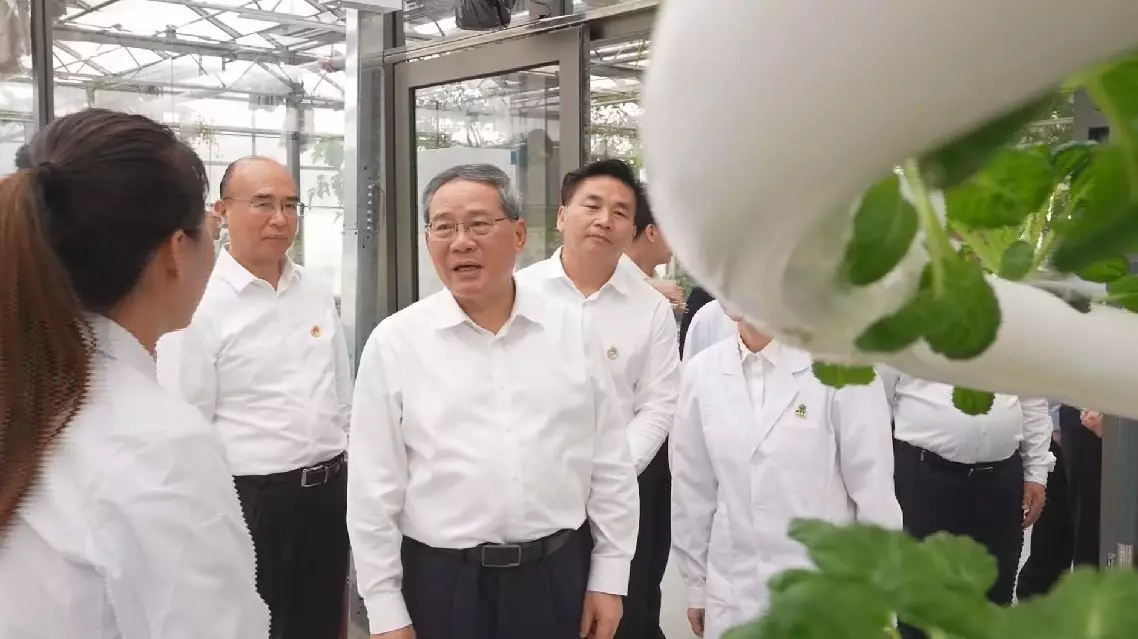
Chinese premier stresses agricultural modernization, food security