The Strait of Hormuz will be administered by Iran, the chief negotiator of the Iranian delegation Parliament Speaker Mohammad Bagher Ghalibaf told media on his way back from Switzerland on Monday.
The management of the Strait of Hormuz will never return to its pre-war state, Ghalibaf stressed.
He also said that Iran and the United States have agreed to establish a center and communication line to swiftly address emergent issues. He clarified that this communication line is solely for managing emergencies involving vessels and does not pertain to transit permit approvals, which will continue to follow established procedures.
The Financial Times website reported on Monday that satellite data from the European Space Agency showed that on Sunday afternoon, about 441 vessels of very large crude carriers were gathered in the waters near Oman's Port of Sohar and the UAE's Port of Fujairah, awaiting the reopening of the Strait of Hormuz following U.S.-Iran negotiations. This number was significantly higher than usual, though it represented a decrease of 42 vessels from five days ago.
Following the announcement of a memorandum of understanding between Iran and the United States, some shipping companies resumed operations amid reduced tensions. However, the situation escalated again after Israel's attacks on Lebanon, leading Iran to announce the renewed closure of the Strait. On Monday morning, four Qatari liquefied natural gas carriers navigated through the Strait of Hormuz, marking the highest single-day passage since the onset of the U.S.-Israel-Iran conflict in late February.
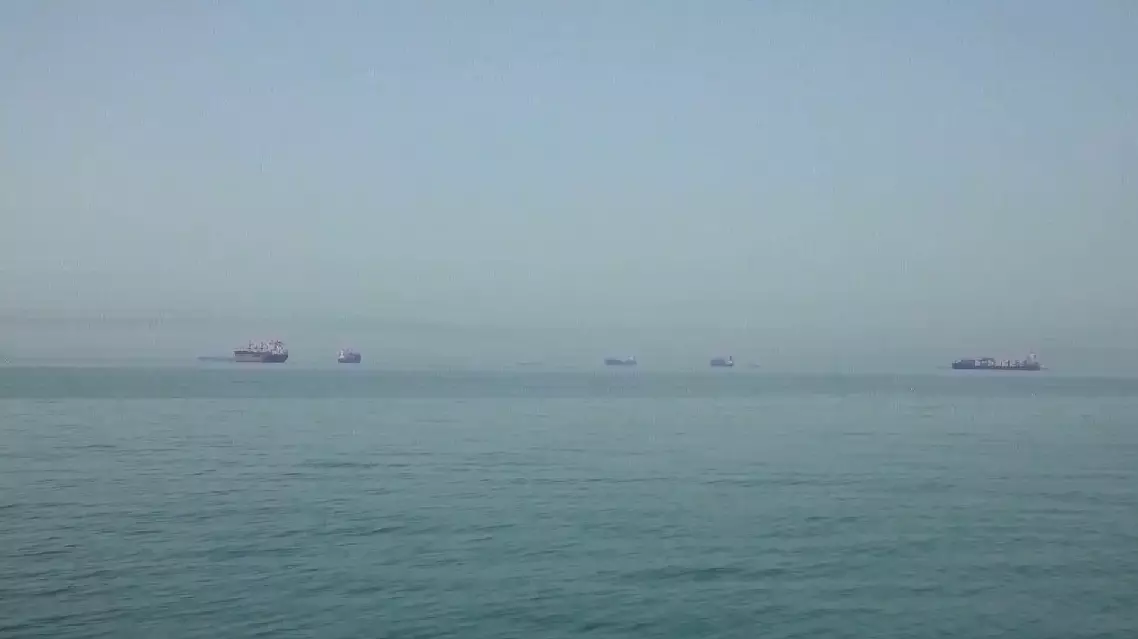
Iran's chief negotiator says Strait of Hormuz will be administered by Iran
Russia and Ukraine exchanged attacks on each other's critical infrastructure including energy, transportation, communications networks, and military logistics in the past 24 hours, both sides reported on Monday.
The Russian Defense Ministry reported on Monday that Russian military groups continued to strike Ukrainian forces on multiple fronts, which targeted Ukrainian oil refineries, energy and transportation infrastructure, as well as manufacturing and storage sites for long-range drones.
The ministry said air defenses destroyed 301 Ukrainian drones overnight over its territories.
In the Donetsk region, specifically in Lyman and Kostiantynivka, Russian forces continued to advance and took control of several buildings.
In a social media post on Monday, Russia's Voronezh Governor Alexander Gusev said that the Ukrainian forces had launched missiles at the region that day, killing five people.
Gusev said that Russian air defense systems detected and destroyed several high-speed aerial targets over Voronezh Oblast on Monday, and that production facilities at a local enterprise had been damaged. In addition, the facades and windows of 10 residential buildings were damaged, and a number of vehicles were destroyed.
On Monday, Russian Satellite Communications Company reported that a Ukrainian military drone had attacked the Dubna space communications center in Moscow Oblast. Television, radio, and communications operations were not affected, and there were no casualties.
Moscow Mayor Sergei Sobyanin said 84 drones were shot down near the capital, with no casualties or damage reported.
Ukraine said Monday it had struck Russian military, communications and logistics facilities while accusing Moscow of attacking foreign-flagged merchant ships in the Black Sea and killing a crew member.
The Ukrainian General Staff said its forces hit the Dubna space communications center in the Moscow region, the Kavkaz port in the Krasnodar region, two car ferries used to supply Russian troops, a Voronezh plant producing electronics for the Iskander and Kh-101 missiles, a drone operator training ground, and a bridge.
Ukrainian officials said Russian drones struck three foreign-flagged civilian ships overnight, killing an Egyptian crew member aboard a Panama-flagged bulk carrier.
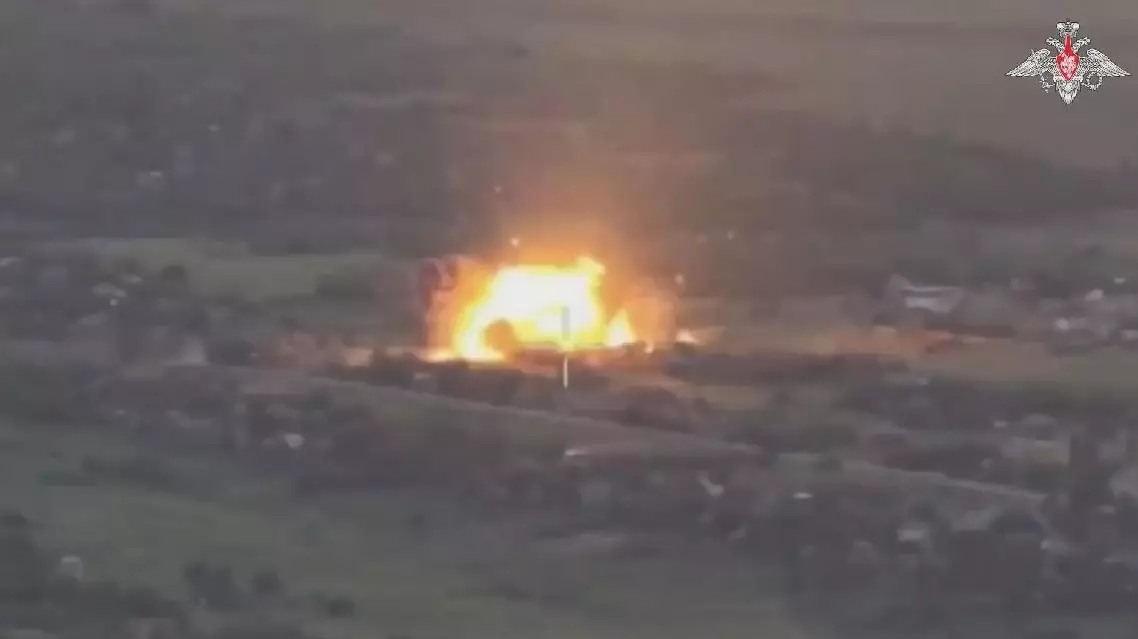
Russia, Ukraine trade strikes targeting key infrastructure facilities