The Chinese Ministry of Natural Resources said Thursday that it had organized a marine environmental survey in waters under China's jurisdiction east of its Taiwan Island to gain a full understanding of the natural ecological conditions of the country's jurisdictional sea areas.
From June 16 to 18, the Xiangyanghong 22 research vessel of the ministry's East China Sea Bureau carried out the survey in waters east of China's Taiwan Island, the ministry said.
The survey collected data on seawater environmental DNA, birds, whales and dolphins, marine chemistry, hydrology and meteorology.
It laid a foundation for China to further understand the conditions of key habitats in the area and to evaluate the health of the ecosystem, while also providing a scientific basis for marine biodiversity conservation in the area, the ministry said.

China conducts marine environmental survey east of Taiwan Island
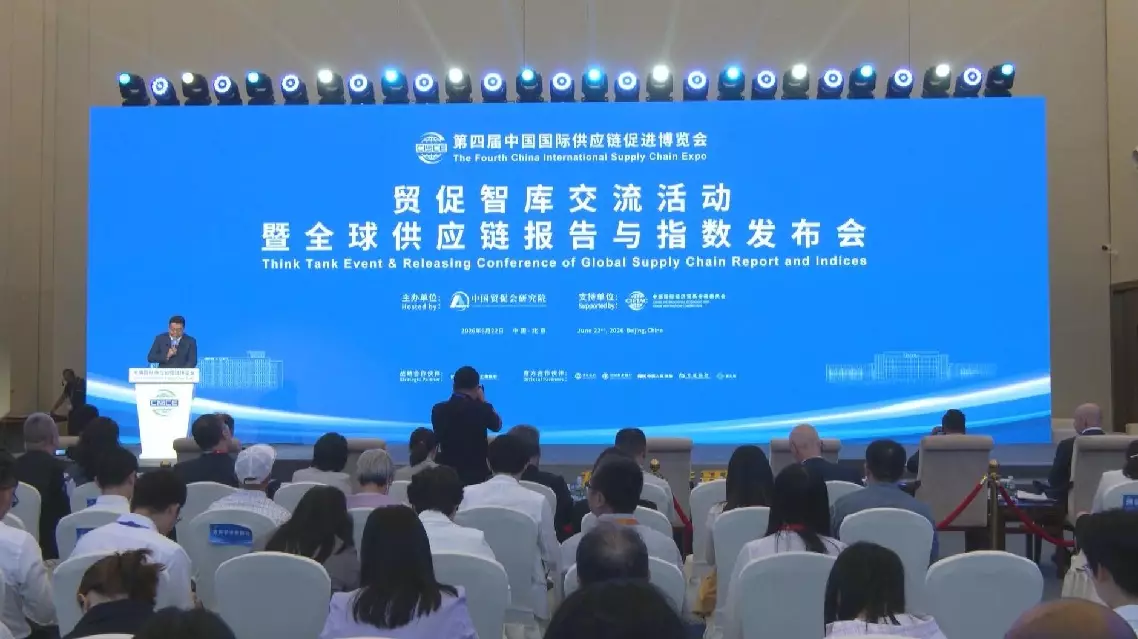
Global supply chains are moving toward greater resilience, efficiency and vitality in the long run, even as geopolitical tensions pose systemic risks, according to a report released Monday at the fourth China International Supply Chain Expo in Beijing.
The report, titled Global Supply Chain Report 2026 and published by the China Council for the Promotion of International Trade (CCPIT), added six new supply chain mappings covering artificial intelligence, 3D printing, hydrogen energy, steel, corn and maritime shipping, bringing the total number of mapped supply chains to 23 since the first expo in 2023.
The CCPIT also released global supply chain resilience indices, which this year expanded to include dedicated indices for the United States and the European Union.
The overall index readings from 2018 to 2025 show that global supply chain promotion, connectivity, innovation and resilience indices all registered gains.
"All indices registered upward movements, pointing to a stable and improving global supply chain environment in which cooperative dynamics continue to outweigh frictions. The resilience index, however, rose at a considerably slower pace than the others, which indicates that the resilience of global supply chain remains fragile and is still in a stage of gradual recovery," said Zhao Ping, dean of the Academy of CCPIT.
Experts attending the expo said that building resilient global supply chains requires countries to deepen collaboration and freely share technology, rather than resorting to the protectionist and unilateral policies that disrupt international trade.
Global supply chains moving toward resilience, efficiency despite geopolitical risks: report