ZUG, Switzerland & VADUZ, Liechtenstein--(BUSINESS WIRE)--Jun 23, 2026--
After more than a decade as Switzerland's crypto pioneer, the Bitcoin Suisse Group ("Bitcoin Suisse") is expanding across Europe. Its European entity, Bitcoin Suisse (Europe) AG, founded in 2018, has been granted a license as a Crypto Asset Service Provider (CASP) under MiCAR by the Liechtenstein Financial Market Authority (FMA), building on its long-standing registration under the Token and TT Service Provider Act (TVTG).
This press release features multimedia. View the full release here: https://www.businesswire.com/news/home/20260622188006/en/
Across Europe, Bitcoin Suisse operates with a clear ambition: to be the first choice for high-net-worth individuals, corporates and institutional investors. This ambition is built on more than a decade of operational experience, proven across multiple market cycles in which the company’s business model has consistently demonstrated its resilience.
Its core services of trading, custody and staking rest on two pillars that clearly differentiate Bitcoin Suisse in the market: a robust, proprietary infrastructure and a unique service philosophy that provides every client with a dedicated relationship manager.
As a result, clients benefit not only from institutional-grade technology and regulatory clarity, but also from personal attention, deep expertise and continuity in the relationship. In a market that is often complex, fast-moving and fragmented, Bitcoin Suisse offers clients a trusted partner that combines technical strength with human accessibility.
“We are very proud of this milestone. The MiCAR authorization marks a decisive step on our journey towards a global brand and eventually becoming a global wealth management platform. Together with our presence in Switzerland and Bermuda, we now have the regulatory foundation to serve clients across some of the world’s most important financial centers,” says Andrej Majcen, Co-Founder and Group CEO, Bitcoin Suisse.
Roman Przibylla Appointed to Lead European Business
Roman Przibylla leads the European expansion as CEO of Bitcoin Suisse (Europe) AG. He brings more than 15 years of distribution experience from senior roles at Deutsche Bank, Commerzbank, HSBC, Vontobel and Maverix Securities.
“The MiCAR license gives Bitcoin Suisse access to one of the largest and most sophisticated investor markets in the world. We can now bring high-net-worth and institutional clients in Europe what they truly need: infrastructure at the highest level and, at the same time, direct, personal points of contact with genuine crypto expertise. That combination is not a given in this market,” says Roman Przibylla, CEO Bitcoin Suisse (Europe) AG.
About the Bitcoin Suisse Group
Bitcoin Suisse is a leading premium provider of crypto financial services for institutional clients, crypto foundations, family offices, asset managers and high-net-worth individuals. Headquartered in Zug and founded in 2013 by crypto natives, Bitcoin Suisse employs over 200 people across Switzerland, Liechtenstein, the United Arab Emirates and Bermuda. www.bitcoinsuisse.com
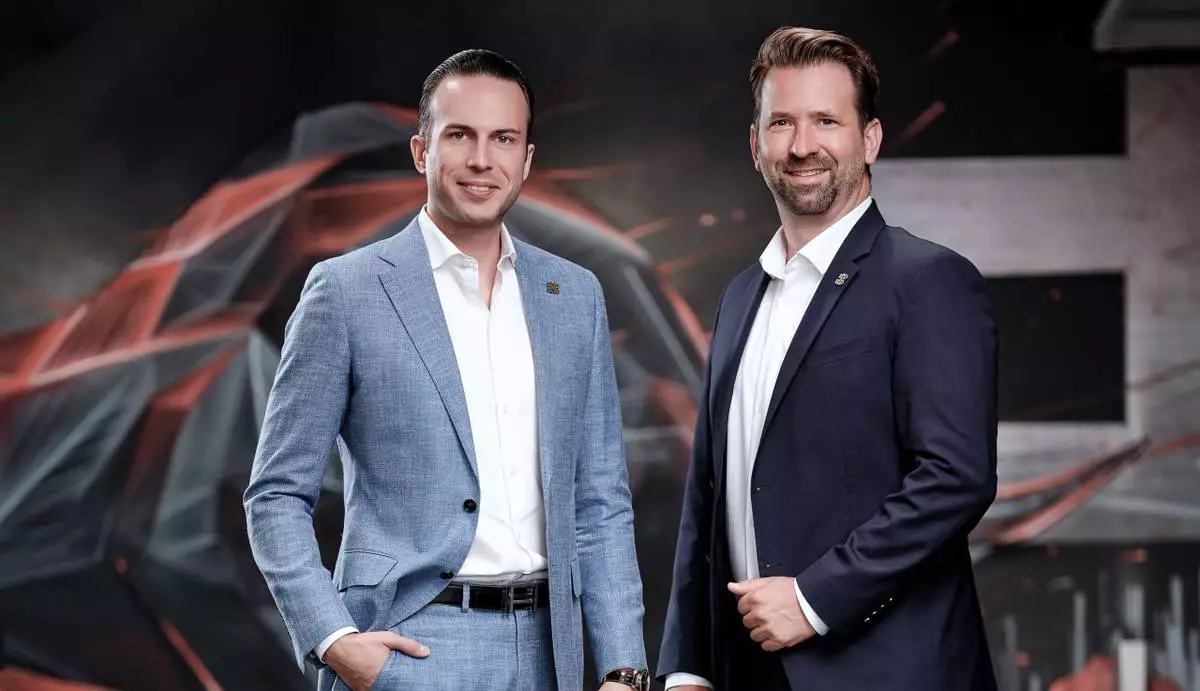
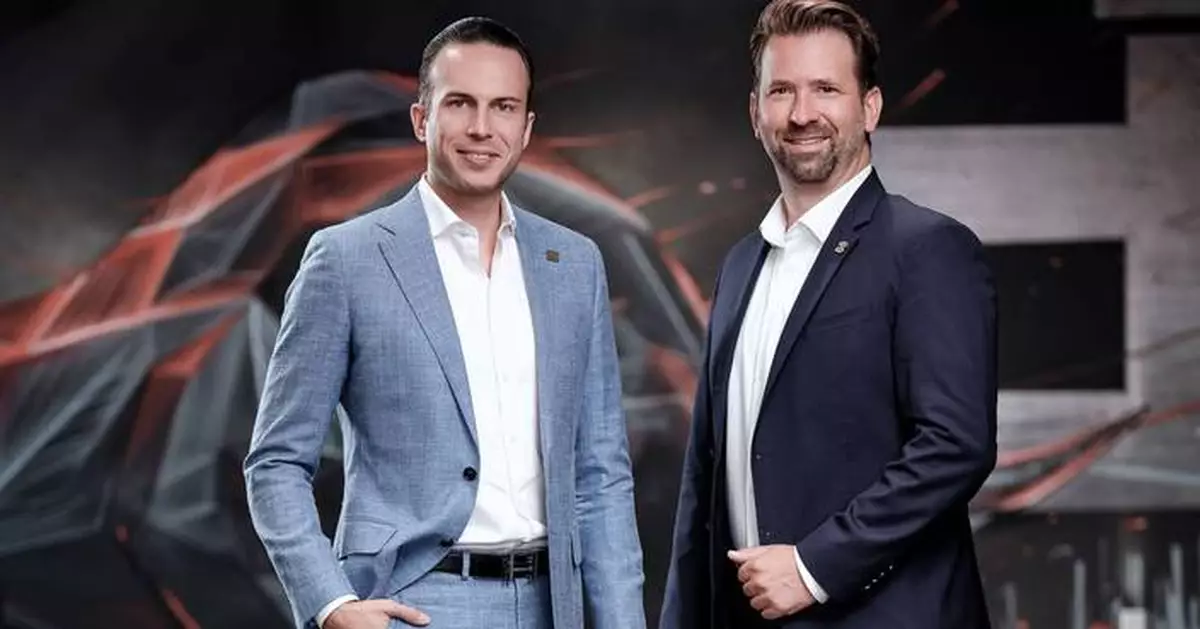
left: Andrej Majcen, Co-Founder and Group CEO of the Bitcoin Suisse Group; right: Roman Przibylla, CEO of Bitcoin Suisse (Europe) AG
ISLAMABAD (AP) — Iran’s president was traveling to Pakistan on Tuesday for talks with officials who have been mediating negotiations between Tehran and Washington on a permanent end to the war in the Middle East even as discrepancies were emerging on what had been agreed so far.
President Masoud Pezeshkian’s visit to Islamabad comes as technical teams were working on details of the deal, following high-level negotiations in Switzerland on Monday led by US Vice President JD Vance and Iran’s parliamentary speaker, Mohammad Bagher Qalibaf.
In Tehran, Iran's capital, Foreign Ministry spokesperson Esmail Baghaei told reporters that no visits have been scheduled for the U.N. watchdog — the International Atomic Energy Agency — to see Iranian nuclear sites bombed by the United States last year. Vance had previously said the negotiations in Switzerland won an agreement for IAEA to inspect the sites.
The IAEA has been in and out of Iran since Israel’s 12-day war against Iran in 2025, but has not been granted access to the bombed enrichment sites targeted by the U.S. in that war.
Security was tight in the area of Islamabad where the Iranian president was to meet with President Asif Ali Zardari and Prime Minister Shehbaz Sharif. It's Pezeshkian's first visit since the conflict started with the U.S. and Israeli attack on Iran on Feb. 28.
Pezeshkian and Sharif were to hold joint news conference after their discussions.
In the initial talks, marking the start of a 60-day diplomatic process that seeks to reach a permanent deal to end the Iran war, Iran and the U.S. agreed to create a “de-confliction cell” to address the fighting in Lebanon between Israel and the Iranian-backed Hezbollah militia group. The U.S. said negotiators also discussed “mechanisms” to ensure the Strait of Hormuz, a key waterway for the transit of oil that Iran had effectively blocked during the war, remains open.
Ahead of his meetings in Pakistan, Pezeshkian cautioned that “the effectiveness of the talks depends on full commitment to the agreed obligations and their precise implementation.”
“Progress on this path will be measured by practical adherence to accepted responsibilities,” he wrote on X. “Statements outside the agreed text do not help advance the negotiations.”
Iran suggested the ongoing technical talks in Switzerland have led to the creation of specific negotiation groups, which include those focused on sanctions relief, nuclear issues, reconstruction and monitoring, according to a the state-run IRNA news agency.
The report quoted Kazem Gharibabadi, a deputy foreign minister leading the technical talks, saying that the countries involved also formed a contact mechanism over ships moving through the Strait of Hormuz and over the fighting in Lebanon between Israel and Hezbollah.
It remains unclear whether the de-confliction cell being created will be enough to stop fighting between the Lebanese militant group Hezbollah and Israel, which occupies part of Lebanon and insists it must maintain a free hand to attack militants launching attacks into northern Israel.
Following the high-level talks in Switzerland, Vance had said if Iranian financial assets were unfrozen they would be used to buy American-grown food.
Vance said that the U.S. and Qatar would have approval over the process, but if Iranian money becomes accessible as sanctions are lifted, it “would actually go to buy American soy, American corn and American wheat for the benefit of the Iranian people.”
However, Iran has no current demand for U.S. crops and Baghaei said on Tuesday that Tehran’s decisions on what to import would be based upon “prices and quality.”
“It is interesting that the philosophy and goal of the war, which was the destruction of the Iranian civilization and the collapse of Iran, has become enriching American farmers,” Baghaei said at the news conference in Tehran.
Iran’s ambassador in Geneva, Ali Bahreini, also questioned Vance’s contention that the U.S. and Qatar would have to approve how Iran uses unfrozen funds.
“Iran is the only country who decides what to do with those assets,” he told reporters.
Mediators Pakistan and Qatar said the cell would include the Lebanese government and would “ensure the adherence of the termination of military operations in Lebanon,” but Israeli Prime Minister Benjamin Netanyahu raised new questions late on Monday, saying his military still has “full freedom of action to thwart any direct or emerging threat to them or to the residents of the north.”
Neither Israel nor Hezbollah are signatories to the U.S.-Iran deal, and Netanyahu has vowed to keep his forces in southern Lebanon until any threat to Israel is eliminated. Hezbollah has refused to halt attacks unless Israel commits to withdrawing.
When asked about Netanyahu’s comments, U.S. President Donald Trump later said “we’re going to take a look at it,” adding that he wouldn’t say what action he would take but that the situation would “get solved.”
“I’m a problem solver, I get problems solved real fast, including with Bibi,” he said, using a nickname for Netanyahu.
At the moment, the renewed ceasefire in Lebanon, brokered on Saturday, appears to be holding with no new Israeli or Hezbollah strikes reported overnight.
Lebanon and Israel planned another round of direct talks in Washington on Tuesday, which are expected to focus on developing a plan for an Israeli withdrawal.
Rising reported from Bangkok and Gambrell from Dubai, United Arab Emirates. Associated Press writers Abby Sewell in Beirut, Jamey Keaten in Geneva and Nasser Karimi in Tehran, Iran, contributed to this report.
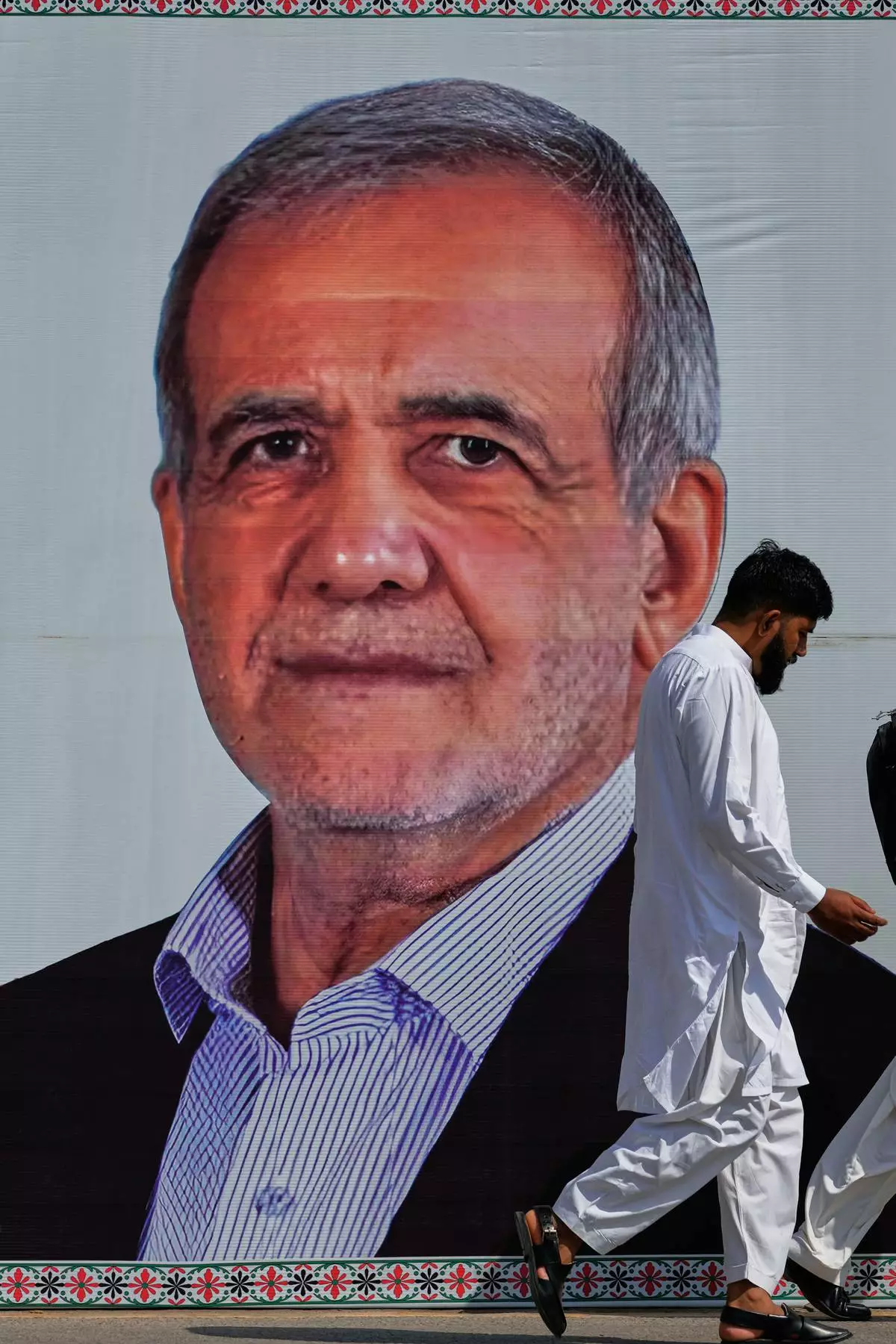
A man walks past a welcoming billboard featuring Iranian President Masoud Pezeshkian along a roadside in Islamabad, Pakistan, Tuesday, June 23, 2026. (AP Photo/Anjum Naveed)
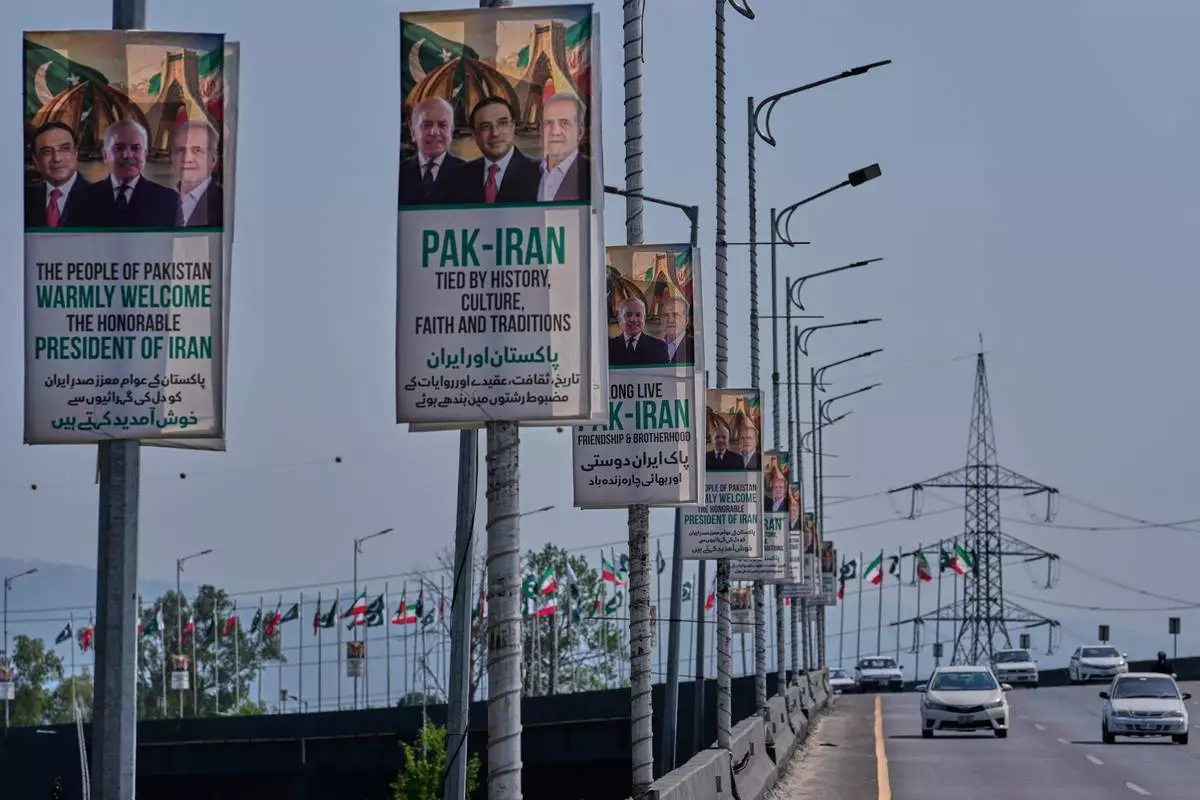
Vehicles drives past welcoming billboards featuring Iranian President Masoud Pezeshkian, right, with Pakistan President Asif Ali Zardari, center, and Shehbaz Sharif alongside an overhead bridge in Islamabad, Pakistan, Tuesday, June 23, 2026. (AP Photo/Anjum Naveed)
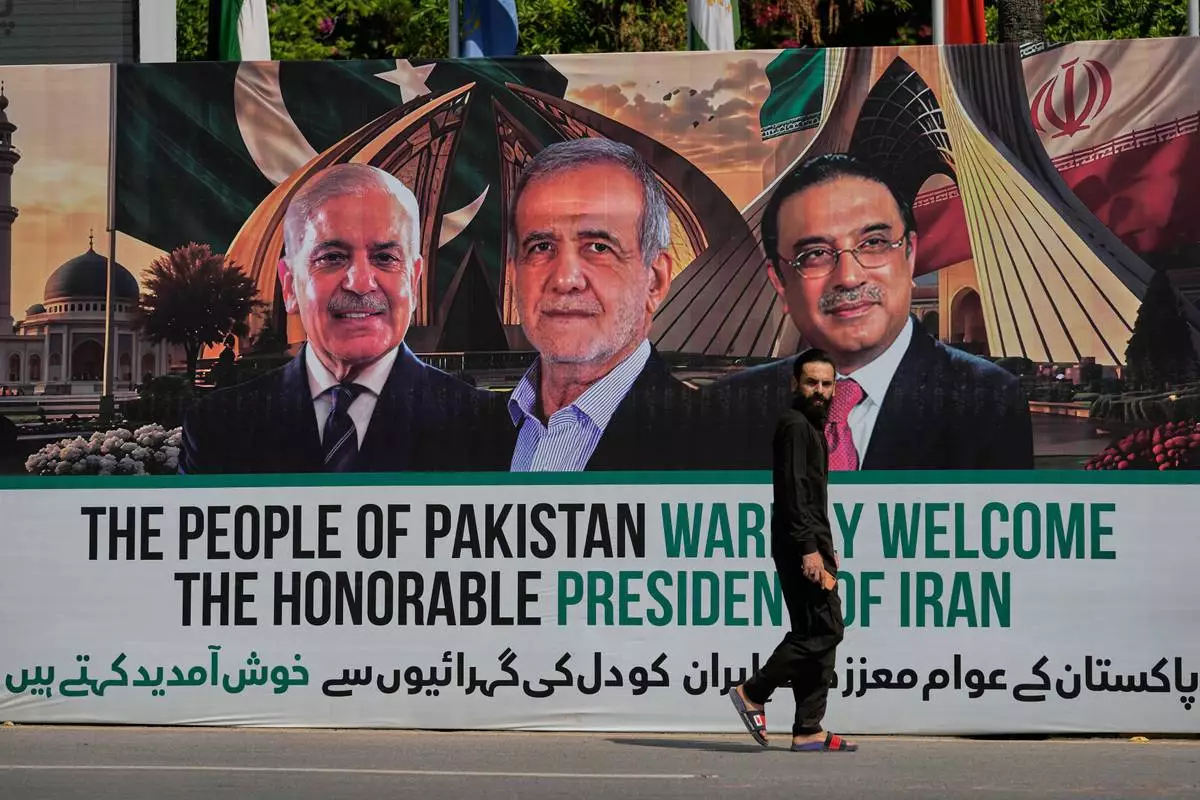
A man walks past a welcoming billboard featuring Iranian President Masoud Pezeshkian, center, with Pakistan President Asif Ali Zardari, right, and Shehbaz Sharif along a roadside in Islamabad, Pakistan, Tuesday, June 23, 2026. (AP Photo/Anjum Naveed)
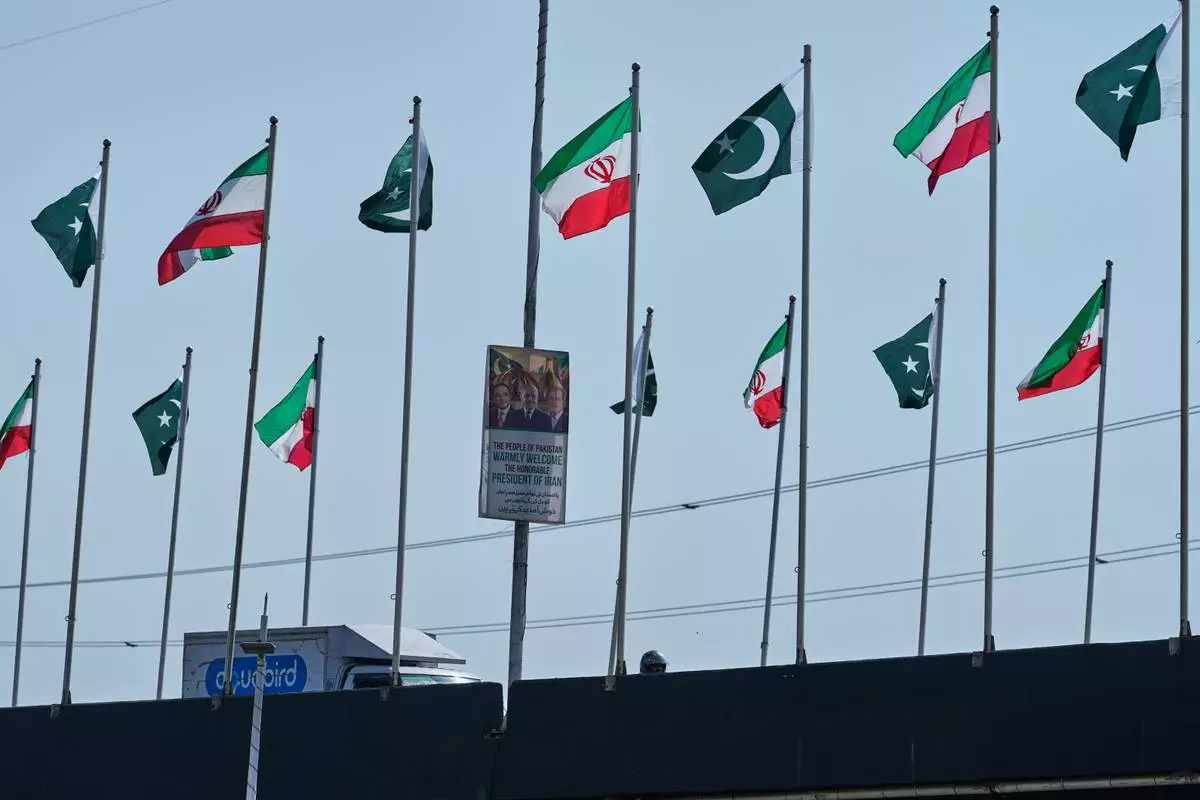
The welcoming billboard, featuring Iranian President Masoud Pezeshkian, right, with Pakistan President Asif Ali Zardari, center, and Prime Minister Shehbaz Sharif, is displayed alongside of an overhead bridge, in Islamabad, Pakistan, Tuesday, June 23, 2026. (AP Photo/Anjum Naveed)
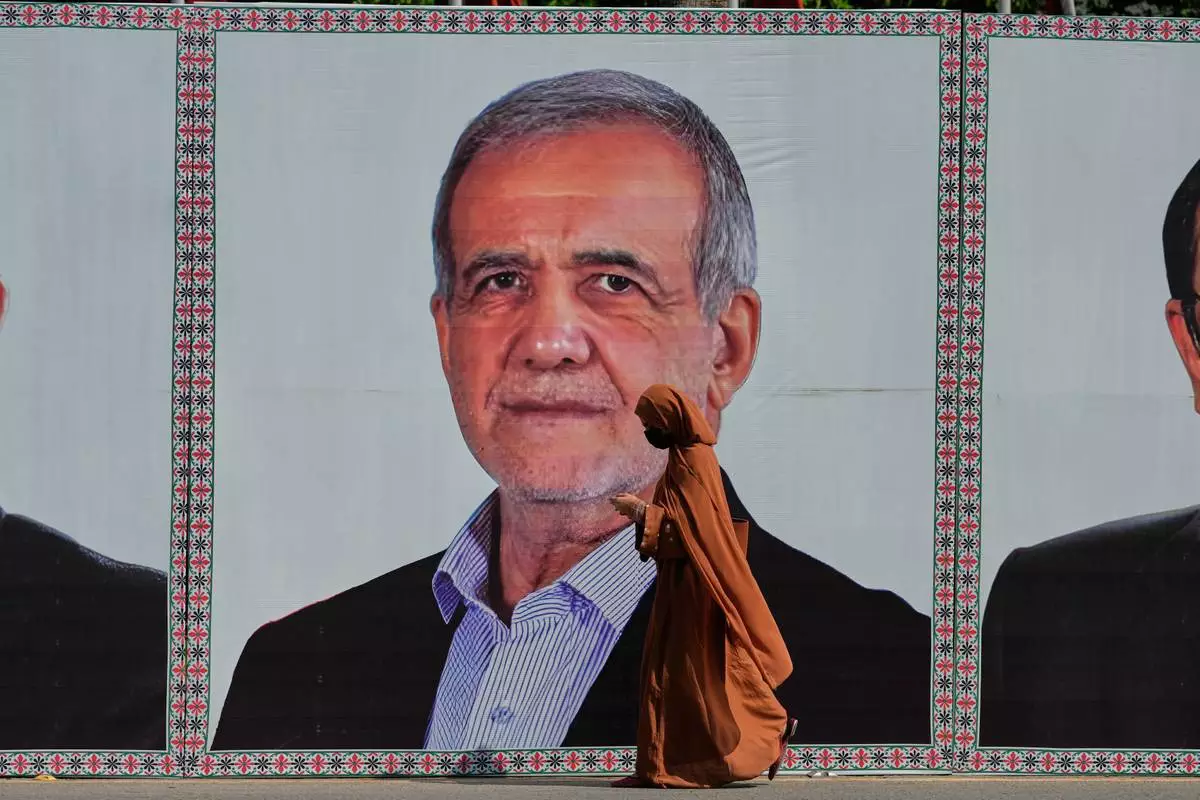
A woman walks past a welcoming billboard featuring Iranian President Masoud Pezeshkian along a roadside in Islamabad, Pakistan, Tuesday, June 23, 2026. (AP Photo/Anjum Naveed)