Hundreds of Indigenous people have testified. They’ve sobbed, cursed and laughed in spite of it all. Many told stories about their time in boarding schools that they’ve kept inside for decades, finally able to begin recovering from childhood trauma.
An oral history project led by the National Native American Boarding School Healing Coalition is wrapping up in Tulsa, Oklahoma on Friday. To date, the nonprofit’s historians have collected video testimony from more than 360 Indigenous survivors in 19 states — stories set to be preserved in the Library of Congress for years to come.
Click to Gallery
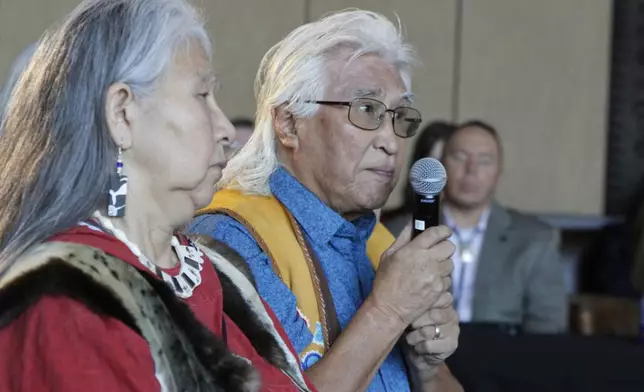
FILE - Fred John Jr., in yellow vest, addresses U.S. Interior Secretary Deb Haaland during the Interior's "Road to Healing" event, Oct. 22, 2023, in Anchorage, Alaska. (AP Photo/Mark Thiessen, File)
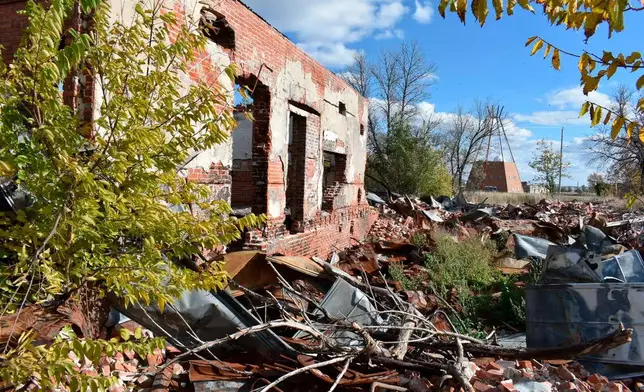
FILE - The ruins of a building that was part of a Native American boarding school on the Rosebud Sioux Reservation in Mission, S.D., are seen, Oct. 15, 2022. (AP Photo/Matthew Brown, File)
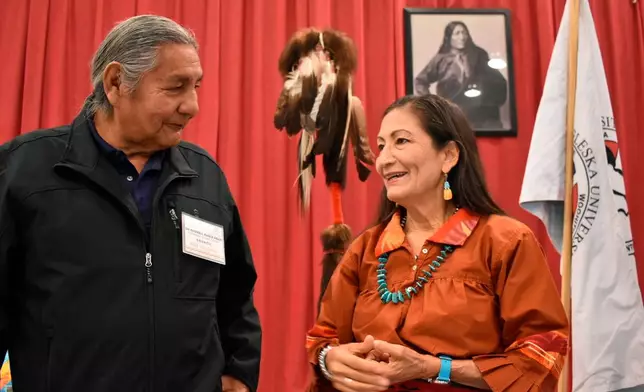
FILE - Russell Eagle Bear, left, with the Rosebud Sioux Reservation Tribal Council, talks to U.S. Interior Secretary Deb Haaland during a meeting about Native American boarding in Mission, S.D., on Oct. 15, 2022. (AP Photo/Matthew Brown, File)
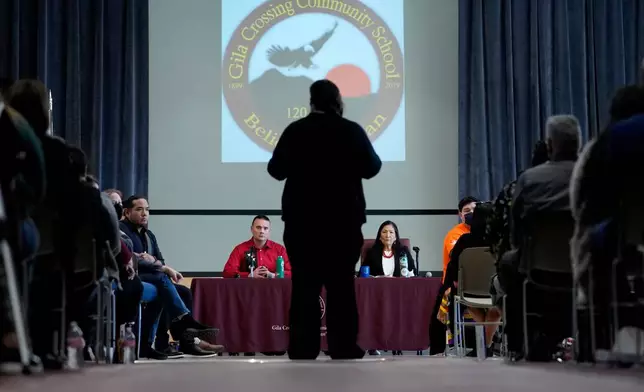
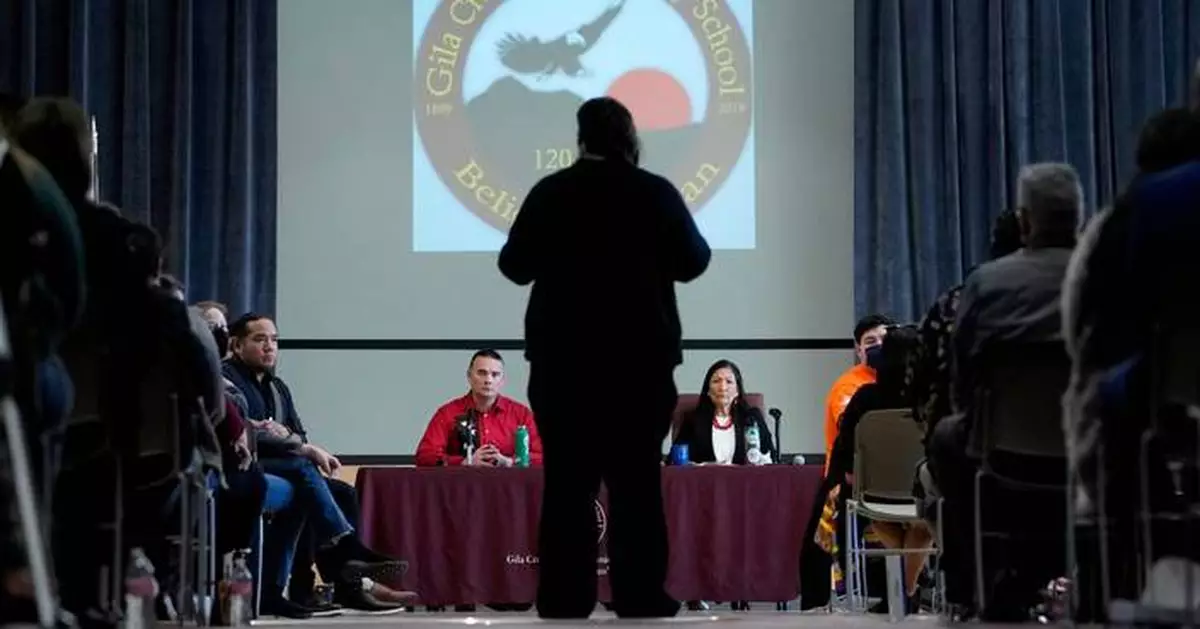
FILE - U.S. Interior Secretary Deb Haaland, right, and Assistant Secretary for Indian Affairs Bryan Newland, left, listen as April Hiosik Ignacio, center, speaks, Jan. 20, 2023, in Laveen, Ariz. (AP Photo/Matt York, File)
Iona Mad Plume, who is Blackfeet and grew up on her tribe’s reservation in Montana, said she “can’t emphasize enough” how healing her experience was. She testified in front of a video camera last month in Billings about her time in the Pierre Indian School in South Dakota, where she was sent at age 14.
Mad Plume, now 74, said since her interview she’s been more grounded and has been able to let go of some of the haunting memories: a dusty blue Greyhound bus driving her away from her parents’ red pickup truck. School staff beating her with a wooden dowel as she cowered on a bunk bed in her dorm room. Eating corn meal or cereal littered with weevil bugs.
“I got a lot out of that, pretty much a lot of closure,” she said. “It was after almost a lifetime of carrying around questions and different things in my mind — so I don’t have to carry that around anymore.”
Another boarding school survivor who contributed to the project in Michigan in 2024 recounted a similar experience. Gene Bozicic, of the Sault Ste. Marie Tribe of Chippewa Indians, attended the Catholic-run Holy Childhood School of Jesus in Harbor Springs, Michigan, beginning at age 11.
“As we further went along, I started to feel more confident in what I could do and what I have accomplished, almost like more pride to be Native,” Bozicic, now 81, said about her video interview. “I hate to see it coming to an end, because they have given me my backbone back.”
The oral history project, which began in March 2024, is a collaboration between the Minnesota-based National Native American Boarding School Healing Coalition and the U.S. Department of the Interior. The intent is to document and share with the public the systemic abuse endured by boarding school survivors under the government’s attempts at forced assimilation — policies that began in the 1800s and lasted for over a century.
Two years earlier, former Interior Secretary Deb Haaland — a Laguna Pueblo member and a descendant of boarding school survivors — led the historic Road to Healing listening tour with Assistant Secretary for Indian Affairs Bryan Newland, a citizen of the Bay Mills Indian Community.
Haaland’s Federal Indian Boarding School Initiative also included in-depth reports on the schools’ multigenerational impacts. Nearly 1,000 Native children were buried at 65 different school sites, the federal government reported. Atrocities occurring within school walls ranged from physical and sexual abuse to failed attempts at cultural genocide, the report found.
In the more than two years since the boarding school coalition’s oral history work began, the process of collecting these in-person testimonies in 19 states evolved, said Lacey Kinnart, the coalition’s oral history program co-director.
Initially, the “quiet room” where survivors decompress with a fellow elder after their interview was optional. But staff soon changed that policy so entering the room was automatic, and added a second “quiet room.” They also began matching survivors with a licensed clinical therapist who specializes in boarding school trauma and a licensed social worker.
“Our elders don’t want to be a burden,” said Kinnart, a citizen of the Sault Ste. Marie Tribe of Chippewa Indians. “But they really do need that extra support.”
Kinnart said staff also noticed survivors feeling nervous around the Indigenous photographer. That shyness showed in the photos. So they built in an extra half-hour into the schedule so each survivor could get to know the person who took their portraits.
The Smithsonian National Museum of Natural History and the Department of the Interior are still assessing how to present the video interviews to the world. Survivors, however, will retain full ownership of their interviews and they alone decide whether their stories are made public.
The videos will be housed in a permanent oral history collection at the Library of Congress, and the project’s end date is June 2027.
The National Native American Boarding School Healing Coalition will continue other oral history projects independently. Staff said their next project will likely be more costly — potentially as much as $13 million — compared to the $6.2 million they received from Interior and the Mellon Foundation for the initial oral history project. And while the upcoming venture would take longer, it would be even more inclusive.
“We’re just scratching the surface with these stories,” said the coalition’s Oral History Program Co-director Charlee Brissette, a citizen of the Sault Ste. Marie of Chippewa Indians. “We want to get a more robust picture of the boarding school experience because it does have that intergenerational effect.”
Indigenous people excluded from this first iteration of the oral history project may get another opportunity in the coming years. It’s an effort welcomed by survivors and descendants alike.
“I’d be interested in doing that, because the whole story needs to be taught,” said Desiray Emerton, 56, a Seminole woman and a descendant of two generations of boarding school survivors.
Her relatives attended Goodland Academy and Chilocco Indian School in Oklahoma. She said she’s seen the generational impacts: Because of her boarding school experiences, Emerton’s mother struggled to be affectionate toward her as a child. And her grandmother died long before the oral history project’s existence.
“I know time’s running out for those who did go through that personally,” Emerton said, “but I always tell my kids I’m walking on the prayers of our ancestors, and I’m running out of time.”
This story is published through the Global Indigenous Reporting Network at The Associated Press.
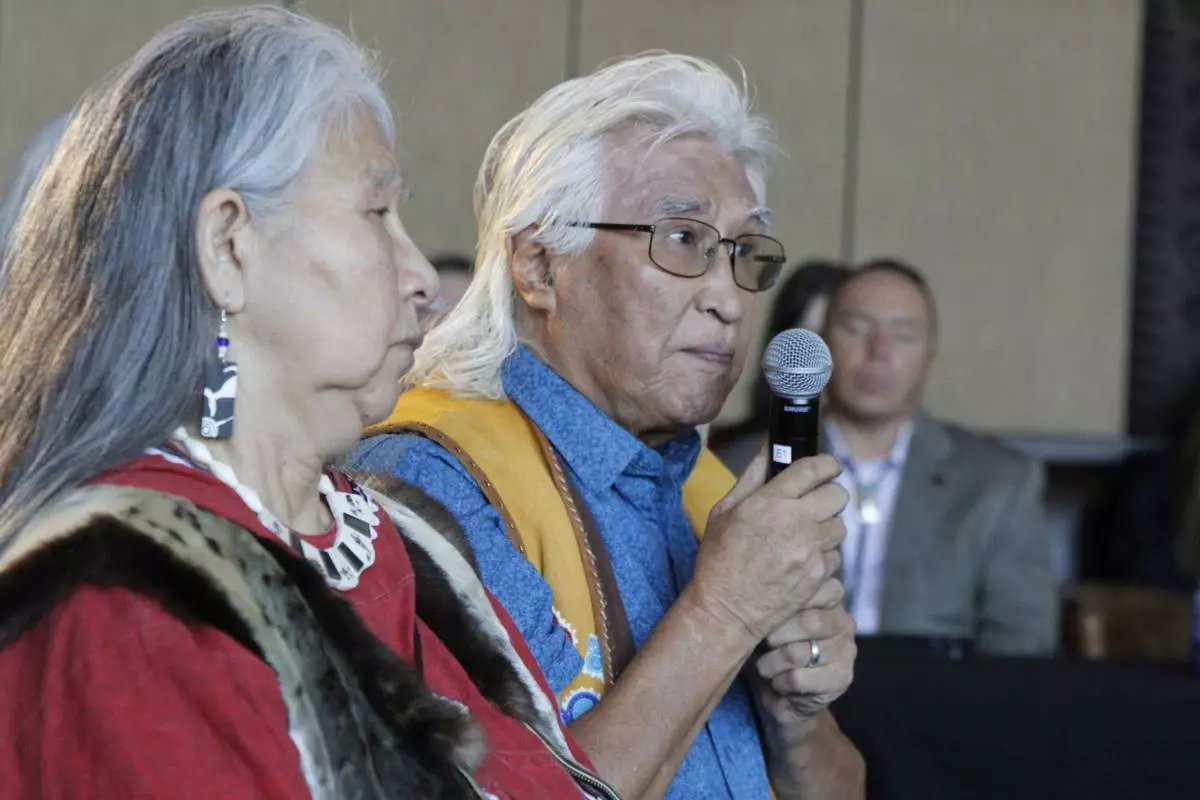
FILE - Fred John Jr., in yellow vest, addresses U.S. Interior Secretary Deb Haaland during the Interior's "Road to Healing" event, Oct. 22, 2023, in Anchorage, Alaska. (AP Photo/Mark Thiessen, File)
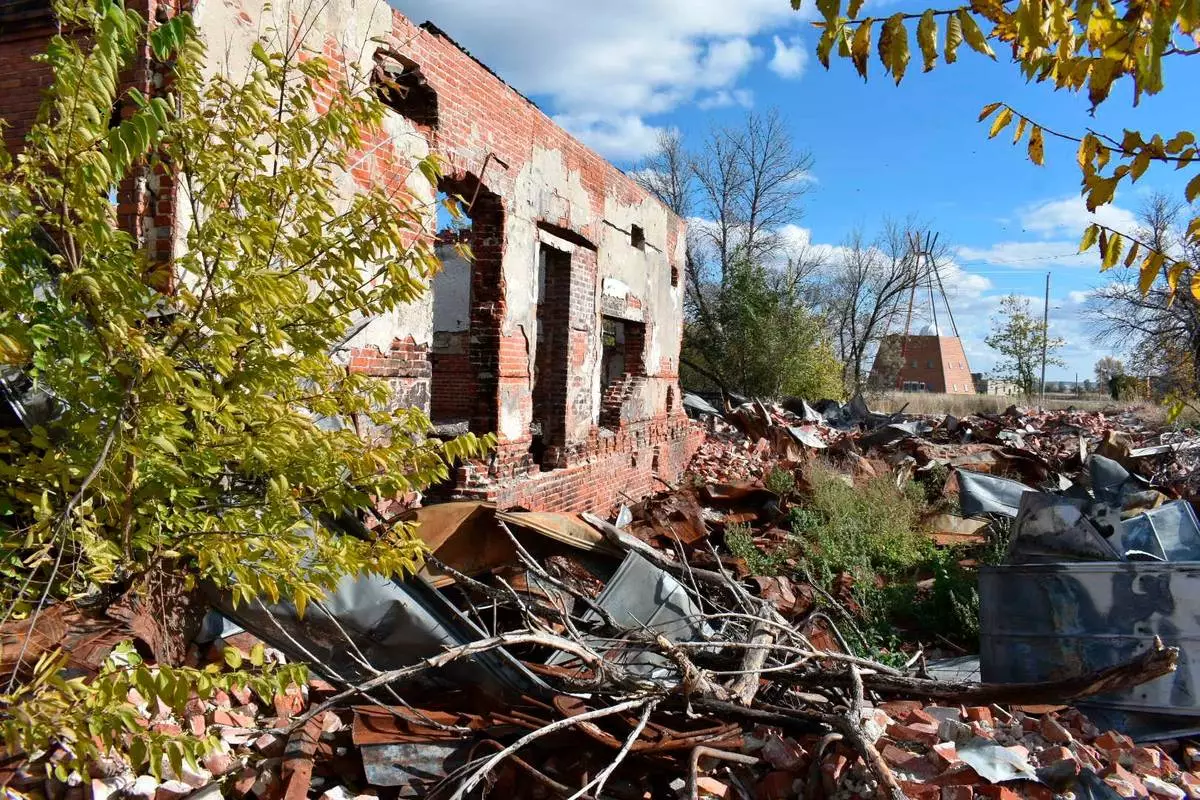
FILE - The ruins of a building that was part of a Native American boarding school on the Rosebud Sioux Reservation in Mission, S.D., are seen, Oct. 15, 2022. (AP Photo/Matthew Brown, File)
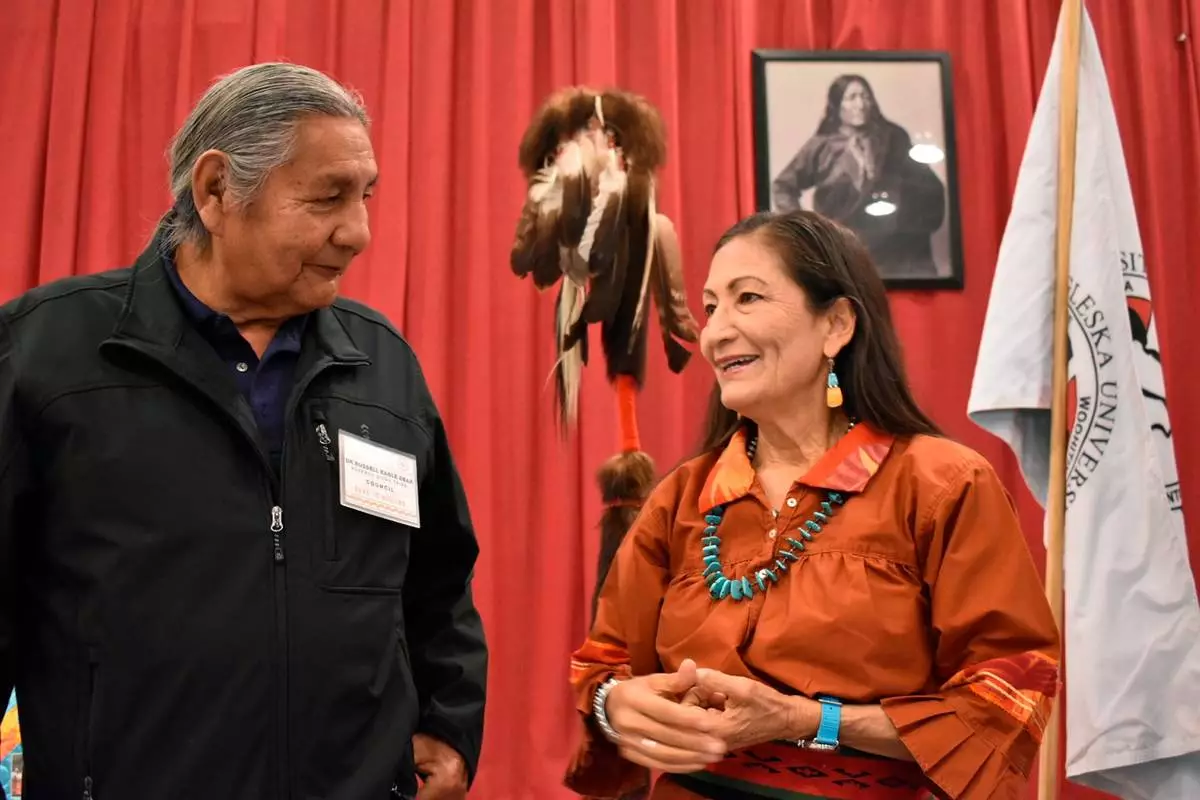
FILE - Russell Eagle Bear, left, with the Rosebud Sioux Reservation Tribal Council, talks to U.S. Interior Secretary Deb Haaland during a meeting about Native American boarding in Mission, S.D., on Oct. 15, 2022. (AP Photo/Matthew Brown, File)
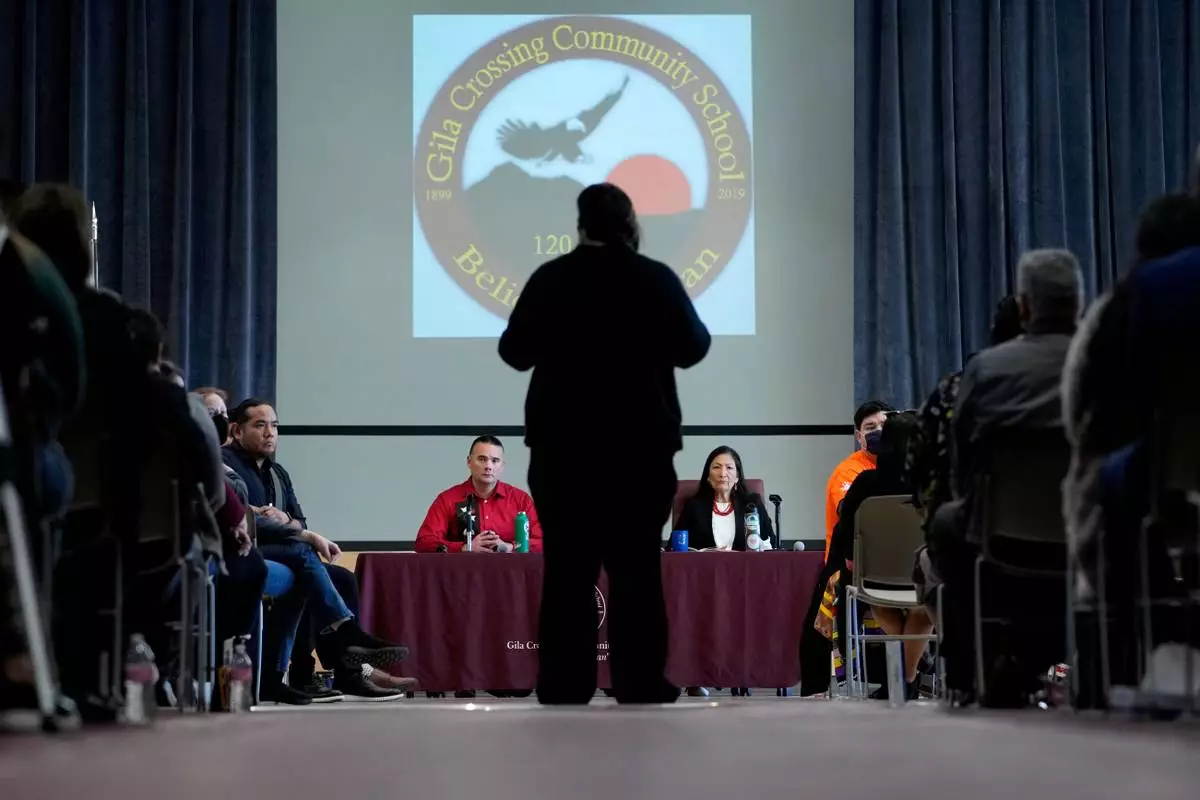
FILE - U.S. Interior Secretary Deb Haaland, right, and Assistant Secretary for Indian Affairs Bryan Newland, left, listen as April Hiosik Ignacio, center, speaks, Jan. 20, 2023, in Laveen, Ariz. (AP Photo/Matt York, File)