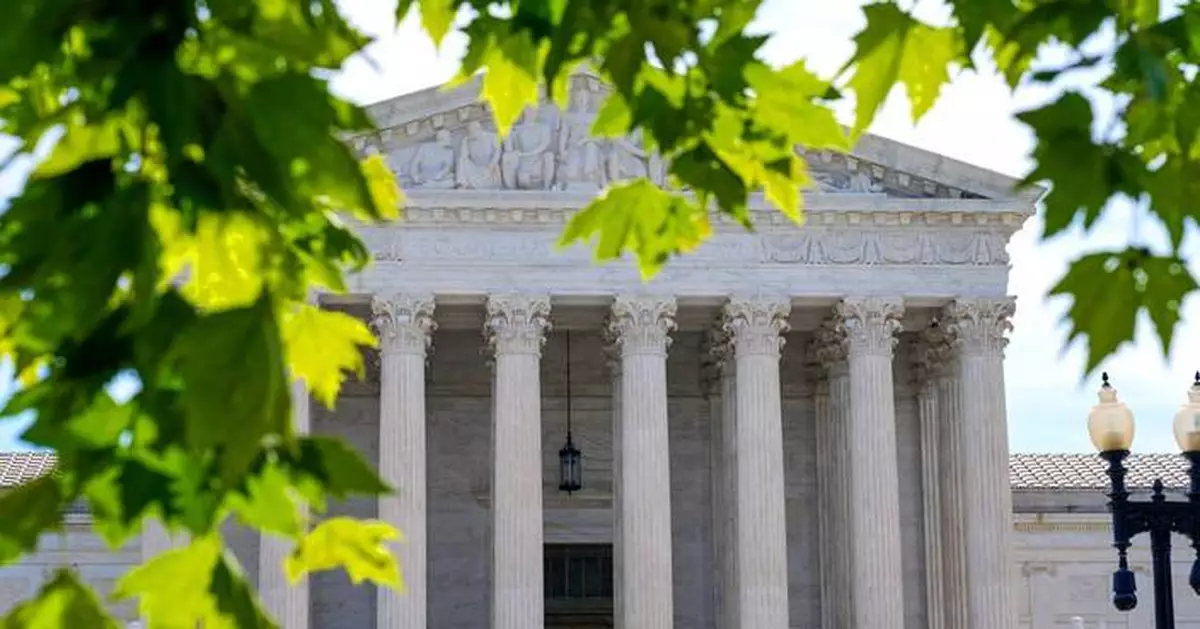
WASHINGTON (AP) — The Supreme Court on Tuesday barred a former Louisiana inmate from suing prison officials who cut off his dreadlocks in violation of his Rastafari religious beliefs.
The justices condemned what happened to the former inmate, Damon Landor. But they ruled that a federal law designed to protect the religious rights of inmates does not permit lawsuits for money damages against individuals even when rights are violated.
The high court, in a 6-3 decision, agreed with lower courts that without exception had ruled that the law, the Religious Land Use and Institutionalized Persons Act, can’t be used to hold those who violate inmates’ rights financially responsible.
The justices refused to apply the rationale from their decision in 2020 that allowed Muslim men to sue over their inclusion on the FBI’s no-fly list under a sister statute, the Religious Freedom Restoration Act.
The Justice Department, which argued against the plaintiffs in the no-fly list case in President Donald Trump’s first Republican administration, had sided with Landor.
Nothing in the law dealing with prisoners' religious rights authorizes lawsuits against individual officers, Justice Neil Gorsuch wrote for the court.
In a dissent, Justice Ketanji Brown Jackson wrote that state prison officials will have little incentive to abide by federal law. “It is not often that a real-life incident so clearly illustrates Congress’s reasons for adopting legislation, or the Constitution’s wisdom in enabling it,” Jackson wrote in an opinion that was joined by her two liberal colleagues.
No one defended what happened to Landor during his five-month prison term in 2020. When he entered the prison system, he carried a copy of an appeals court ruling in another inmate’s case holding that cutting religious prisoners’ dreadlocks violated the federal law.
At his first two stops, officials respected his beliefs. But things changed when he got to the Raymond Laborde Correctional Center in Cottonport, about 80 miles (130 kilometers) northwest of Baton Rouge, for the final three weeks of his term.
A prison guard took the copy of the ruling Landor carried and tossed it in the trash, according to court records. Then the warden ordered guards to cut his dreadlocks. While two guards restrained him, a third shaved his head to the scalp, the records show.
Landor sued after his release, but lower courts dismissed the case. The 5th U.S. Circuit Court of Appeals lamented Landor’s treatment but said the law doesn’t allow him to hold prison officials liable for damages.
Louisiana wrote that “the state has amended its prison grooming policy to ensure that nothing like petitioner’s alleged experience can occur.”
The Rastafari faith is rooted in 1930s Jamaica, growing as a response by Black people to white colonial oppression. Its beliefs are a melding of Old Testament teachings and a desire to return to Africa. Its message was spread across the world in the 1970s by Jamaican music icons Bob Marley and Peter Tosh, two of the faith’s most famous exponents.
Follow the AP’s coverage of the U.S. Supreme Court at https://apnews.com/hub/us-supreme-court.
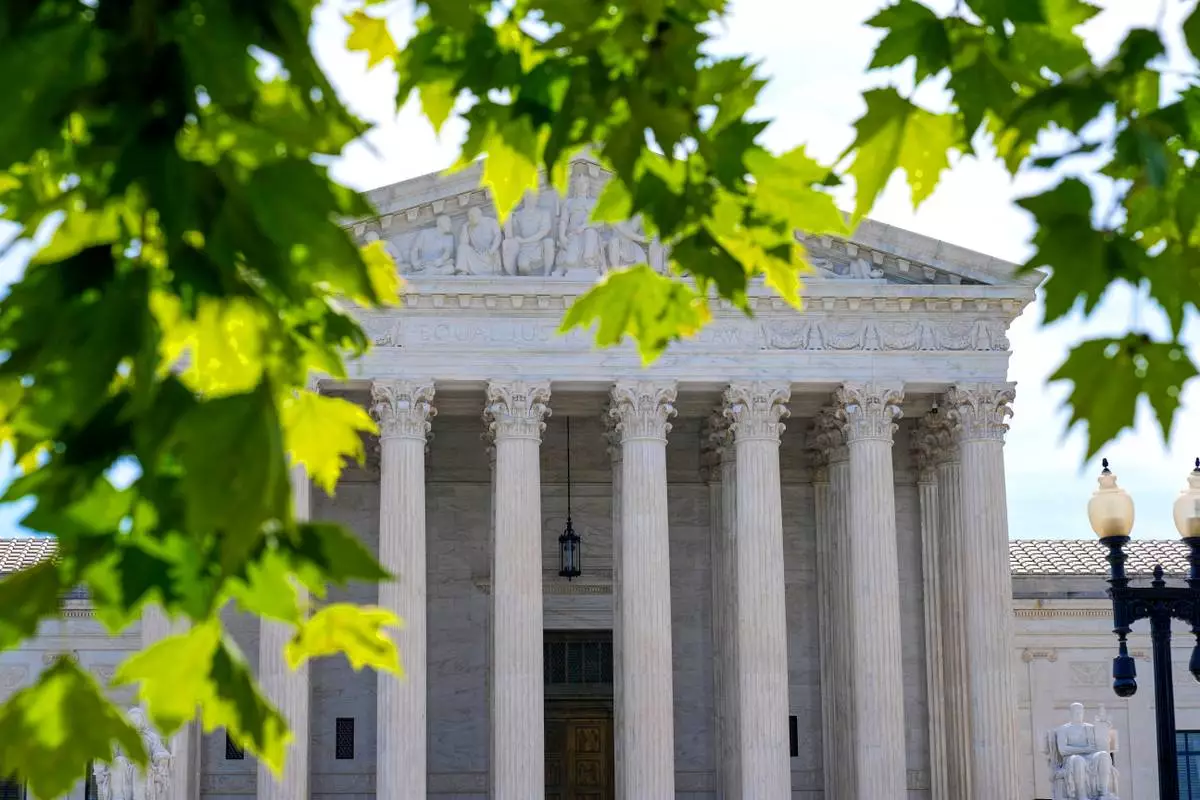
FILE - The U.S. Supreme Court is seen, June 5, 2026, in Washington. (AP Photo/Mariam Zuhaib, File)
Forty mayors from around the world have signed onto a pact announced Tuesday to try to shape how urban data centers are built and operated.
It's their vision for how urban data center development can be done sustainably — and not at the expense of their cities' natural resources, energy prices or climate targets. C40 Cities, an alliance of nearly 100 cities seeking to impact climate change, launched it during London Climate Action Week.
Many new data centers are coming to rural areas for cheap land. Experts at C40 say metropolitan areas are under tremendous pressure too, with about 1,700 data centers located in their network of cities so far. Development of data centers is expected to grow by over 40% in 50 of those cities.
C40 got involved because the mayors of Phoenix and Melbourne, Australia, came together over worries about data centers using a lot of their cities' electricity and water, and competing with housing developers for available land.
“We found out that the challenges in every region around the world were very similar,” said Cassie Sutherland, a managing director at C40. “Our approach was to say OK, how do we now use a global mayoral voice to come together with the conditions under which they will accept data centers.”
Data centers are built in cities to be close to firms that want systems powered by artificial intelligence to respond instantaneously. Major companies locate data centers in cities to be near their business operations. And data centers tend to be built in clusters, forming ecosystems in metropolitan areas that might outweigh factors like land costs. It’s just more recently that data centers have moved out into rural areas, said Andrew Batson, global head of data center research at JLL.
Political and local opposition has been growing because of fears about blackouts, rising electricity bills and the centers' voracious water needs. Some states are suspending tax breaks or considering moratoriums on data center construction.
About half of participating mayors are from the U.S. That includes Seattle and the California cities of Palo Alto and Riverside. In the Southwest, Phoenix and Albuquerque, New Mexico, joined. On the East Coast, Beverly, Massachusetts, signed, as did Lincoln, Nebraska; Chicago and Cleveland in the Midwest and Miami in the South.
European cities in Greece, Spain, Italy, Germany, the United Kingdom and Norway joined, as did Montreal in Canada. The pact includes African cities in Ivory Coast, Sierra Leone, South Africa and Kenya, as well as Asia-Pacific cities in India and Australia, and Lebanon in the Middle East.
Sutherland said their vision needs to be translated into action, with each city using it as a framework for their own regulations or guidelines. Mayors are limited in what they can do unilaterally, so they'll need buy-in from other government officials, utilities and the private sector.
The pact lists several standards for data center developments. Urban data centers should be built on abandoned or underutilized land in an area that minimizes negative impacts on noise, heat and air pollution. Developments should be fueled by renewable energy and battery storage, and data centers should reduce water use and emissions, as well as capture waste heat.
And, the mayors want data centers that create jobs, buy local goods and services, pay for their own infrastructure upgrades and listen to community feedback.
The Phoenix metropolitan area has pending permit requests that would double the electricity demand if all of these data centers were built. Developers are drawn there for its reliable power and predictable weather.
Phoenix Mayor Kate Gallego said she's concerned that investments in data centers right now are worsening climate change and not meeting the needs of communities. Mayors are forming a unified front to help improve data centers everywhere — that will keep developers from simply looking for communities unable to advocate for their own benefits, she added.
“We understand the importance of this innovation, it’s creating great jobs in our community,” Gallego said. “We just want to make sure that we get it right for our local residents and for the health of our planet.”
As of Tuesday, none of Southeast Asia's cities endorsed the pact. Several said they couldn't because of national policies or other complications, but the conversations are ongoing, C40 said.
The region accounts for a quarter of global energy demand growth, partially driven by more than 2,000 data centers in Indonesia, Malaysia, Singapore, Thailand, Vietnam and the Philippines, according to the think tank Ember.
The annual energy demand from these data centers will more than double in the next five years, the International Energy Agency said. This is most evident in Malaysia, which has drawn investments and interest from tech giants like Microsoft, Google and Nvidia.
If Melbourne follows through on all its plans, data centers will annually consume up to 20 billion liters (5.3 billion gallons) worth of water, or about 4% of the drinking water supply, according to the city’s Lord Mayor Nicholas Reece.
The water supply is already strained by the growing population, longer dry periods and more extreme heat driven by climate change.
Melbourne played a key role in the pact. Reece said stricter environmental regulations there likely won't threaten future plans. Ultimately, he said, data centers are going to go where there's enough power and land, and where they're close to the markets and companies using artificial intelligence.
“We don’t want to see a race to the bottom between cities where governments, desperate for investment, are chasing data centers on any terms possible,” he said. “We want to see a better framework in place so that the investment rush in data centers can be a win-win — a win for investors and also a win for local communities.”
The Associated Press’ climate and environmental coverage receives financial support from multiple private foundations. The AP is solely responsible for all content. Find AP’s standards for working with philanthropies, a list of supporters and funded coverage areas at AP.org.
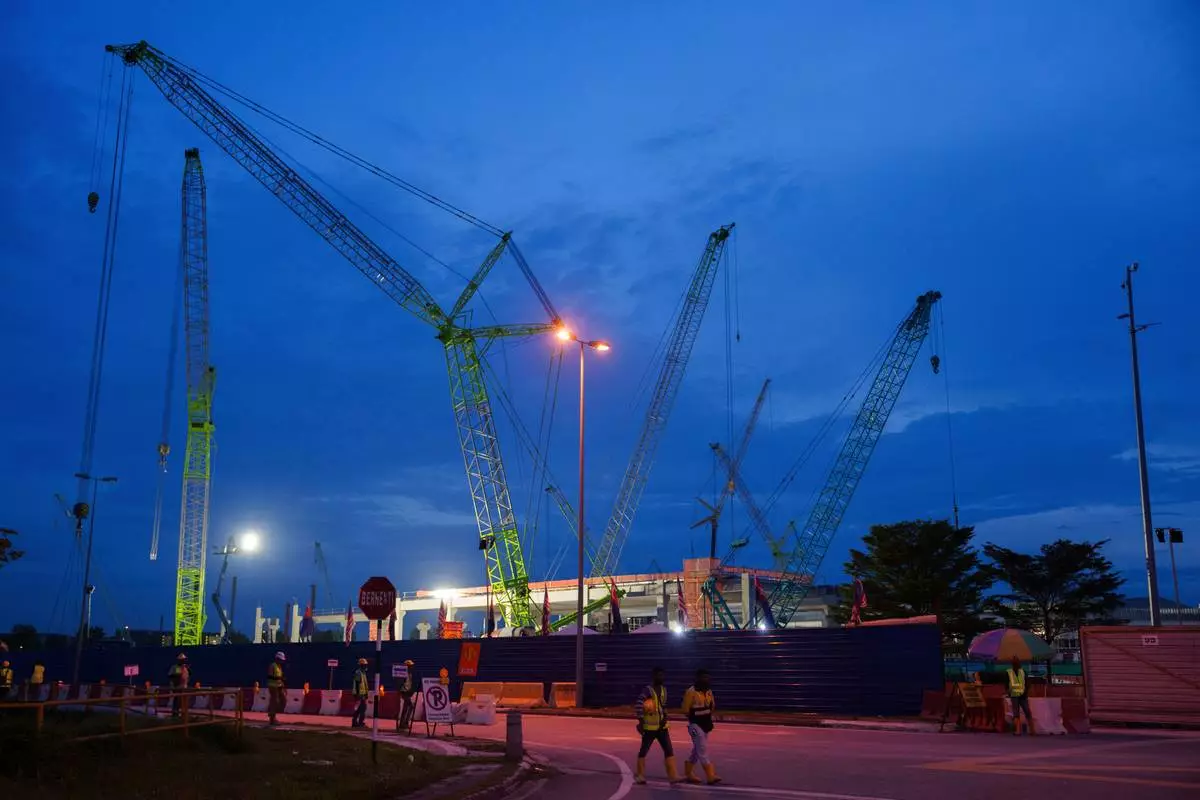
FILE - Workers walk outside a data center building under construction in Johor Bahru town at Johor state, Sept. 28, 2024. (AP Photo/Vincent Thian, File)
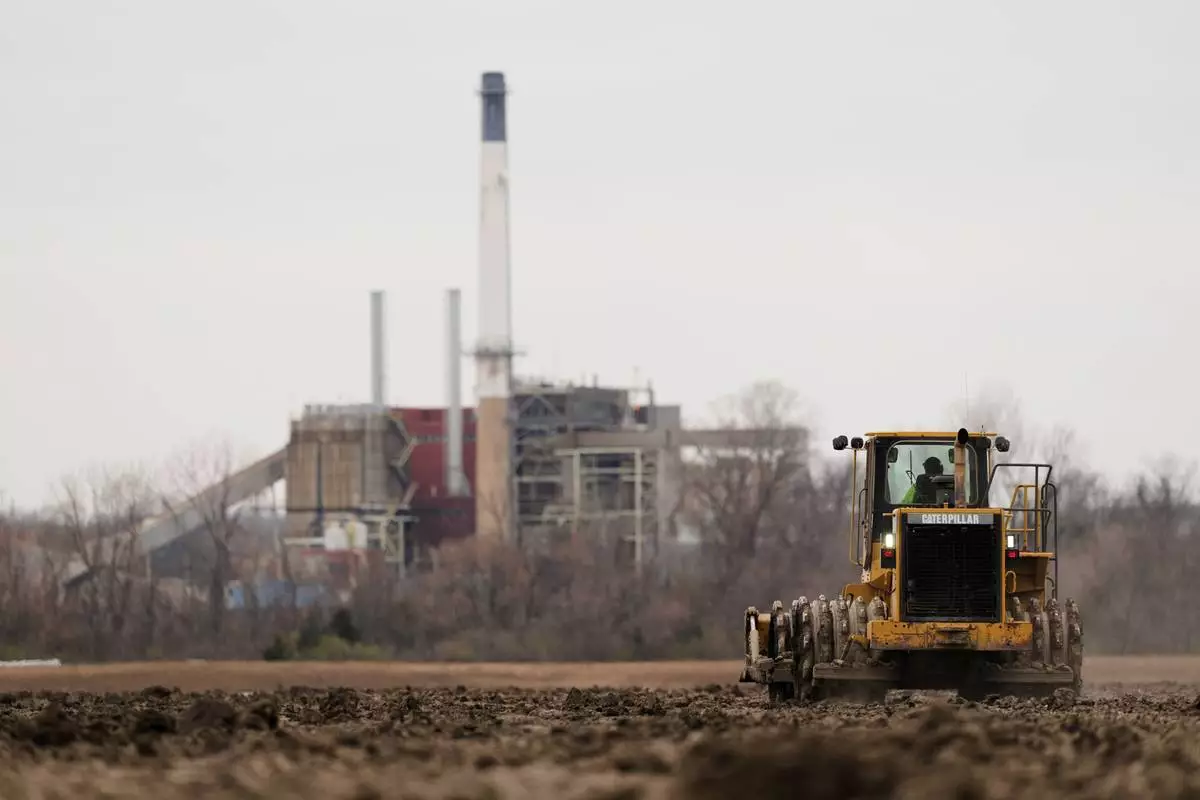
FILE - A worker prepares a plot of land for an AI data center, with a retired power plant being refurbished to provide electricity for the facility in the distance, March 24, 2026, in Independence, Mo. (AP Photo/Charlie Riedel)
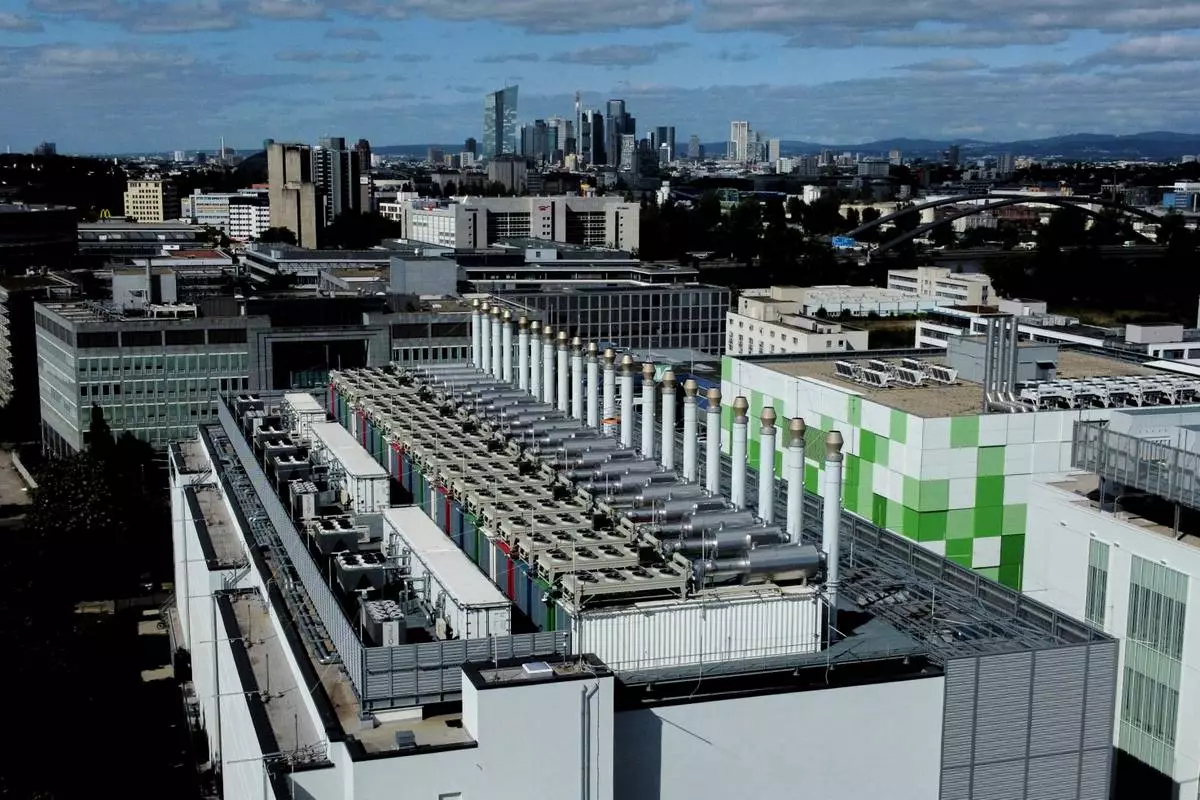
FILE - A data centre is visible in Frankfurt, Germany, Aug. 22, 2025. (AP Photo/Michael Probst, File)
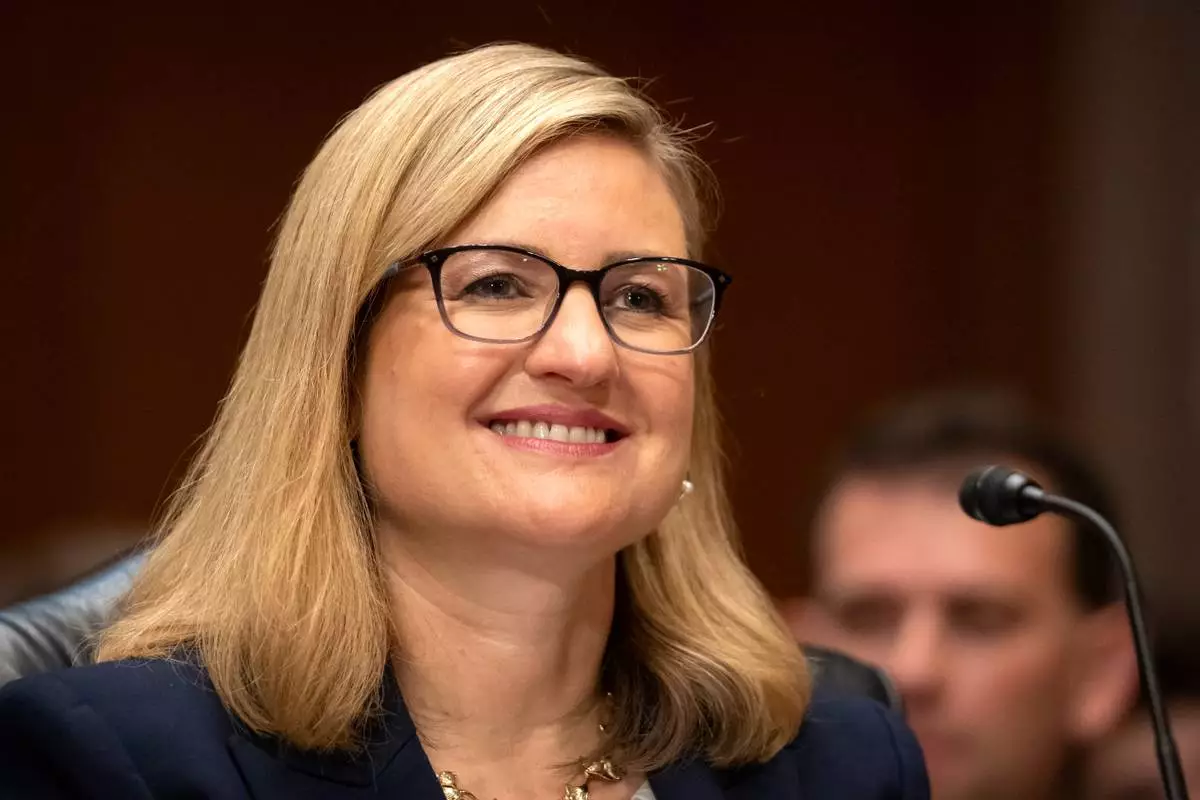
FILE - Phoenix Mayor Kate Gallego listens during a hearing of the Senate Committee on Environment and Public Works on Capitol Hill, July 16, 2025, in Washington. (AP Photo/Mark Schiefelbein, File)
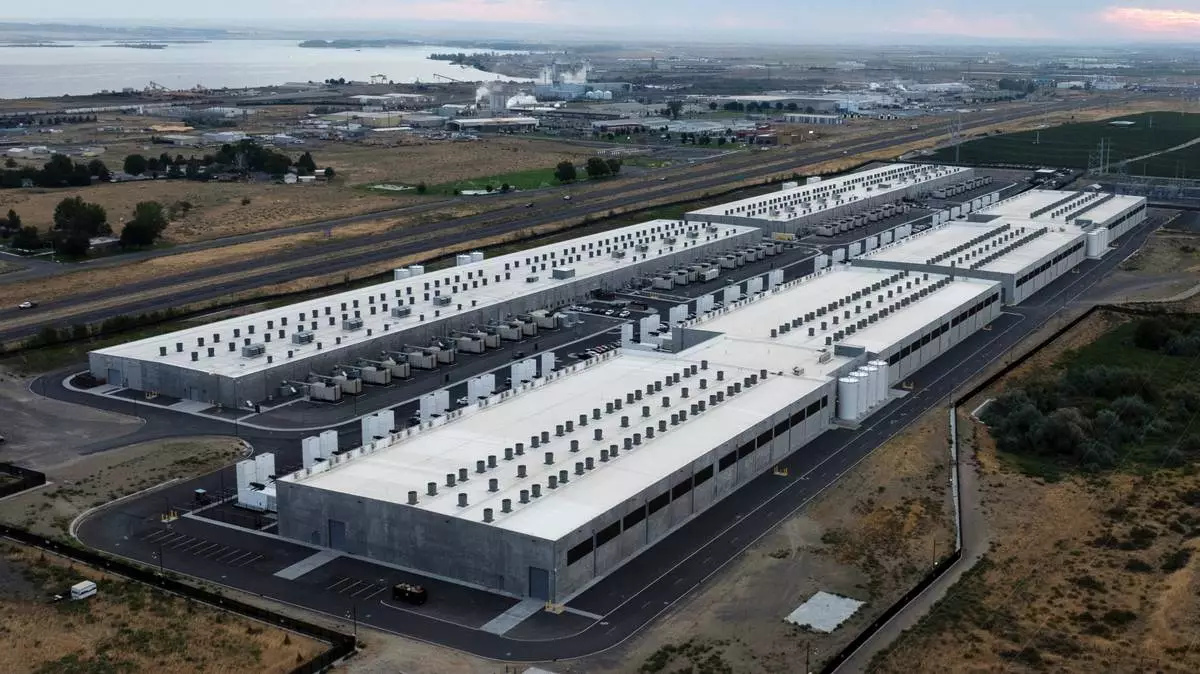
FILE - Amazon Web Services data center is visible on Aug. 22, 2024, in Boardman, Ore. (AP Photo/Jenny Kane, File)