PHOENIX--(BUSINESS WIRE)--Jun 23, 2026--
As Arizona faces a shifting funding landscape for early childhood education, state and community leaders are turning to new data to help every dollar go further for young learners and their families.
This press release features multimedia. View the full release here: https://www.businesswire.com/news/home/20260623321616/en/
The newly updated Arizona Early Childhood Fiscal Map, released by Read On Arizona and statewide partners, provides a comprehensive look at how federal and state investments support early care, education, and literacy across Arizona. With data on multiple funding streams from 2019 through 2025, the tool is intended to help policymakers and local leaders better understand, align, and optimize resources to improve outcomes for children.
“Maximizing impact isn’t just about more funding, it’s about using what we have more strategically,” said Lori Masseur, Director of Early Learning for Read On Arizona. “The Fiscal Map is an important tool to help decision makers across sectors identify gaps in services, align resources, reduce duplication, and target investments where they can have the greatest impact.”
By shifting the conversation from agency-based budgets to a child-centered perspective, the Fiscal Map highlights the full range of resources that support school readiness and early literacy programs and services in Arizona. The accompanying summary report underscores the increased need for strategic, coordinated investments among state and local partners, as federal pandemic relief funding, which played a significant role in expanding early childhood services in recent years, has expired.
The report also highlights strong collaboration across Arizona’s early childhood ecosystem, bringing together partners including the Arizona Department of Education, Department of Economic Security, Department of Health Services, First Things First, Head Start leaders, and community organizations. These efforts are focused on coordinating services, strengthening the early childhood workforce, and building a more sustainable system that supports young children and families statewide.
Two new local fiscal maps, focused on early childhood investments in the City of Tempe and Yuma County, are also available.
Marie Raymond, Community Health and Human Services Manager for the City of Tempe and community lead of Read On Tempe, said, “One of the key takeaways is how local funding complements state resources. State funding often brings scale, while city funding provides flexibility and stability within a fluctuating funding landscape.”
To explore the Fiscal Map or to learn more about the collaborative work of Read On Arizona, visit readonarizona.org.
About Read On Arizona
Launched in 2013, Read On Arizona is the state’s early literacy initiative. Partners in Read On Arizona take a collaborative approach to advance the strategies, policies, and investments needed for all Arizona children to learn to read at grade level and be successful in school, with strategic focus on improving school readiness and third grade reading proficiency. Read On Arizona provides leadership at the state level through an advisory board consisting of representatives from its founding partners—Arizona Department of Education, Arizona Community Foundation, First Things First, Helios Education Foundation, and Virginia G. Piper Charitable Trust—as well as the Arizona State Board of Education, the Governor’s Office, and several other key literacy stakeholders and philanthropic organizations. Read On Arizona also supports local literacy efforts through a network of Read On Communities. Arizona Literacy Plan 2030 outlines the key drivers, proven strategies, and actions required to improve literacy outcomes for Arizona students. Learn more at ReadOnArizona.org.

The Fiscal Map identifies the range of resources that support school readiness and early literacy programs and services in Arizona.
Drink a fragrant cup of herbal tea, and the intoxicating scent of steeped herbs might calm your mind before you even take a sip. Even better is when they come from your own backyard herb garden.
Mine includes several ingredients for my daily cup, and they’re all easy to grow and prepare.
Herbal teas are distinct from true teas — such as black or green — which comes from the leaves of the Camellia sinensis plant. (You can grow that in your garden, too.) Brew herbal teas with either freshly harvested or dried herbs.
Either way, settling in with a cup of homegrown herbal tea — hot or iced — can be a relaxing ritual.
Most herbs require a sunny spot that receives at least 6-8 hours of sunlight daily, but they benefit from a bit of afternoon shade in hot climates. They grow well in containers, raised beds and gardens in well-draining soil. Fertilizer isn’t usually necessary, but incorporating a generous helping of compost into the soil at planting time will help nourish herbs throughout the growing season.
To sow directly outdoors, space seeds as directed on the package label. If seeds are super tiny, such as those of mints, mix them with a bit of sand, then scatter them directly over the soil. When they reach 2 inches tall, remove excess sprouts to achieve the recommended spacing between the remaining plants.
Check the “date to maturity” on the seed pack or plant tag. Seeds are best sown in spring, but purchased starter plants can be planted later as long as the expected harvest date falls within the remaining time frame before the first frost.
Keep the soil lightly moist until the plants become established, then water only when the soil dries out.
Here are some favorite herbs to get you started.
German chamomile: This annual plant’s miniature daisy-like flowers make a cheerful addition to the garden and brew into a lovely, delicate tea that pairs well with a bit of honey. Provide regular doses of a flower-boosting fertilizer, such as 5-10-5, according to package directions, beginning one month after planting.
Mints: There are many delicious choices. Favorites include peppermint, spearmint, chocolate mint, pineapple mint, lime mint and apple mint. All perennial mints (hardy in zones 3-9) grow and spread with abandon, so it’s best to plant them in pots rather than directly into the garden (unless you are willing to allow them to take over an entire area).
Agastache foeniculum: Commonly called anise hyssop, this perennial is often used as an ornamental in flower beds in zones 3-8 or 9. The plant’s highly aromatic leaves make a tasty licorice-flavored tea. Although related to mint, it retains a mostly mounded form and does not spread as aggressively as its cousins. Note: For tea, be sure to plant the straight species (foeniculum); although other anise hyssops may be edible, their flavors vary.
Lemon balm: Another mint relative, this perennial is hardy in zones 4-8 and should also be contained to prevent aggressive spread. Its subtle lemon flavor is refreshing without being overpowering.
Lemon verbena: This perennial shrub, hardy in zones 8-11, grows best in partial shade and is a heavier feeder than many other herbs. Apply a liquid fertilizer every 2-3 weeks to boost its health and vigor. Hardy in zones 8-11, the plant’s leaves impart a stronger, more intense lemon flavor than lemon balm.
Harvest herbs in the morning, just after the dew has dried, when their essential oils are most concentrated. In my zone 7 garden, that’s typically around 10 a.m. Rinse them well and pat dry.
To use right away, heat water to just below boiling, then pour 8 ounces into a cup with 2-3 tablespoons of chopped, fresh herbs. Cover the cup and allow it to sit for 10-15 minutes. Strain, and add sweetener or combine with other herbs, as desired.
To dry herbs for future use, spread them on a screen or tie a bunch of stems together and hang the bouquet upside down. Place in a well-ventilated, dark, dry spot until they become crunchy.
Remove leaves or flowers from stems, then store in a tightly sealed glass jar in a cool, dark spot, like a kitchen cabinet, where they’ll retain their flavor and fragrance for about 2 years.
Because the drying process concentrates their flavors, you’ll need fewer herbs and less brewing time to make your tea, so start with 1 teaspoon and 5 minutes of steeping, adjusting according to your preference.
Jessica Damiano writes regular gardening columns for The Associated Press. She publishes the Weekly Dirt Newsletter. Sign up here for weekly gardening tips and advice.
For more AP gardening stories, go to https://apnews.com/hub/gardening.
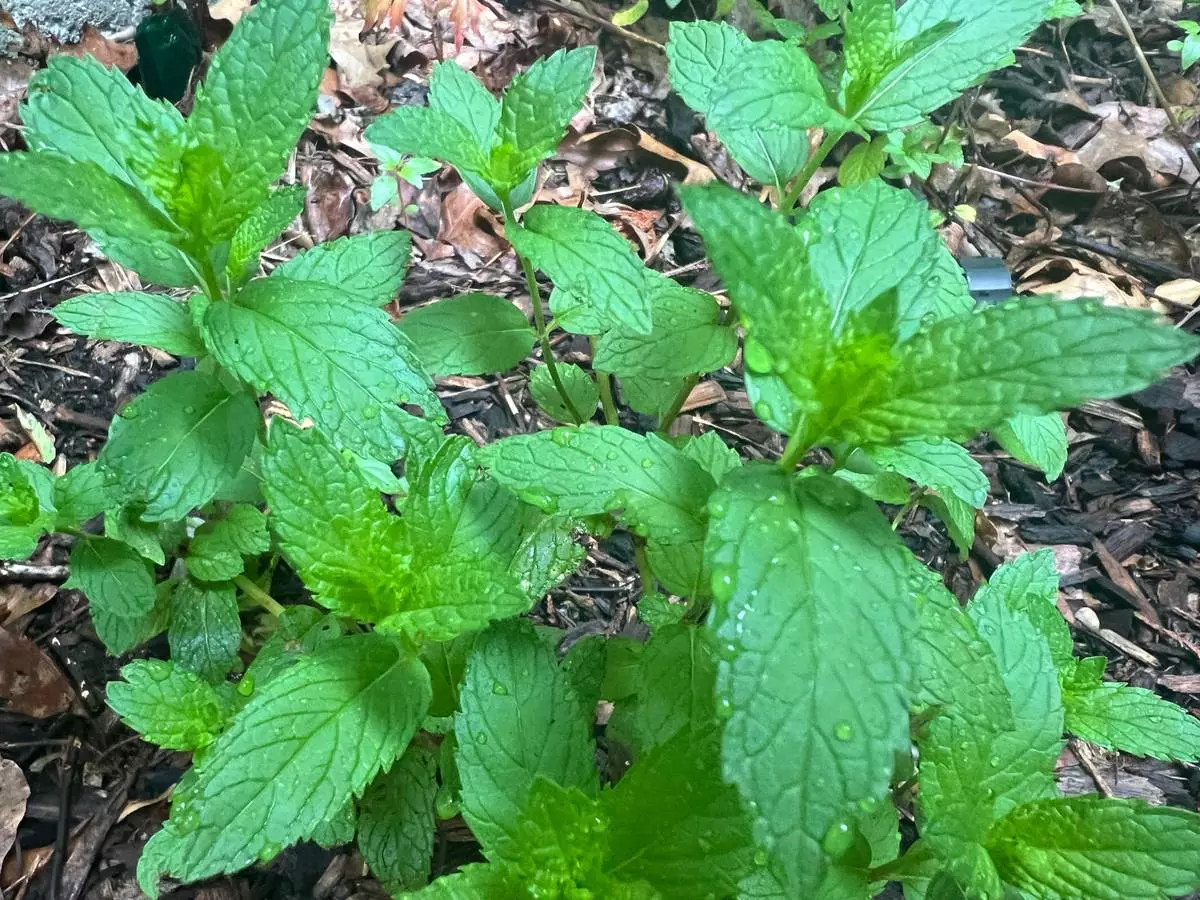
A spearmint plant grows in the ground at a home on Long Island, N.Y., on June 15, 2026. (Jessica Damiano via AP)
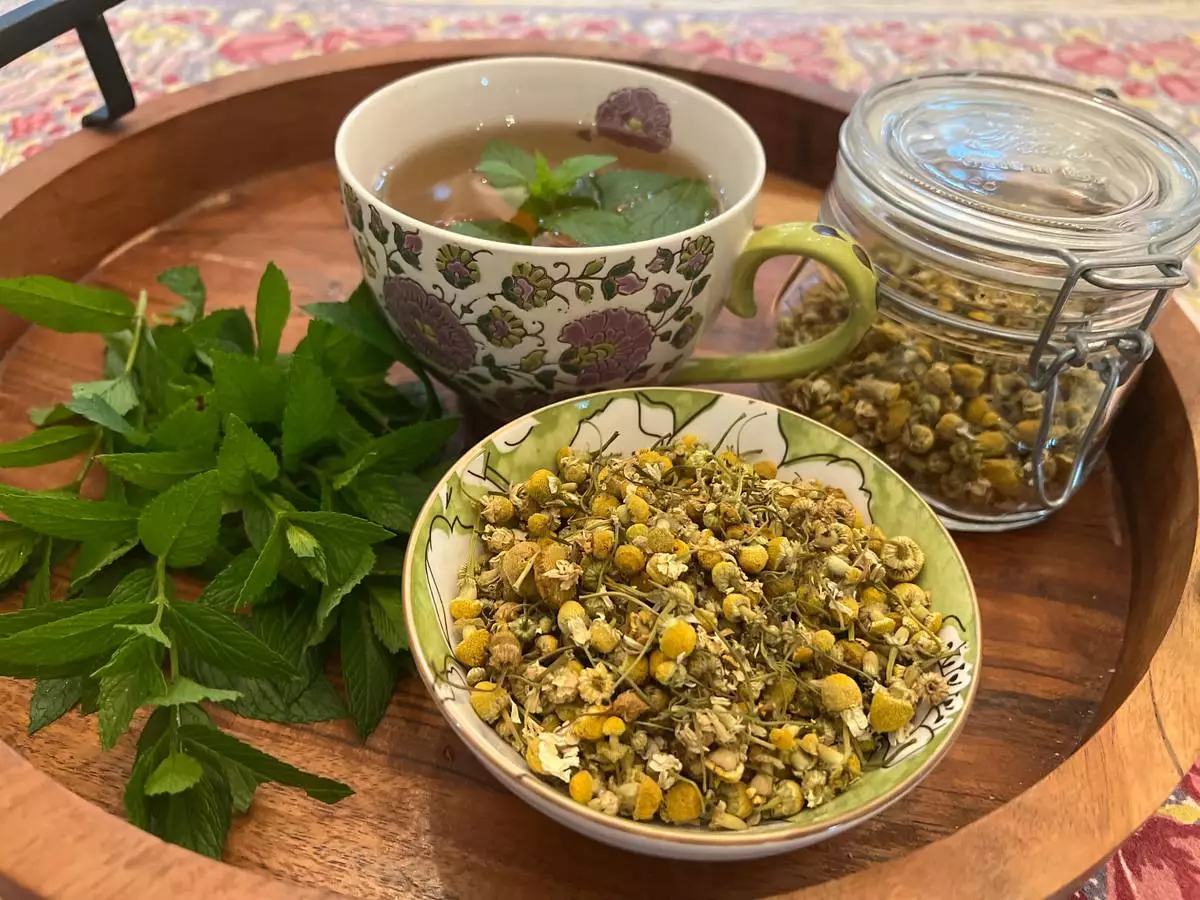
Freshly harvested spearmint leaves, dried chamomile flowers, and a cup of herbal tea are displayed on Long Island, N.Y. on June 15, 2026. (Jessica Damiano via AP)