BRUSSELS (AP) — A delegation from the Afghan Taliban is traveling to Brussels on Tuesday for closed-door talks with European Union staff, expected to focus on deportations, said a Taliban official.
Afghans make up one of the largest groups of migrants seeking asylum in the European Union, but a growing number of governments in the 27-nation bloc want to speed up and increase deportations for those whose claims are rejected or who commit crimes in their host countries.
Afghan authorities have imposed draconian restrictions on rights, particularly for women and girls, since the Taliban seized power in the country in 2021 in the wake of the chaotic withdrawal of U.S.-led forces.
Rights groups said Tuesday's meeting undercuts the EU’s human rights obligations and could endanger people in Europe and Afghanistan.
“Any engagement with the Taliban needs to prioritize protecting human rights and accountability — not deporting people to danger there,” said Fereshta Abbasi, a researcher at Human Rights Watch. “EU countries are undermining their credibility by condemning Taliban abuses and pursuing accountability on one hand, while cooperating with the Taliban to forcibly return Afghans on the other.”
With not a single EU nation recognizing the Taliban, the meeting in Brussels symbolizes a small crack in the group’s diplomatic isolation since seizing power five years ago.
The five-person delegation in Brussels from the Taliban — a government that none of 27 EU nations recognizes — includes Abdul Qahar Balkhi, a New Zealand-born spokesperson for the Taliban’s foreign ministry, said a Taliban official speaking on condition of anonymity.
Belgian Foreign Minister Maxime Prévot said that while Belgium doesn’t recognize the Taliban, it would comply with EU requests to grant the Taliban visas.
“Belgium cannot confer legitimacy on a regime accused of serious human rights violations,” he said in a statement referring to Belgium’s hosting of the EU institutions. “Making a meeting possible in the framework of our host-state policy does not amount to recognition, does not amount to legitimacy, and does not constitute an invitation by the Belgian government.”
Members of the Taliban delegation were issued visas after security screening with limited territorial validity, giving them 24 hours in Belgium and no access to other countries in the Schengen border-free travel zone.
Since neither Belgium nor the EU officially recognizes the Taliban government, the meeting will not take place on official buildings or sites belonging to either. The European Commission has declined repeated requests to provide additional information.
A spokesperson for the European Commission said Monday that the meeting is in response to pressure from a clear majority of the 27 EU nations – 20 of whom signed a letter in October calling for stronger migration policies including a ramping up of deportations.
“They had asked the Commission to coordinate such technical contacts on returns,” said spokesperson Markus Lammert. “Member states are looking into ways to return persons who have committed serious crimes and who are possibly a security threat.”
The first EU-Taliban meeting was held in Afghanistan in January when the Commission sent a mission to Kabul. It also maintains staff there.
The October letter was drafted in part by Belgian Migration Minister Anneleen Van Bossuyt, who said then that “we have sent a clear and powerful message to the European Commission: we can no longer afford a standstill. It is high time for a firm and joint approach, so that Europe can regain control over migration and security.”
Bossuyt said that across the EU, only 2% of the 22,870 Afghans told to return had done so.
Another Commission spokesperson said the meeting “does not mean by any means recognition.”
Afghanistan has been dealing with the return of about 3 million Afghans from Pakistan and Iran in the past year alone, all of whom have been pretty much been forcibly repatriated from those two countries, exacerbating a humanitarian disaster in Afghanistan, already reeling from food and economic crises including biting sanctions on the Islamic Emirate.
Afghan Taliban authorities have imposed draconian restrictions on women and girls, including bans on education beyond primary school and on working in all but very few professions, as well as strict regulations on what women are allowed to wear in public.
“The desperate scenes of people — including EU staff — fleeing Afghanistan are a recent memory. It is unconscionable that the EU would now try and deport people to Afghanistan, which has only become more dangerous in the meantime,” said Eve Geddie, Director of Amnesty International’s European Institutions Office.
Facing political pressure to toughen migration policies across the 27-nation bloc, the EU has recently passed deep reforms to its collective rules aiming to ramp up deportations -- including allowing the setting up of so-called “return hubs,” increased domestic surveillance capabilities, tighter border controls, and engagement with the Taliban government which it does not recognize because of human rights abuse allegations.
With Afghanistan facing food shortages and economic collapse, the Taliban government is in need of humanitarian aid and hopes to lessen its international economic and political isolation.
Afghan reported from Kabul. Associated Press writers Victoria Eastwood in Cairo, Suzan Fraser in Ankara, and Sylvain Plazy in Brussels contributed to this report.
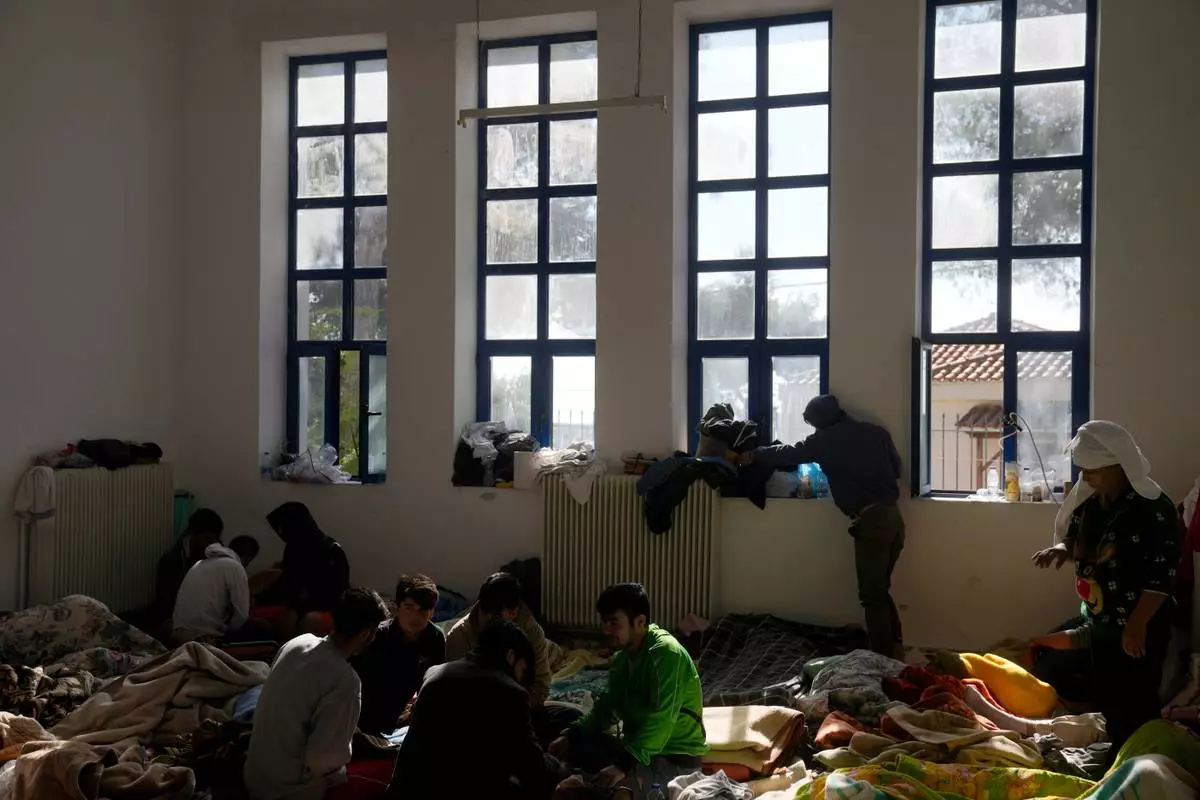
FILE - Migrants, most of them from Afghanistan, rest at an old school used as a temporary shelter on the island of Kythira, southern Greece, Oct. 7, 2022. (AP Photo/Thanassis Stavrakis, File)
ISLAMABAD (AP) — Iran’s president was traveling to Pakistan on Tuesday for talks with officials who have been mediating negotiations between Tehran and Washington on a permanent end to the war in the Middle East even as discrepancies were emerging on what had been agreed so far.
President Masoud Pezeshkian’s visit to Islamabad comes as technical teams were working on details of the deal, following high-level negotiations in Switzerland on Monday led by US Vice President JD Vance and Iran’s parliamentary speaker, Mohammad Bagher Qalibaf.
In Tehran, Iran's capital, Foreign Ministry spokesperson Esmail Baghaei told reporters that no visits have been scheduled for the U.N. watchdog — the International Atomic Energy Agency — to see Iranian nuclear sites bombed by the United States last year. Vance had previously said the negotiations in Switzerland won an agreement for IAEA to inspect the sites.
The IAEA has been in and out of Iran since Israel’s 12-day war against Iran in 2025, but has not been granted access to the bombed enrichment sites targeted by the U.S. in that war.
Violence flared again in southern Lebanon, threatening the fragile ceasefire there, as Israeli soldiers opened fire in the town of Nabatiyeh al-Fawqa on Tuesday, killing two men, Lebanon’s state-run National News Agency reported. It said the men were next to a bulldozer that was working to clear the road at the time.
Separately, the agency said Israeli troops fired on residents on the outskirts of the town of Hadatha as they were heading to carry out a burial in the town’s ceremony with a Lebanese army escort.
There was no immediate comment from Israel on the reports.
Security was tight in the area of Islamabad where the Iranian president was to meet with President Asif Ali Zardari and Prime Minister Shehbaz Sharif. It's Pezeshkian's first visit since the conflict started with the U.S. and Israeli attack on Iran on Feb. 28.
Pezeshkian and Sharif were to hold joint news conference after their discussions.
In the initial talks, marking the start of a 60-day diplomatic process that seeks to reach a permanent deal to end the Iran war, Iran and the U.S. agreed to create a “de-confliction cell” to address the fighting in Lebanon between Israel and the Iranian-backed Hezbollah militant group. The U.S. said negotiators also discussed “mechanisms” to ensure the Strait of Hormuz, a key waterway for the transit of oil that Iran had effectively blocked during the war, remains open.
Ahead of his meetings in Pakistan, Pezeshkian cautioned that “the effectiveness of the talks depends on full commitment to the agreed obligations and their precise implementation.”
“Progress on this path will be measured by practical adherence to accepted responsibilities,” he wrote on X. “Statements outside the agreed text do not help advance the negotiations.”
Iran suggested the ongoing technical talks in Switzerland have led to the creation of specific negotiation groups, which include those focused on sanctions relief, nuclear issues, reconstruction and monitoring, according to a the state-run IRNA news agency.
The report quoted Kazem Gharibabadi, a deputy foreign minister leading the technical talks, saying that the countries involved also formed a contact mechanism over ships moving through the Strait of Hormuz and over the fighting in Lebanon between Israel and Hezbollah.
It remains unclear whether the de-confliction cell being created will be enough to stop fighting between the Lebanese militant group Hezbollah and Israel, which occupies part of Lebanon and insists it must maintain a free hand to attack militants launching attacks into northern Israel.
Following the high-level talks in Switzerland, Vance had said if Iranian financial assets were unfrozen they would be used to buy American-grown food.
Vance said that the U.S. and Qatar would have approval over the process, but if Iranian money becomes accessible as sanctions are lifted, it “would actually go to buy American soy, American corn and American wheat for the benefit of the Iranian people.”
However, Iran has no current demand for U.S. crops and Baghaei said on Tuesday that Tehran’s decisions on what to import would be based upon “prices and quality.”
“It is interesting that the philosophy and goal of the war, which was the destruction of the Iranian civilization and the collapse of Iran, has become enriching American farmers,” Baghaei said at the news conference in Tehran.
Iran’s ambassador in Geneva, Ali Bahreini, also questioned Vance’s contention that the U.S. and Qatar would have to approve how Iran uses unfrozen funds.
“Iran is the only country who decides what to do with those assets,” he told reporters.
Mediators Pakistan and Qatar said the cell would include the Lebanese government and would “ensure the adherence of the termination of military operations in Lebanon,” but Israeli Prime Minister Benjamin Netanyahu raised new questions late on Monday, saying his military still has “full freedom of action to thwart any direct or emerging threat to them or to the residents of the north.”
Neither Israel nor Hezbollah are signatories to the U.S.-Iran deal, and Netanyahu has vowed to keep his forces in southern Lebanon until any threat to Israel is eliminated. Hezbollah has refused to halt attacks unless Israel commits to withdrawing.
When asked about Netanyahu’s comments, U.S. President Donald Trump later said “we’re going to take a look at it,” adding that he wouldn’t say what action he would take but that the situation would “get solved.”
“I’m a problem solver, I get problems solved real fast, including with Bibi,” he said, using a nickname for Netanyahu.
The reports of Tuesday's deadly violence in Lebanon came after two days of calm following a ceasefire brokered on Saturday. No Israeli airstrikes or shelling have been reported since Sunday, and Hezbollah also has not claimed any attacks in what has been the longest halt in the fighting since the latest Israel-Hezbollah war erupted on March 2.
Lebanon and Israel planned another round of direct talks in Washington on Tuesday, which are expected to focus on developing a plan for an Israeli withdrawal.
Rising reported from Bangkok and Gambrell from Dubai, United Arab Emirates. Associated Press writers Abby Sewell in Beirut, Jamey Keaten in Geneva and Nasser Karimi in Tehran, Iran, contributed to this report.
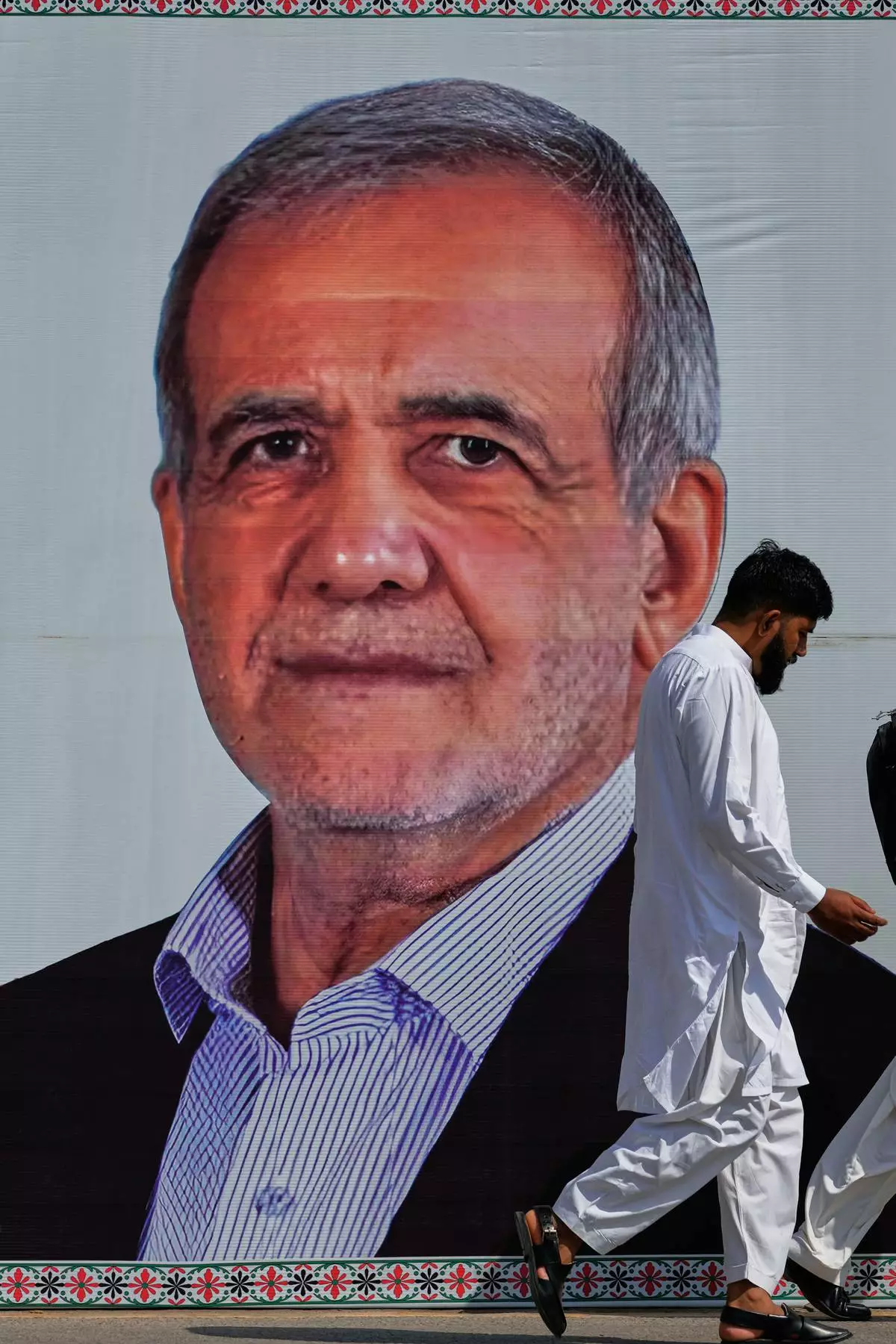
A man walks past a welcoming billboard featuring Iranian President Masoud Pezeshkian along a roadside in Islamabad, Pakistan, Tuesday, June 23, 2026. (AP Photo/Anjum Naveed)
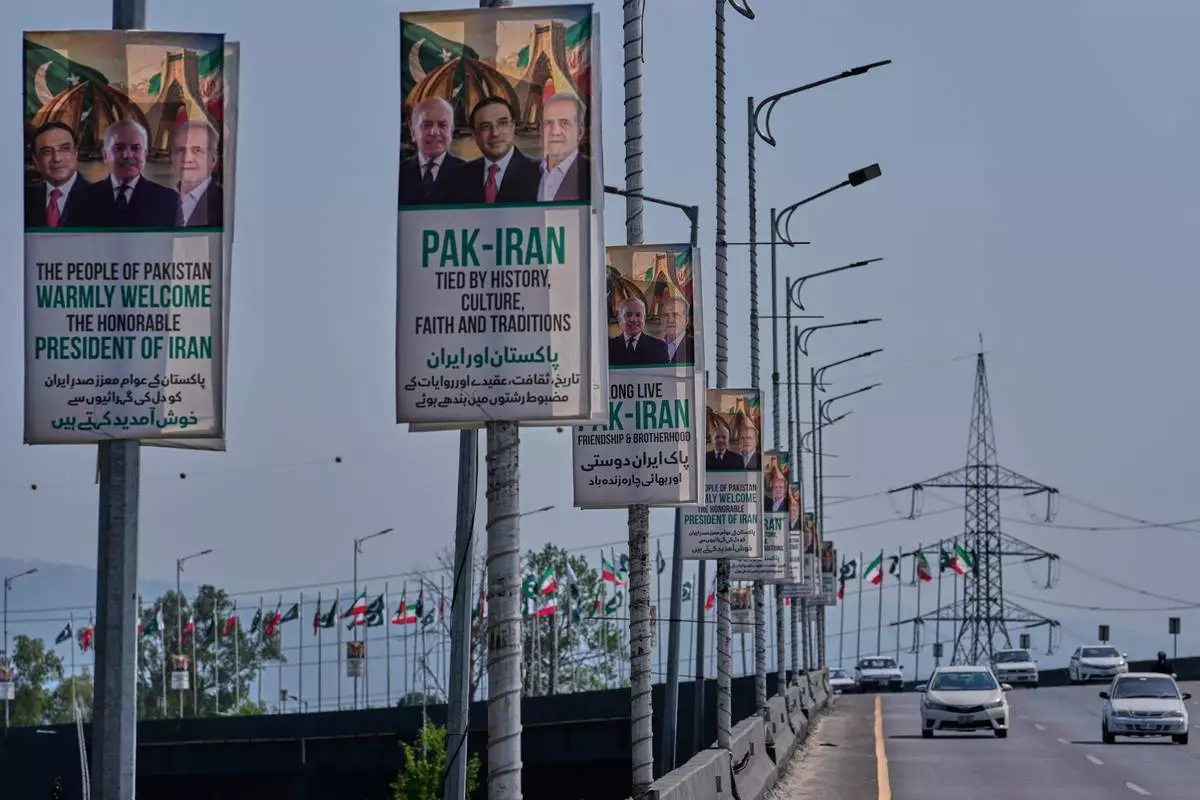
Vehicles drives past welcoming billboards featuring Iranian President Masoud Pezeshkian, right, with Pakistan President Asif Ali Zardari, center, and Shehbaz Sharif alongside an overhead bridge in Islamabad, Pakistan, Tuesday, June 23, 2026. (AP Photo/Anjum Naveed)
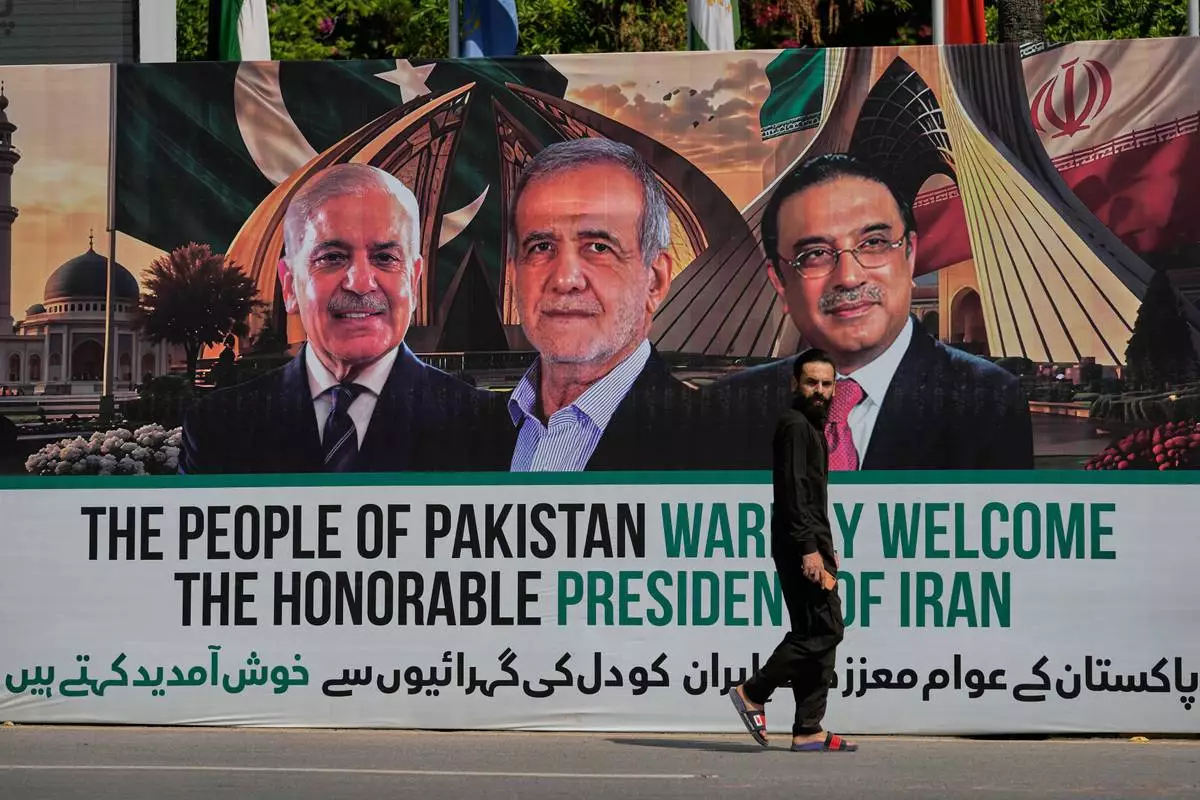
A man walks past a welcoming billboard featuring Iranian President Masoud Pezeshkian, center, with Pakistan President Asif Ali Zardari, right, and Shehbaz Sharif along a roadside in Islamabad, Pakistan, Tuesday, June 23, 2026. (AP Photo/Anjum Naveed)
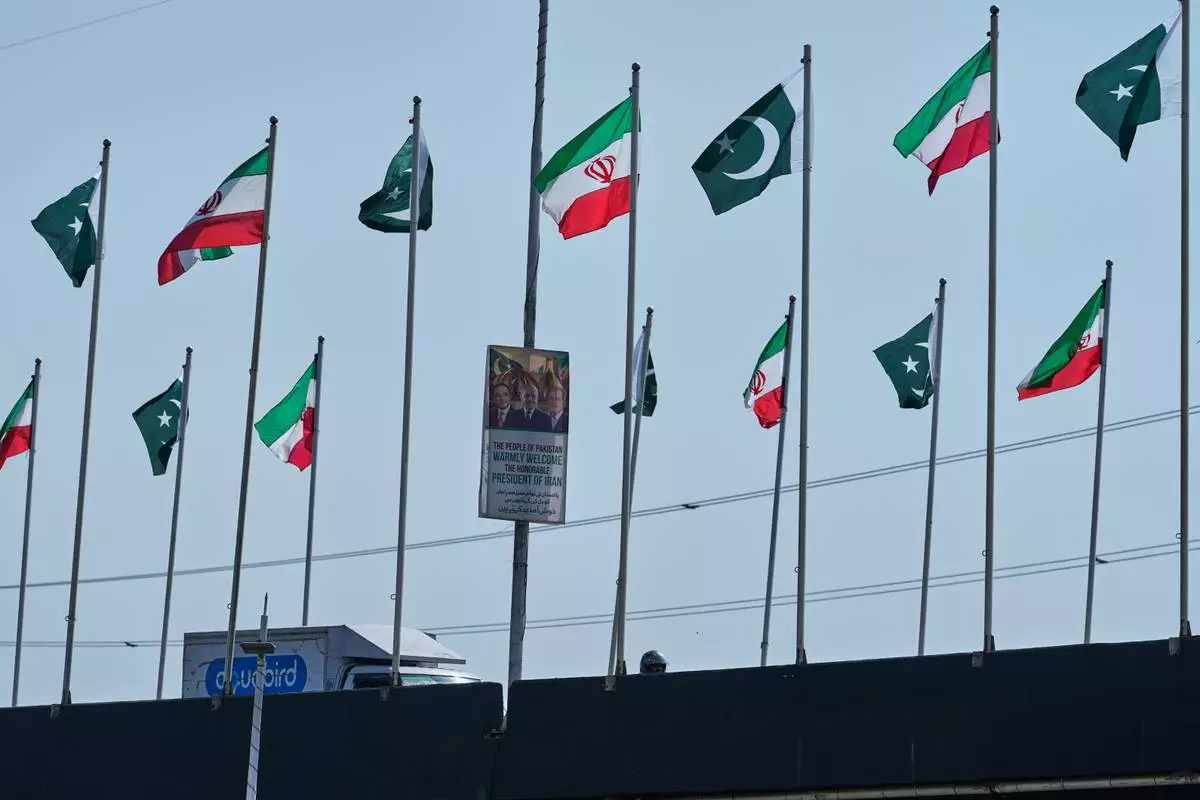
The welcoming billboard, featuring Iranian President Masoud Pezeshkian, right, with Pakistan President Asif Ali Zardari, center, and Prime Minister Shehbaz Sharif, is displayed alongside of an overhead bridge, in Islamabad, Pakistan, Tuesday, June 23, 2026. (AP Photo/Anjum Naveed)
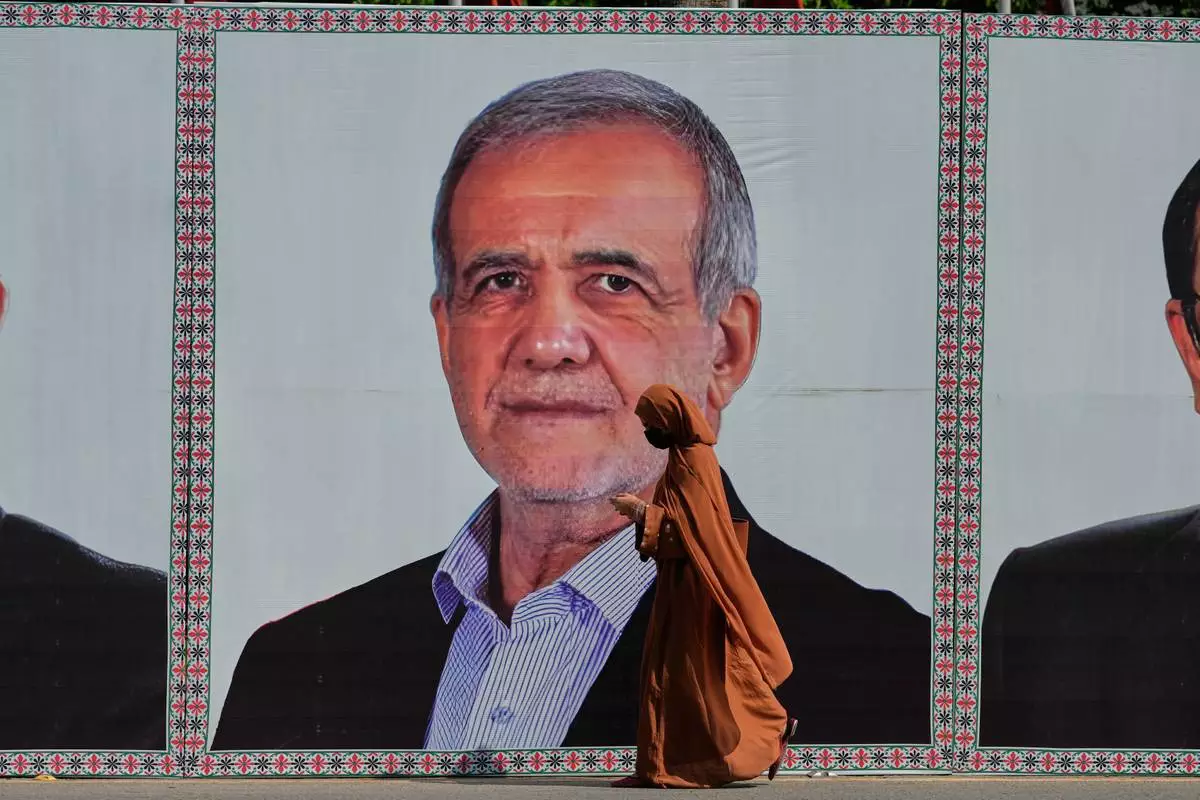
A woman walks past a welcoming billboard featuring Iranian President Masoud Pezeshkian along a roadside in Islamabad, Pakistan, Tuesday, June 23, 2026. (AP Photo/Anjum Naveed)