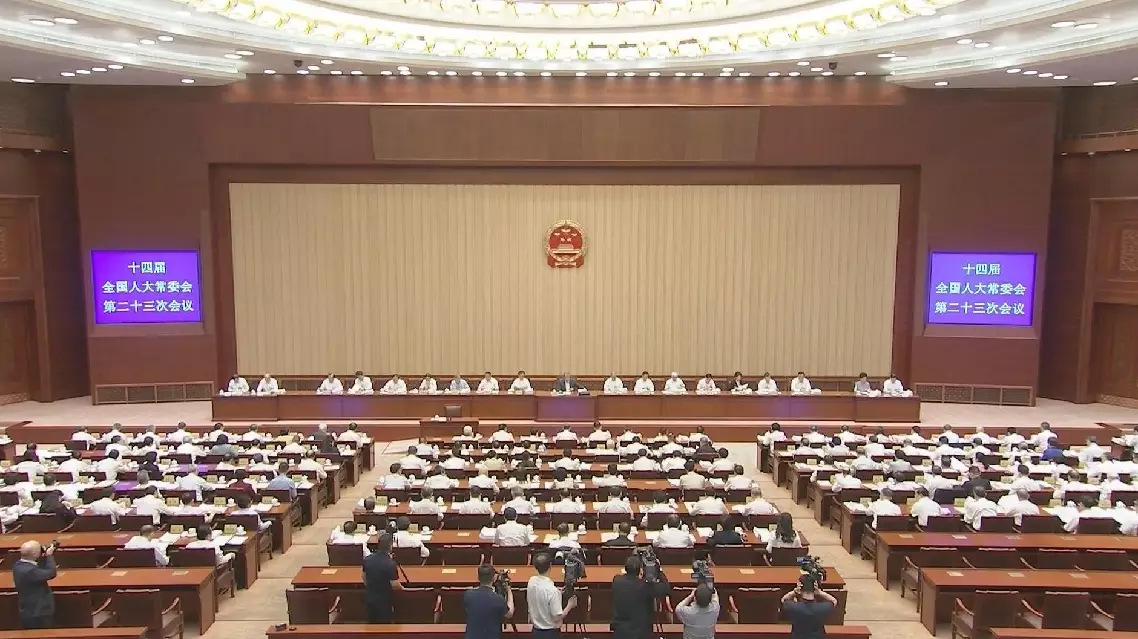
China's top legislature started a regular session on Tuesday to review a raft of bills, including draft revisions and reports.
Zhao Leji, chairman of the 14th National People's Congress (NPC) Standing Committee, presided over the first plenary meeting of the committee's 23rd session.
Lawmakers reviewed a slew of draft laws, including the draft law on procuratorial public-interest litigation, the draft law on Antarctic activities and environmental protection, the draft fire and rescue personnel law and the draft financial law.
They deliberated draft revisions to the trademark law, the government procurement law, the public bidding law and the law on the People's Bank of China, as well as draft amendments to the law on certified public accountants and the lawyers law.
They also heard a report on the central government's final accounts for 2025, and an audit report on the execution of the central government's 2025 budget and other fiscal revenue and expenditure, among others. Lawmakers, in addition, reviewed a deputy qualification report and personnel-related bills.
China's top legislature convenes standing committee session
The Strait of Hormuz, one of the world's most important energy shipping routes, is fully open to commercial vessels, the U.S. and Iran confirmed separately on Tuesday after negotiators from the two countries, under Qatari and Pakistani mediation, concluded the first round of talks in central Switzerland.
The developments came a day after mediators announced encouraging outcomes from the first round of indirect U.S.-Iran talks in Switzerland, including a 60-day roadmap toward a final agreement and mechanisms to ensure commercial shipping security through the strait and end hostilities in Lebanon.
U.S. and Iranian negotiators began their talks on Sunday at the Buergenstock mountain resort in central Switzerland, marking the first direct talks between the two sides since the signing of the Islamabad Memorandum of Understanding (MoU) last week.
According to the MoU, the United States and Iran declare an immediate and permanent termination of military operations on all fronts, including in Lebanon, and commit to negotiating and achieving the final peace agreement in maximum 60 days.
Ali Bahreini, Iranian ambassador and permanent representative to the United Nations (UN) Office at Geneva, announced on Tuesday that the Strait of Hormuz is fully open to commercial vessels without tolls.
He said the two sides have decided to set up a communication line to ensure the safe passage of commercial ships through the Strait of Hormuz.
Bahreini said that the situation will be reviewed after 60 days, depending on negotiations between Iran and the United States.
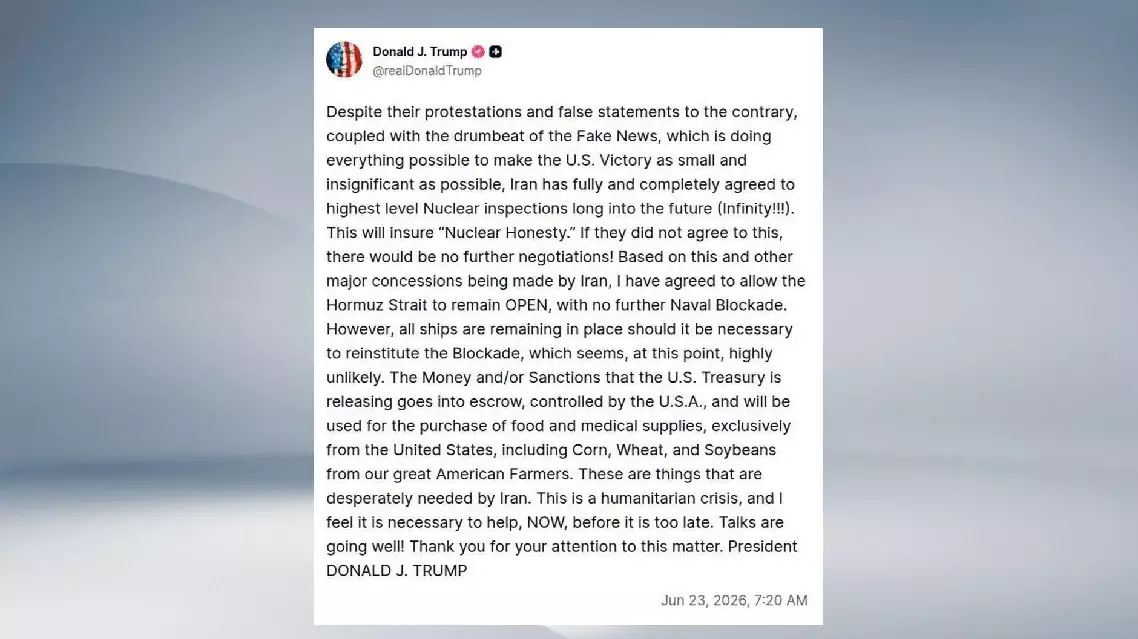
Separately, U.S. President Donald Trump said on a social media post the same day that given "major concessions" by Iran, including Iran's consent to the highest-level nuclear inspections, the U.S. will "allow the Hormuz Strait to remain open, with no further blockade."
Iran and Oman issued a joint statement on Tuesday affirming their commitment to ensuring safe passage through the Strait of Hormuz, stressing that all arrangements relating to the waterway "must fully respect their sovereignty and sovereign rights."
The two countries agreed to continue discussions through a joint working team between their foreign ministries to reach an understanding on the future management of navigation in the strait and the related charging service "costs," read the statement.
Beyond the political statements, data from maritime analysts confirmed the resurgence in traffic through the Strait of Hormuz.
Shipping analytics firm Kpler reported that at least 36 commercial vessels transited the strait on Monday, the highest single-day tally since the war began last February, signaling that traffic had rebounded to nearly one-third of the strait's normal peacetime traffic, which averages around 120 vessel crossings per day.
On Tuesday, two more supertankers that had been stranded in the Persian Gulf sailed through the waterway, each loaded with 2 million barrels of crude, according to data from the London Stock Exchange Group and Kpler.
Before the conflict, more than one-fifth of global oil and liquefied natural gas moved through the waterway, which is also important for grain and consumer goods shipments into the Gulf.
Despite the tangible progress on maritime access, the U.S. and Iran remain at odds on key elements of the broader deal, issuing conflicting accounts over whether Iran has agreed to full IAEA nuclear inspections and how unfrozen Iranian assets may be used.
Iran, US separately confirm Strait of Hormuz reopened to commercial shipping