Skip to Content Facebook Feature Image

Federal officials plan to offload some warehouses purchased for immigrant detention

News

Federal officials plan to offload some warehouses purchased for immigrant detention
News

News

Federal officials plan to offload some warehouses purchased for immigrant detention

2026-06-24 06:14 Last Updated At:06:21

U.S. Immigration and Customs Enforcement is retreating from a plan to use warehouses to hold up to 10,000 people on a single site, jettisoning a key piece of former Homeland Security Secretary Kristi Noem’s $38-billion plan to rapidly expand detention capacity this year.

The federal government, which was sued by Michigan and a Detroit suburb, informed a judge Monday that a warehouse purchased in Romulus will be sold. Plans also are unraveling in Social Circle, Georgia, and the El Paso suburb of Socorro, local officials said.

The three cities are among 11 where the federal government spent a combined $1.074 billion on warehouses.

The New York Times first reported last week that federal immigration officials now plan to get rid of seven of the 11 warehouses — either giving them to other federal agencies or selling them outright.

DHS didn't confirm the reports but said in a statement that it is "moving swiftly to utilize EXISTING detention space with our state and county partners.”

“Wildly foolhardy" is how Claire Trickler-McNulty, a former ICE official under the Obama, Trump and Biden administrations described the plans to convert the buildings into immigrant detention.

One issue was that Noem’s purchases were largely carried out of public view and angered communities that were caught by surprise. Some only learned about ICE’s ambitions after the agency bought or leased space for detainees.

After Noem was fired, her replacement, Markwayne Mullin, quickly paused the purchase of new warehouses.

Some were opposed on moral grounds to ICE’s presence in their neighborhoods, while others questioned whether the facilities would be a drain on local resources, such as sewer and water systems.

Seven federal lawsuits were filed, and regulatory roadblocks created hassles elsewhere.

Meanwhile, questions about how much DHS paid for some warehouses triggered an internal audit. The agency shelled out double what the New Jersey warehouse was valued at in tax records and nearly five times more than the assessed value of the Social Circle warehouse.

Trickler-McNulty, the former ICE official, said ICE does have a few facilities that it owns that it inherited from its predecessor agency, the Immigration and Naturalization Service, but generally ICE has contracted out its detention needs.

“Facilities over 2,000 people just break down. It’s very hard to run a very big facility, to keep it staffed, to keep all of it moving,” she said.

Mullin, who took over and expanded his family’s plumbing business before representing Oklahoma in the U.S House and Senate, acknowledged there had been issues at his confirmation hearing.

He noted that most municipalities don’t have the capacity in their infrastructure for waste and water.

Indeed the water issues were such a challenge that a federal lawsuit filed over the Salt Lake City warehouse, the costliest purchased at $145.4 million, said ICE officials told the mayor that they might need to truck water and sewage from the facility as an “interim solution.”

The New York Times story, which cited internal documents that the newspaper obtained, said the Salt Lake City warehouse is among those that federal immigration officials plans to hand off or sell. Also on the list is the Romulus warehouse, as well as one in New Jersey and two each in Georgia and Pennsylvania.

Michigan Attorney General Dana Nessel said it would have been an “abomination" if the 249,000-square-foot Romulus warehouse was transformed into immigrant detention, as was planned when it was purchased for $34.7 million,

“The ICE warehouse proposal was every bit as ill-conceived as it was cruel and unnecessary, and I am relieved that this chapter is coming to a close,” Nessel, a Democrat, said.

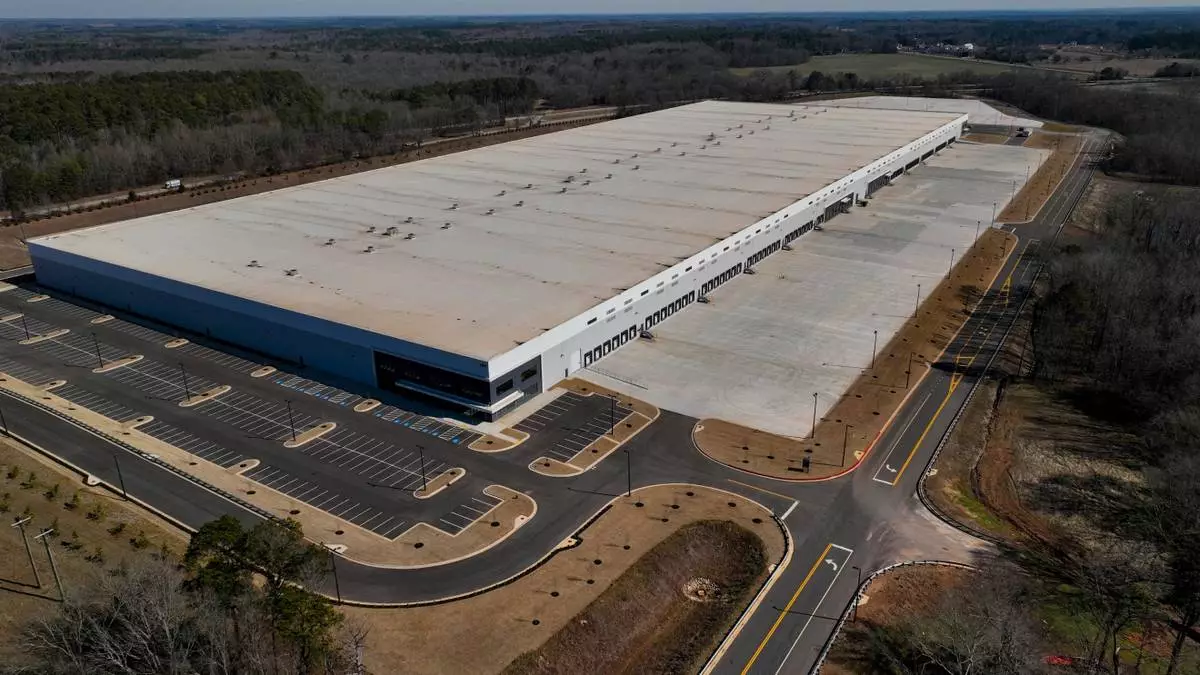
Social Circle, Georgia, announced last week in a statement that it has received notification from U.S. Rep. Mike Collins, a Republican, that the Department of Homeland Security is no longer pursuing an ICE detention facility there.

Meanwhile, acting ICE Director David Venturella told officials in the El Paso area during a visit there earlier this month that the agency has changed its plans for three warehouses it purchased in nearby Socorro for $122 million, said Rep. Veronica Escobar, who was present for the visit.

Escobar, a Democrat who represents El Paso, said during a news conference that ICE no longer plans to detain up to 8,500 immigrants in the facilities as originally envisioned, and instead will convert the property into an ICE campus, she said. The site will include an unspecified smaller number of detainees but also ICE offices and training space, she said.

However, many of the communities remained frustrated, as they struggled to get information about possible sales.

In Pennsylvania, state and local officials said Tuesday that they hadn’t received any new information from DHS about two warehouses bought earlier this year by the department. Both are being held up by the state’s denial of permits over concerns that drinking water and sewer service are inadequate to handle thousands of inhabitants.

U.S. Rep. Dan Meuser, whose district includes both warehouses, said he met Friday with DHS personnel, but that the agency hadn’t made a decision whether to use them as detention centers or sell them.

In Georgia, the city manager in Oakwood, said Tuesday he is talking to his state congressional delegation, trying to confirm rumors that a warehouse there will be sold. “I have not heard anything yet,” B.R. White said.

In Maryland, where a judge extended a stoppage on transforming a sprawling warehouse into a processing facility for immigrants, ICE is currently collecting public comments about the environmental impacts of the facility. And an announcement earlier this month disclosed more details on plans for the facility, including six secure recreation yards.

Patrick Dattilio, the founder of Hagerstown Rapid Response, which formed in opposition to housing ICE detainees in the warehouse, said there has been little communication outside of the lawsuit. But he remains committed to keeping it from opening.

“It’s a big warehouse," Dattilio said. “It’s not meant for people.”

Associated Press writers Marc Levy and Ed White contributed to this report.
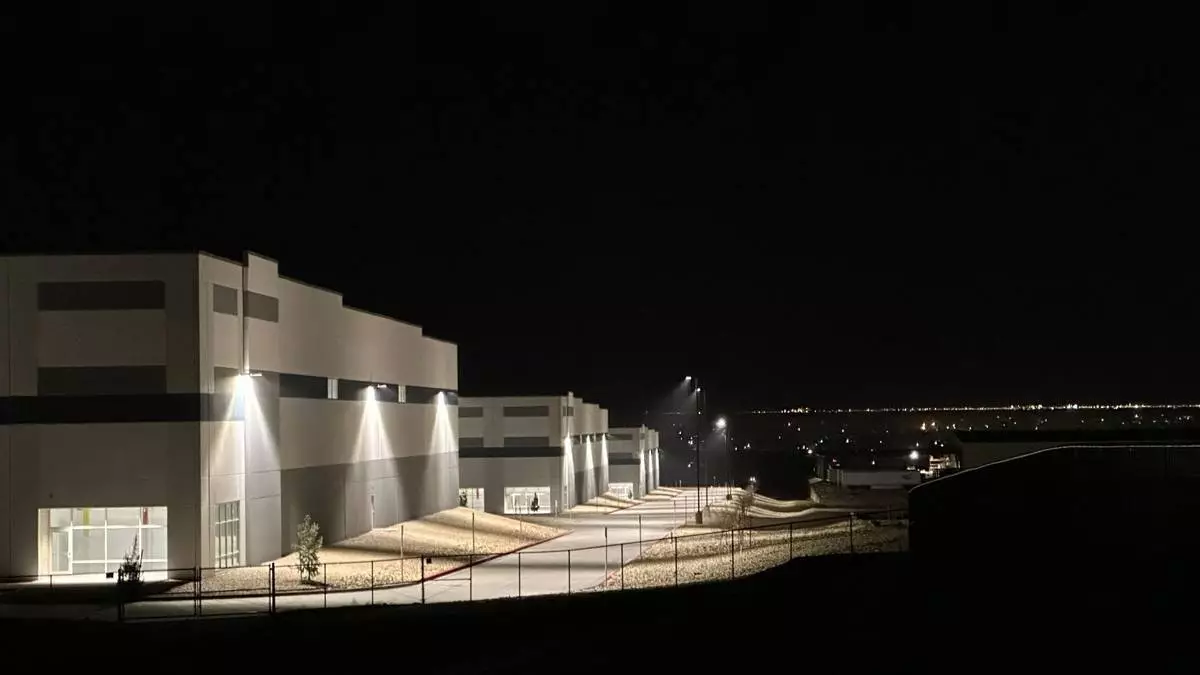
FILE - A massive 826,780-square-foot warehouse sits illuminated Feb. 12, 2026, in the El Paso suburb of Socorro, Texas, that was recently purchased by the U.S. Department of Homeland Security for $122.8 million. (AP Photo/Morgan Lee, file)
FILE - A massive 826,780-square-foot warehouse sits illuminated Feb. 12, 2026, in the El Paso suburb of Socorro, Texas, that was recently purchased by the U.S. Department of Homeland Security for $122.8 million. (AP Photo/Morgan Lee, file)

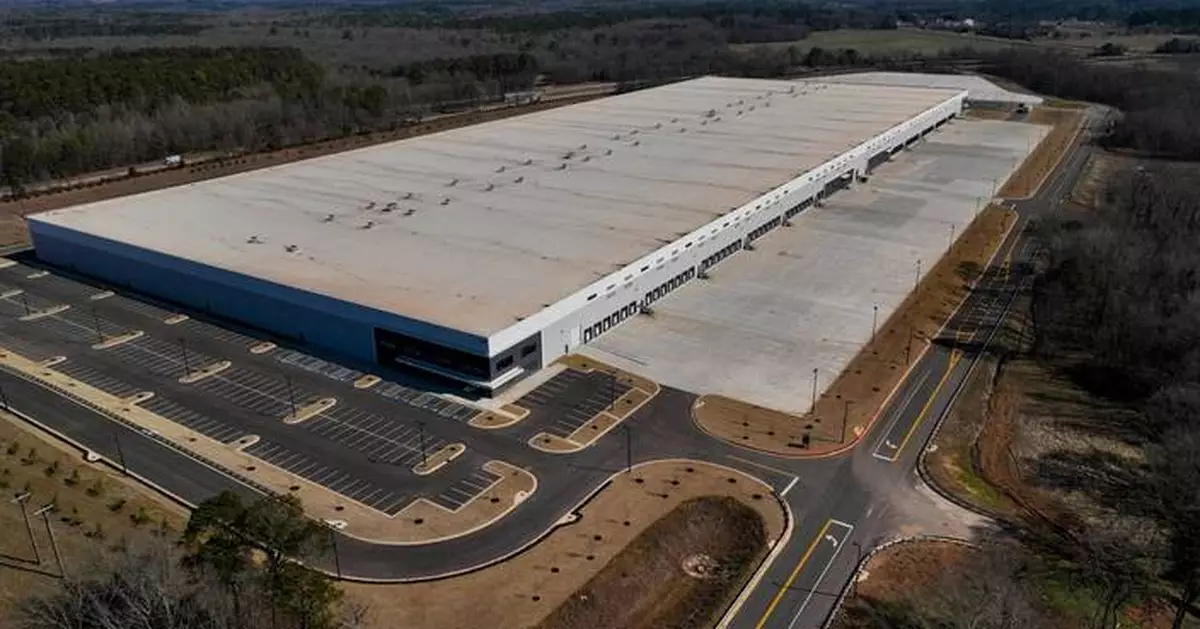
FILE - A newly built warehouse is seen on Friday, Feb. 6, 2026, in Social Circle, Ga., where officials are concerned about U.S. Immigrations and Customs Enforcement's plans connected to a $45-billion expansion of immigrant detention centers. (AP Photo/Mike Stewart, file)


FILE - A newly built warehouse is seen on Friday, Feb. 6, 2026, in Social Circle, Ga., where officials are concerned about U.S. Immigrations and Customs Enforcement's plans connected to a $45-billion expansion of immigrant detention centers. (AP Photo/Mike Stewart, file)
SAN JUAN, Puerto Rico (AP) — The U.S. hit Cuban state companies on Tuesday with new sanctions that analysts say are expected to spook foreign investors and deepen a severe economic crisis.

U.S. Secretary of State Marco Rubio said the sanctions target five Cuban entities, including three linked to Grupo de Administración Empresarial S.A., a business conglomerate run by Cuba’s Revolutionary Armed Forces. Best known as GAESA, it is believed to command nearly 40% of Cuba's gross domestic product. As of early 2024, it held $14.5 billion in liquid reserves.

“The situation in Cuba is devolving as the island’s corrupt, brutal and anti-American Communist regime continues to prioritize its own total control over the freedom, opportunity and basic well-being of the Cuban people,” Rubio wrote on X.

Rubio, the son of Cuban immigrants, accused “regime elites” of using GAESA to “steal the island’s few resources, diverting them for repression, anti-American subversion and spying instead of schools, power plants, and basic necessities for the Cuban people.”

Bruno Rodríguez, Cuba's foreign affairs minister, rejected the sanctions, calling Rubio “dishonest and mendacious.”

“Cuba has proven stronger, more capable, and more effective than he anticipated in the face of the ruthless aggression and collective punishment inflicted upon its people and their living conditions," he wrote on X. “What this individual is promoting from the world’s greatest power is a crime.”

Cuba’s U.N. Ambassador Ernesto Soberón Guzmán accused Rubio of directing “a chorus of lies” featuring Mike Waltz, the U.S. ambassador to the United Nations, and U.S. Rep. María Elvira Salazar, a Republican.

“No government, no rational person — and certainly not the people of Cuba who suffer from the economic impact of the U.S. economic war — can believe that the intensification of the blockade, the energy siege, and the rest of the most recent sanctions are aimed at supporting the Cuban people,” he said in a statement.

Anyone who provides services to the targeted Cuban entities risks being sanctioned and cut off from the U.S. financial system.

“By designating specific entities, they’re making it clear to foreign investors: ‘If your business in Cuba touches any of these folks, you risk being banned,’” said Michael Bustamante, a professor and chair in Cuban and Cuban-American Studies at the University of Miami.

“For most of these companies, it’s a bridge too far,” he said of the impact of the new sanctions.

Almacenes Universales S.A., or AUSA, is among the entities sanctioned. As the government’s main logistics and warehousing company, it holds up Cuba's export and import system and is the main logistics operator at the port of Mariel, west of Havana. It’s also the main storage company used by the state, Cuba’s private sector and foreign investor partners.

Last week, Cuba announced a series of economic reforms, including allowing the private sector to bypass the state when importing goods. But Bustamante said he doesn’t believe that measure is operational yet.

If people or companies avoid doing business with the storage entities, he said, that could disrupt the flow of goods and lead to humanitarian consequences.

Also sanctioned was Rafin S.A., which Bustamante described as a “very opaque” company that he believes operates as the corporate financial arm within GAESA. He said it’s not a bank but holds capital from the government and GAESA and may be a player in financial deals.

“That would also seemingly throw more cold water on the foreign investors that are already there,” Bustamante said.

The third GAESA-related entity that was sanctioned is Banco Financiero Internacional S.A., a commercial bank that Bustamante said serves as a key institution for foreign investors. “If you don’t have a bank where you can go as a foreign investor, it makes your operations logistically quite difficult, to put it mildly.”

Max Meizlish, a former U.S. Treasury sanctions enforcement officer, said the bank was targeted because it's “a key nexus” for GAESA-related funds: "This is significant.”

Also sanctioned were Geominera S.A., a state-owned mining company, and Empresa Siderúrgica Jose Martí, which the U.S. described as Cuba’s largest raw steel producer.

The final sanction was slapped against Annalie Lilliam Rueda Cardero, daughter-in-law of former President Raúl Castro.

The sanctions are the latest in a recent string that have targeted GAESA itself and Cuban President Miguel Díaz-Canel.

“It’s very, very hard to suss out what’s going on here,” Bustamante said. “Is this setting the table for the great sale of Cuba state assets to the highest bidder or the lowest bidder?...Is this part of the recipe of a hostile takeover?”

The administration of U.S. President Donald Trump keeps pressuring for a change in Cuba’s political and economic model, accusing the island of representing a threat to the U.S. because of its ties to U.S. adversaries. The Cuban government has repeatedly denied it’s a threat.

Meanwhile, Cuba unveiled economic reforms last week that Bustamante described as “potentially the most significant liberalization of the Cuban economy in 60 years," though he said questions and doubts remain.

On Tuesday, a U.S. State Department spokesperson said the reforms “are modest, long overdue and ultimately superficial smoke signals from the Cuban regime. This is part of the dictatorship’s handbook: announce a cycle of supposed reforms to insinuate a desire for change, then quickly roll back any changes the moment the regime’s total control is at all threatened.”

“The U.S. administration is going to continue applying pressure on the regime until the regime is a different beast entirely,” said Meizlish, a research fellow with the U.S.-based Foundation for Defense of Democracies.

Cuba is already struggling with severe blackouts, food and water shortages and a crumbling healthcare system stemming in part from a U.S. energy blockade. In late January, Trump threatened tariffs against any country that sells or provides oil to the island, which depended heavily on oil shipments from Venezuela that were halted after the U.S. attacked the South American country.

Associated Press reporters Matthew Lee in Abu Dhabi, United Arab Emirates, and Edith M. Lederer at the United Nations contributed.

Follow AP’s coverage of Latin America and the Caribbean at https://apnews.com/hub/latin-america

People walk past graffiti in the colors of the Cuban flag in Havana, Cuba, Wednesday, June 17, 2026. (AP Photo/Jorge Luis Banos)

People walk past graffiti in the colors of the Cuban flag in Havana, Cuba, Wednesday, June 17, 2026. (AP Photo/Jorge Luis Banos)

Recommended Articles