PARIS (AP) — France coach Didier Deschamps will return home from the World Cup following the death of his mother and will miss his team's final group game against Norway, the French football federation said Tuesday.
The FFF said Deschamps learned of his mother's death on Tuesday morning and that he is going back to France to attend her funeral.
“At this incredibly painful time, we wish the head coach great strength and assure him of everyone's support,” the FFF said, adding that assistant coach Guy Stéphan will take temporary charge of the squad — including for Friday's game in Massachusetts — until Deschamps returns.
The federation did not say when Deschamps was expected to return to the United States.
The 57-year-old Deschamps had previously announced he is stepping down as France coach after the tournament, 14 years after taking charge.
The former France captain led Les Bleus to World Cup glory in 2018 and his team lost the final to Argentina in 2022 in a penalty shootout.
France won its opening two matches at this World Cup, beating Senegal 3-1 and Iraq 3-0 to advance to the knockout stage.
Norway has also won its two matches.
AP World Cup: https://apnews.com/fifa-world-cup

France head coach Didier Deschamps attends a training session ahead of the team's World Cup Group I soccer match against Iraq in Philadelphia, Sunday, June 21, 2026. (AP Photo/Petr David Josek)

France head coach Didier Deschamps sits on the bench before the World Cup Group I soccer match between France and Iraq in Philadelphia, Monday, June 22, 2026. (AP Photo/Derik Hamilton)
The federal government can't block benefits from the nation's largest food aid program from being used to buy candy, soda and other sugary drinks, a judge ruled.
Monday's ruling scuttles restrictions now in place or planned for the federally funded and state-run Supplemental Nutrition Assistance Program in 23 states. President Donald Trump's administration has not said whether it will appeal to a higher court.
U.S. District Judge Amy Berman Jackson, who sits in Washington and was nominated to the bench by former President Barack Obama, said in her opinion that the ruling was because the federal government did not follow its own definition of “food.” She said it wasn't a comment on whether the restrictions are a good idea.
“The federal defendants and the states may have a genuine desire to improve the health of SNAP households by encouraging healthy choices at the store, and they can take lawful steps to meet those goals,” she wrote. “But what they cannot do is violate the law and their own regulations along the way.”
Agriculture Secretary Brooke Rollins and Health and Human Services Secretary Robert F. Kennedy Jr. have encouraged states to limit what the food aid can be used to buy as part of the “Make America Healthy Again” campaign.
They reason that soda and candy fuel obesity, diabetes and chronic disease epidemics — and taking them off the menu would encourage healthier food choices.
The Agriculture Department has given 23 states so far permission to implement restrictions. Some have been implemented already, while others are queued to take effect in the coming months and years.
At least one state that was set to limit soda and candy purchases changed course earlier this year. Colorado's human services board voted against implementing the ban after a March hearing in which SNAP beneficiaries and advocates said people would face stigmas if they mistakenly tried to use the benefits on prohibited items. They also said the rules were confusing because they would have allowed buying drinks with at least 50% fruit or vegetable juice, but not those with less.
While the goals are similar, the exact rules vary by state. Some wanted to ban both sugary drinks and candy, while others only sought to ban sugary beverages.
A legal challenge to the candy and soda ban — which includes items such as sports drinks in some states — was filed by SNAP beneficiaries in Colorado, Iowa, Nebraska, Tennessee and West Virginia.
Jackson said the main legal misstep in restricting what SNAP benefits could buy came because it ran contrary to Congress's definition of “food.”
Under the law, SNAP benefits — formerly known as food stamps — can be used for “any food or food product for home consumption except alcoholic beverages, tobacco, hot foods or hot food products ready for immediate consumption.”
The government can waive requirements, but limiting use of the benefits to improve nutrition isn't listed as a reason to do so. Yet when states asked the Agriculture Department to let them restrict purchases, their requests included using alternate definitions of “food.”
Rollins suggested on social media Tuesday that the administration would “keep fighting to Make America Health Again,” though she did not say directly whether there would be an appeal. Rollins said “an activist judge just blocked our commonsense restriction on using SNAP benefits for soda and junk.”
The case is among scores of challenges to Trump administration policies that hinge on whether the administration has the authority to change policies without congressional approval.
While it's a big program helping nearly 39 million Americans — about 1 in 9 — buy groceries, SNAP is normally relatively low-profile. That's been different since Trump returned to office last year.
Under his big tax and policy law signed last year, more recipients are subject to work requirements and states are being required to pay a larger share of administrative costs — and could be on the hook for benefit costs if their error rates are too high.
During a government shutdown last year, courts blocked the administration from cutting off benefits. Meanwhile, Rollins has said that there's rampant fraud in the program.
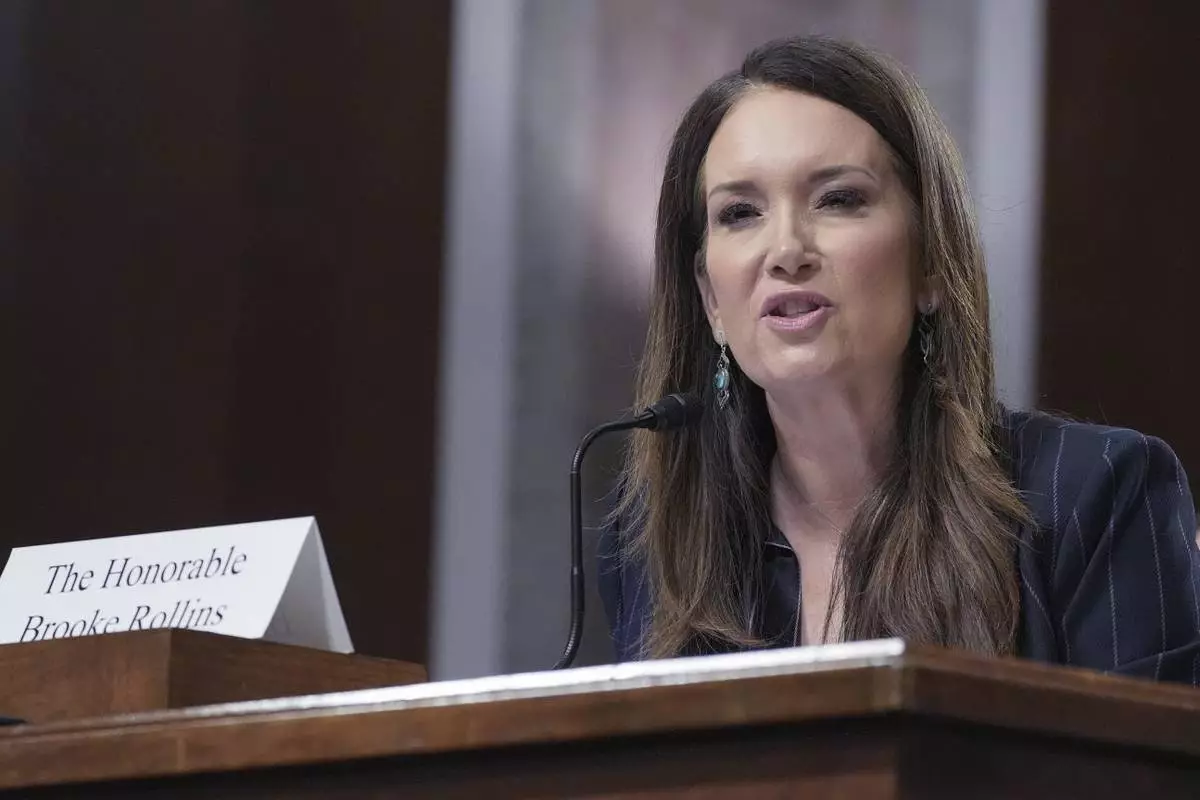
U.S. Agriculture Secretary Brooke Rollins testifies during a Senate Committee on Agriculture, Nutrition, and Forestry oversight hearing on Capitol Hill, Wednesday, June 10, 2026, in Washington. (AP Photo/Mariam Zuhaib)
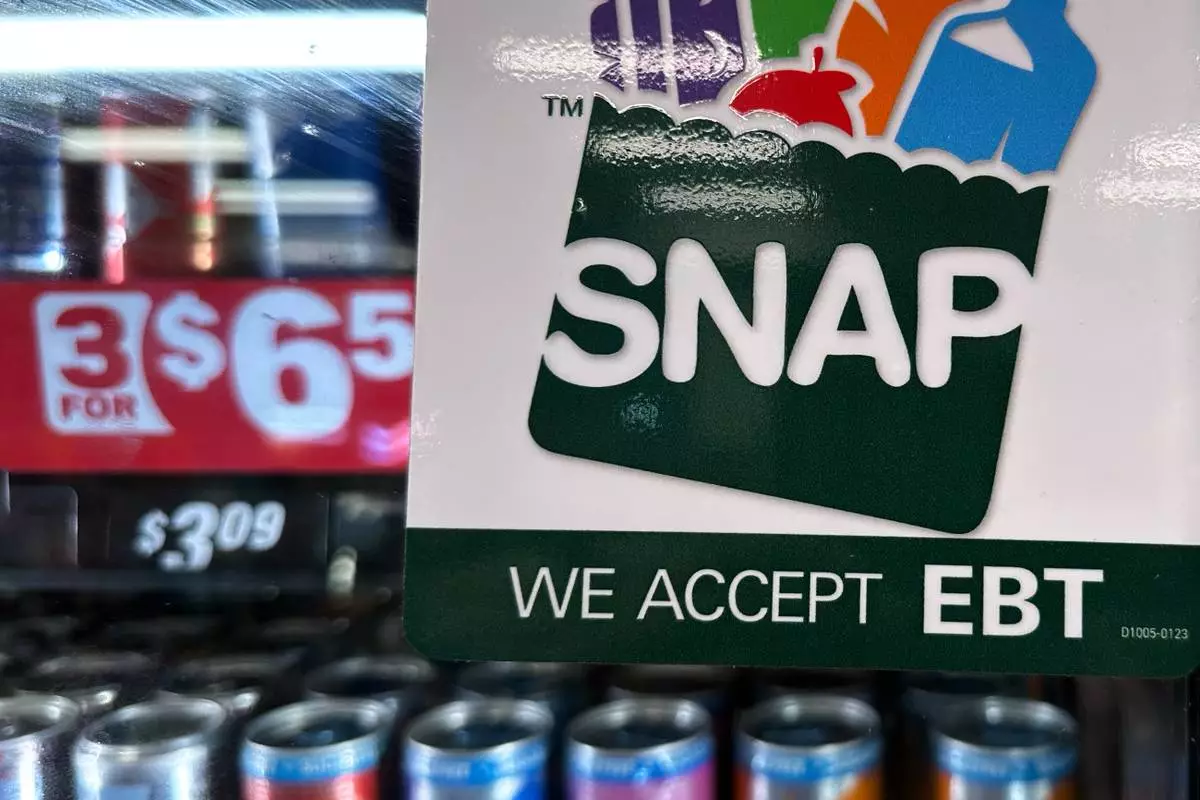
FILE - SNAP EBT information sign is displayed at a gas station in Riverwoods, Ill., Nov. 1, 2025. (AP Photo/Nam Y. Huh, File)