BOSTON--(BUSINESS WIRE)--Jun 24, 2026--
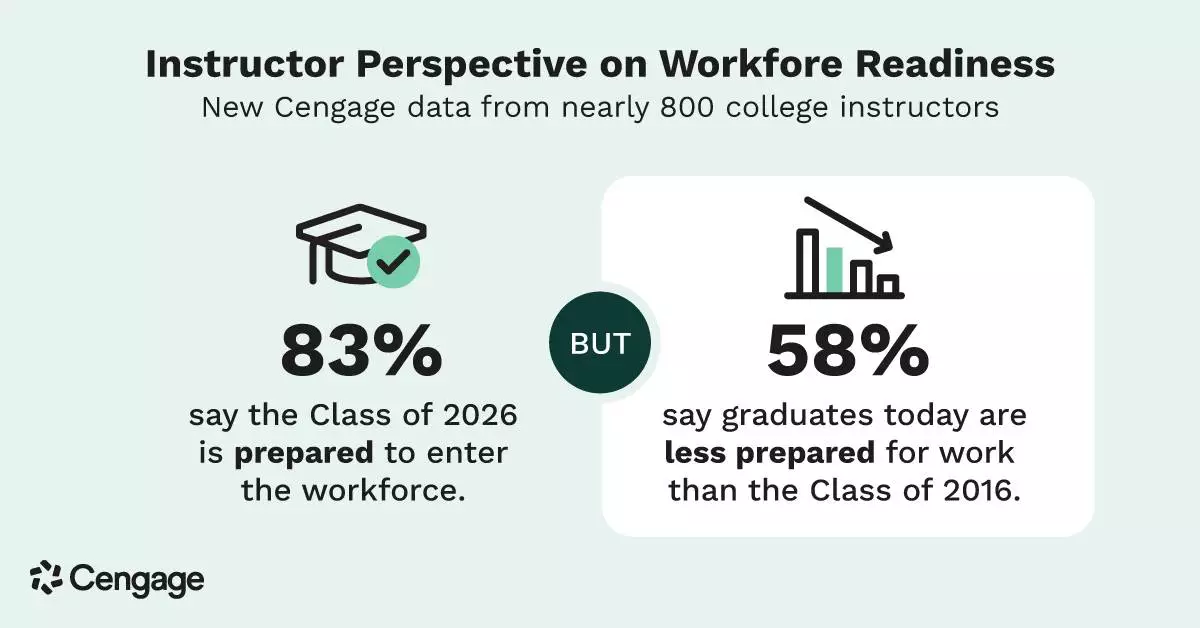
New data released today from Cengage’s “ Employability Report Special Edition – Instructor Perspective on Workplace Readiness ” reveals that while most college instructors believe today's graduates are prepared to enter the workforce (83%), many see a long-term decline in overall workforce readiness. More than half (58%) say the Class of 2026 is less prepared for work than graduates from a decade ago (Class of 2016), citing weaker critical thinking, communication and interpersonal skills, as well as greater dependence on technology and AI.
This press release features multimedia. View the full release here: https://www.businesswire.com/news/home/20260624818776/en/
The findings, which surveyed nearly 800 college educators, come amid broader concerns about student learning outcomes nationwide. A recent analysis of student test scores by researchers at Stanford, Harvard and Dartmouth found that declines in student reading and math performance began years before the COVID-19 pandemic, suggesting many of the challenges instructors observe today may reflect long-term trends in academic preparedness rather than pandemic disruptions alone.
“Today's graduates have access to more technology, resources and career-focused learning opportunities than ever before,” said Michael Hansen, Cengage CEO. “Yet, instructors overwhelmingly indicate that human-centered skills like critical thinking, communication, professionalism and resilience are areas where students need the most support. That concern, coupled with employers who continue to raise expectations for entry-level talent, signals a growing disconnect between academic preparation and workplace readiness. This disconnect underscores the need for educational transformation – something that Cengage is focused on driving by helping institutions better connect learning to outcomes and workforce preparedness."
The growing gap in preparedness is noticeable among instructors who note striking differences in today’s students compared to 10 years ago, including:
However, despite these concerns, instructors remain largely confident in this year's graduates with 83% saying the Class of 2026 is prepared to enter the workforce. Notably, almost one in three (31%) say today's graduates are better prepared, citing learning advantages such as:
Beyond concerns about graduate preparedness, instructors are increasingly focused on how AI is changing the future of entry-level work. More than half (54%) believe AI will negatively impact entry-level job opportunities in the next three to five years. Concern is highest among Business and Economics (71%), Humanities and Social Sciences (64%) and STEM (57%) instructors.
To better prepare students to compete with AI and build skills alongside AI literacy, instructors recommend adapting learning approaches to:
"What we're seeing is not a loss of confidence in today's graduates, but an evolution in how instructors think about workforce readiness," said Kim Russell, Senior Vice President of Research, User Experience and Design at Cengage. "While most educators believe students are prepared to enter the workforce, they increasingly recognize that succeeding in today's workplace requires more than technical knowledge alone. Instructors are placing greater emphasis on the human-centered skills that employers consistently value — critical thinking, communication, resilience and professionalism — especially as AI continues to reshape how work gets done."
For more information about instructors’ and graduates’ response to career readiness, click here.
Methodology
The Cengage “Employability Report Special Edition – Instructor Perspective on Workplace Readiness” surveyed 759 college and university instructors across the United States to better understand perceptions of graduate workforce readiness, evolving skill needs and the future impact of AI on employment opportunities.
About Cengage
Cengage, a global edtech company, supports learners, educators and institutions across more than 100 countries. With products serving nearly 16 million digital users across the Higher Education, School, Work and English Language Learning markets, we've built a learning ecosystem that connects education to employment. We combine trusted content, AI-powered insights and scalable digital platforms to power learning for every future and drive meaningful outcomes at every stage of the learning journey. Visit us at www.cengagegroup.com or find us on LinkedIn or X.
Cengage Instructor Data Reveals Most College Educators Believe Graduates Are Less Prepared for Work Than a Decade Ago

Cengage Instructor Data Reveals Most College Educators Believe Graduates Are Less Prepared for Work Than a Decade Ago
WASHINGTON (AP) — The Trump administration on Wednesday reached a multi-state settlement with chemical giant Chemours Co. over years-long, illegal discharges of synthetic “forever chemicals” used to make products resistant to water, grease and stains. The settlement is the first by the federal government to resolve enforcement claims against a manufacturer of harmful chemicals known as PFAS.
Under the agreement, filed in federal court in West Virginia, Chemours will pay a civil penalty of $22.5 million for alleged violations and spend $90 million over 15 years to mitigate PFAS discharges in three states: West Virginia, North Carolina and New Jersey.
Chemours, a spin-off of chemical maker DuPont, also agreed to install PFAS pollution controls for and surface water discharges and air emissions at a West Virginia facility at an estimated cost of $60 million, supply clean drinking water to communities near its West Virginia and New Jersey sites at an estimated cost of $280 million, and implement controls to reduce releases of PFAS and other toxic chemicals from its facility in North Carolina.
Combined, the penalties and relief programs are estimated to cost about $450 million, the Justice Department said.
The settlement allows Chemours to continue manufacturing PFAS for commercial and military applications while preventing future contamination and protecting communities from existing pollution, said Adam Gustafson, principal deputy assistant Attorney General for the Environment and Natural Resources Division.
“The Trump administration recognizes the important role of Chemours for it commercial and military obligations,'' Gustafson said in an interview. “The settlement protects public health while preserving that important balance.”
The settlement against a major PFAS manufacturer “delivers on the Trump administration’s promise to make polluters pay and stop PFAS contamination at the source,” said Jeffrey Hall, assistant EPA administrator for enforcement and compliance assurance.
The agreement will greatly reduce PFAS contamination of water, land and air and even begin to mitigate past harm, Hall said. “This settlement brings Chemours into compliance with the law and holds it fully accountable,” he said.
The settlement comes as the Trump administration is expected to propose softening Biden-era limits on “forever chemicals” in drinking water, while delaying but keeping tough standards for two common types of the substance.
The proposal will start the formal process of rolling back parts of the first-ever limits on PFAS in drinking water finalized during former President Joe Biden’s administration. Officials at the time found they increased the risk of cardiovascular disease, certain cancers and babies being born with low birth weight.
The agency is committed to addressing Per- and Polyfluoroalkyl substances (PFAS) in drinking water while following the law and ensuring that regulatory compliance is achievable for drinking water systems, EPA Administrator Lee Zeldin said.
The settlement determined that facilities Chemours operates in the three states have discharged PFAS into the Ohio River, Cape Fear River and Delaware River, respectively, in violation of permits required by the Clean Water Act and state laws. Chemours also violated legal requirements under the federal Toxic Substances Control Act at all three facilities.
As a result of the alleged violations, people living near the facilities were exposed to illegal PFAS, officials said. PFAS are widely used and found around the world, with scientific studies showing that exposure to some PFAS in the environment may be linked to harmful health effects in humans and animals.
The violations continued for over a decade, the Justice Department said. The facilities were previously owned for many decades by DuPont. The settlement announced Wednesday does not resolve DuPont’s liability for past PFAS violations, officials said.
A federal judge last year ordered Chemours to stop discharging unlawful levels of cancer-causing chemicals into the Ohio River from the company’s Washington Works plant in West Virginia. The pollutants endanger the environment, aquatic life and human health, U.S. District Judge Joseph Goodwin wrote in the August 2025 order.
The West Virginia Rivers Coalition had asked Goodwin to require the company to immediately comply with its permit limits after violating them for more than five years.
DuPont, Chemours and another company, Corteva, agreed to pay New Jersey up to $2 billion last year to settle environmental claims stemming from PFAS. The federal settlement does not affect the state case.
The federal consent decree calls for 14 specific treatment systems to reduce PFAS in wastewater, stormwater and groundwater from the West Virginia plant. Chemours will test drinking water near the West Virginia and New Jersey sites and provide treated or alternative clean water.
FILE - The U.S. Department of Justice logo is seen on a podium before a news conference, May 4, 2026, in Washington. (AP Photo/Julia Demaree Nikhinson, File)
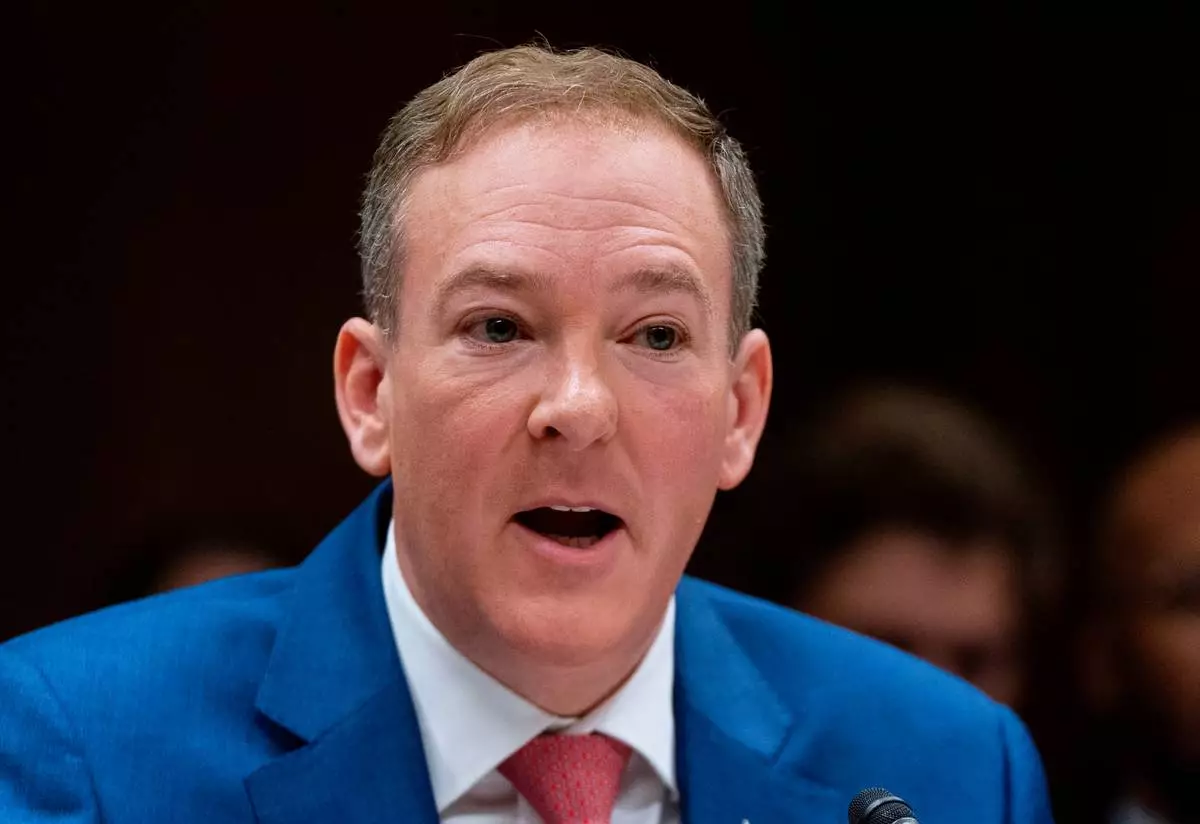
FILE - Environmental Protection Agency administrator Lee Zeldin, testifies to the Senate Appropriations subcommittee on Interior, Environment and related agencies, on Capitol Hill, May 13, 2026, in Washington. (AP Photo/Manuel Balce Ceneta, File)
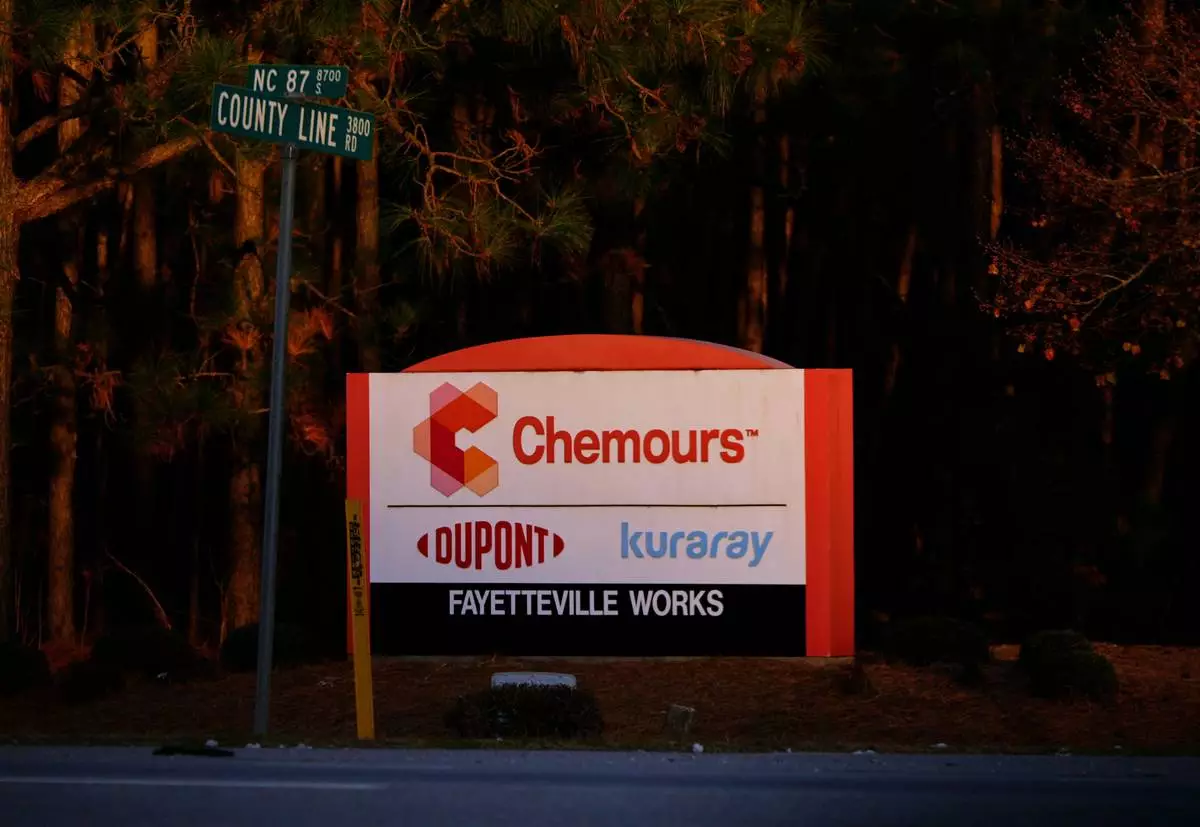
FILE - A sign is displayed at the entrance of Chemours Company, Fayetteville Works in White Oak, N.C., Dec. 9, 2025. (AP Photo/Carolyn Kaster, File)
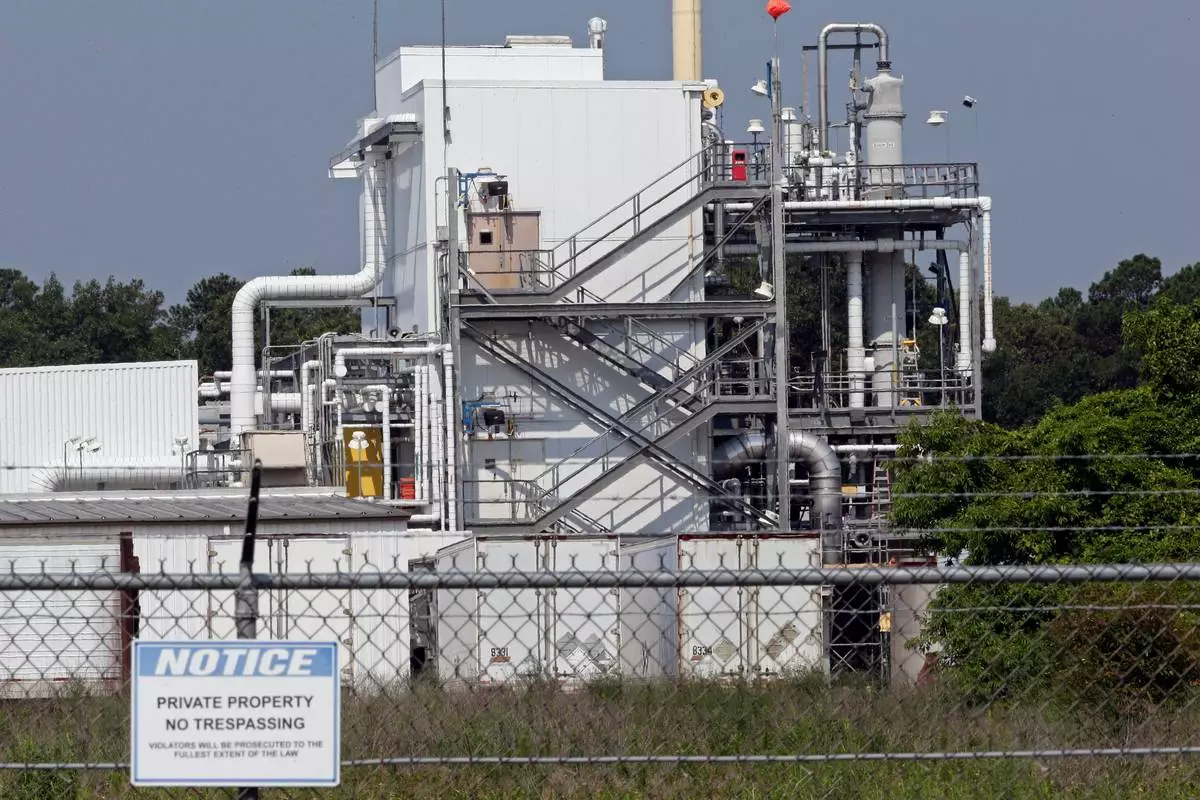
FILE - The Chemours Company's PPA facility at the Fayetteville Works plant near Fayetteville, N.C., June 15, 2018. (AP Photo/Gerry Broome, File)