Infrared surveillance cameras captured first-ever footage of a masked palm civet in a primitive forest of northwest China's Qinghai Province, provide crucial evidence for zoogeographical research.
According to the Qinghai Provincial Forestry and Grassland Bureau, researchers discovered the footage of a medium-sized animal through infrared surveillance cameras during wildlife monitoring in the Makehe primitive forest in southeastern Qinghai-Tibet Plateau. After morphological comparison and data verification, the animal was confirmed to be a masked palm civet. This marks the first documented record of the masked palm civet or any viverrid species in Qinghai Province.
The masked palm civets are mainly distributed in low-altitude areas of east, central and south China. Its appearance in the Makehe primitive forest shows this species may have adapted to high-altitude environment. The discovery provides new field evidence for studying the dispersal pathways, distribution patterns and adaptation mechanisms of civets to high-altitude environments.
Masked palm civets have been listed as a second-class nationally protected animal species in China.
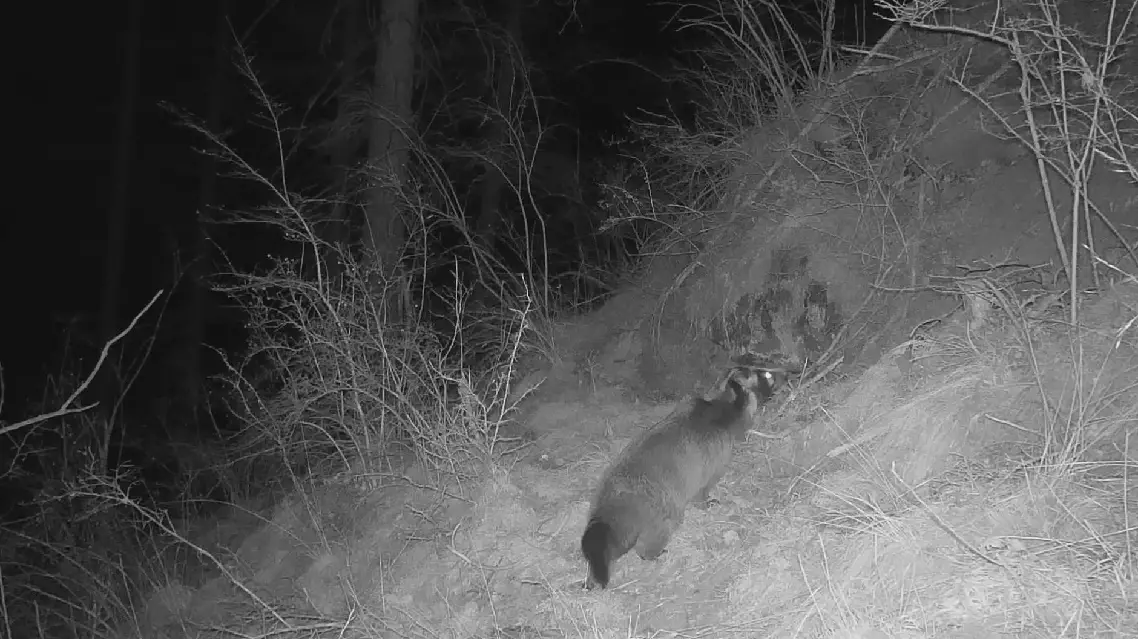
Masked palm civet caught on camera in northwest China's Qinghai