Prime Minister of Bangladesh Tarique Rahman arrived in Beijing on Wednesday for an official visit to China.
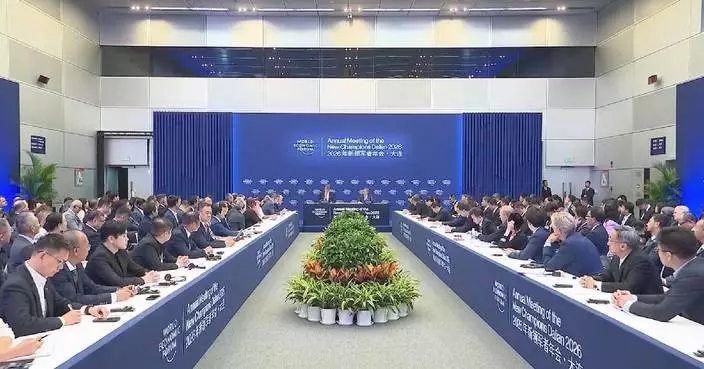
At the invitation of Chinese Premier Li Qiang, Rahman is paying an official visit to China from June 24 to 26. He arrived in the Chinese capital by high-speed train from the northeastern coastal city of Dalian, where he attended the 17th Annual Meeting of the New Champions, also known as the Summer Davos Forum.
According to the Chinese foreign ministry, this is Rahman's first visit to China since he took office in February. During his stay, Chinese President Xi Jinping, Premier Li Qiang and Zhao Leji, chairman of the Standing Committee of the National People's Congress, will meet or hold talks with him respectively. They will have in-depth exchanges of views on bilateral relations and international and regional issues of common concern, and chart out the direction for the future development of bilateral ties.
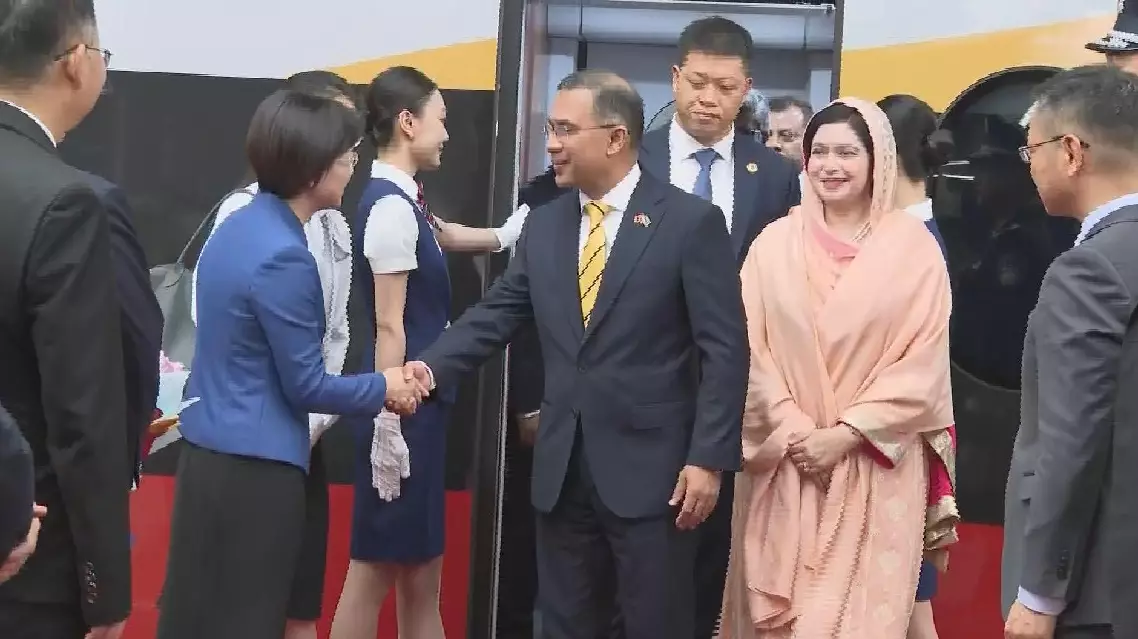
Bangladeshi PM arrives in Beijing for official visit
A dedicated judge spent more than a decade bringing the courtroom to farm fields and village homes in Nujiang Lisu Autonomous Prefecture, southwest China's Yunnan Province, turning legal proceedings into face-to-face dialogue for residents in remote ethnic minority communities.
Deng Xing, a Party member and now director of the Enforcement Division at the Nujiang Intermediate People's Court, pioneered circuit trials and grassroots mediation, helping extend judicial services to villages once isolated by steep mountains and deep gorges.
As a grassroots judge, Deng became widely known through photos showing him carrying the national emblem across suspension bridges over the roaring Nujiang River in the prefecture.
With transportation long constrained by the region's rugged terrain, reaching local residents often meant traveling on foot for hours to hear cases and provide legal services.
"Walking mountain trails, crossing zip-lines and climbing steep slopes were fairly normal things for us. About 70 percent or more of our cases were handled through circuit trials," Deng said.
Looking back, Deng believes taking the courtroom directly to local communities helped judges earn trust and resolve disputes more effectively.
"All people want is for the judge to find the true facts of the case and handle it fairly under the law," he said.
A member of the Lisu ethnic group and fluent in local dialects, Deng was able to communicate with many elderly residents who spoke little or no Mandarin. As he rose from a grassroots judge to head of a county-level court, he encouraged younger colleagues to move beyond paperwork and address disputes at doorsteps, ensuring that judicial services reached the communities where they are needed most.
"I am very happy with how it was sorted out, and so is the defendant," said Zhao Zhigang, a plaintiff in one of the cases.
His dedication also left a lasting impression on younger judges.
"He once taught us that when a problem cannot be resolved, we should proactively report it to the Party committee and the government to help the people solve their practical issues, rather than simply leaving them an unenforceable or blank judgment. In this process, I've also done my utmost," said Wang Wusheng, chief judge of the Yingpan Tribunal under the People's Court of Lanping County.
As rural revitalization has transformed the region, newly built roads and bridges have made courthouses more accessible. Yet circuit trials continue to play an important role in serving residents in remote communities.
"When I introduced the bonfire court, we should create a warm and amicable atmosphere. Especially in cold winter, if people can sit by a fire and talk things through, many disputes are already resolved halfway. If I filed a lawsuit, how would I hope the judge and the court would treat me? I think that's fundamental," Deng said.
Local officials also said the value of circuit courts extends far beyond individual cases.
"While maintaining harmony and stability, they have made efforts in courts to provide a solid legal foundation for the township's economic and social development," said Wu Tianling, Party secretary of Yingpan Township.
Though Deng is no longer the young judge crossing rivers and mountains to hear cases, a new generation of judicial workers is carrying forward that tradition.
"[He often tells us that] a Communist Party member must take the lead. Although I am not a Party member, the strong sense of responsibility and commitment characteristic of Party members has always inspired us. It makes us want to learn from them and become someone like them," said He Xiaofang, vice president of the People's Court of Lanping County.
Today, Deng serves in a new role at the prefecture-level intermediate court, but his mission remains unchanged.
"Whatever position I take, my duty to serve the people has never changed. Through our judicial work and exercise of authority, we strive to ensure people of all ethnic groups to feel fairness and justice are at their side," Deng said.
His journey continues in a different post, while a new generation of judges follows the path he helped forge, bringing justice closer to China's remote ethnic minority communities.
Deng's story is part of a special series produced and aired by China Global Television Network (CGTN) to mark the 105th anniversary of the Communist Party of China on July 1.
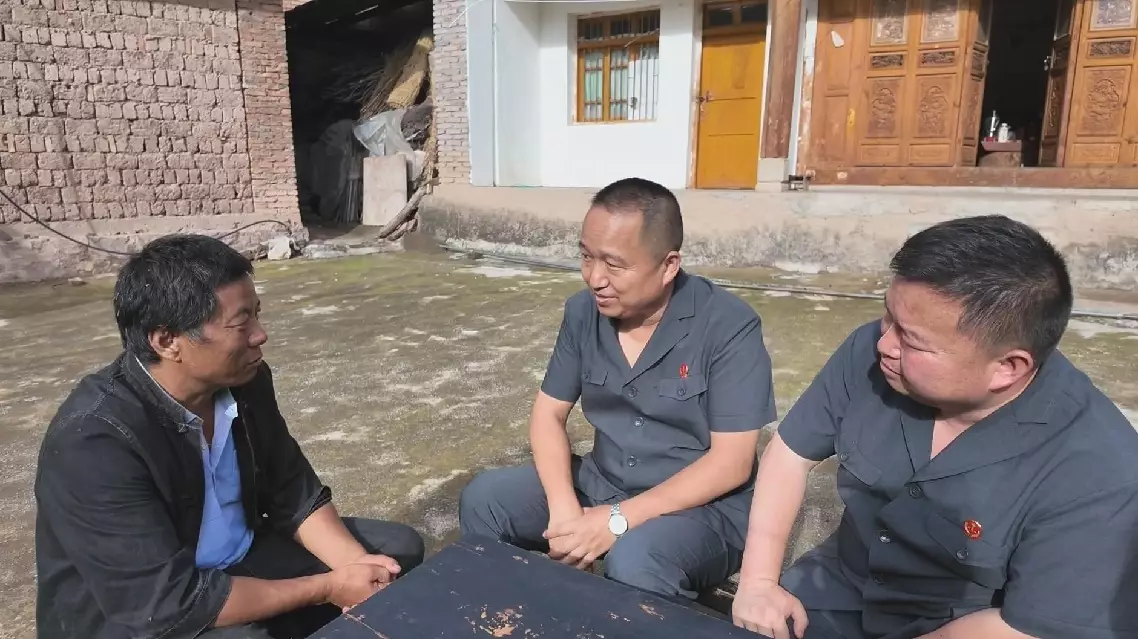
Judge brings justice to remote ethnic minority communities in southwest China