Skip to Content Facebook Feature Image

Samsara Introduces 360 Camera for Operated Equipment and Expands AI Multicam and Two-Way Voice Capabilities through the Dash Cam

Business

Samsara Introduces 360 Camera for Operated Equipment and Expands AI Multicam and Two-Way Voice Capabilities through the Dash Cam
Business

Business

Samsara Introduces 360 Camera for Operated Equipment and Expands AI Multicam and Two-Way Voice Capabilities through the Dash Cam

2026-06-24 23:00 Last Updated At:23:11

SAN FRANCISCO--(BUSINESS WIRE)--Jun 24, 2026--

Samsara Inc. (“Samsara”) (NYSE: IOT), the pioneer of the Connected Operations® Platform, today introduced the Samsara 360 Camera, new AI Multicam capabilities, and two-way voice capabilities through the dash cam for road fleets—expanding real-time visibility for fleets and field teams.

This press release features multimedia. View the full release here: https://www.businesswire.com/news/home/20260624036653/en/

Operated equipment operations and field teams have long dealt with limited visibility. A forklift in a warehouse, a baggage tug on the ramp, an excavator on a job site: these machines move in high-density, high-consequence environments where blind spots are unavoidable, and incidents are costly. At the same time, road fleets face their own persistent challenge: the moments of highest risk, reversing, lane changes, and tight maneuvering, are often the hardest for drivers to see through. Samsara’s new hardware and AI capabilities are designed to close both gaps.

“By combining the power to see everything with the automation to act on it, we are shifting into the next gear on safety,” said Johan Land, Chief Product Officer at Samsara. “The 360 Camera brings first-to-market visibility to operated equipment, AI Multicam gives road fleet drivers sharper awareness of what surrounds them, and two-way voice means the AI can respond the moment a question arises. Millions of frontline workers show up every day to keep our world running, and we are fully committed to helping get every one of them home safely.”

The First 360-Degree Camera Built for Operated Equipment

Construction sites, warehouses, mines, and airports are among the most demanding environments in physical operations. Frontline workers on these job-sites are required to use heavy, risky equipment such as excavators, forklifts, baggage tugs, and pushbacks with open cabs — yet until now, none of them had a camera system built for the job. Without proper views of their surroundings and access to footage from on the ground, incident investigations stalled, liability was disputed, and the same unsafe behaviors were repeated.

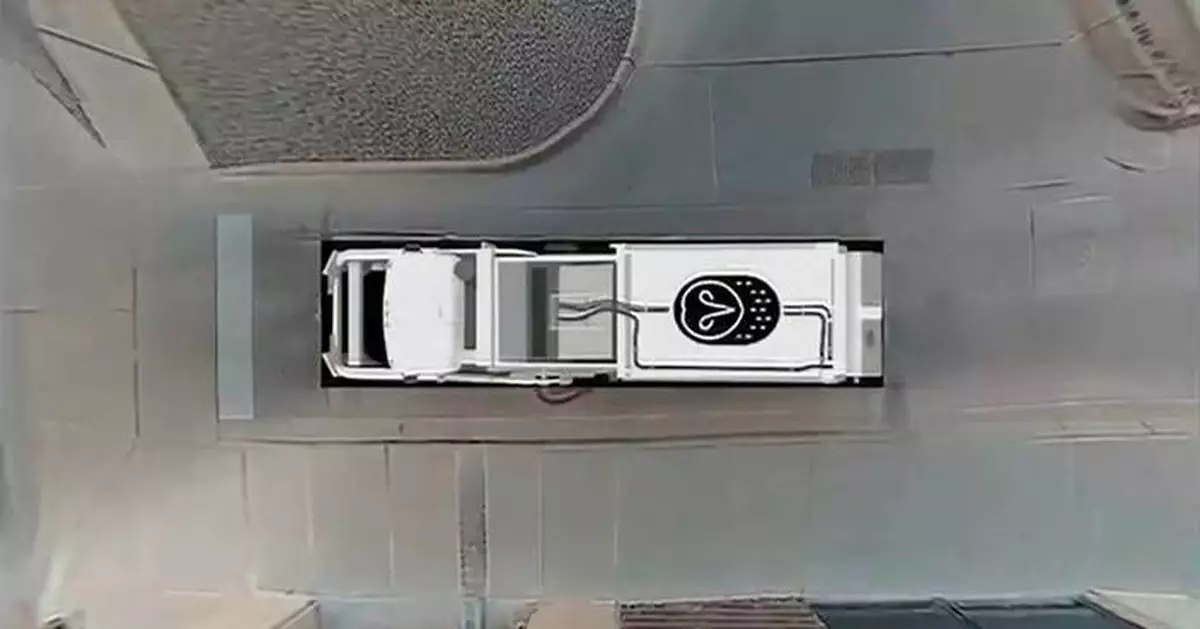
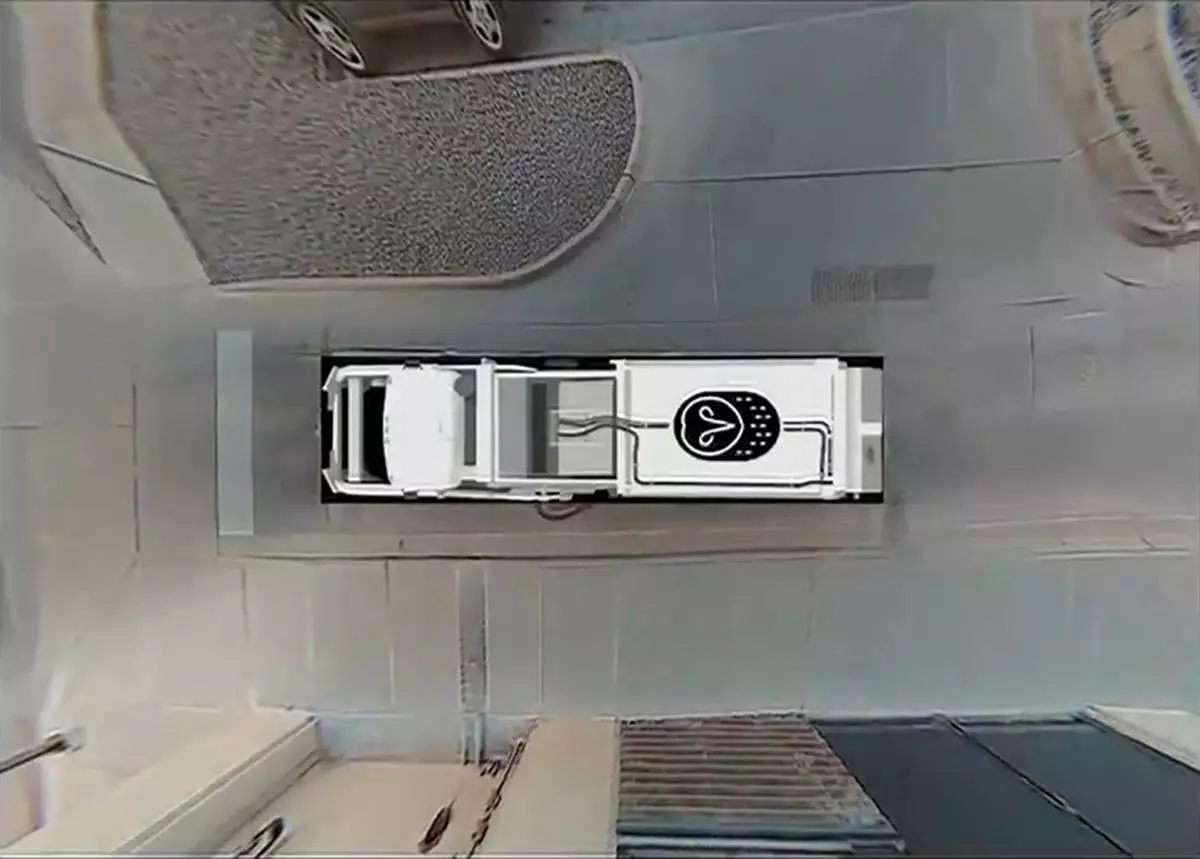
Samsara’s 360 Camera changes that: a single-module camera capturing a full 360-degree view from one mount point and an interactive pan and zoom. Now, equipment operators can see potential risks in real-time and safety managers can examine any angle of a recorded event in detail. Built to withstand harsh weather and rough operating conditions, it gives teams the evidence they need to move from incident report to root cause in minutes rather than days.

“Safety on the ramp has always been our top priority, and Samsara has been a true partner in helping us raise the bar,” said Mehdi Jnah, Director of Ground Support Equipment, Alaska Airlines. “Their AI dash cams gave us something we never had before — real-time alerts and video footage to protect our crews. With the 360 Camera, we extend safety to every type of ground service equipment on the ramp. Baggage tractors, tugs, pushbacks — each with its own unique demands and operating procedures. Now, not only can we see it all, we have real-time access to the evidence we need to move from incident report to root cause in minutes. We believe this kind of innovation has the potential to transform ramp safety across the entire industry.”

New AI Multicam Capabilities Give Road Fleets a Sharper View

Reversing, changing lanes, and navigating tight spaces are the moments of highest contact risk for road fleets — and the moments where drivers have the least information about what surrounds them. Samsara is expanding its AI Multicam system with new capabilities designed to close that gap:

Two-Way AI Conversations Put Safety Response Directly in the Cab

The dash cam is no longer a one-way device. With two-way voice, Samsara AI and managers can converse with drivers in the moment. When a driver crosses into a geofenced area, AI engages the driver through the dash cam, flagging critical road information such as a lower speed limit, a parking restriction, or a known towing risk, all without a dispatcher placing a call. And when a person needs to step in, managers can initiate a call through the same channel — a direct line that doesn't depend on a phone, a charged battery, or a cell signal. The same goes for drivers, who can send their manager a message through the dash cam to alert them to conditions such as severe weather or driving delays.

“We tried contacting a driver in his truck via phone, but were unable to reach him. I then used the dash camera to contact him and connected successfully. The driver mentioned that his phone lost battery. It’s this kind of technology that helps ensure our drivers stay safe,” said Otis Anderson, Safety Compliance Analyst, Jordan Carriers.

Watch the demo of the AI camera suite. Learn more about Samsara’s latest innovations in physical operations, including:

Follow Beyond 2026 news and developments on Samsara's LinkedIn and X pages, or by using the #SamsaraBeyond hashtag.

About Samsara

Samsara (NYSE: IOT) is the pioneer of the Connected Operations® Platform, which is an open platform that connects the people, devices, and systems of some of the world’s most complex operations, allowing them to develop actionable insights and improve their operations. With tens of thousands of customers across North America and Europe, Samsara is a proud technology partner to the people who keep our global economy running, including the world’s leading organizations across industries in transportation, construction, wholesale and retail trade, field services, logistics, manufacturing, utilities and energy, government, healthcare and education, food and beverage, and others. The company’s mission is to increase the safety, efficiency, and sustainability of the operations that power the global economy.

Samsara is a registered trademark of Samsara Inc. All other brand names, product names, or trademarks belong to their respective holders.
Samsara Birds Eye View

Samsara Birds Eye View

WASHINGTON (AP) — The Trump administration on Wednesday reached a multi-state settlement with chemical giant Chemours Co. over years-long, illegal discharges of synthetic “forever chemicals” used to make products resistant to water, grease and stains. The settlement is the first by the federal government to resolve enforcement claims against a manufacturer of harmful chemicals known as PFAS.

Under the agreement, filed in federal court in West Virginia, Chemours will pay a civil penalty of $22.5 million for alleged violations and spend $90 million over 15 years to mitigate PFAS discharges in three states: West Virginia, North Carolina and New Jersey.

Chemours, a spin-off of chemical maker DuPont, also agreed to install PFAS pollution controls for and surface water discharges and air emissions at a West Virginia facility at an estimated cost of $60 million, supply clean drinking water to communities near its West Virginia and New Jersey sites at an estimated cost of $280 million, and implement controls to reduce releases of PFAS and other toxic chemicals from its facility in North Carolina.

Combined, the penalties and relief programs are estimated to cost about $450 million, the Justice Department said.

The settlement allows Chemours to continue manufacturing PFAS for commercial and military applications while preventing future contamination and protecting communities from existing pollution, said Adam Gustafson, principal deputy assistant Attorney General for the Environment and Natural Resources Division.

“The Trump administration recognizes the important role of Chemours for it commercial and military obligations,'' Gustafson said in an interview. “The settlement protects public health while preserving that important balance.”

The settlement against a major PFAS manufacturer “delivers on the Trump administration’s promise to make polluters pay and stop PFAS contamination at the source,” said Jeffrey Hall, assistant EPA administrator for enforcement and compliance assurance.

The agreement will greatly reduce PFAS contamination of water, land and air and even begin to mitigate past harm, Hall said. “This settlement brings Chemours into compliance with the law and holds it fully accountable,” he said.

The settlement comes as the Trump administration is expected to propose softening Biden-era limits on “forever chemicals” in drinking water, while delaying but keeping tough standards for two common types of the substance.

The proposal will start the formal process of rolling back parts of the first-ever limits on PFAS in drinking water finalized during former President Joe Biden’s administration. Officials at the time found they increased the risk of cardiovascular disease, certain cancers and babies being born with low birth weight.

The agency is committed to addressing Per- and Polyfluoroalkyl substances (PFAS) in drinking water while following the law and ensuring that regulatory compliance is achievable for drinking water systems, EPA Administrator Lee Zeldin said.

The settlement determined that facilities Chemours operates in the three states have discharged PFAS into the Ohio River, Cape Fear River and Delaware River, respectively, in violation of permits required by the Clean Water Act and state laws. Chemours also violated legal requirements under the federal Toxic Substances Control Act at all three facilities.

As a result of the alleged violations, people living near the facilities were exposed to illegal PFAS, officials said. PFAS are widely used and found around the world, with scientific studies showing that exposure to some PFAS in the environment may be linked to harmful health effects in humans and animals.

The violations continued for over a decade, the Justice Department said. The facilities were previously owned for many decades by DuPont. The settlement announced Wednesday does not resolve DuPont’s liability for past PFAS violations, officials said.

A federal judge last year ordered Chemours to stop discharging unlawful levels of cancer-causing chemicals into the Ohio River from the company’s Washington Works plant in West Virginia. The pollutants endanger the environment, aquatic life and human health, U.S. District Judge Joseph Goodwin wrote in the August 2025 order.

The West Virginia Rivers Coalition had asked Goodwin to require the company to immediately comply with its permit limits after violating them for more than five years.

DuPont, Chemours and another company, Corteva, agreed to pay New Jersey up to $2 billion last year to settle environmental claims stemming from PFAS. The federal settlement does not affect the state case.

The federal consent decree calls for 14 specific treatment systems to reduce PFAS in wastewater, stormwater and groundwater from the West Virginia plant. Chemours will test drinking water near the West Virginia and New Jersey sites and provide treated or alternative clean water.

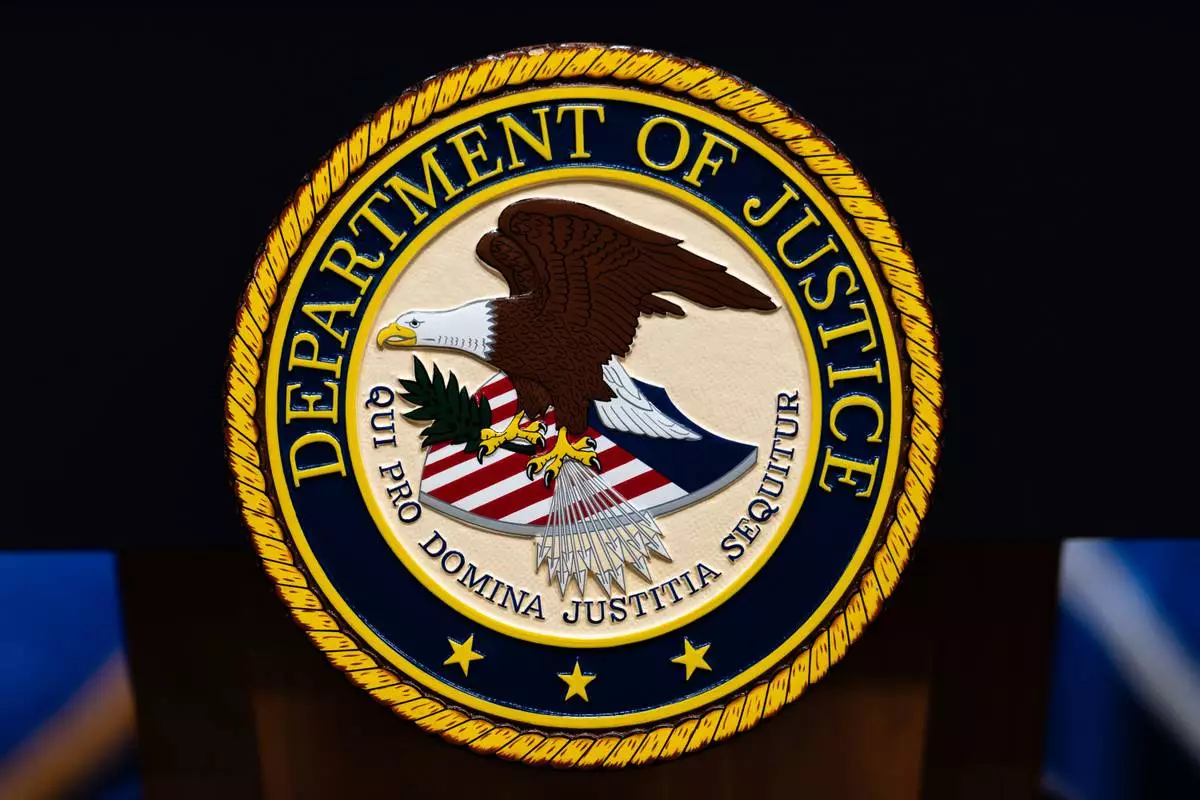
FILE - The U.S. Department of Justice logo is seen on a podium before a news conference, May 4, 2026, in Washington. (AP Photo/Julia Demaree Nikhinson, File)

FILE - The U.S. Department of Justice logo is seen on a podium before a news conference, May 4, 2026, in Washington. (AP Photo/Julia Demaree Nikhinson, File)

FILE - Environmental Protection Agency administrator Lee Zeldin, testifies to the Senate Appropriations subcommittee on Interior, Environment and related agencies, on Capitol Hill, May 13, 2026, in Washington. (AP Photo/Manuel Balce Ceneta, File)

FILE - Environmental Protection Agency administrator Lee Zeldin, testifies to the Senate Appropriations subcommittee on Interior, Environment and related agencies, on Capitol Hill, May 13, 2026, in Washington. (AP Photo/Manuel Balce Ceneta, File)

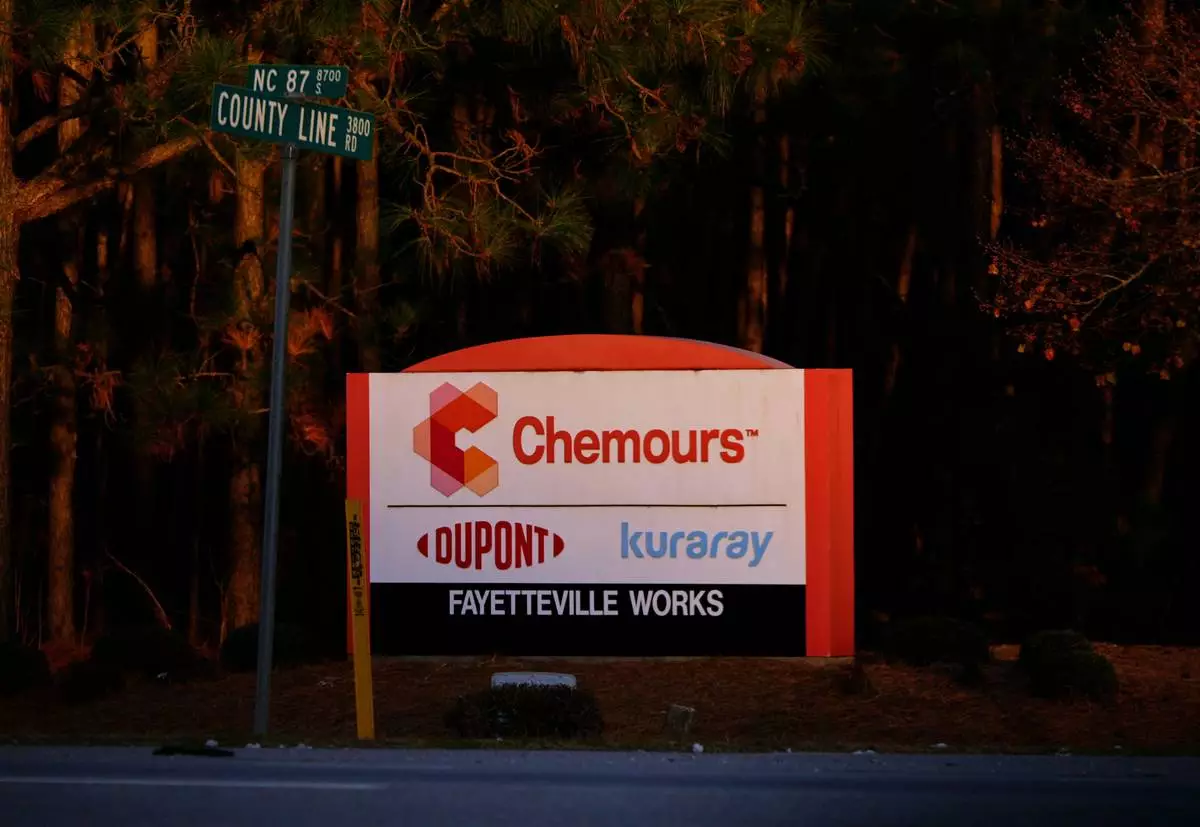
FILE - A sign is displayed at the entrance of Chemours Company, Fayetteville Works in White Oak, N.C., Dec. 9, 2025. (AP Photo/Carolyn Kaster, File)

FILE - A sign is displayed at the entrance of Chemours Company, Fayetteville Works in White Oak, N.C., Dec. 9, 2025. (AP Photo/Carolyn Kaster, File)

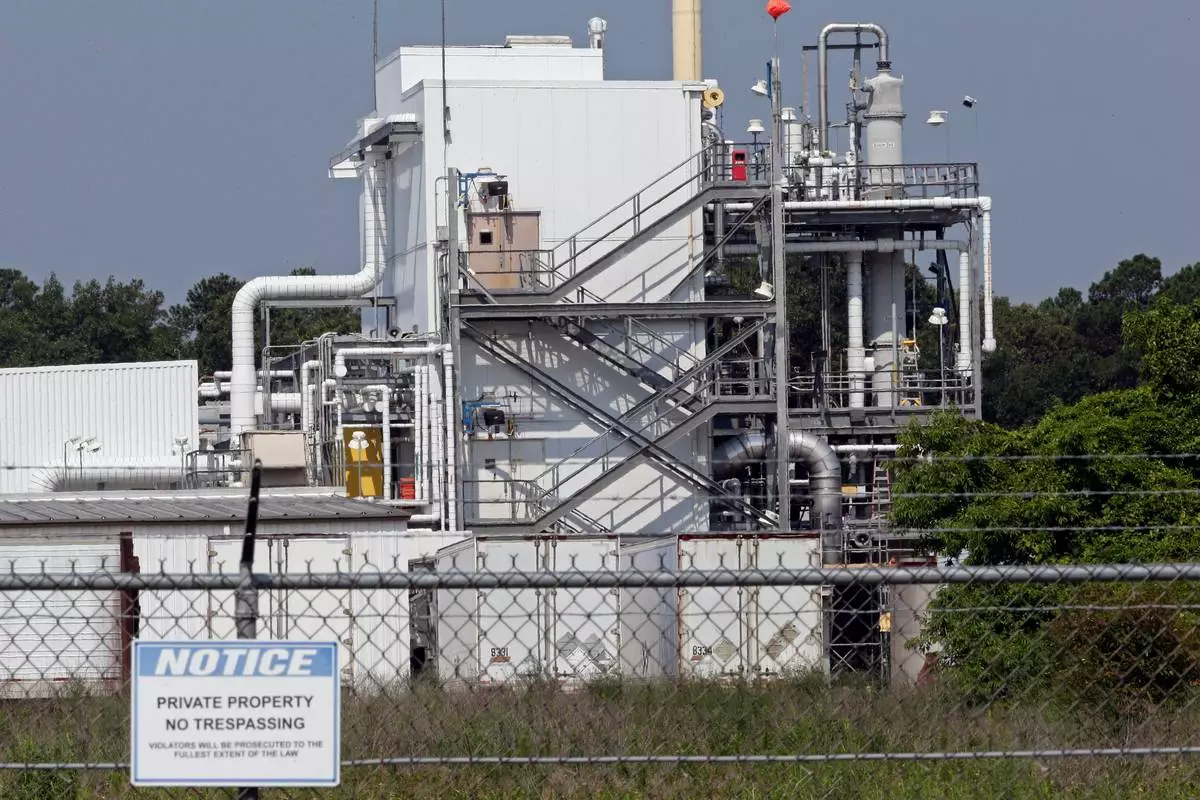
FILE - The Chemours Company's PPA facility at the Fayetteville Works plant near Fayetteville, N.C., June 15, 2018. (AP Photo/Gerry Broome, File)

FILE - The Chemours Company's PPA facility at the Fayetteville Works plant near Fayetteville, N.C., June 15, 2018. (AP Photo/Gerry Broome, File)

Recommended Articles