A federal judge on Wednesday permanently barred President Donald Trump’s administration from implementing most of his first executive order on elections, part of which sought to require people to show documentary proof of citizenship when they register to vote.
The ruling by U.S. District Court Judge Denise Casper in Boston effectively converts a preliminary injunction she issued a year ago, in which she temporarily blocked many of Trump’s efforts to overhaul elections, into a permanent ban.
Casper rejected the administration’s argument that the lawsuit to block the changes brought by Democratic state attorneys general was premature because the rules had yet to be implemented. Instead, she agreed that the Constitution gives states and Congress the authority to regulate elections, and that Trump’s requirements violated the separation of powers.
The Constitution "does not grant the President any specific powers over elections,” she wrote.
Among other proposed changes, Trump’s order would have required people to provide documentary proof of citizenship when registering to vote, prevented mail ballots from being counted if they arrive after Election Day, even if they were postmarked by then, and punished states that failed to comply by withholding certain federal money.
In a statement, New York Attorney General Letitia James said she was grateful the court had blocked Trump's "unconstitutional attempt to seize control of our elections" and would continue to defend voting rights in this year's midterm elections.
“Generations of Americans fought tirelessly for the right to vote, and we honor their legacy by protecting that right against anyone who tries to undermine it," she said.
Requests for comment sent to the White House and Department of Justice were not immediately returned.
It was the latest in a string of rulings against the elections executive order Trump signed just months after taking office for his second term. He has since signed another executive order on elections, seeking to create a national voter list and limit mail balloting. That directive also faces multiple legal challenges.
Last fall, a federal judge in Washington, D.C., overseeing a separate challenge to the first election executive order by civil rights and Democratic Party-aligned groups blocked the government from taking steps to include the proof-of-citizenship requirement on the federal voter registration form. That judge later barred the Secretary of Defense from requiring documentary proof of citizenship when military personnel register to vote or request ballots.
In an apparent nod to the difficulty of implementing a proof-of-citizen requirement by executive order, Trump is pushing legislation in the Republican-controlled Congress to create such a mandate. The SAVE America Act has passed the House but has stalled in the Senate, leading Trump to advocate for eliminating the filibuster that is blocking the legislation.
On Wednesday, he abruptly canceled the expected signing of a bipartisan housing bill, saying he won't sign legislation until Congress passes his proof of citizenship requirement for voting.
The president and many of his Republican allies have been promoting the narrative that voting by noncitizens is a major problem, when in fact it's quite rare. The federal voter registration form already requires people to attest that they are U.S. citizens, and violating that is punishable as a felony that can lead to prison or deportation.
In another major voting case, the U.S. Supreme Court is due to issue an opinion soon on whether mail ballots must arrive by Election Day. That could immediately change the rules in 14 states that allow grace periods ranging from days to weeks if the ballots are postmarked by Election Day.
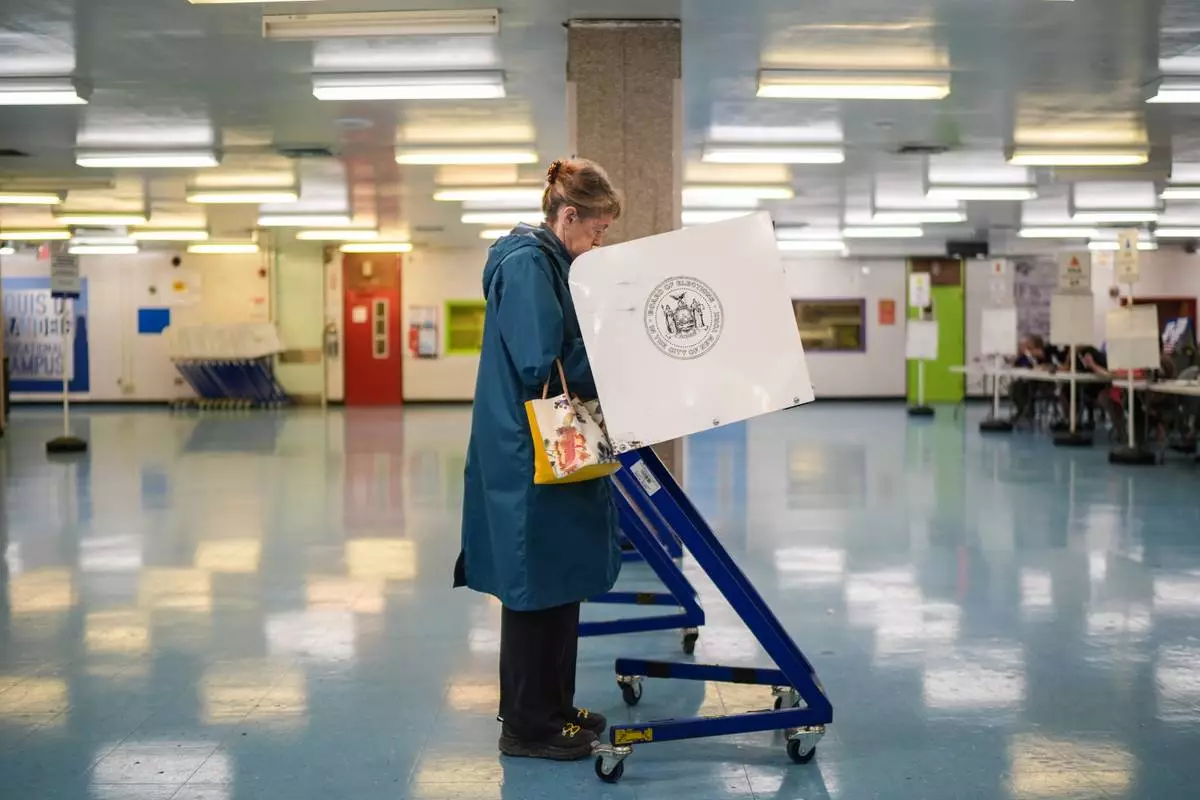
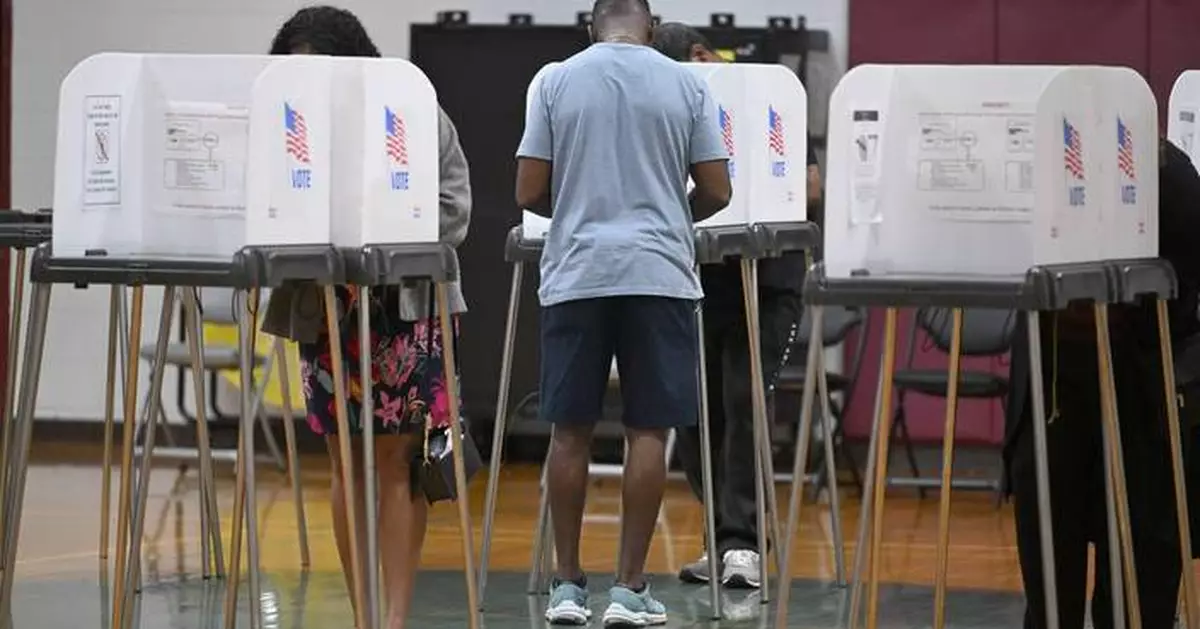
A voter casts a ballot during New York’s primary election on Tuesday, June 23, 2026, in New York. (AP Photo/Ryan Murphy)
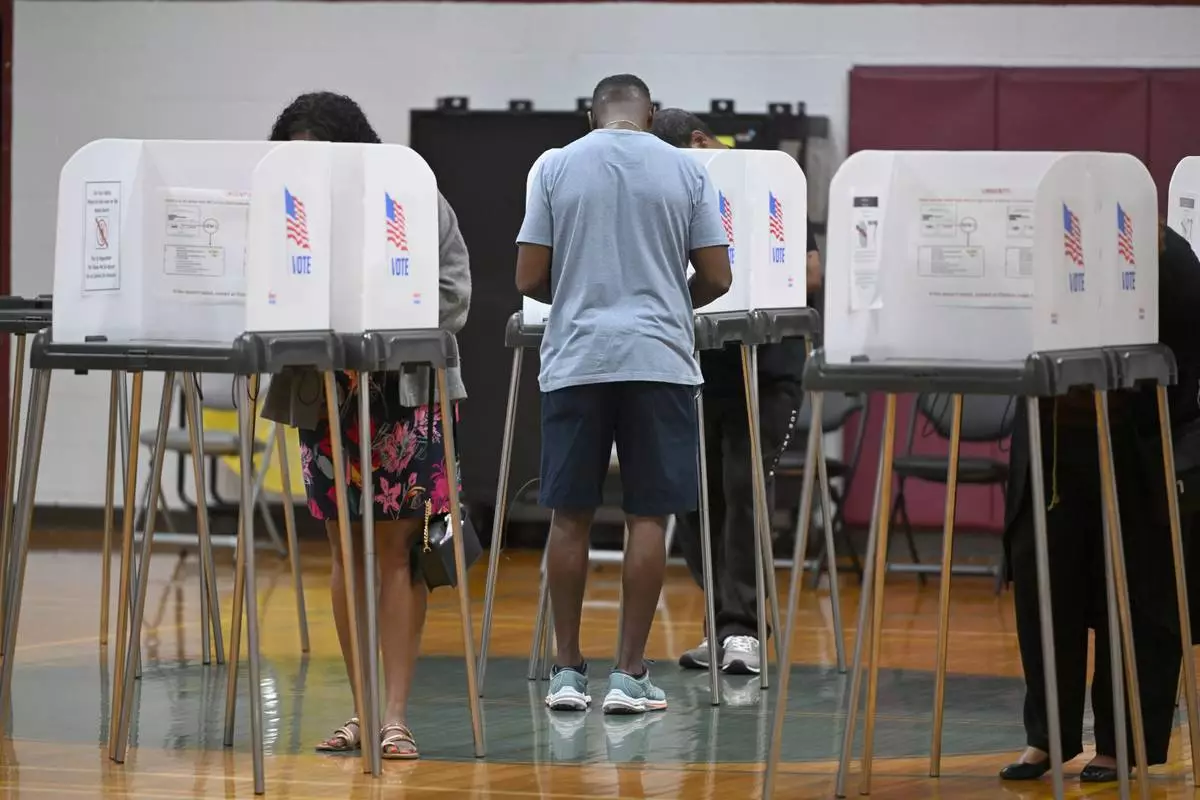
People cast their votes at the Upper Marlboro Community Center Tuesday,, June 23, 2026, in Upper Marlboro, Md. (AP Photo/Gail Burton)
WASHINGTON (AP) — The Trump administration on Wednesday reached a multi-state settlement with chemical giant Chemours Co. over years-long, illegal discharges of synthetic “forever chemicals” used to make products resistant to water, grease and stains. The settlement is the first by the federal government to resolve enforcement claims against a manufacturer of harmful chemicals known as PFAS.
Under the agreement, filed in federal court in West Virginia, Chemours will pay a civil penalty of $22.5 million for alleged violations and spend $90 million over 15 years to mitigate PFAS discharges in three states: West Virginia, North Carolina and New Jersey.
Chemours, a spin-off of chemical maker DuPont, also agreed to install PFAS pollution controls for and surface water discharges and air emissions at a West Virginia facility at an estimated cost of $60 million, supply clean drinking water to communities near its West Virginia and New Jersey sites at an estimated cost of $280 million; and implement controls to reduce releases of PFAS and other toxic chemicals from its facility in North Carolina, based on a pending independent assessment.
Combined, the penalties and relief programs are estimated to cost at least $450 million, the Justice Department said.
The settlement allows Chemours to continue manufacturing PFAS for commercial and military applications while preventing future contamination and protecting communities from existing pollution, said Adam Gustafson, principal deputy assistant Attorney General for the Environment and Natural Resources Division.
“The Trump administration recognizes the important role of Chemours for it commercial and military obligations,'' Gustafson said in an interview. “The settlement protects public health while preserving that important balance.”
The settlement against a major PFAS manufacturer “delivers on the Trump administration’s promise to make polluters pay and stop PFAS contamination at the source,” said Jeffrey Hall, assistant EPA administrator for enforcement and compliance assurance.
The agreement will greatly reduce PFAS contamination of water, land and air and even begin to mitigate past harm, Hall said. “This settlement brings Chemours into compliance with the law and holds it fully accountable,” he said.
In a statement Wednesday, Chemours said it has already begun planning and implementing operational improvements at its facilities and will take steps to mitigate future emissions and enhance existing programs.
"This settlement provides Chemours with greater clarity on future compliance requirements and actions to support long-term responsible manufacturing,'' spokeswoman Jess Loizeaux said.
The settlement comes as the Trump administration is expected to propose softening Biden-era limits on “forever chemicals” in drinking water, while delaying but keeping tough standards for two common types of the substance.
The proposal will start the formal process of rolling back parts of the first-ever limits on PFAS in drinking water finalized during former President Joe Biden’s administration. Officials at the time found they increased the risk of cardiovascular disease, certain cancers and babies being born with low birth weight.
The agency is committed to addressing Per- and Polyfluoroalkyl substances (PFAS) in drinking water while following the law and ensuring that regulatory compliance is achievable for drinking water systems, EPA Administrator Lee Zeldin said.
The settlement determined that facilities Chemours operates in the three states have discharged PFAS into the Ohio River, Cape Fear River and Delaware River, respectively, in violation of permits required by the Clean Water Act and state laws. Chemours also violated legal requirements under the federal Toxic Substances Control Act at all three facilities.
As a result of the alleged violations, people living near the facilities were exposed to illegal PFAS, officials said. PFAS are widely used and found around the world, with scientific studies showing that exposure to some PFAS in the environment may be linked to harmful health effects in humans and animals.
The violations continued for over a decade, the Justice Department said. The facilities were previously owned for many decades by DuPont. The settlement announced Wednesday does not resolve DuPont’s liability for past PFAS violations, officials said.
A federal judge last year ordered Chemours to stop discharging unlawful levels of cancer-causing chemicals into the Ohio River from the company’s Washington Works plant in West Virginia. The pollutants endanger the environment, aquatic life and human health, U.S. District Judge Joseph Goodwin wrote in the August 2025 order.
The West Virginia Rivers Coalition had asked Goodwin to require the company to immediately comply with its permit limits after violating them for more than five years.
DuPont, Chemours and another company, Corteva, agreed to pay New Jersey up to $2 billion last year to settle environmental claims stemming from PFAS. The federal settlement does not affect the state case.
North Carolina Attorney General Jeff Jackson called the settlement “an insult to the people of eastern North Carolina.”
His state is “ground zero for GenX contamination, but this deal does practically nothing to clean up our water,” said Jackson, a Democrat. GenX is a trade name for a synthetic chemical developed by Chemours as an alternative to PFAS but which has raised significant health and environmental concerns in its own right.
“Chemours made this mess, and Chemours should clean it up," Jackson said in a statement.
The federal consent decree calls for 14 specific treatment systems to reduce PFAS in wastewater, stormwater and groundwater from the West Virginia plant. Chemours will test drinking water near the West Virginia and New Jersey sites and provide treated or alternative clean water.
FILE - The U.S. Department of Justice logo is seen on a podium before a news conference, May 4, 2026, in Washington. (AP Photo/Julia Demaree Nikhinson, File)
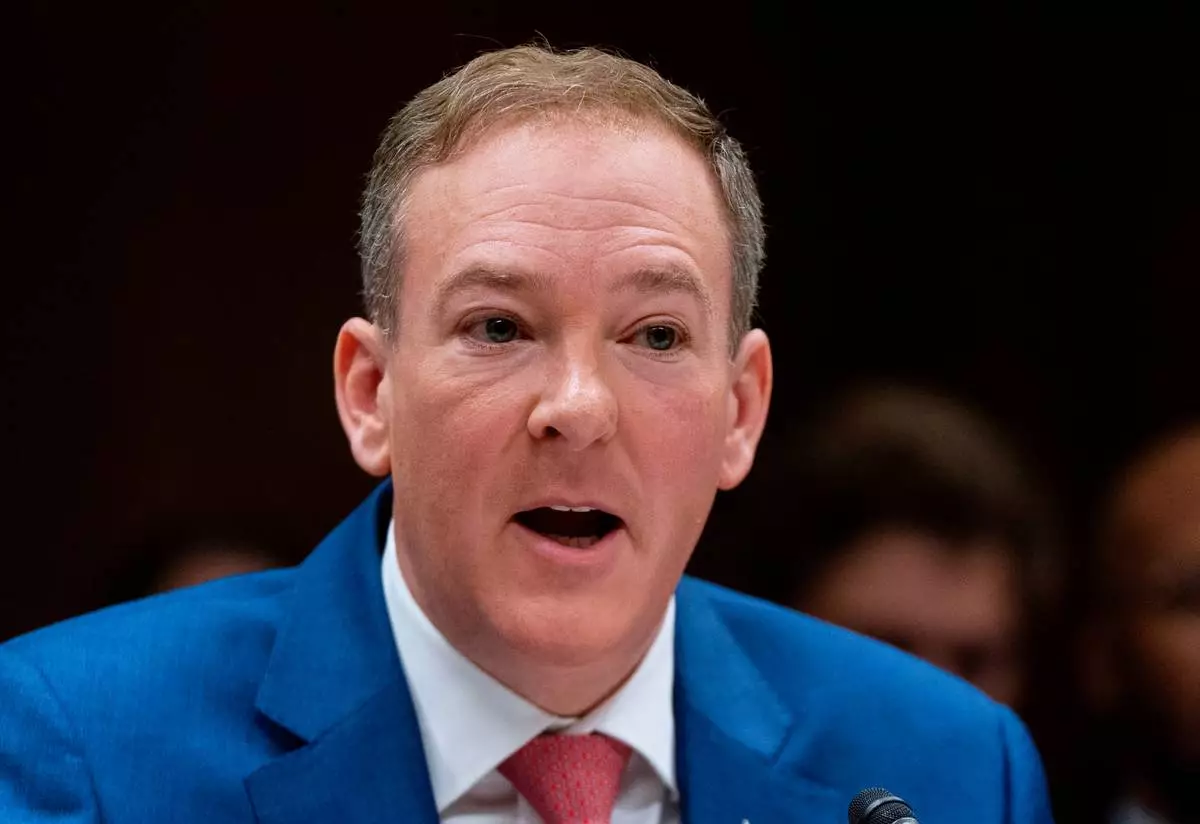
FILE - Environmental Protection Agency administrator Lee Zeldin, testifies to the Senate Appropriations subcommittee on Interior, Environment and related agencies, on Capitol Hill, May 13, 2026, in Washington. (AP Photo/Manuel Balce Ceneta, File)
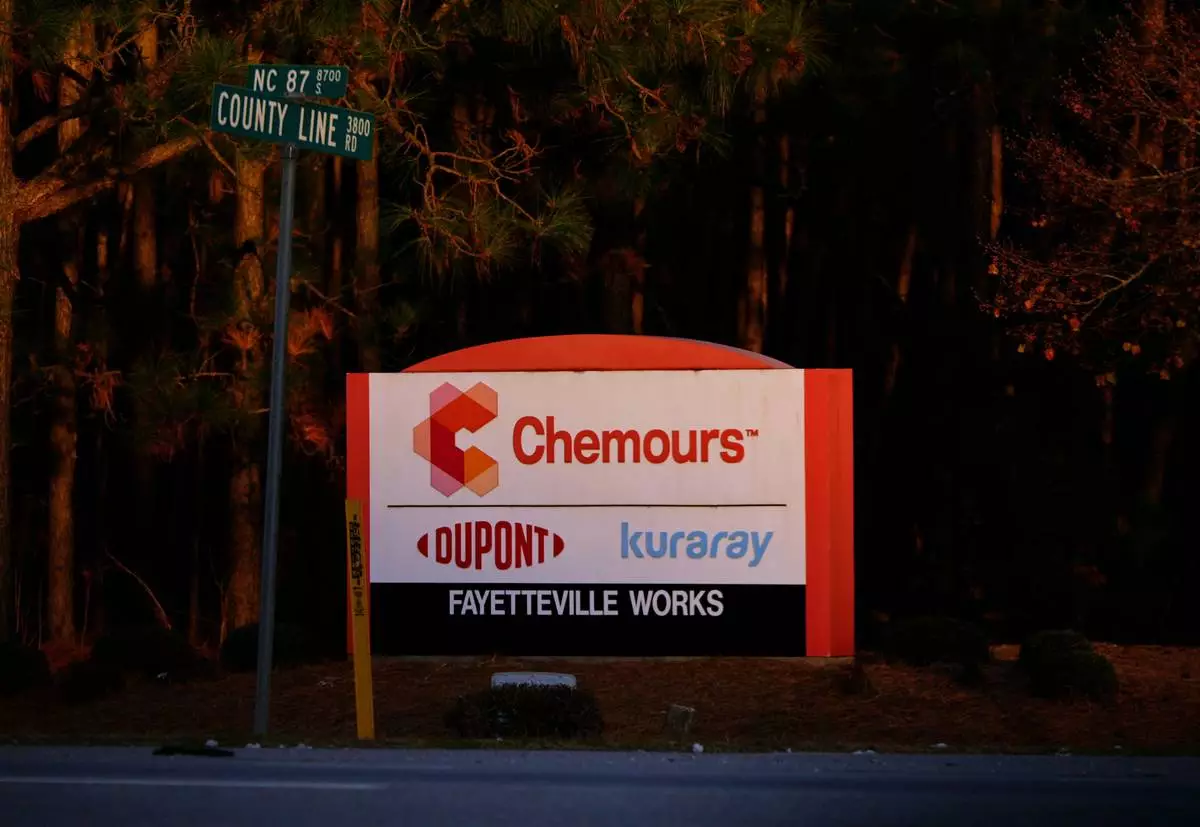
FILE - A sign is displayed at the entrance of Chemours Company, Fayetteville Works in White Oak, N.C., Dec. 9, 2025. (AP Photo/Carolyn Kaster, File)
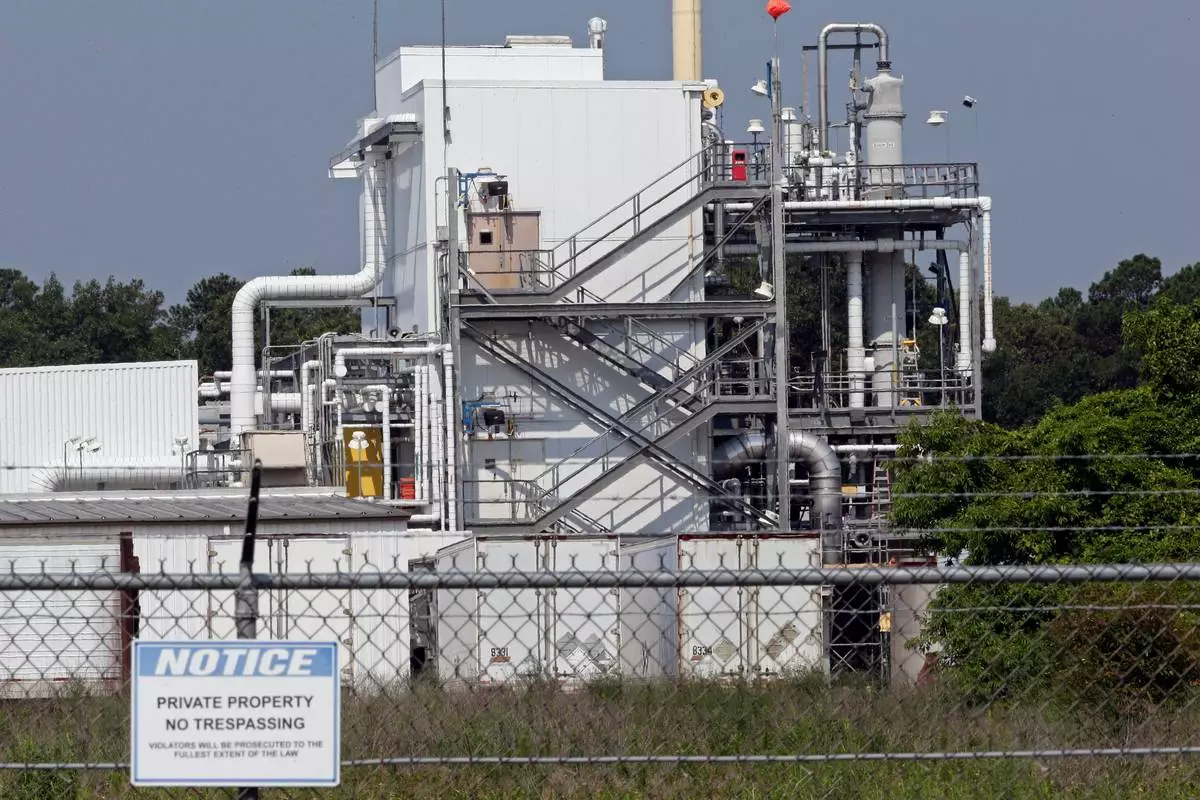
FILE - The Chemours Company's PPA facility at the Fayetteville Works plant near Fayetteville, N.C., June 15, 2018. (AP Photo/Gerry Broome, File)